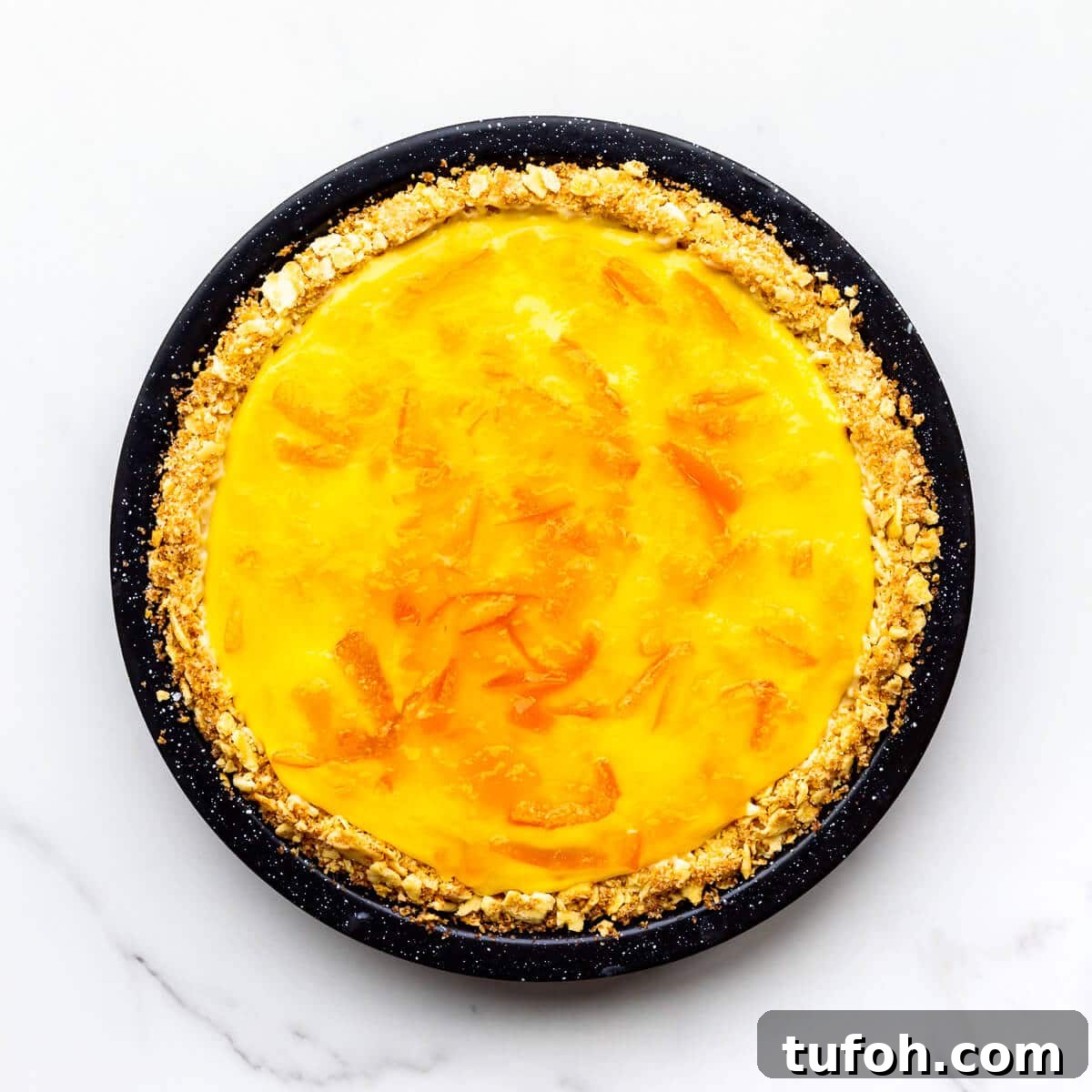
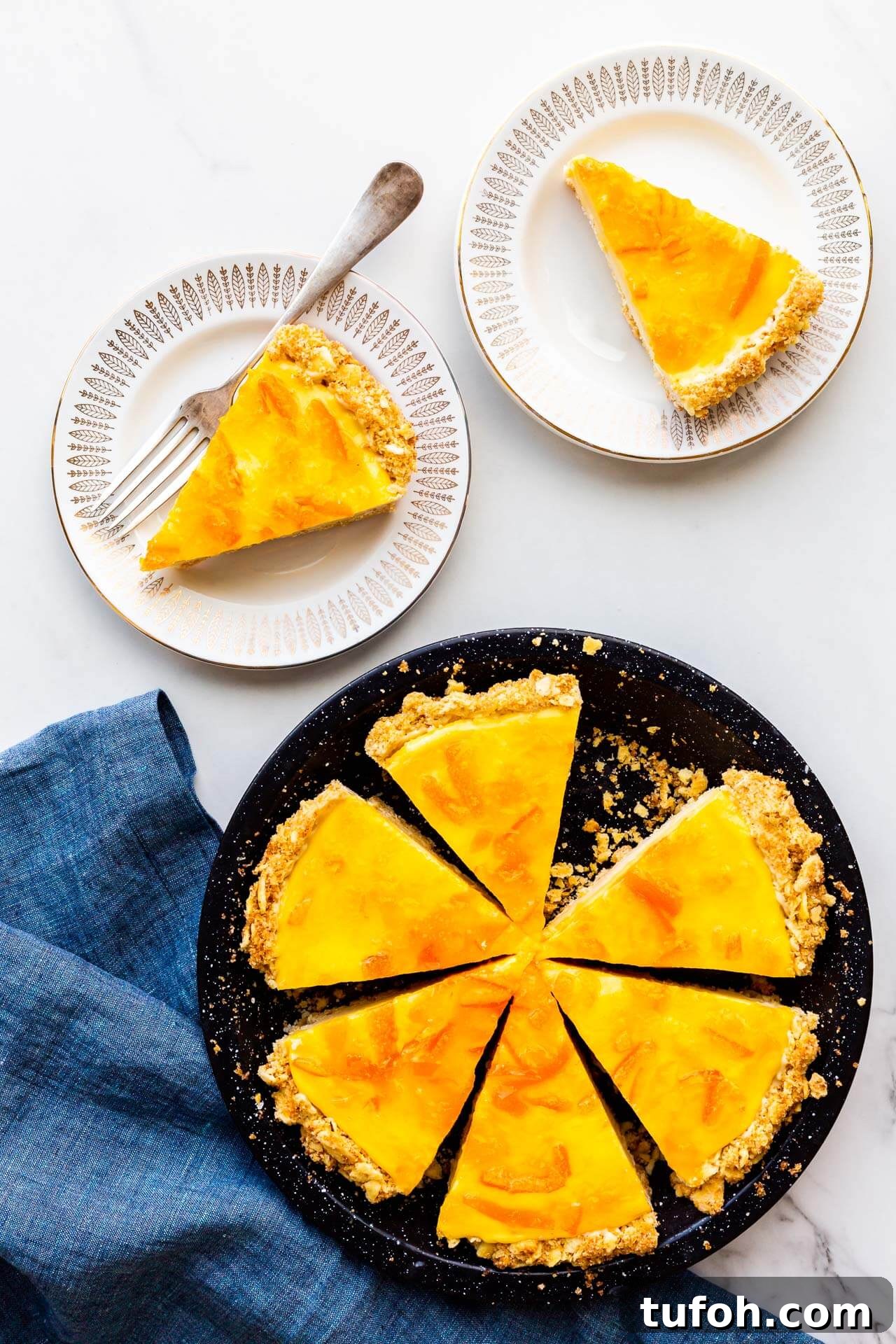
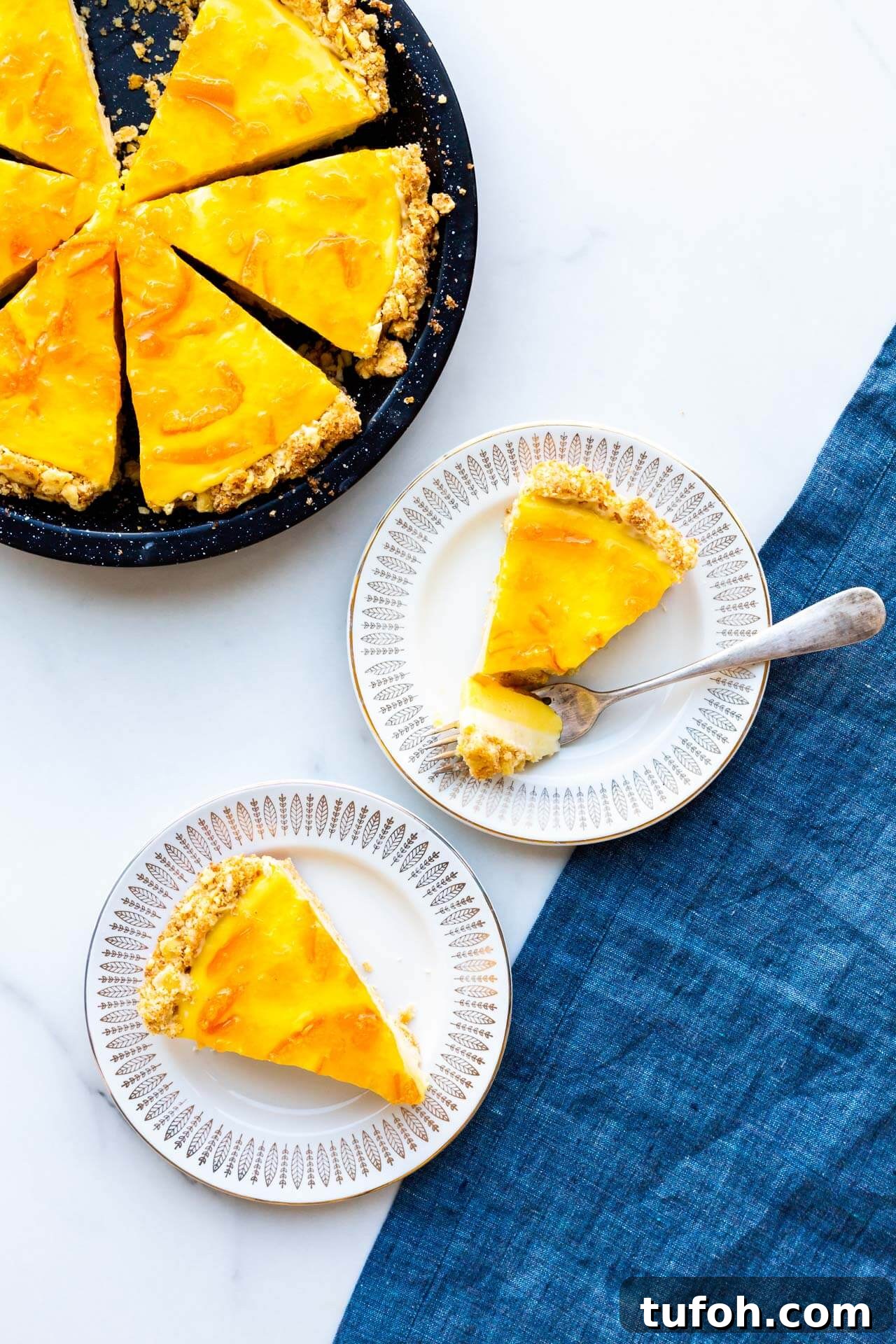
This orange pie combines a crunchy saltine crust, a silky cheesecake layer, and a bright orange curd made from frozen orange juice concentrate for punchy citrus flavor. The pie is finished with orange marmalade brushed over the top to add shine and a bittersweet lift.
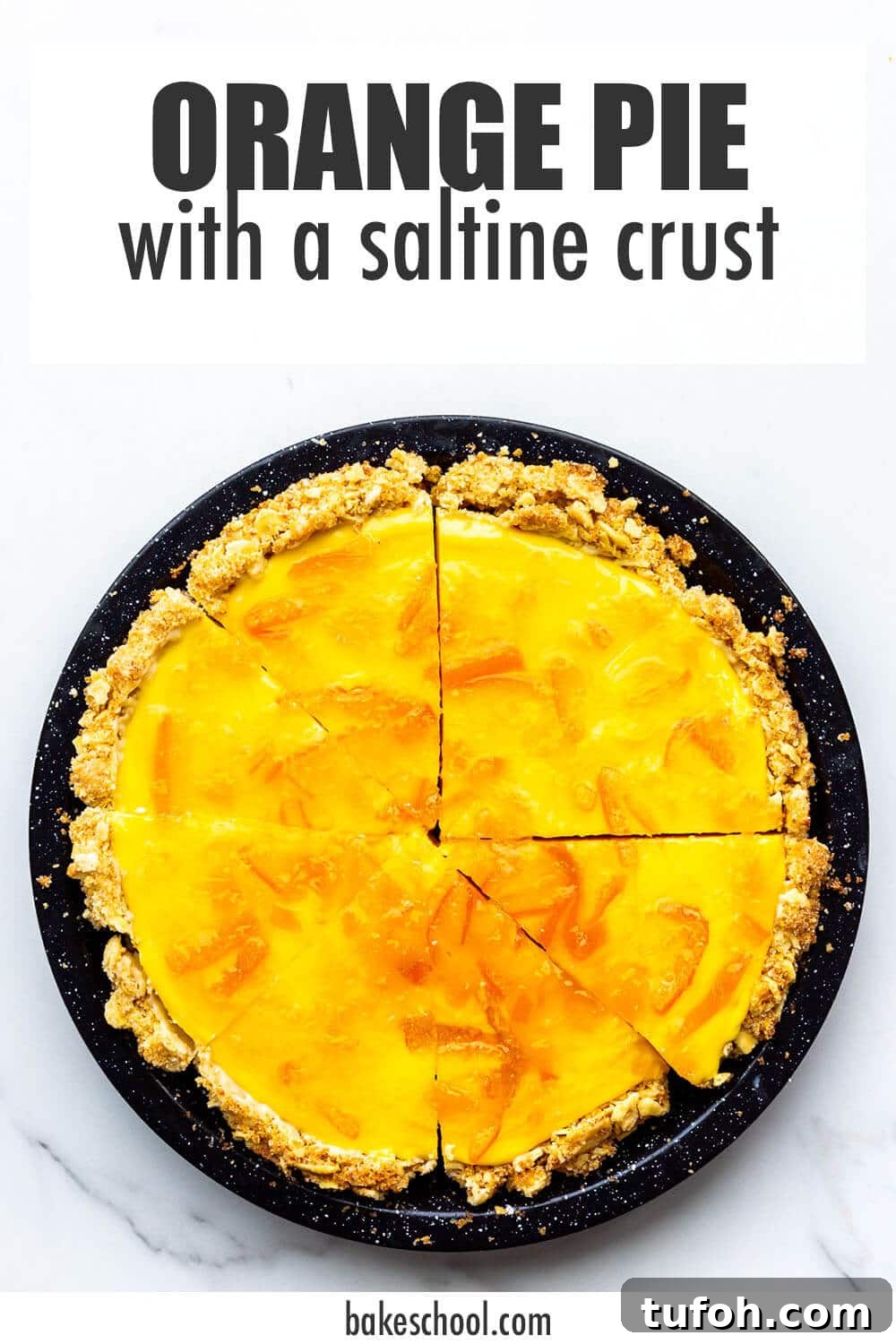
Key components
The recipe is made from a few straightforward components that come together into a polished, sliceable pie. Make the fillings ahead so they have time to cool before assembly.
- Saltine crumb crust: a sturdy, salty-sweet crust made from crushed saltine crackers, melted butter, sugar and a bit of powdered milk for texture.
- Orange curd: an intense orange curd using frozen orange juice concentrate and a small amount of gelatin to help it hold a clean slice.
- Liquid cheesecake: a baked, soft cheesecake layer that’s cooked just until set at the edges and still slightly jiggly in the center, then cooled and piped into the crust.
- Orange marmalade glaze: marmalade brushed on top to add flavor, prevent the curd from drying, and give the pie a glossy finish.
Saltine crust
This crust is intentionally sturdy and crunchy. It’s similar in concept to a graham-cracker crust but with the salty crunch of saltines. If you prefer a looser, crumbly crust, adjust the butter ratio. You can substitute a graham-cracker crust if desired.
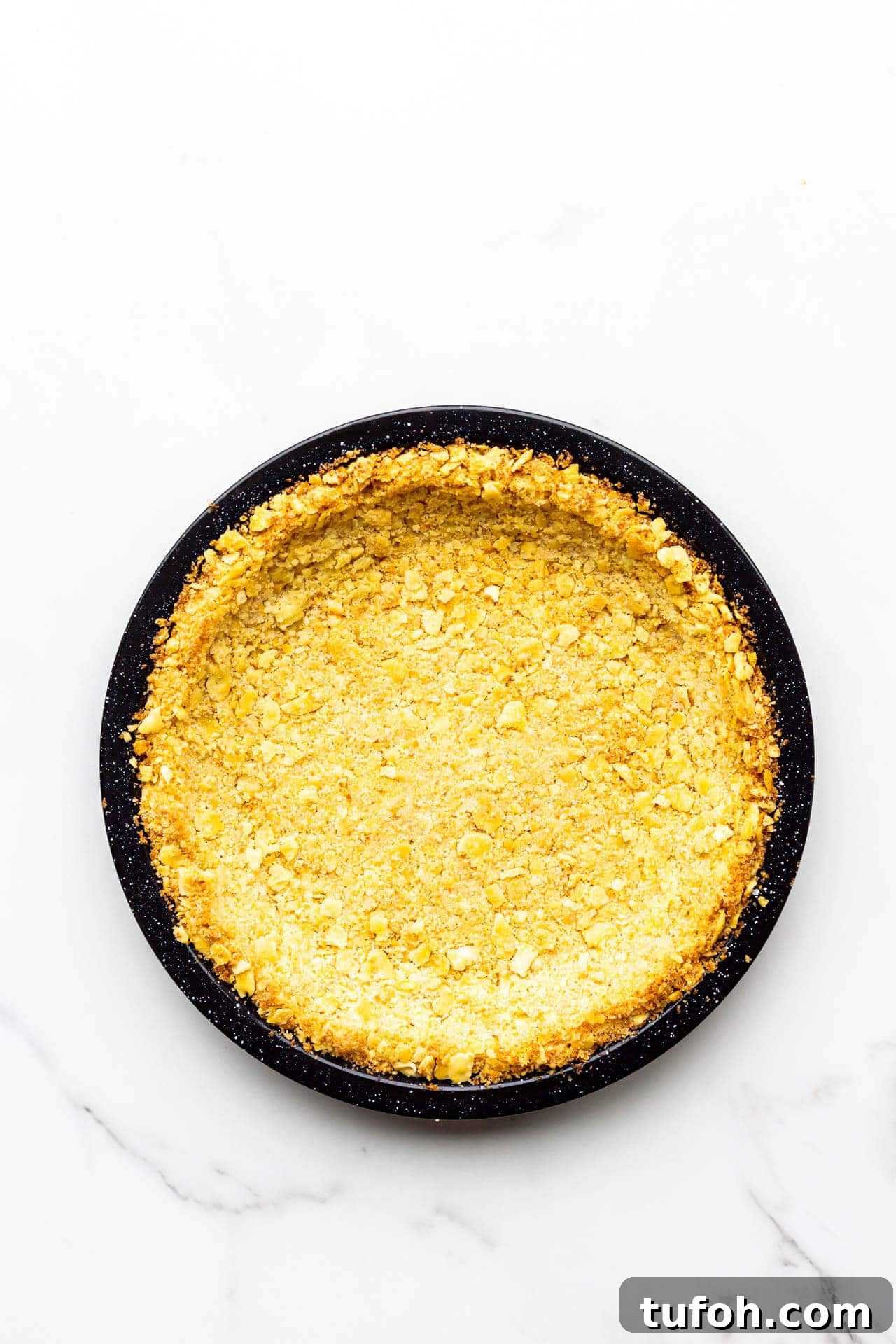
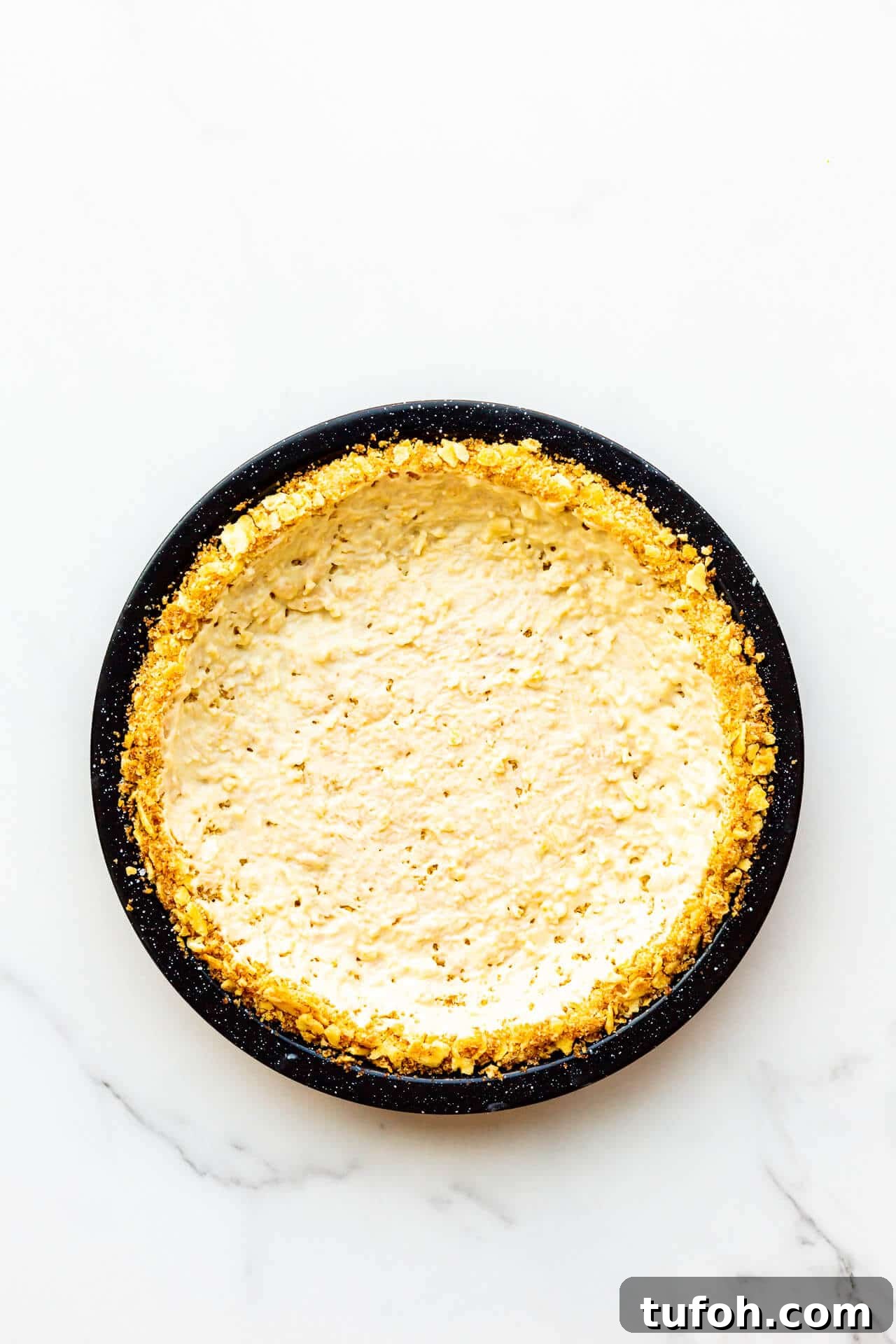
I brush the baked crust with melted white chocolate to seal it before filling. This technique, called chablonner in pastry kitchens, helps prevent the crust from softening from wet fillings.
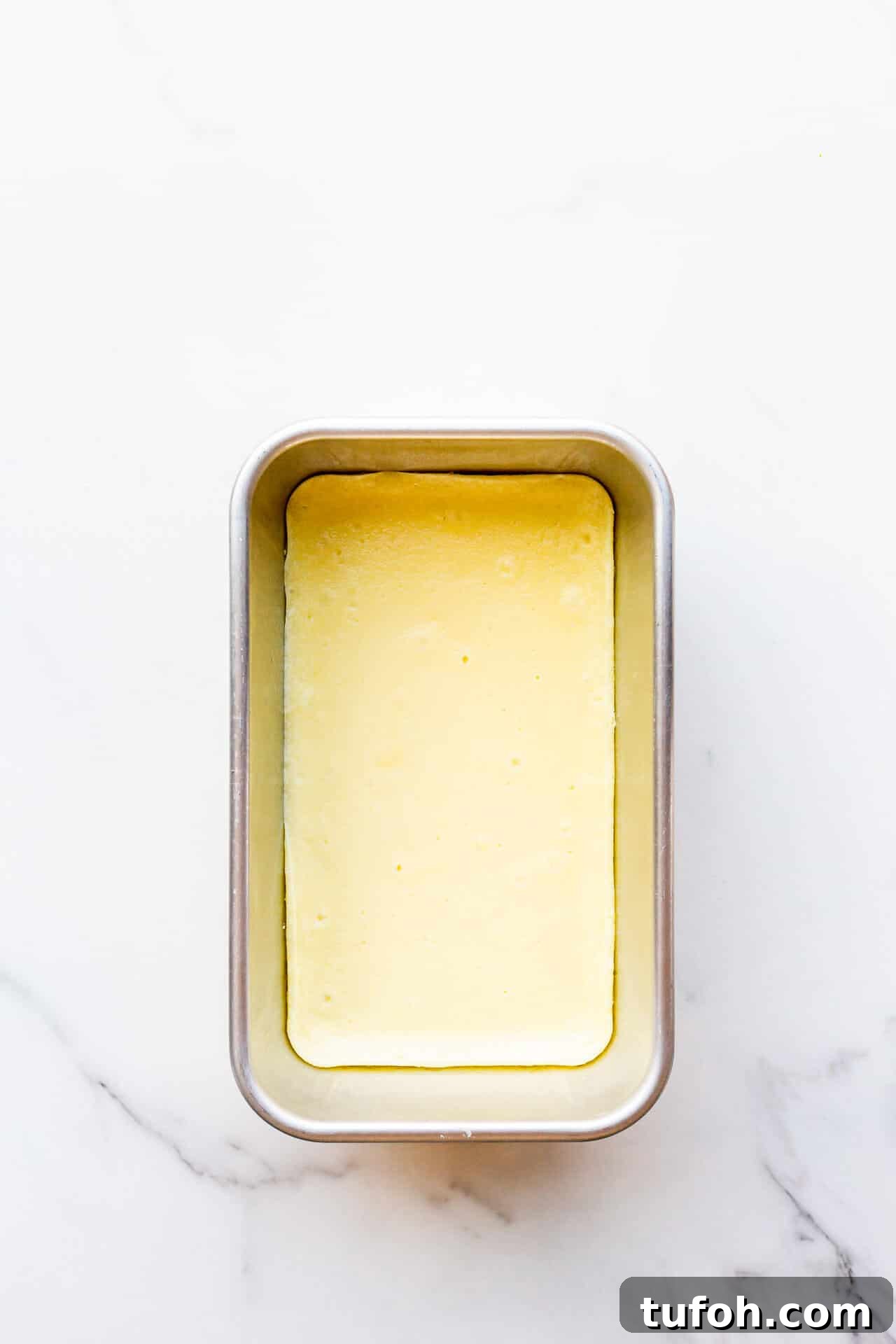
Liquid cheesecake
The cheesecake layer is gently baked until the edges are set and the center remains soft and jiggly. I bake it in a greased 9 x 5-inch loaf pan; the timing will vary by pan and oven, but expect roughly 30–40 minutes at 300°F (150°C) until the desired texture is reached.
Once cooled, transfer the cheesecake to a piping bag to make filling the crust easy and tidy.
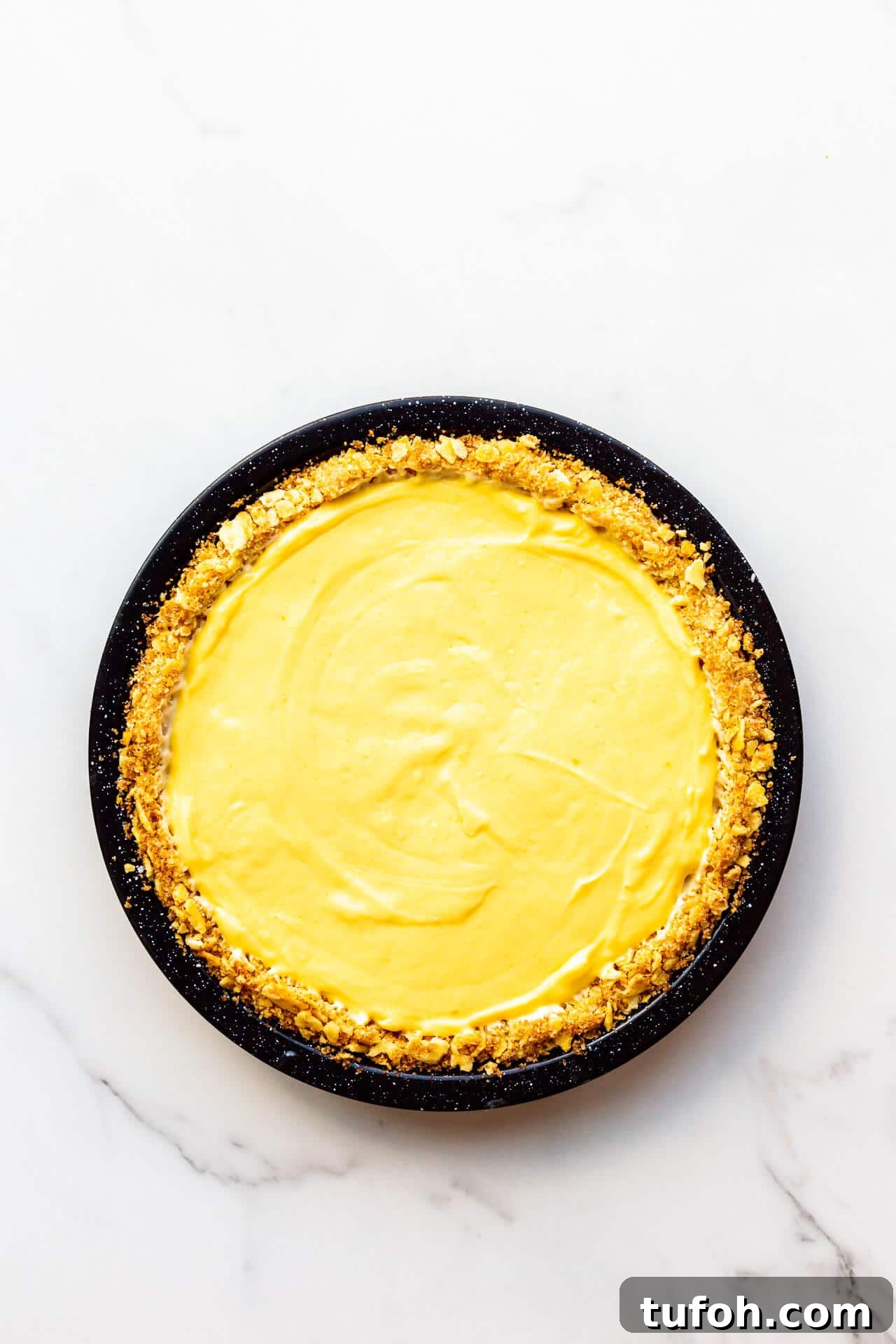
Orange curd
Stabilizing with gelatin
Cooking the curd to around 80°C (175°F) will thicken it. Adding a small amount of gelatin while the curd is warm improves stability so the filling slices cleanly after chilling. Gelatin melts near body temperature (about 40°C), so:
- add gelatin while the curd is warm so it dissolves completely;
- do not add gelatin to a cold curd (it won’t dissolve);
- remove the curd from the heat before adding gelatin to avoid degrading its setting power;
- keep the finished pie chilled to prevent the gelatin from softening.
Gelatin types
Gelatin is available as powdered gelatin and as leaf (sheet) gelatin. Both work if used correctly. Sheets are softened in cold water, squeezed, then added to the warm curd. Powdered gelatin is typically bloomed in a small amount of cold liquid and then stirred into the warm curd. Follow package instructions for quantities—most common commercial gelatins will set about 500 mL (2 cups) of liquid per sheet or pouch, but check your brand.
Glaze
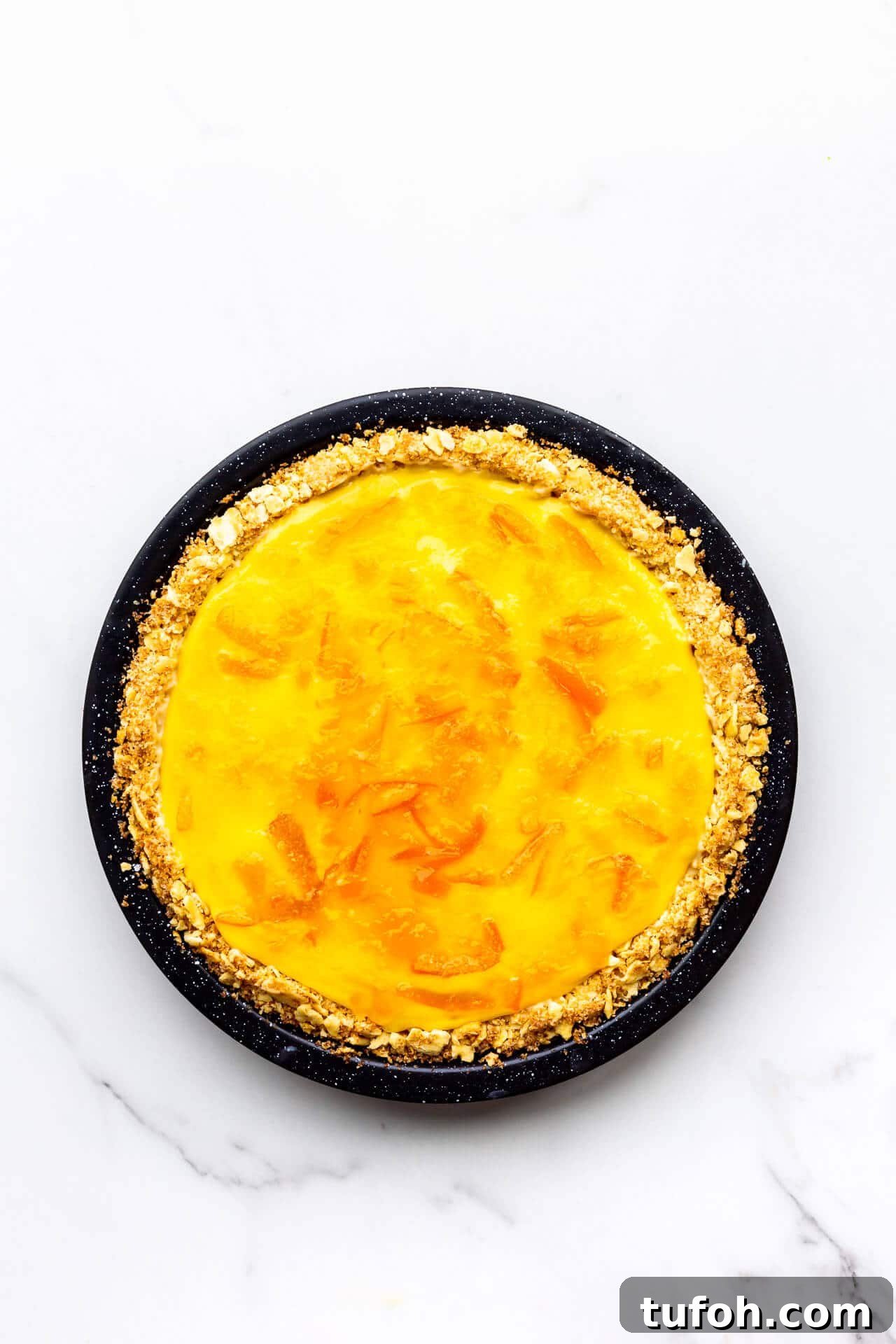
Brush orange marmalade lightly over the chilled curd using the back of a spoon. The marmalade adds shine, extra orange flavor and helps seal the curd so it won’t dry out. That barrier also extends storage life in the refrigerator and protects the curd from freezer-drying if you freeze slices.
📖 Recipe
Orange Pie
Equipment
- Whisk
- Stand mixer with paddle (optional)
- 9-inch (23 cm) pie plate
- 9 x 5-inch loaf pan
- Piping bag and offset spatula
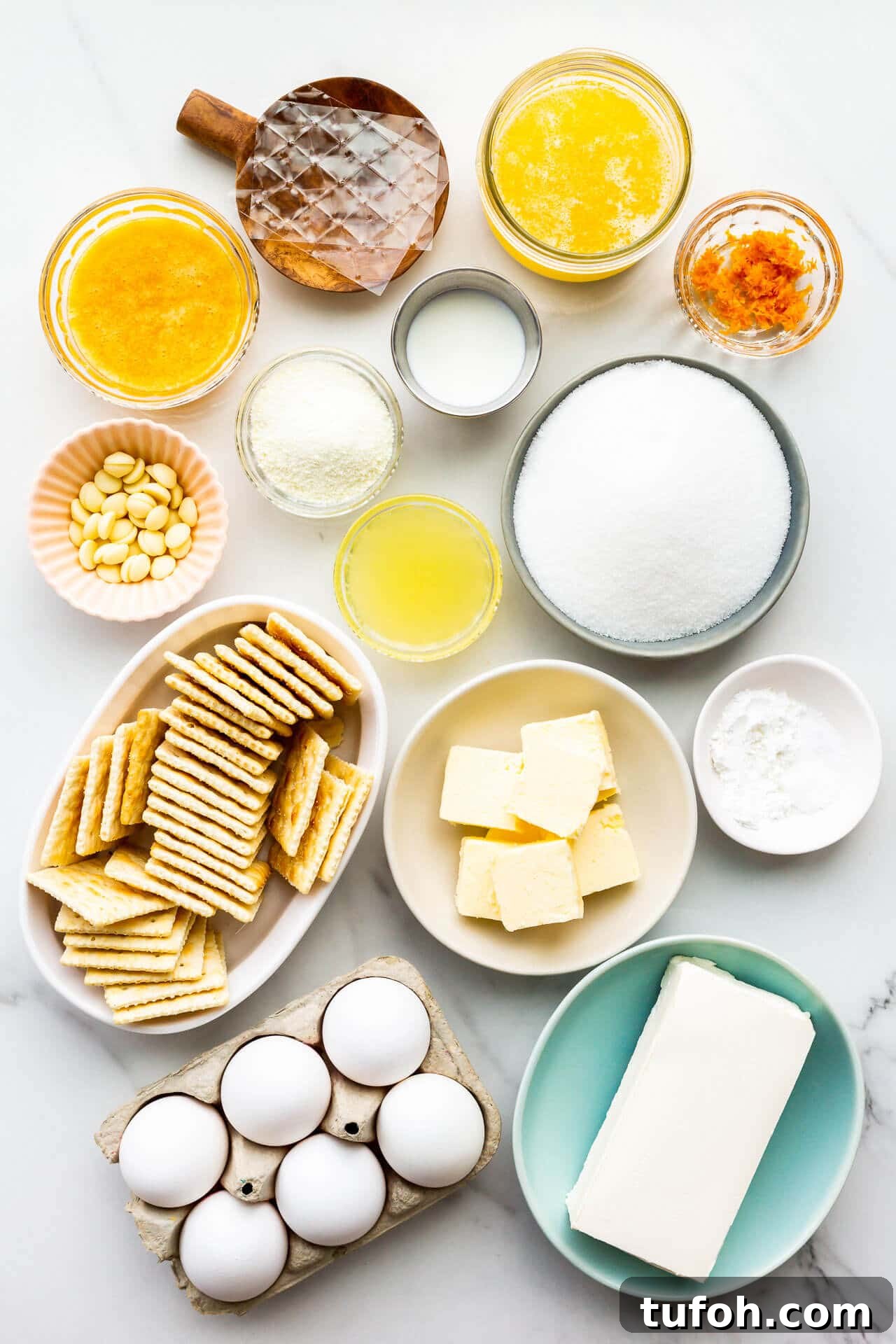
Ingredients
Orange curd
- 1 gelatin sheet
- 100 g granulated sugar
- 85 g frozen orange juice concentrate, defrosted and undiluted
- 45 g fresh lemon juice
- 15 mL orange zest
- 4 large egg yolks
- 1 large egg
- 115 g unsalted butter, cold, cut into cubes
Liquid cheesecake
- 250 g full-fat cream cheese
- 150 g granulated sugar
- 15 mL cornstarch
- 2.5 mL fine kosher salt (adjust if using table salt)
- 30 mL whole milk
- 1 large egg
Saltine crust
- 110 g saltine crackers (about 1 sleeve)
- 100 g granulated sugar
- 20 g nonfat dry milk powder
- 2.5 mL fine kosher salt
- 100 g unsalted butter, melted
- 50 g white chocolate (for brushing / sealing)
Glaze
- 125 mL orange marmalade, room temperature or warmed so it’s spreadable
Instructions
Orange curd
- Soak the gelatin sheet in cold water, fully submerged, for about 5 minutes while you prepare the curd.
- In a medium saucepan, whisk together sugar, defrosted orange concentrate, lemon juice, orange zest and eggs.
- Cook over low heat, whisking constantly, until the mixture thickens and reaches about 80°C (175°F).
- Remove from heat, transfer to a blender, and add the butter.
- Drain and squeeze the gelatin, add it to the blender and blend until smooth and homogeneous. The butter should be fully incorporated.
- Transfer the curd to a container and refrigerate until cool.
Liquid cheesecake
- Preheat oven to 300°F (150°C). Grease a 9 x 5-inch loaf pan.
- Beat cream cheese in a mixer on low until smooth, about 2 minutes. Add sugar and beat until smooth.
- Whisk cornstarch and salt together, add milk in a slow stream, then whisk in the egg.
- With the mixer on low, add the egg mixture to the cream cheese and beat until smooth, 3–4 minutes, scraping the bowl as needed.
- Pour batter into the loaf pan and bake 20 minutes. Gently shake the pan: edges should be firm and center loosely set. If not, bake another 10–15 minutes. Total time is usually about 30–40 minutes in a loaf pan.
- Cool completely, then transfer to a piping bag for easier filling.
Saltine crust
- Crush saltines into coarse crumbs and place in a bowl. Stir in milk powder, sugar and salt.
- Add melted butter and toss to coat, forming small clusters.
- Line a 9-inch pie plate with a parchment round, press the cracker mixture firmly into the bottom and up the sides.
- Bake on a sheet pan at 300°F (150°C) for up to 20 minutes (mine took 18). Cool completely, then brush the interior lightly with melted white chocolate to seal.
Assembly
- With all components cooled, pipe the liquid cheesecake into the crust in an even layer and smooth with an offset spatula.
- Gently whisk the curd to loosen it, dollop it over the cheesecake layer and smooth carefully.
- Dollop orange marmalade over the curd and spread gently with the back of a spoon without disturbing the curd too much.
- Chill the pie in the freezer for a few hours to firm the layers and make unmolding easier.
- To serve, remove from freezer, loosen the crust edges with a knife or spatula, lift the pie from the pan, and slice into 8 pieces. Store in the refrigerator.
Notes
- This recipe uses fine kosher salt (Diamond Crystal). If using table salt, use about half the amount to avoid over-salting.
- If you prefer not to make the cheesecake layer, you can double the orange curd to fill the pie instead.
Nutrition (approx.)
Calories: 593 kcal • Carbohydrates: 78 g • Protein: 8 g • Fat: 29 g • Saturated Fat: 16 g • Sodium: 535 mg • Sugar: 64 g
Nutrition information is an approximation.