Do you know when someone with celiac disease should see a dietitian? It’s an important question that doesn’t always get enough attention. Today’s post explains when and why seeing a dietitian can be helpful after a celiac diagnosis.
This guest post is by Tayler Silfverduk, RDN, known as Celiac Dietitian.
I’m pleased to share this guest post from Tayler Silfverduk, a registered dietitian who specializes in celiac disease. Tayler’s work helps people with celiac get practical, evidence-based guidance after diagnosis.
In this article, Tayler explains when a person with celiac disease should consult a dietitian and why that support can matter. Many of us wish we had this guidance earlier in our journey; it can make adjusting to a gluten-free life much easier.
When a Celiac Should See a Dietitian
- When A Celiac Should See A Dietitian
- Introduction to Dietitians
- What is a Dietitian?
- Celiac Disease & Dietitian Nutritionists
- When & Why You Should Meet with a Celiac Specialized Dietitian
- Work With Tayler
Introduction to Dietitians
People share mixed experiences about seeing a dietitian after a celiac diagnosis. Some found it transformative, others didn’t find it helpful. The right answer depends on what kind of support you need and the qualifications of the professional you see.
Are dietitians helpful for people with celiac disease?
Let’s review when and why consulting a dietitian is a good idea following diagnosis.
What is a Dietitian?
A registered dietitian (RD or RDN) is a nutrition professional who completes specific education and supervised training before qualifying to provide clinical and practical nutrition guidance.
Typical criteria to become a dietitian in the United States include:
- a minimum Bachelor’s degree in an accredited dietetics program (Master’s degree required as of 2024)
- 1200+ hours of supervised practice
- passing the national registration exam
- ongoing continuing education to maintain credentialing
In short, all registered dietitians are nutritionists, but not everyone who calls themselves a nutritionist is a registered dietitian. The RD or RDN credential indicates standardized education and training.
Celiac Disease & Dietitian Nutritionists
Can any nutritionist help with celiac disease?
That depends on their credentials and experience. A nutritionist without dietitian training may not be prepared to manage medical or nutritional complications of celiac disease. Likewise, a dietitian who lacks celiac-specific experience might miss important nuances.
For long-term management and complex issues, it’s best to work with a registered dietitian who specializes in celiac disease and gluten-free care.
When & Why You Should Meet with a Celiac-Specialized Dietitian
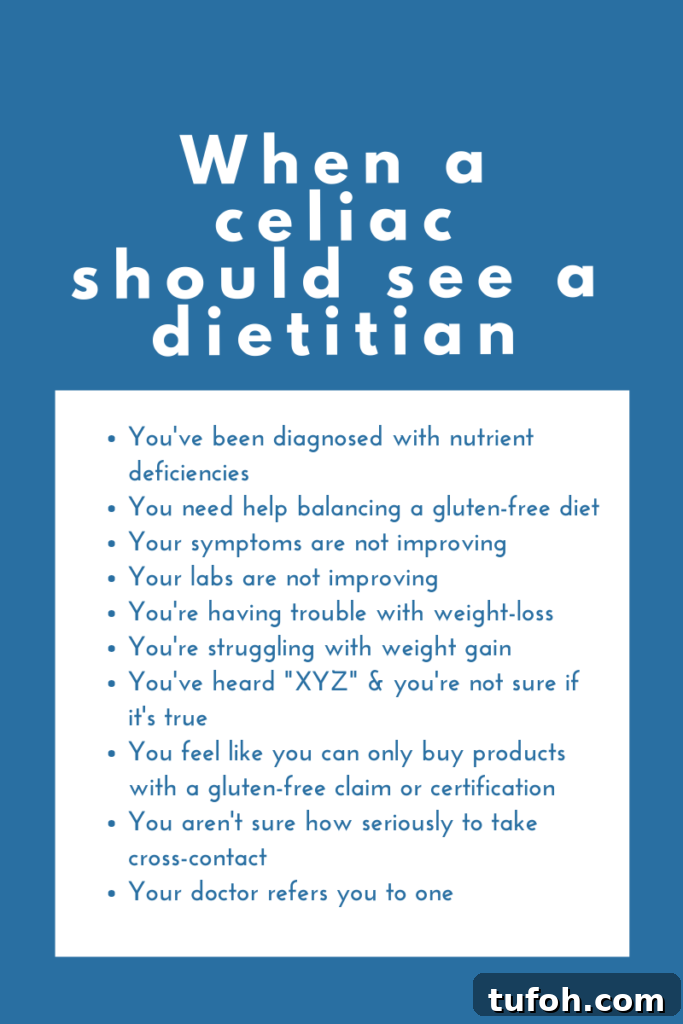
Here are common situations where a celiac-specialized registered dietitian can be particularly helpful:
- You’ve been diagnosed with nutrient deficiencies.
Celiac disease and changes to a gluten-free diet can lead to deficiencies in iron, calcium, vitamin D, B vitamins, magnesium, and fiber. A dietitian assesses deficits and creates a practical plan to restore nutritional balance. - You need guidance on a balanced gluten-free diet.
Switching to gluten-free eating can unintentionally reduce intake of key nutrients. A dietitian helps you build varied meals that meet your nutritional needs while staying safe from gluten. - Your symptoms or lab results aren’t improving despite a gluten-free diet.
Persistent symptoms may stem from inadvertent gluten exposure, additional food sensitivities, or other causes. A celiac-focused dietitian can evaluate likely sources and recommend targeted steps to address ongoing issues. - You’re struggling with unintended weight gain or loss after diagnosis.
Weight changes are common. A registered dietitian can identify causes and support you with a tailored nutrition plan to reach a healthy weight. - You’re unsure which advice to trust.
There’s a lot of conflicting information about celiac and gluten-free living. A qualified dietitian can dispel myths, explain evidence-based practices, and help you advocate for your health. - You feel overly reliant on products labeled “gluten-free” or are unnecessarily restricting foods.
If fear or confusion is limiting your food choices or social activities, a dietitian can help restore confidence and a healthier relationship with food. - You’re uncertain about cross-contact and safe practices.
Cross-contact guidance is not one-size-fits-all. A celiac-specialized dietitian can assess your environment and lifestyle to recommend practical, individualized precautions.
These examples illustrate how specialized dietitian support can fill gaps in care after a celiac diagnosis. Many people don’t receive adequate follow-up, and consulting a knowledgeable RD/RDN can provide both practical tools and reassurance.
Work With Tayler
Thank you to Tayler Silfverduk for sharing clear, experience-based guidance on celiac disease management. Her expertise helps people navigate the practical and nutritional challenges of going gluten-free.
If you’re newly diagnosed and want structured, practical strategies for staying safe and well on a gluten-free diet, consider seeking support from a qualified celiac dietitian or exploring educational resources tailored to celiac care.