Blogging has changed a lot since I started back in 2008, hunched over in the dim corner of a corporate cubicle.
I launched my first site on a whim. It began as a small chronicle of hosting friends in a tiny New York City kitchen — people squeezed around a coffee table in a fourth-floor walk-up. I wasn’t just experimenting with flavor combinations; I was trying to figure out how to cook great food with no budget for high-end cuts, no time for multi-course dinners, and no counter space for bulky appliances. I didn’t even own a ladle.
At the time, I couldn’t find anyone in the food world whose voice felt like mine. So I used the modest branding knowledge I’d picked up during that year in the corporate cubicle and decided to occupy that overlooked corner of the food space myself.
Now the internet feels saturated. Scrolling through the food scene can be overwhelming — like returning to a friend’s holiday party year after year and discovering you no longer recognize anyone. The conversation is familiar but faster; the charm that once felt right now looks a little out of step. Standing in a crowded room fighting to be heard can be exhausting, and trying to buy the right outfit just to blend in doesn’t feel good either. When that happens in real life, social anxiety can make me want to hide under the covers.
When I taught my food blogging course earlier this fall, I could sense that many people share that fear: the worry of showing up alone and shouting over the crowd. As I reflected on my work from the past year and planned for the next, that comparison anxiety surfaced again. With so much happening in the world, I asked myself: does the internet really need another gluten-free chocolate chip cookie recipe?
The answer is yes.
Here are two reminders I keep returning to — reasons to keep creating, even when the room feels crowded. I hope you’ll remember them too when you doubt what you’re sharing with the world.
1. Food is more than fuel — it’s ritual, culture, and comfort. Cooking a meal and serving it with intention creates ripples. Teaching children to gather around a table, offering nourishment to someone you love, or simply taking time to make something with care warms the world in small but meaningful ways. And yes, a batch of gluten-free chocolate chip cookies helps.
2. Not every voice resonates with every person. How a message lands depends as much on who delivers it as on the message itself. Everyone has a role in shaping change — around the boardroom table, on a stage, or in the kitchen. Even in a crowded room, someone will listen. When in doubt, hand them a cookie.
So what’s changing for me in the New Year? More recipes and conversation, but with a clearer focus on impact. First, I’ll be sharing more plant-based recipes. I don’t believe in strict omissions, but I do think our bodies and the planet would benefit from less red meat. Second, I plan to have more honest wellness conversations, particularly about women’s health. The “moon sister” month of The Wellness Project was eye-opening, and with ongoing uncertainty around healthcare, improving body literacy matters more than ever.
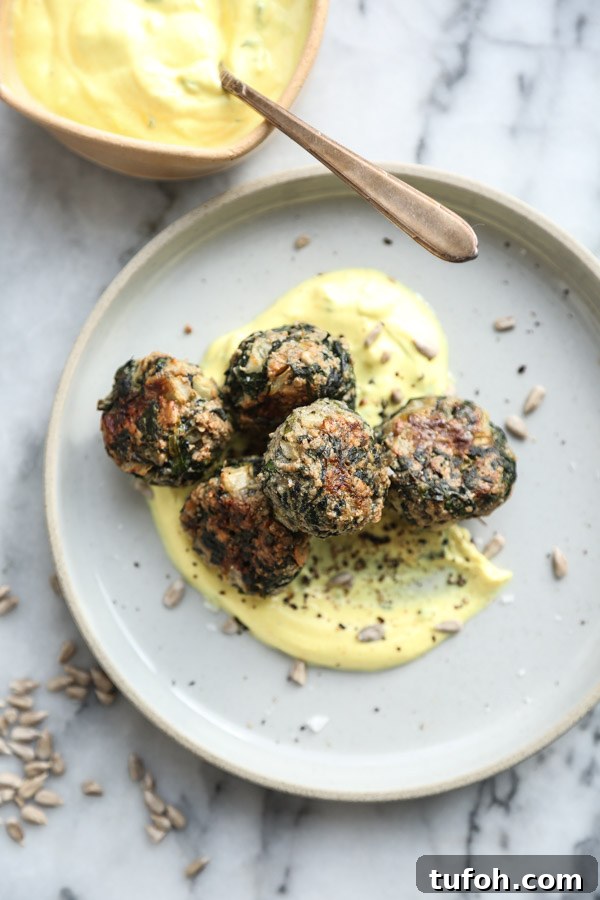
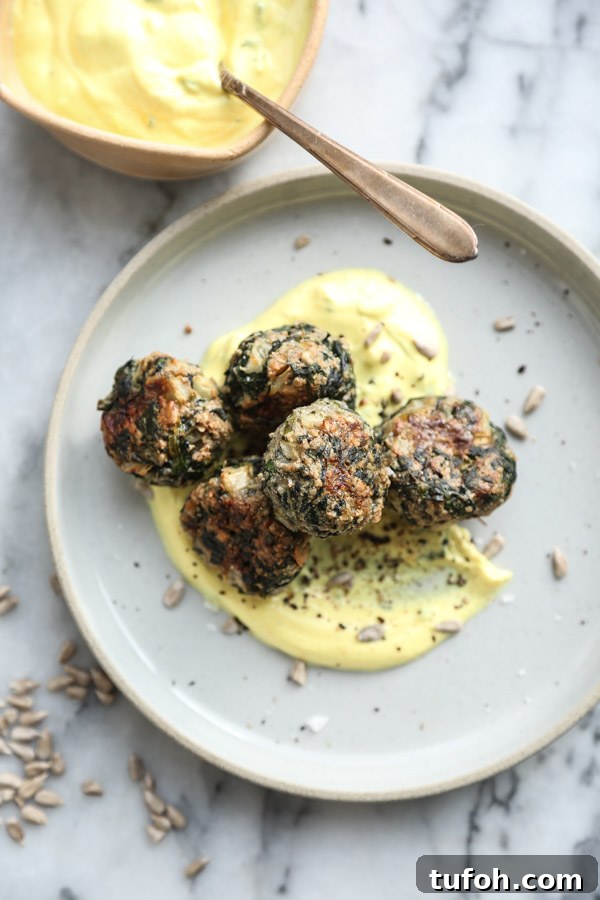
Until then, I’m passing on a plant-forward, gluten-free recipe from a former cubicle neighbor. Molly brought these spinach bites to a baby shower years ago, and their crispy, savory texture stuck with me. I had to share them with you.
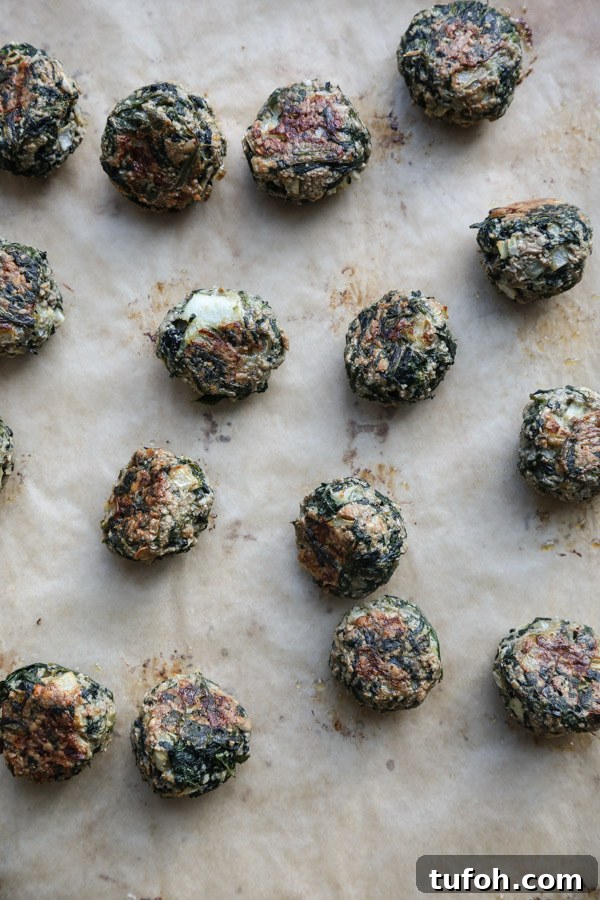
These spinach balls are a healthy, gluten-free twist on spanakopita filling. I used manchego instead of feta, but any cheese works or you can leave it out. Instead of breadcrumbs, Molly turned raw sunflower seeds into a fine flour — though almond flour, hemp seeds, or other nuts would work well too. I loved the subtle, nutty note the sunflower seeds add.
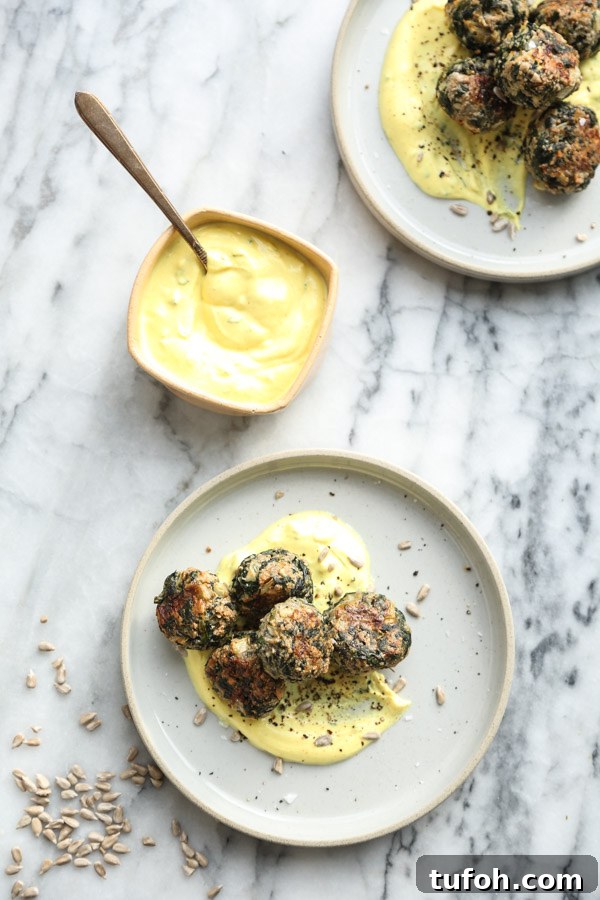
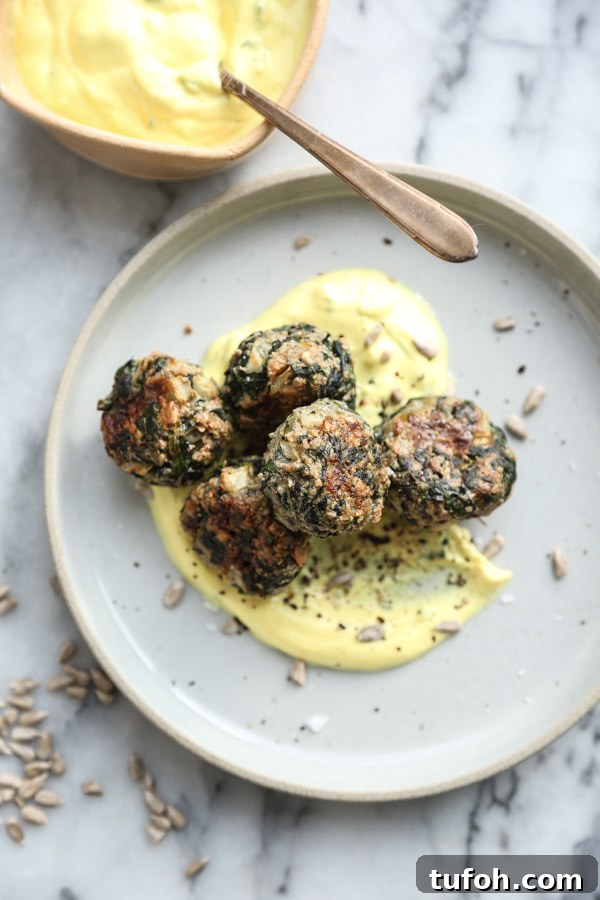
Serve them as a meatless appetizer at holiday gatherings or as a quick weeknight vegetarian main in place of falafel. They’d also make a lovely topping for a grain bowl, especially with the turmeric-yogurt drizzle.
Wishing you a calm and delicious holiday season. Remember: no matter how crowded the room, there’s always space for more gluten-free cookies, healthy spinach balls, or whatever you decide to bring to the table.
From one healthy holiday hedonist to another,
Xoxo
Phoebe
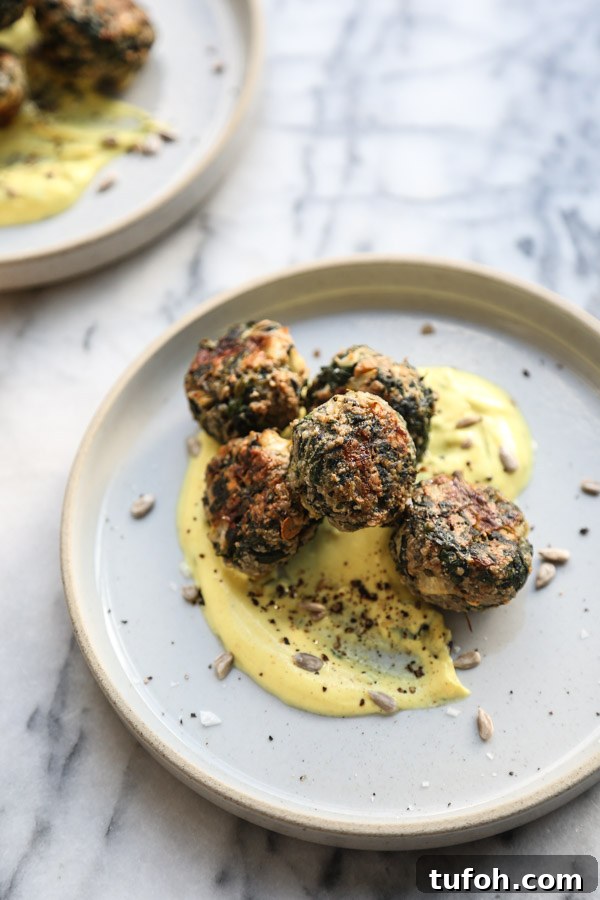
Healthy Spinach Balls with Sunflower Seeds and Manchego Cheese
print recipe
Ingredients
- 1 cup raw unsalted sunflower seeds
- One 10oz package of frozen chopped spinach, thawed
- 1 small onion (about 1 cup), finely diced
- 2 tablespoons finely chopped fresh basil
- 2 garlic cloves, minced
- 1/4 cup finely grated Parmesan or aged Manchego cheese
- 2 large eggs
- 2 tablespoons softened unsalted butter or ghee
- 1/2 teaspoon dried oregano
- 3/4 teaspoon fine sea salt
- 1/4 teaspoon freshly ground black pepper
for the sauce:
- 4 ounces plain full fat Greek yogurt
- 1/4 teaspoon turmeric
- 1 teaspoon raw honey
- 1 tablespoon lemon juice
- 1/2 teaspoon sea salt
Instructions
-
Preheat the oven to 375°F. Position a rack in the center and line a baking sheet with parchment paper.
-
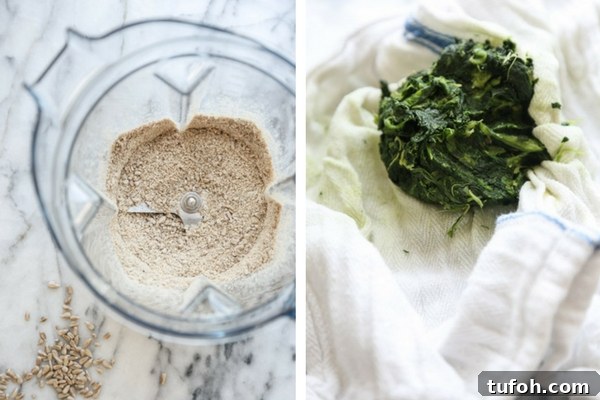
Pulse the sunflower seeds in a food processor or blender until they form a fine flour. Transfer to a large bowl and set aside.
-
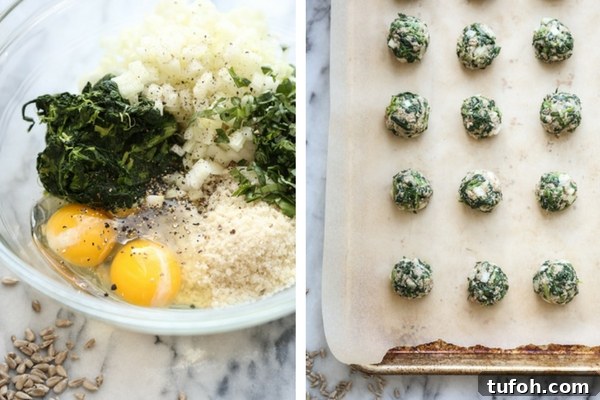
Squeeze excess water from the thawed spinach using a clean dish towel—the result should be about the size of a baseball. Add the spinach to the bowl with the sunflower flour, then add onion, basil, garlic, cheese, eggs, butter or ghee, oregano, salt, and pepper. Mix until combined.
-
Use a melon baller or tablespoon to form 1½-inch balls and arrange them on the prepared baking sheet (about 20–24 balls). Chill uncovered in the refrigerator for at least 30 minutes, up to 4 hours.
-
Whisk together yogurt, turmeric, honey, lemon juice, and salt for the sauce. Taste and adjust seasoning, then set aside.
-
Bake the spinach balls 15 minutes, until a light brown crust forms on the bottom. Turn each ball and bake another 15 minutes, until crispy and browned all around.
-
Serve warm or at room temperature with the turmeric yogurt for dipping.
Notes
 If you make this, tag @phoebelapine and #feedmephoebe – I’d love to see it!