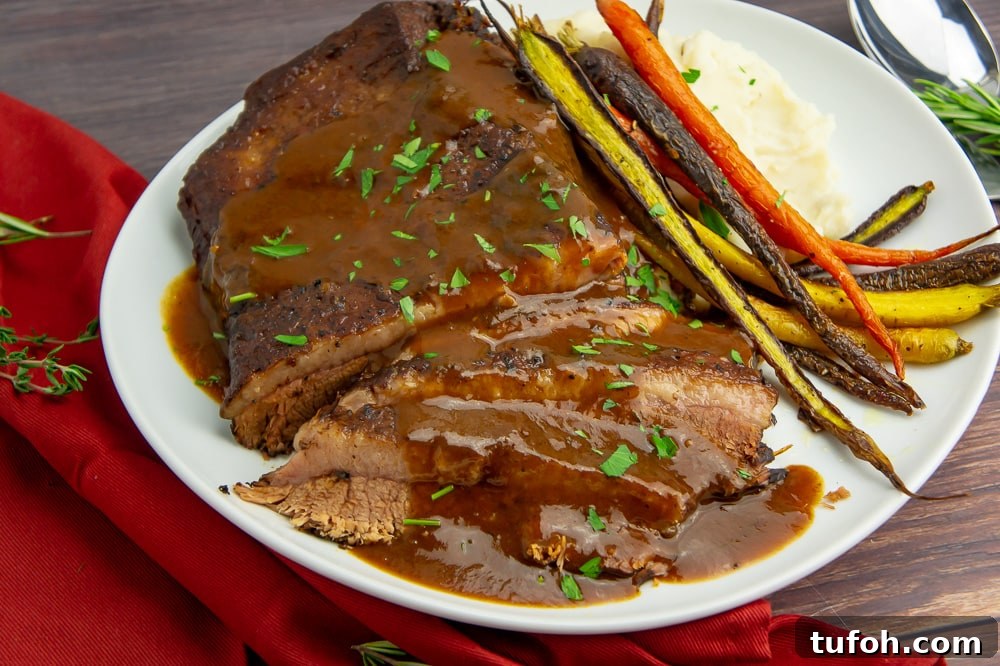
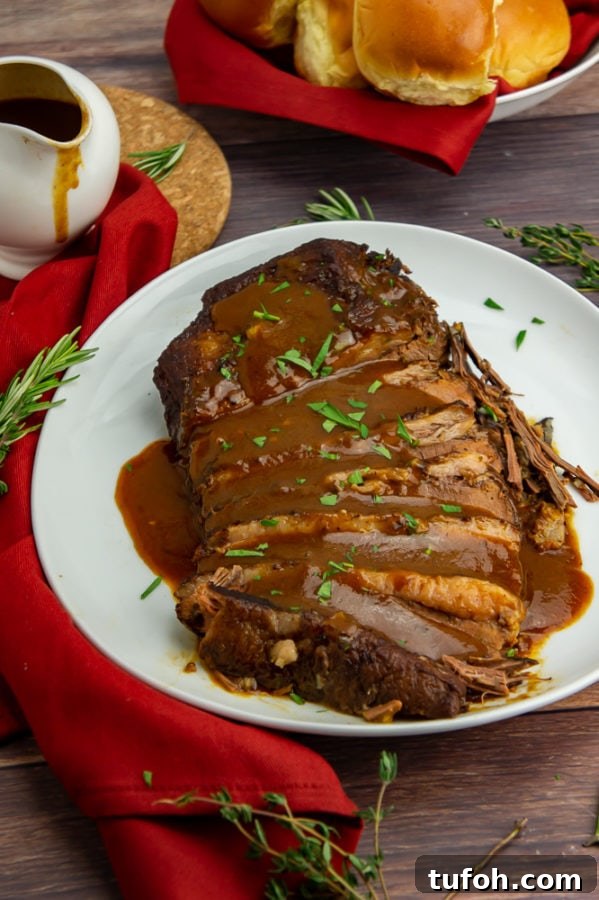
A slow, red wine braised brisket makes an indulgent, low-effort dinner. A prime cut of beef is slowly roasted in a fragrant braising liquid until it falls apart, then served with a silky sauce made from the same pot.
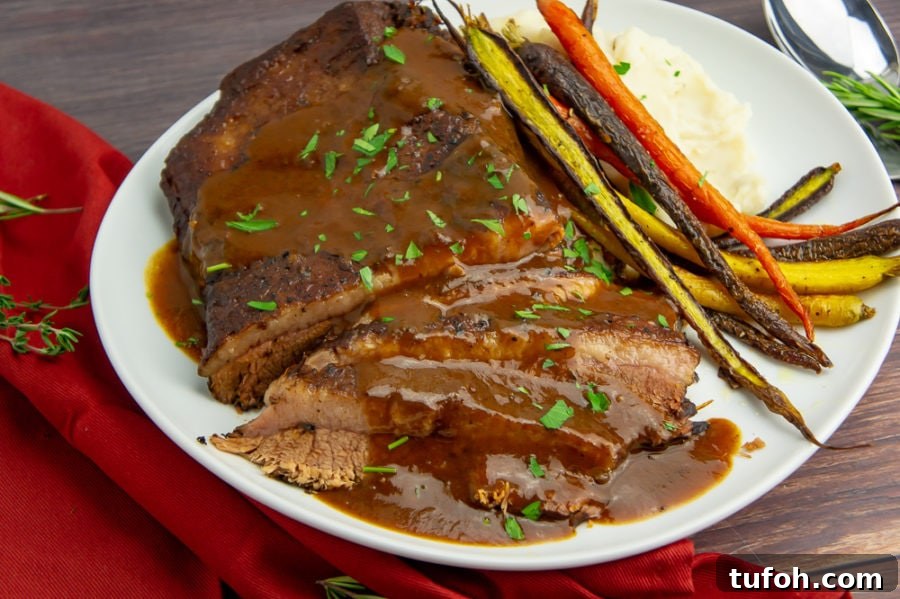
If I had to pick one method for cooking forever, it would be the slow braise in a dutch oven. There is something deeply satisfying about building a rich braising liquid, nestling in a tough cut of meat, and pulling out fork-tender brisket hours later. The hands-on time is minimal; most of the work is patience and gentle heat. With a little prep at the start and a short finishing step at the end, a inexpensive cut becomes a luxurious centerpiece with its own sauce.
What the Heck Is Brisket?
A slow braise works best for cuts that are tough when cooked quickly but transform beautifully with low, steady heat. Brisket comes from the cow’s chest and contains a lot of connective tissue and often a fat cap. Those qualities make it ideal for braising because the collagen breaks down and the fat renders, resulting in moist, flavorful meat.
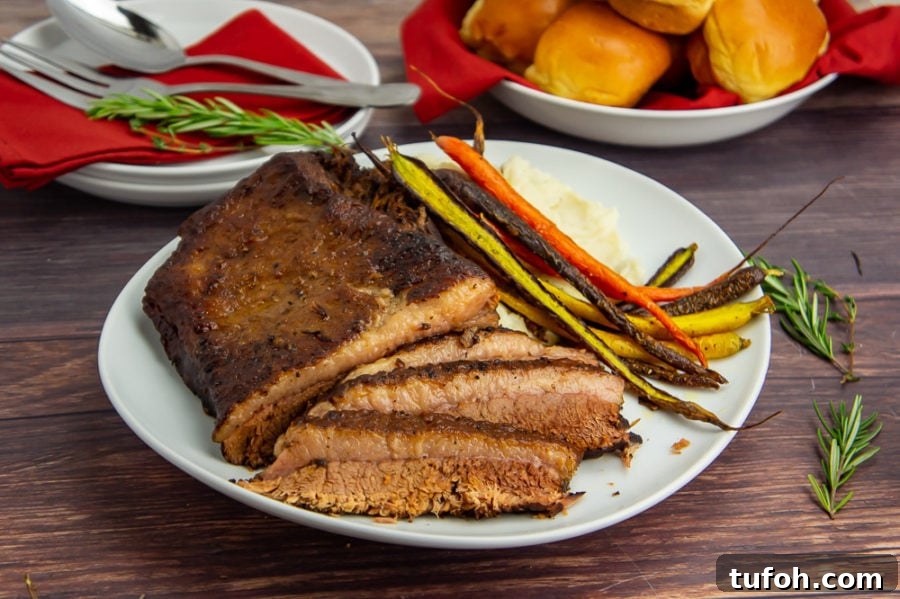
- There are two common sections: the flat (first cut) and the point (second cut). The flat slices neatly and has good marbling; the point is fattier and excels in long braises. Either will work in this recipe.
- Briskets are often sold in 3–5 lb pieces at grocery stores. You can also ask a butcher for a whole brisket and specify how you want it trimmed.
- Brisket shrinks during cooking. Plan roughly half a pound per person, or more if you want leftovers.
Fun fact: The same cut is used for corned beef after it’s cured.
How to Make Red Wine Brisket
Once you have the brisket, braising is straight forward but there are a few key tips that make the result consistently excellent.
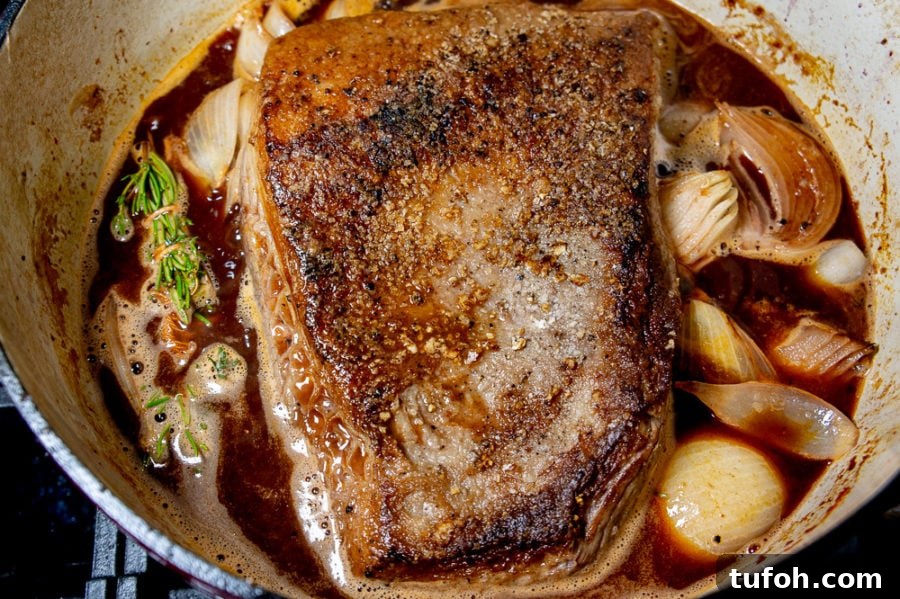
- Bring the meat to room temperature for about 20 minutes before searing so it browns evenly.
- Take time to sear—a 6–7 minute sear in a hot dutch oven builds flavor and creates a crust that stands up to slow cooking.
- Build flavor in layers by caramelizing onions and cooking tomato paste briefly; these small steps deepen the final sauce.
- Do not fully submerge the brisket. For a proper braise, keep the top half of the meat above the liquid so rendered fat can baste the surface; this helps keep the meat moist and prevents the fat cap from being stripped away.
- Save the cooking liquid and thicken it into a sauce with a roux or a cornstarch slurry so nothing goes to waste.
- Bundle herbs with kitchen twine or cheesecloth and keep onions in quarters so they’re easy to remove before finishing the sauce.
- Keep the pot covered with a tight lid; trapped steam is an essential element of a successful braise.
- Use a heavy, oven-safe pot such as enameled cast iron for even heat and reliable long cooks.
Pro tip: A brisket braise takes time—allow about 3 to 4 hours in the oven plus prep and a short finish for the sauce. Patience yields tender results.
When you lift the lid, you’ll be greeted by the aroma of herbs, caramelized onions, and red wine—an inviting scent that builds anticipation for the meal.
Tips & Variations
Choose a red wine you enjoy drinking—this guarantees you’ll like the braising liquid. If you prefer milder options, try Barbera, Merlot, Sangiovese, or Grenache. Each brings fruit and acidity without overwhelming the beef. If you don’t want to use wine, a brown ale or a good beef stock will also make a rich braise. The method is flexible; swap liquids and seasonings to suit your preferences.
Start the brisket early in the day and let it braise while you go about your routine. When dinner arrives you’ll have a dish that feels special without a lot of fuss.
Questions about making wine-braised brisket
Can I cook it faster at a higher temperature for the same results?
There is limited flexibility—about 25°F either way. The recommended oven is 300°F for 3½ hours. If you are pressed for time, 325°F for about 3 hours can work, but higher temperatures risk drying the meat and losing tenderness. Lower and slower is generally better for the most succulent results.
Can I use a different cut?
Yes. Any tough cut with good fat or marbling will braise well. Chuck roast or short ribs are excellent alternatives that respond similarly to long, moist cooking.
Can this be made ahead?
Absolutely. Braises often taste better the next day after flavors have melded. Cool the pot and store in the fridge, or remove the brisket and keep it submerged in a few inches of braising liquid. Reheat gently in the oven or on the stove and reheat the sauce separately before serving.
How long does it keep?
Store cooked brisket in the refrigerator and consume within four days. You can also freeze brisket and sauce for longer storage—freeze in airtight containers for an easy future meal.
How do I adapt this for a slow cooker?
Sear the brisket and caramelize the onions on the stovetop first, then combine the seared meat, onions, herbs, wine, and stock in the slow cooker. Cook covered on low for 7–8 hours. For thickening, a cornstarch slurry is the easiest finish in a slow cooker.
How do I thicken with cornstarch instead of a roux?
If you prefer cornstarch, reserve only 1 tablespoon of butter for the onions and skip the flour. Make a slurry with 1 tablespoon cornstarch and 1 tablespoon cool water, then stir it into the simmering braising liquid after removing the brisket and aromatics. Bring to a boil and the sauce will thicken quickly.
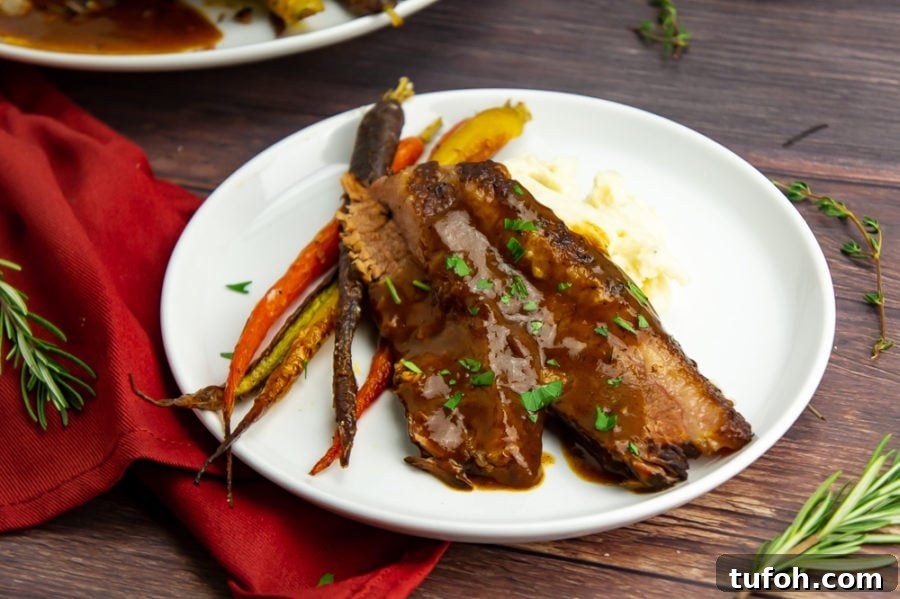
Sitting down to braised brisket is always a treat. Serve it with simple roasted potatoes, a gratin, or biscuits for a memorable family meal. Enjoy the leftovers—braised brisket improves with time and reheating.
Red Wine Braised Beef
Ingredients
- 4 lb beef brisket
- 2 cups red wine
- 2 cups beef stock
- 2 teaspoons kosher salt
- 1/2 teaspoon black pepper
- 2 medium yellow onions, quartered
- 3 cloves garlic, thinly sliced
- 2 tablespoons tomato paste
- 3 sprigs fresh thyme
- 2 sprigs fresh rosemary
- 2 tablespoons flour
- 3 tablespoons butter, divided
Instructions
- Preheat the oven to 300°F and set a dutch oven over medium heat on the stove.
- Season the brisket generously with salt and pepper. Place fat side down in the hot pot and sear until deeply golden, about 6–7 minutes. Remove the brisket and turn off the heat.
- Quarter the onions, thinly slice the garlic, and tie the thyme and rosemary into a bundle with twine or cheesecloth so it’s easy to remove later.
- When the pan cools slightly, add 1 tablespoon butter and let it melt. Stir in the 2 tablespoons of flour to form a paste and cook gently until golden brown; use low heat if needed. Remove the roux to a small bowl to cool.
- Wipe the pan clean, return to medium heat, and add the remaining 2 tablespoons of butter. When melted, add the quartered onions and caramelize for about 5 minutes.
- Stir in the tomato paste and garlic and cook until fragrant, about 1 minute.
- Pour in the red wine and beef stock and bring to a boil. Nestle the brisket into the liquid with the fat side up, keeping the top half of the meat above the liquid level; use onions to prop it up if needed. Add the herb bundle.
- Cover and transfer to the oven. Braise for 3½ hours, or until the brisket is fork-tender.
- Carefully lift the brisket, onion quarters, and herb bundle from the pot and discard the onions and herbs. Place the braising liquid over medium heat on the stove.
- Stir in the chilled roux a little at a time, stirring constantly until fully dissolved. Bring the sauce to a boil and cook until it thickens, about 1–2 minutes.
- Slice the brisket against the grain and serve with a generous pour of the red wine sauce.
Nutrition (per serving)
Calories: 471 kcal · Protein: 49 g · Fat: 21 g · Carbohydrates: 8 g · Sodium: 952 mg
I’d love to see how yours turns out—tag me on Instagram @theflourhandprint if you post a photo. Until next time, happy eating!