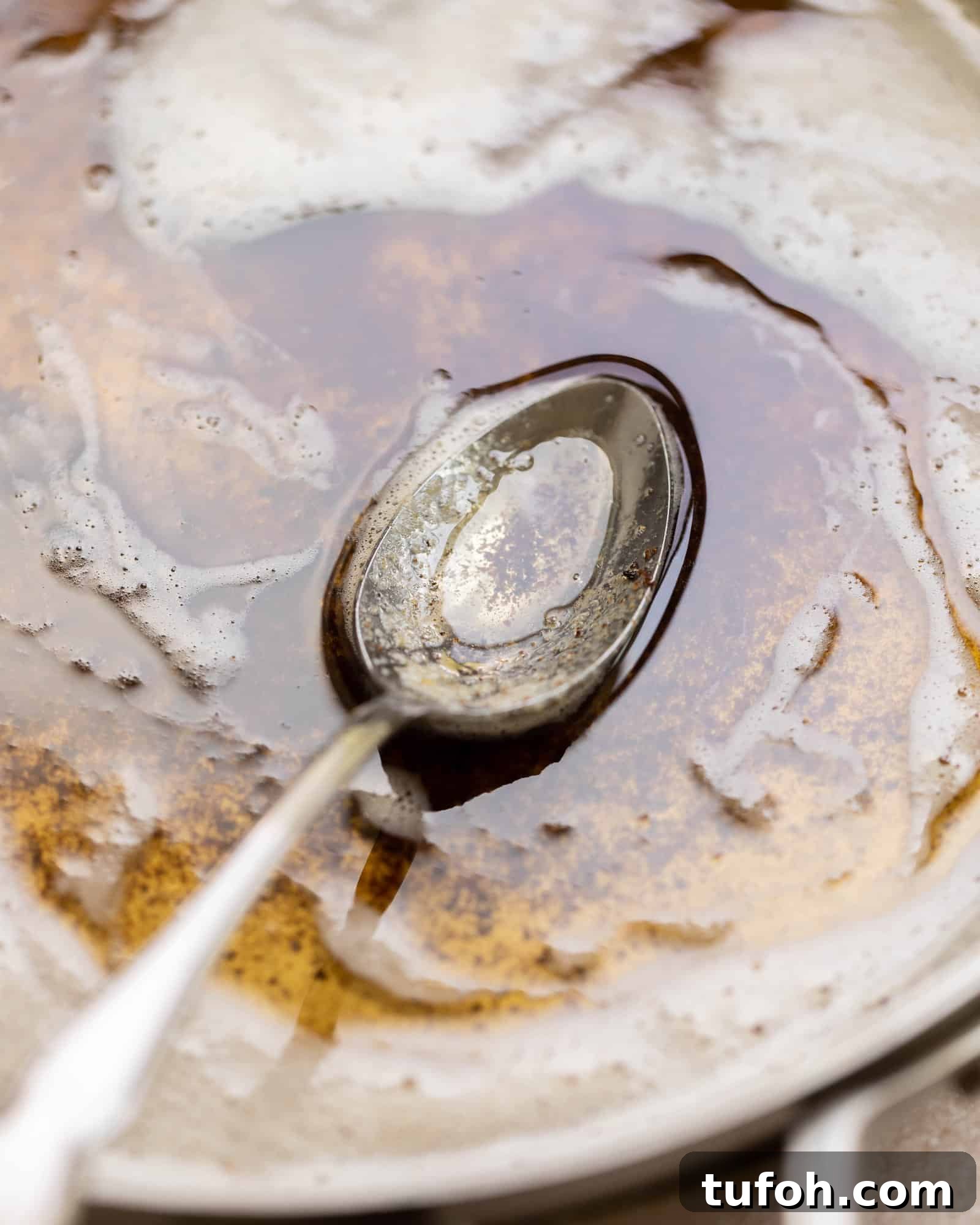
Learn how to make brown butter to lift everything from savory sauces to sweet desserts with a deep, toasted butter flavor. Once you master this quick technique, you’ll reach for it in cookies, cakes, frostings, sauces, and savory dishes.
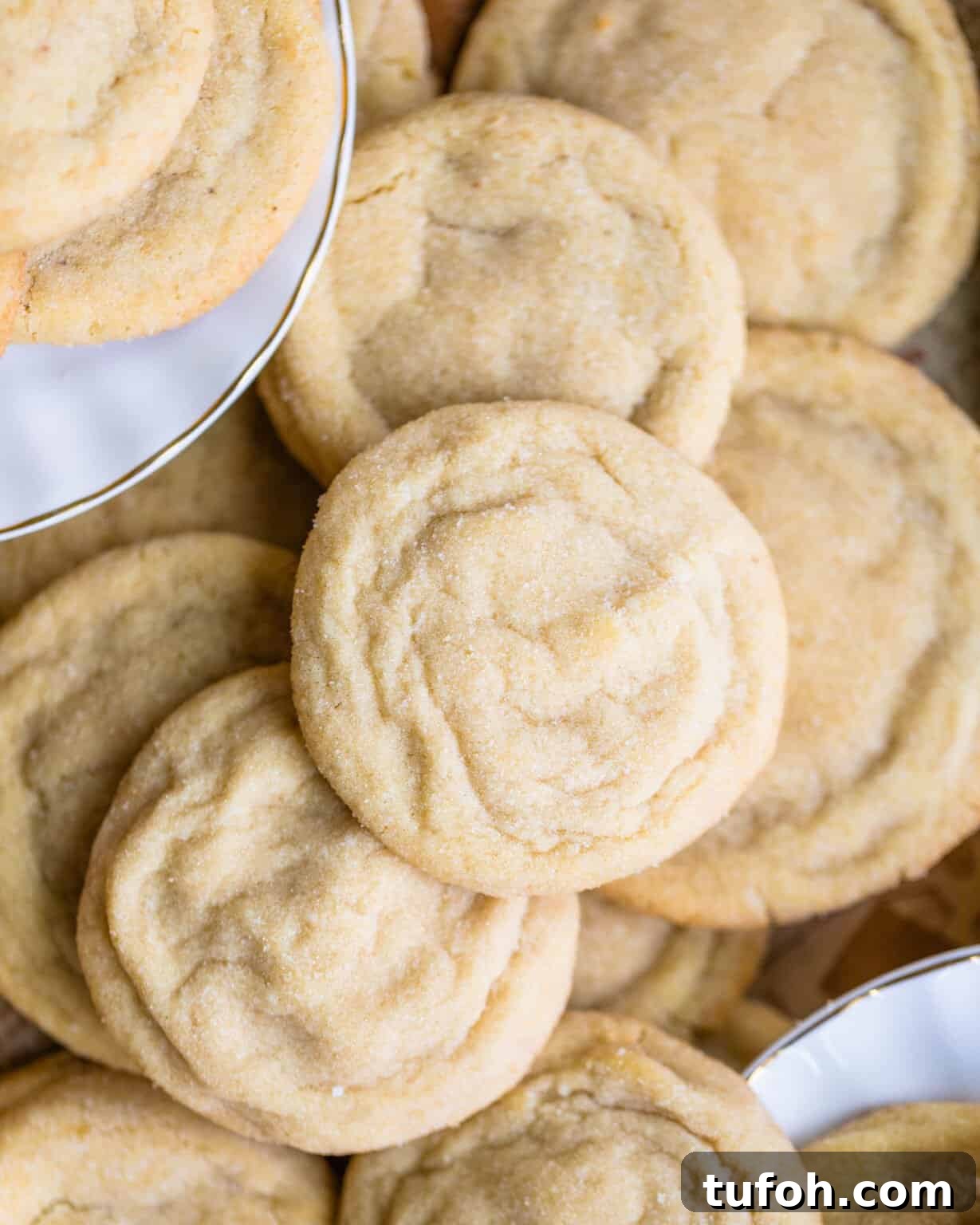
Brown butter is one of those simple cooking tricks that transforms ordinary recipes into something special. It pairs beautifully with both sweet and savory preparations, adding a nutty, caramel note that enhances pastries, sauces, pastas, and more.
Use brown butter to enrich frostings, finish roasted vegetables, flavor mashed potatoes, or swap it in for regular butter in baking for a deeper, more complex taste.
What is brown butter?
Brown butter, or beurre noisette in French (literally “hazelnut butter”), is made by gently heating butter until the milk solids brown and develop nutty, caramelized flavors. The process concentrates the butter’s flavor and adds a toasty aroma and taste.
What is the difference between this and regular butter?
Before cooking, brown butter starts as regular butter. As it cooks, some water evaporates and the milk solids caramelize, so the final product has less water and a more concentrated flavor. If replacing regular butter with brown butter in a recipe, account for the reduced water content—sometimes a tablespoon of water is added back when using it for baking.
What kind of butter should I use?
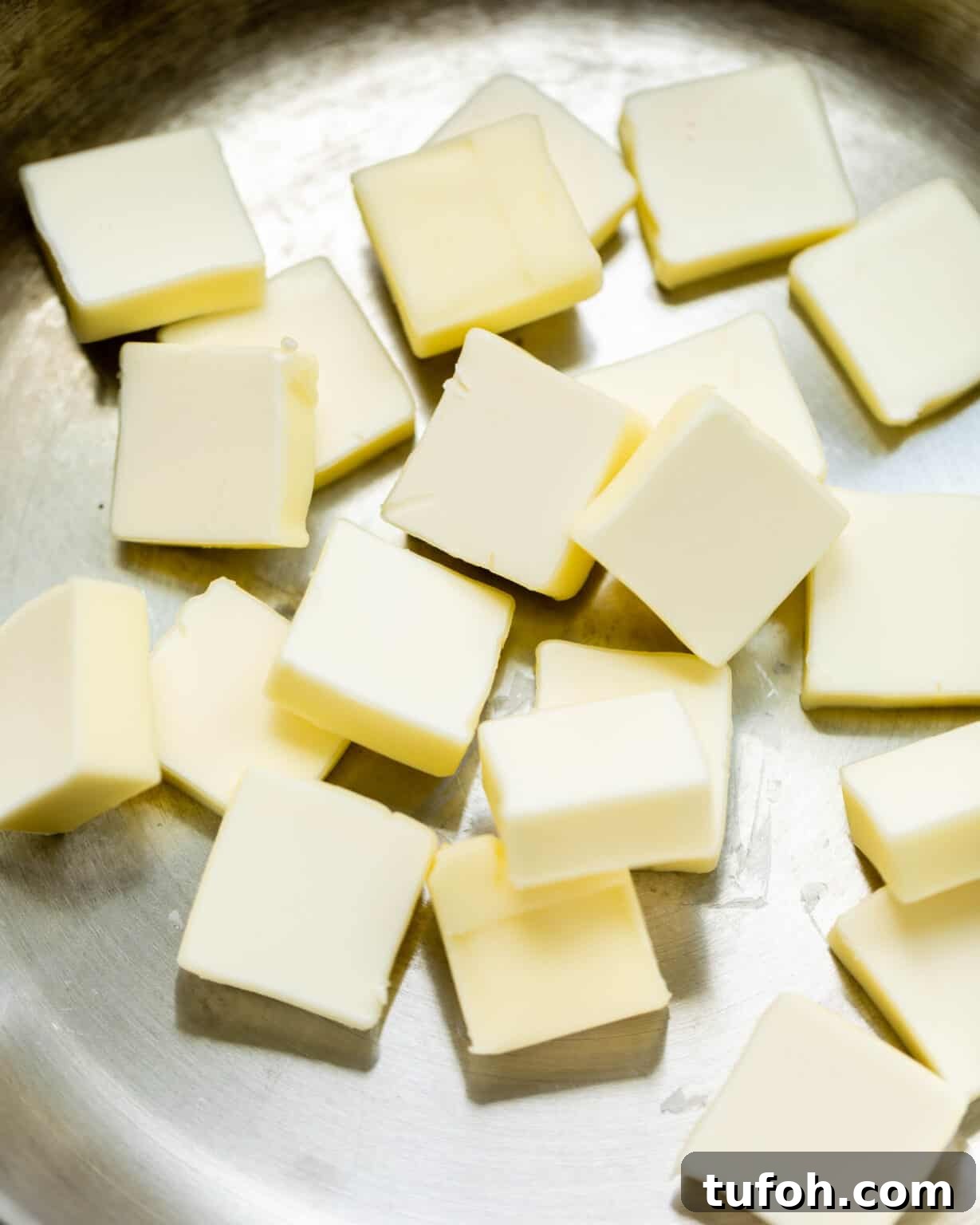
Since the result depends entirely on the butter, opt for a high-quality unsalted butter so you can control the salt level in your recipes. European-style butters with higher fat content work especially well for a rich finish.
How to Make Brown Butter
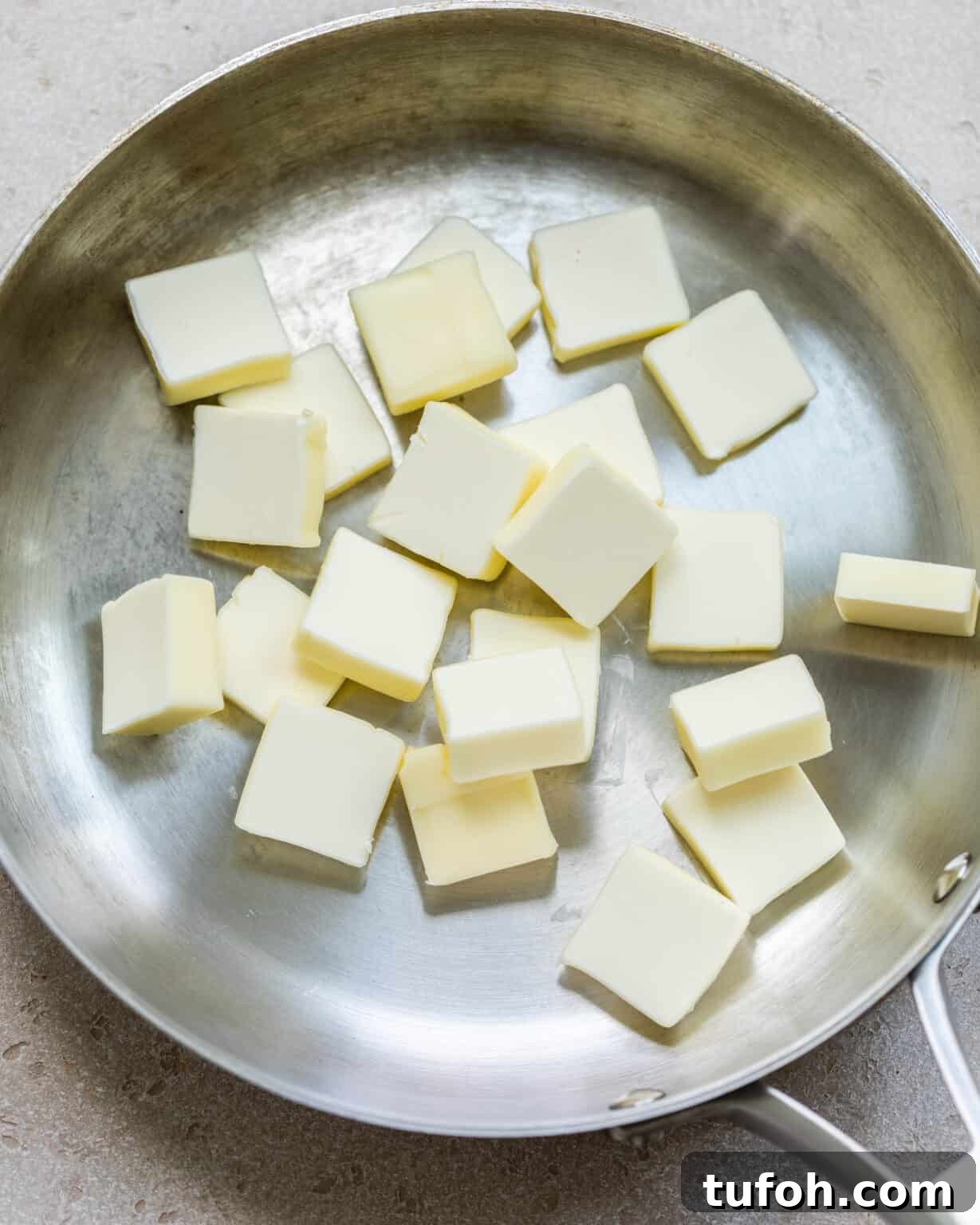
Place a stick of butter in a pan set over medium-low heat. Slicing the butter into chunks helps it melt more evenly and quickly. As it melts, it will bubble as water evaporates.
Continue to cook, stirring or whisking frequently. The butter will become foamy and then small brown specks—the toasted milk solids—will form on the bottom of the pan. Use a light-colored, heavy-bottomed pan so you can clearly see the color change.
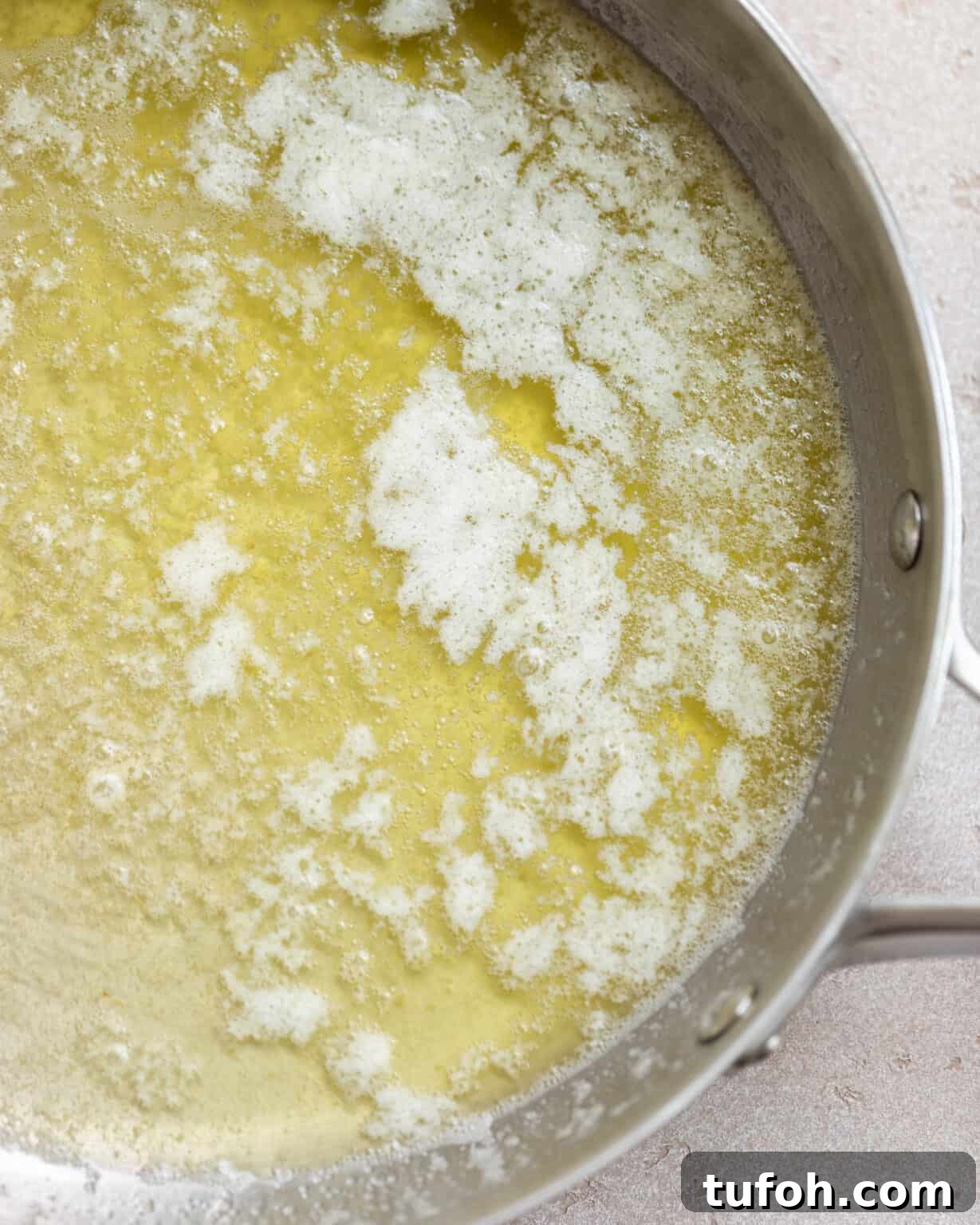
Remove the butter from the heat when it reaches a deep brown (not black) and gives off a warm, nutty aroma. The brown bits are full of flavor—do not discard them. If you prefer a smooth liquid, you can strain the butter, but leaving the bits in adds texture and flavor in many recipes.
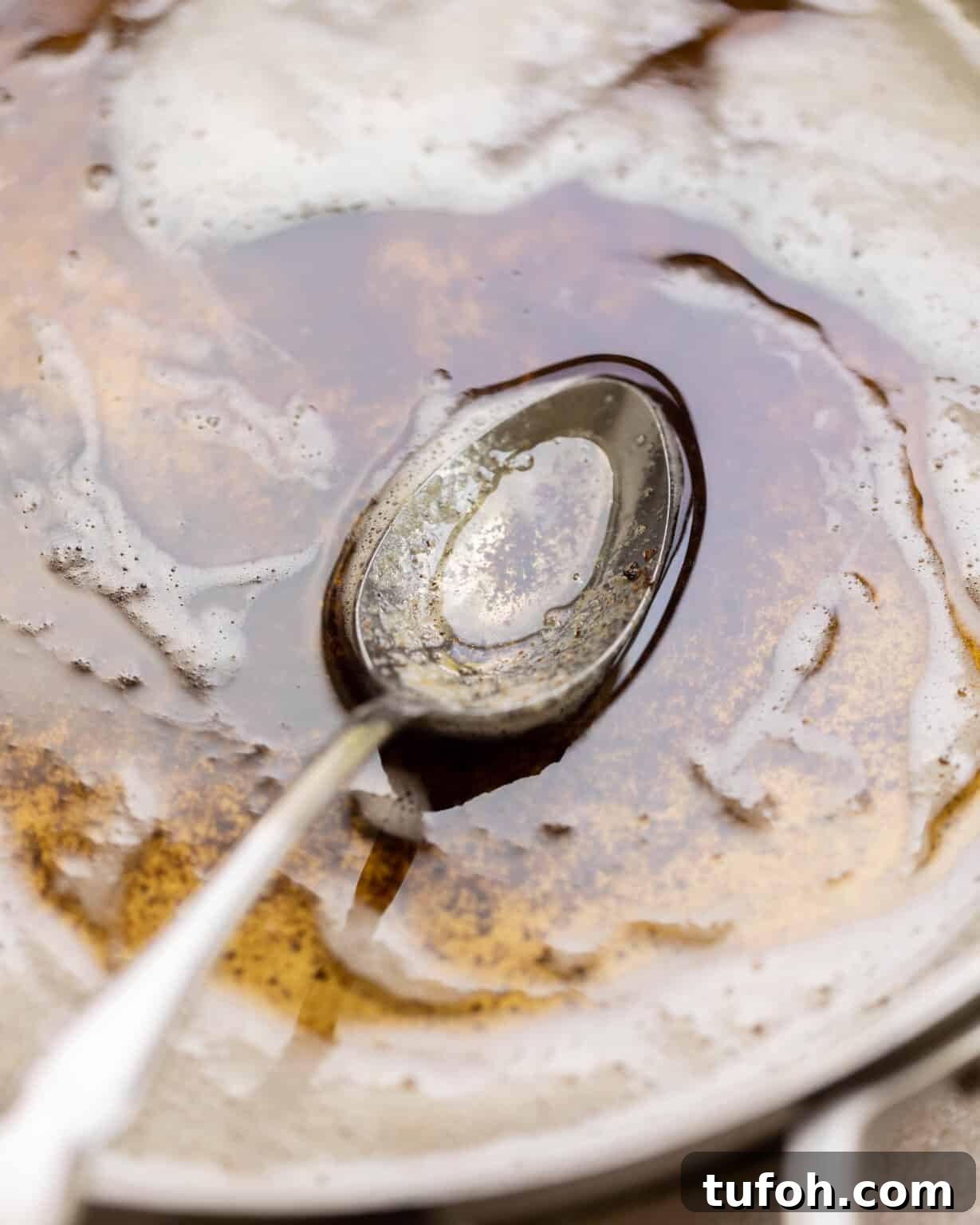
How long does it take?
Expect about 5–10 minutes depending on heat level, pan type, and amount of butter. Stay attentive—browning happens quickly once the milk solids begin to toast.
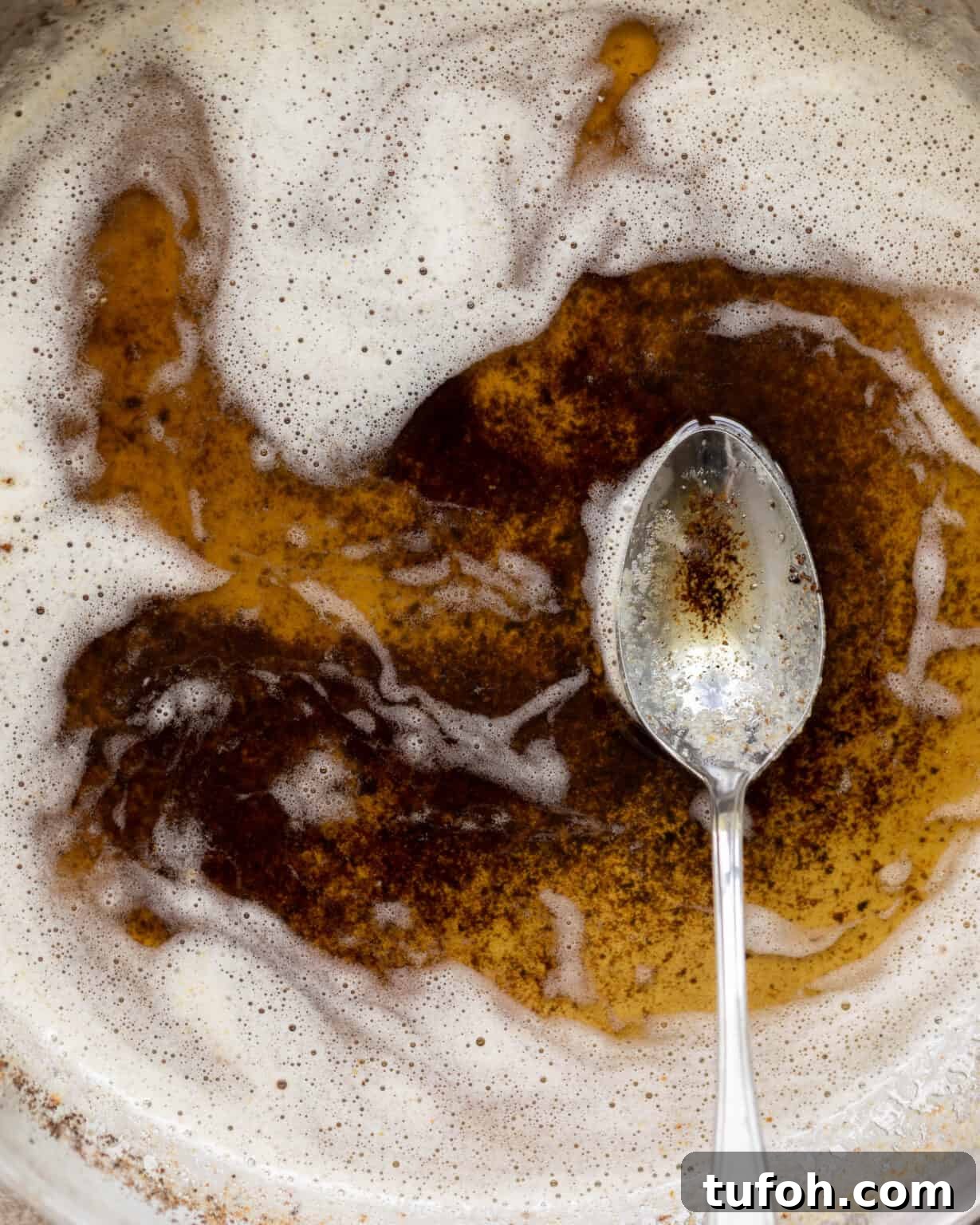
What are those brown specks in the butter?
The brown specks are toasted milk solids—packed with flavor. Save and use them; they’re the best part of brown butter. Stir them into batters, sauces, or spoon them over roasted vegetables.
Brown Butter vs Burnt Butter
Because the browning stage happens quickly, keep stirring and scraping the pan to prevent the solids from burning. If the butter turns black, it’s burnt and tastes bitter—discard and start over.
Is brown butter just ghee?
They are related but different. Ghee is clarified butter made by cooking out the water and then straining away the milk solids, resulting in a clear, golden fat with a higher smoke point and no lactose. Brown butter keeps the toasted milk solids, which provide the characteristic nutty flavor.
Tips
- Use a wide, heavy-bottomed, light-colored pan for even heating and to see the color change.
- Slice the butter into pieces so it melts faster and more evenly.
- Stir continuously as it foams to keep the milk solids from sticking and burning.
- Remove from heat when the butter is a deep brown and fragrant—not black.
- Keep the toasted solids; they add intense flavor to many dishes.
What is brown butter good for?
Brown butter can replace regular butter in most recipes, adding a richer, nuttier profile. Use it:
- In baked goods like cookies, cakes, and blondies
- To finish pastas, vegetables, or roasted meats
- In sauces, dressings, and compound butters
- On pancakes, waffles, or toasted bread
Storing Leftovers
Store brown butter in an airtight container in the refrigerator for several weeks or freeze it for longer storage. Reheat gently or microwave briefly to return it to liquid for recipes.
Recipes that Use Brown Butter
Sweet
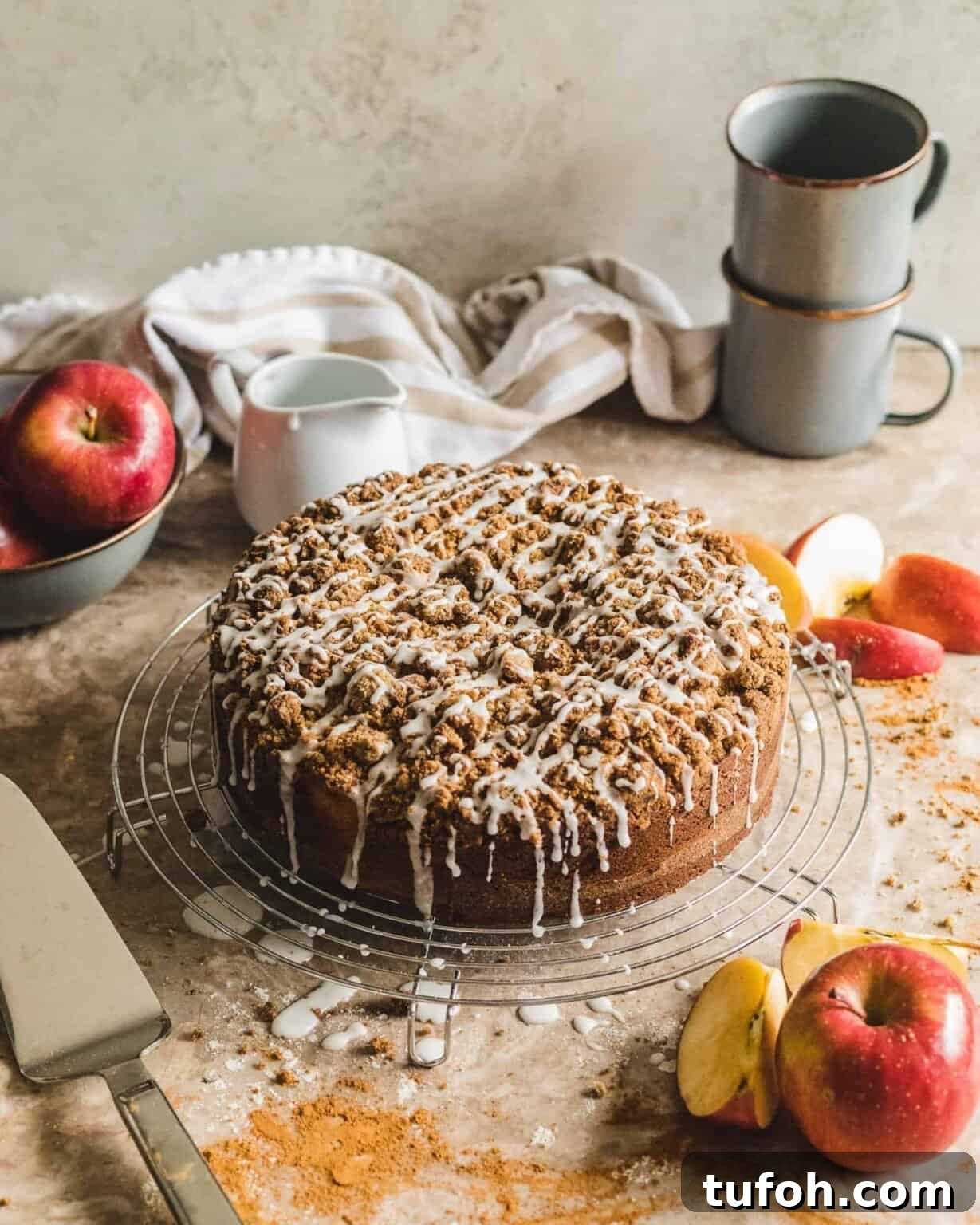
- Cinnamon Streusel Coffee Cake
- Brown Butter Sugar Cookies
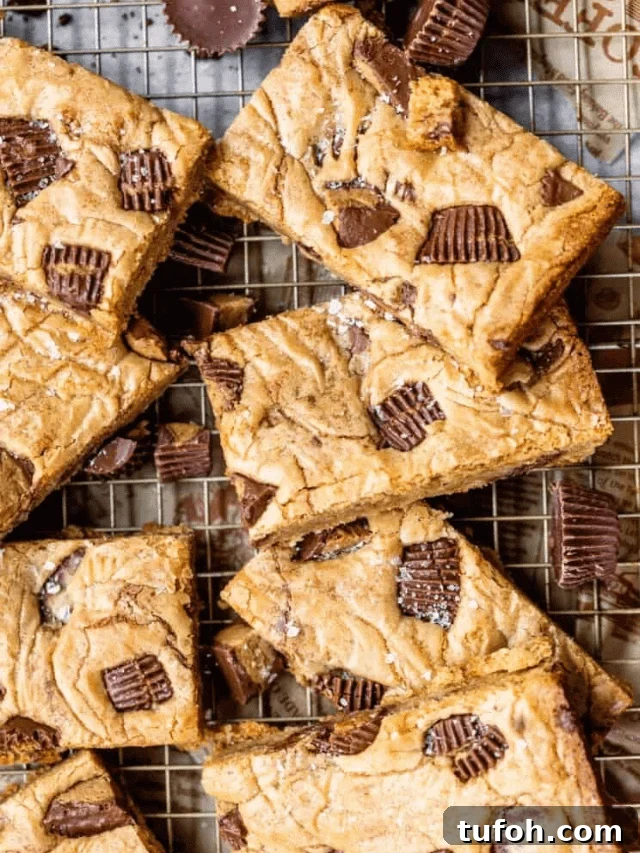
- Peanut Butter Cup Blondies
- Mixed Berry Crumble Bars
- Chai Cookies
- Waffles with Cinnamon Apples
- Pumpkin Bread with Frosting
Savory
- Garlic and Herb Mashed Potatoes with Brown Butter
- Sage Brown Butter Biscuits with Parmesan
LET’S STAY CONNECTED ON SOCIAL MEDIA! NEVER MISS A RECIPE BY FOLLOWING ME ON PINTEREST, FACEBOOK, AND INSTAGRAM!
If you make brown butter, leave a rating and a comment—tag @BritneyBreaksBread or use #britneybreaksbread on Instagram so creations can be shared. I hope you enjoy this simple technique as much as I do.
How to Make Brown Butter
Equipment
- Pan/Skillet
Ingredients
- 1/2 cup unsalted butter
- 1 tbsp water (optional, to reconstitute for baking)
Instructions
- Place the stick of butter in a pan over medium-low heat.
- Melt until foamy and brown bits appear on the bottom of the pan, stirring constantly.
- Remove from heat and use in your recipe. If substituting for regular butter in baking, optionally stir in 1 tablespoon water.
Nutrition
Per serving: Calories: 102 kcal; Carbohydrates: 1 g; Protein: 1 g; Fat: 12 g; Saturated Fat: 7 g. (Nutrition is an approximation.)