Growing Orchids at Home: A Personal Story and Practical Tips
Do you grow orchids? My daughter gave me one several years ago for Mother’s Day, and at first I assumed they would be fussy and difficult. To my surprise, they turned out to be much easier than I expected. Over time I collected more, and now I have four orchids. That’s convenient, because at least one plant seems to be in bloom at any given moment, so my home always has a touch of color.
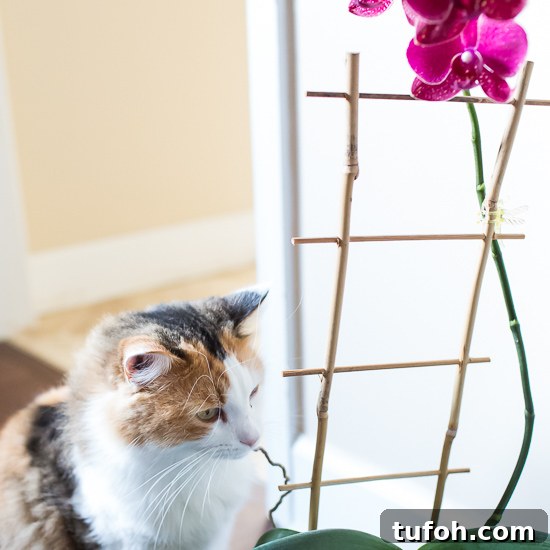
This deep pink orchid is one of my favorites. I placed it on the floor to try to get a better photograph of the blooms, and as you might expect, that’s when the real fun began.
Someone decided she had to help me with the photos. Amazingly, both Coco and Luxie—my resident feline assistants—generally leave my orchids alone. I say that with a little laugh, because I’ve probably just jinxed myself and might come home from the grocery store to find petals scattered everywhere. Before bringing any plant into the house, I always check to make sure it’s safe for pets. I was very relieved to learn that orchids are considered non-toxic to cats, so they’re a good choice for homes with curious kitties.
What I’ve learned from growing these plants is that orchids do well when given the right combination of light, water, and patience. They don’t need constant fussing, but they appreciate consistent care. Placing them where they receive bright, indirect light makes a big difference. Direct afternoon sun through a window can scorch the leaves, while a spot with filtered light helps encourage strong stems and plentiful blooms.
Watering is another area where many people worry. Orchids prefer to dry slightly between waterings rather than sit in saturated soil. I water mine thoroughly but infrequently: let the potting medium dry out a bit, then water so excess drains away. Overwatering is a common mistake, so good drainage and an airy potting mix designed for orchids are helpful. When in doubt, it’s better to err on the side of less water.
Humidity and air circulation play roles too. Orchids enjoy a humid environment but also need fresh air to prevent fungal problems. In dry months I’ll use a humidity tray or place several plants together to raise local humidity. A gentle fan or occasional opening of a window keeps the air moving and helps the plants stay healthy.
Repotting is infrequent but necessary every year or two, depending on the mix and root health. When I repot, I remove any old, broken-up media and trim dead roots so the plant can focus energy on healthy growth. Many orchids bloom on new growth, so encouraging strong, healthy roots and shoots increases the chances of repeat flowering.
One of the joys of growing orchids is the slow, satisfying progression from new leaf and root growth to a flowering spike and then full bloom. Each plant has its own personality: some bloom for extended periods, others put on shorter but spectacular shows. Watching the changes over seasons has turned into a relaxing hobby that fits into my daily routine.
Finally, if you live with pets, it’s always wise to double-check any plant’s safety. My approach is to research before I buy, place plants out of easy reach when possible, and observe how my animals respond. So far, Coco and Luxie are content to watch from a distance or occasionally supervise my photography sessions without doing any real damage.
If you’re thinking about starting with orchids, choose a few healthy plants, give them bright indirect light, moderate humidity, and careful, infrequent watering. With a little attention and patience, you’ll find these elegant plants to be rewarding and surprisingly accessible additions to your home.