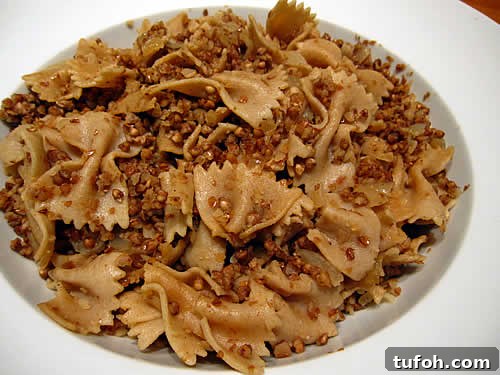
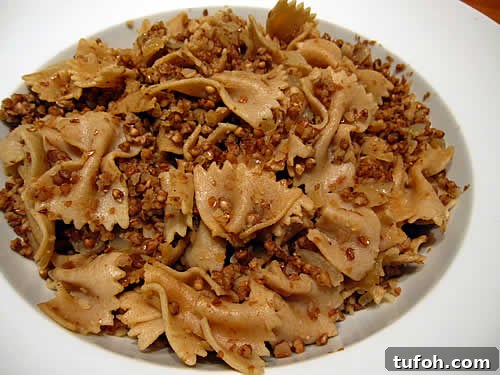
When I was a child, my grandmother from the Bronx made bow-ties and kasha whenever she visited. I loved it then, and it’s become a comfort food I still turn to. The dish is simple, nutritious, and has that warm, homey flavor that brings back memories.
Kasha traditionally means roasted buckwheat groats in Jewish cuisine (in Russia the word can refer to cereal more generally). Kasha was commonly used as a filling for knishes, a type of stuffed dumpling. Buckwheat originated in Asia and remains popular there—think soba noodles—and much of the world’s buckwheat is grown in Russia and China.
Varnishkes is related to the Slavic vareniki, originally a rectangular noodle; the bow-tie pasta called varnishkes is made by pinching a rectangular strip into a bow-tie shape.
This recipe is often made with chicken or beef broth and schmaltz (rendered chicken fat), but here we use vegetable stock and olive oil to keep it lighter and vegetarian-friendly. Family recipes vary, but the essential elements remain the same: bow-tie pasta and kasha.
Kasha Varnishkes
Rate Recipe
Print Recipe
Ingredients
- 1/2 pound 100% Whole Wheat “Bow-Tie”, Farfalle Pasta
- 1 cup uncooked Buckwheat Groats, Kasha
- 1 medium Onion, chopped
- 3 cups Vegetable Stock
- 1 Egg, or 1/4 cup Egg Whites
- 2 tablespoons Olive Oil, divided
- Salt and freshly ground Pepper
Instructions
-
Cook the pasta according to package directions. While the pasta cooks, sauté the chopped onion in 1 tablespoon of olive oil in a small skillet until translucent, then set aside.
-
In a large skillet, heat the remaining 1 tablespoon olive oil. Add the kasha (buckwheat groats) and the egg, stirring quickly so the kasha becomes coated. Keep stirring until the egg is set and the groats are separate and dry.
-
Pour the vegetable stock over the groats, cover, and simmer until the liquid is absorbed, about 7 to 12 minutes. When the kasha is tender and the liquid is absorbed, combine it with the cooked pasta and the sautéed onions in the large skillet. Adjust the pasta-to-kasha ratio to taste, stir while reheating, and season with salt and freshly ground pepper.
Nutrition
Like this recipe? Rate and comment below!