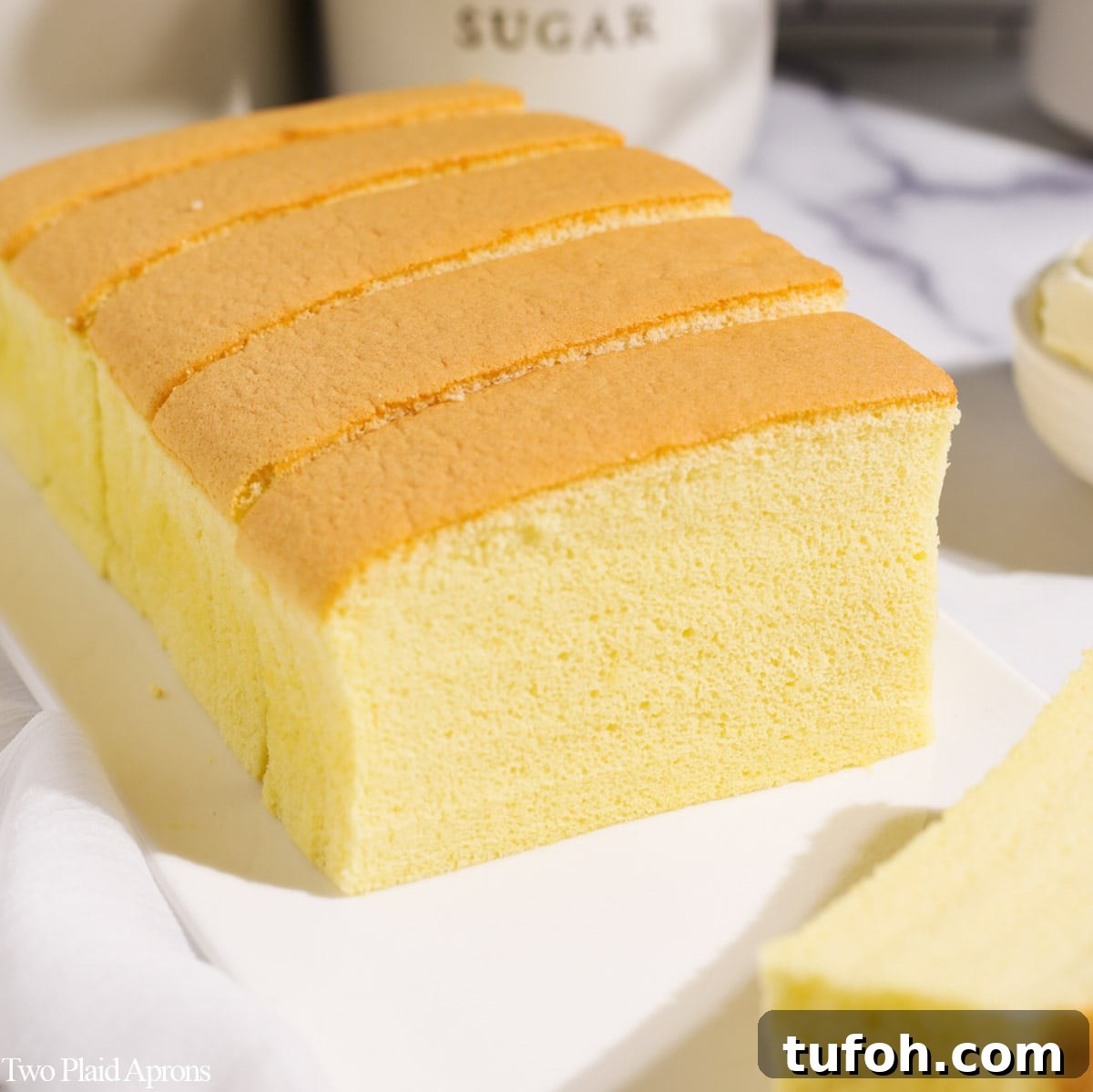
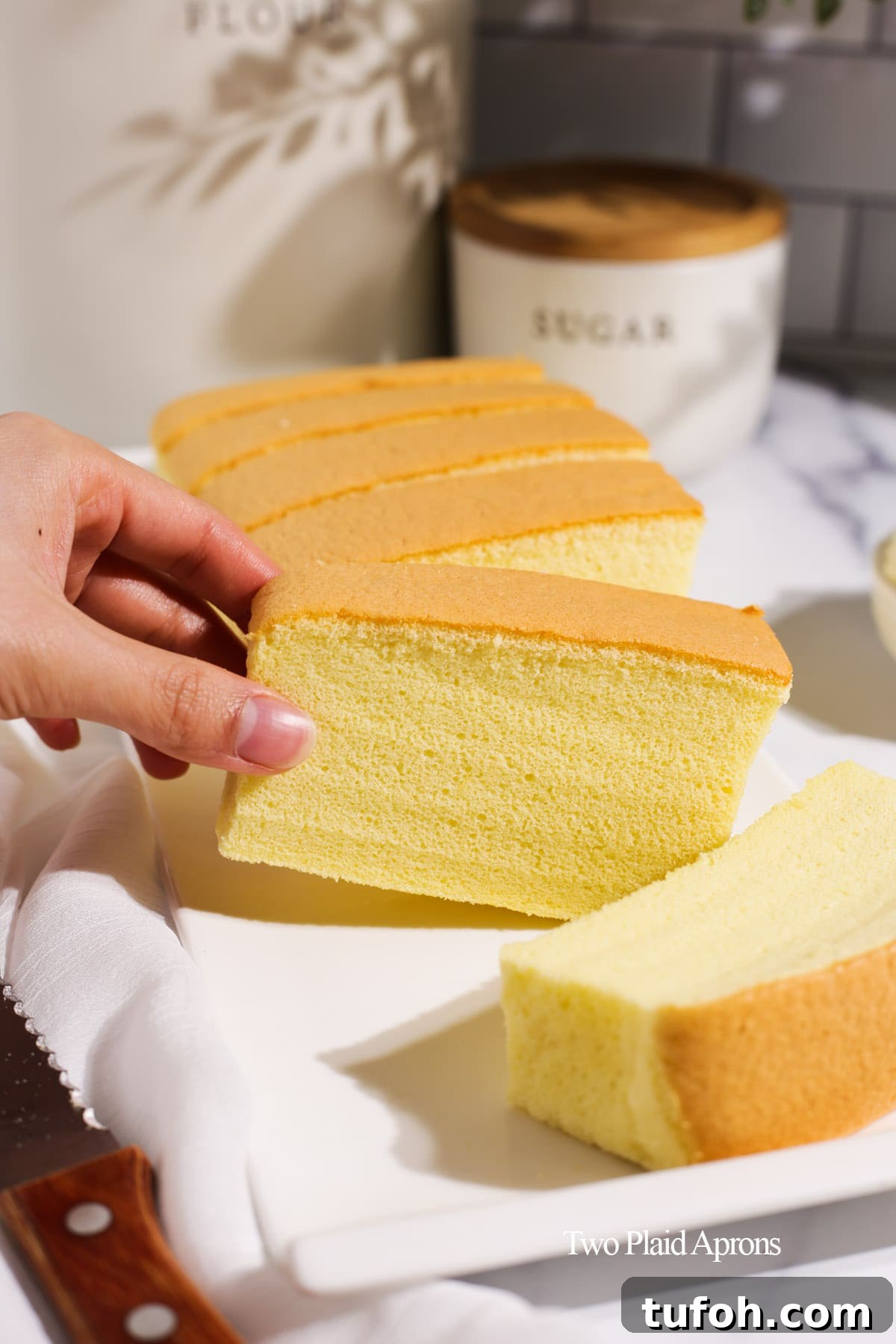
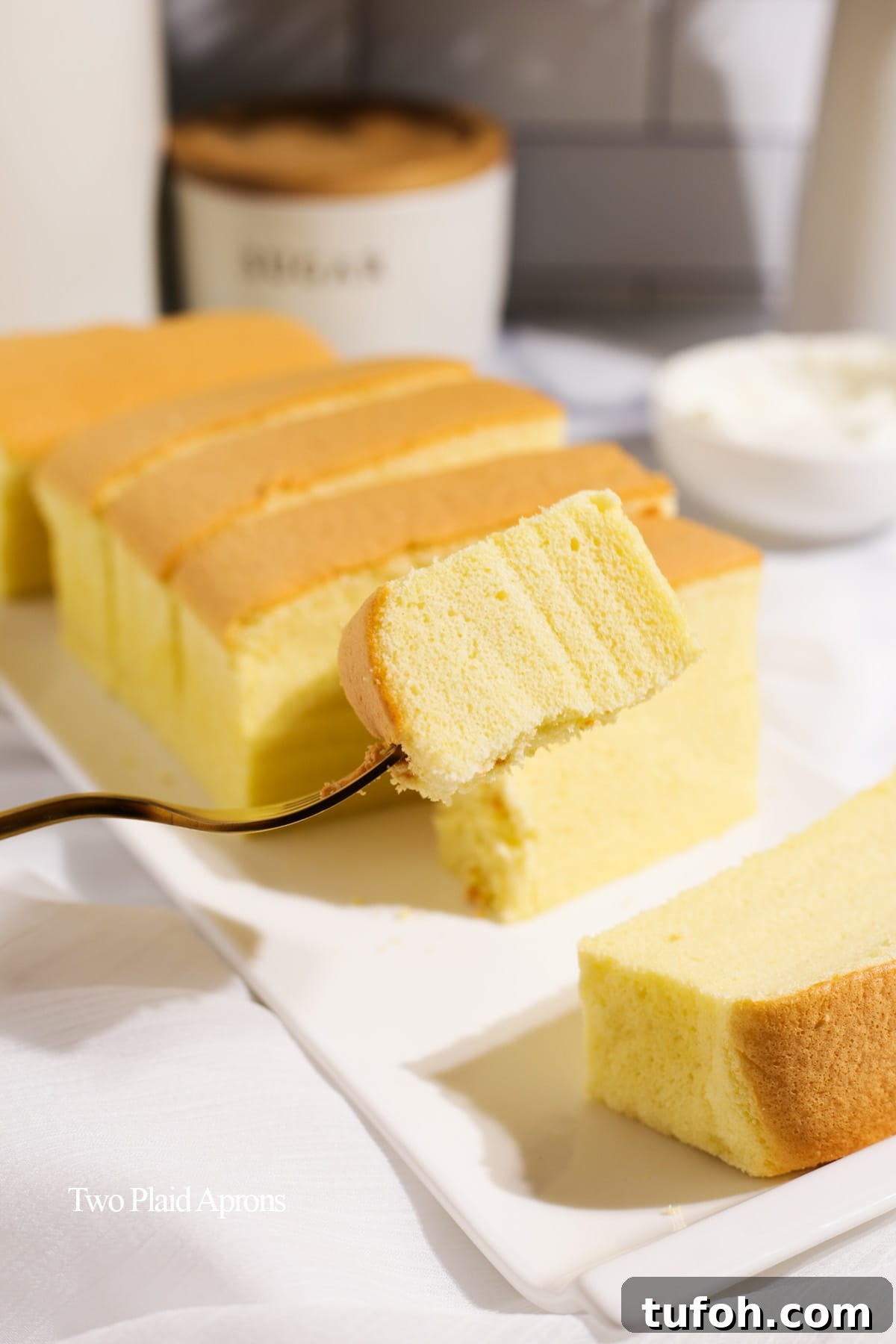
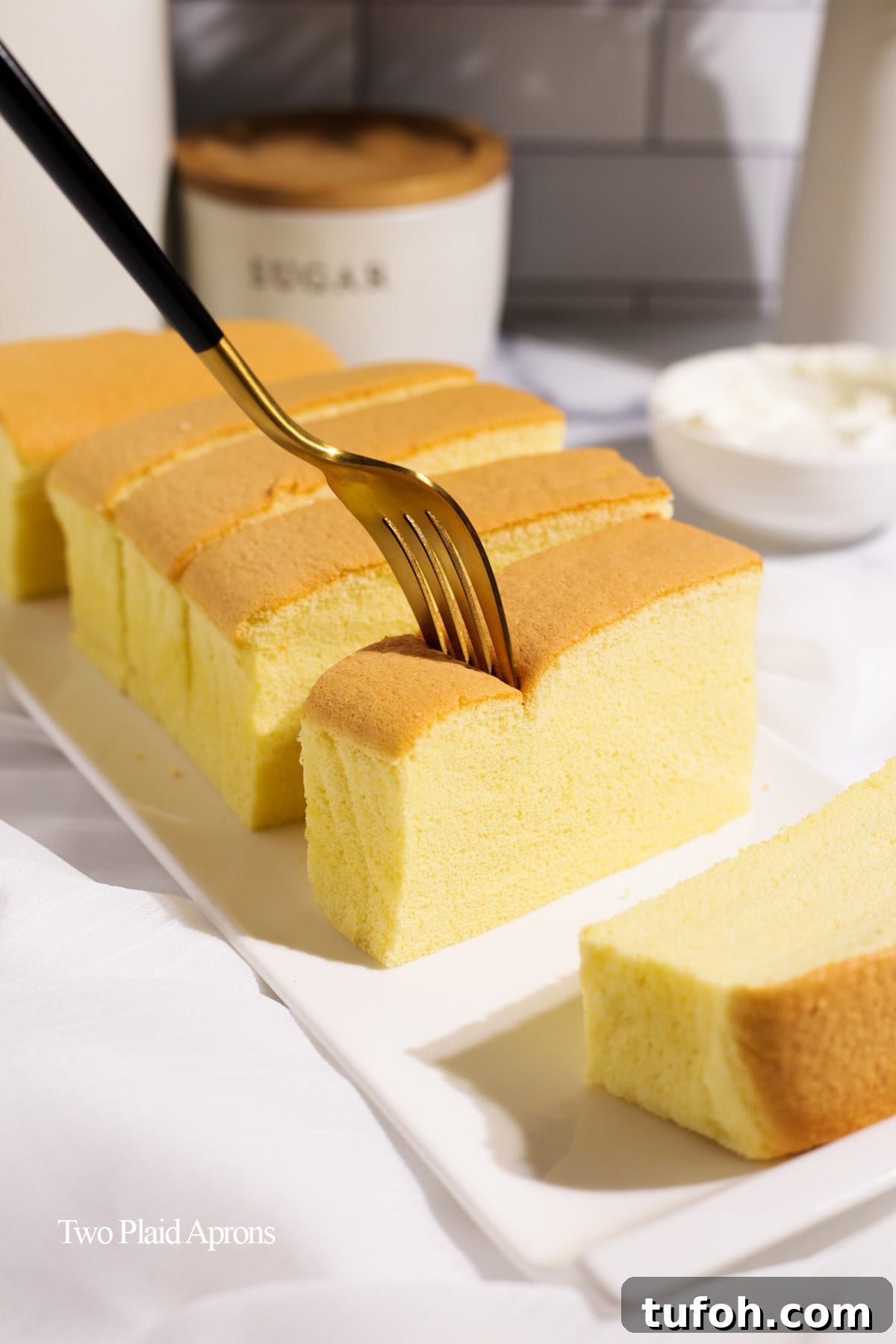
Taiwanese castella cake, also called Taiwanese soufflé castella, is a light, jiggly sponge cake celebrated for its cloud-like texture. Mildly sweet, it’s delicious on its own or topped with whipped cream and fresh fruit.
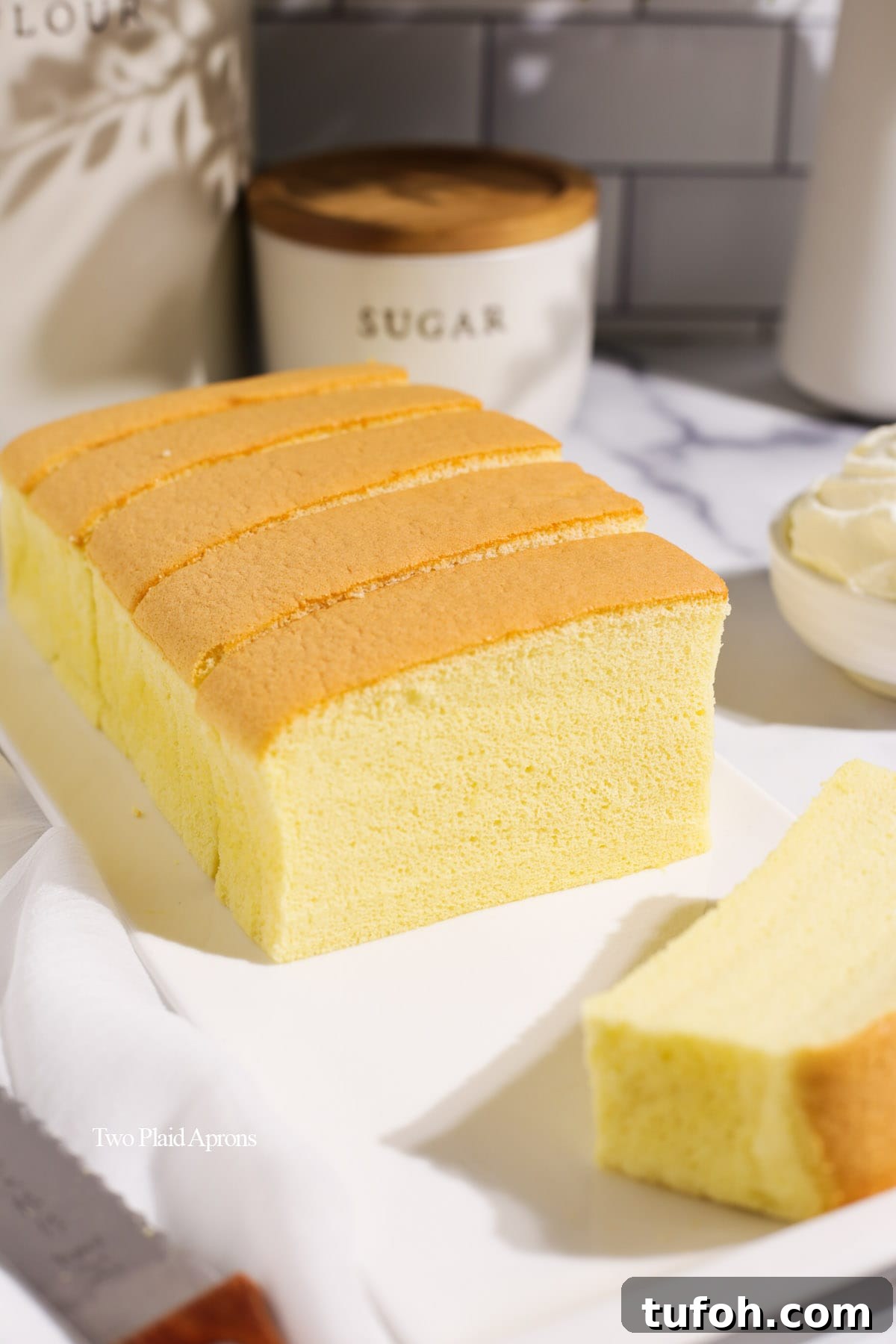
Across Taiwan you’ll find bakeries and street stalls devoted to Taiwanese castella cake. It’s a treat to watch a large pan of the wobbly sponge being removed and sliced into rectangles right before your eyes.
Some vendors serve it plain, others fill it with whipped cream or add savory elements like cheese. After extensive testing, here is a reliable recipe for a super jiggly, pillow-soft castella cake you can make at home.
What is Taiwanese castella cake?
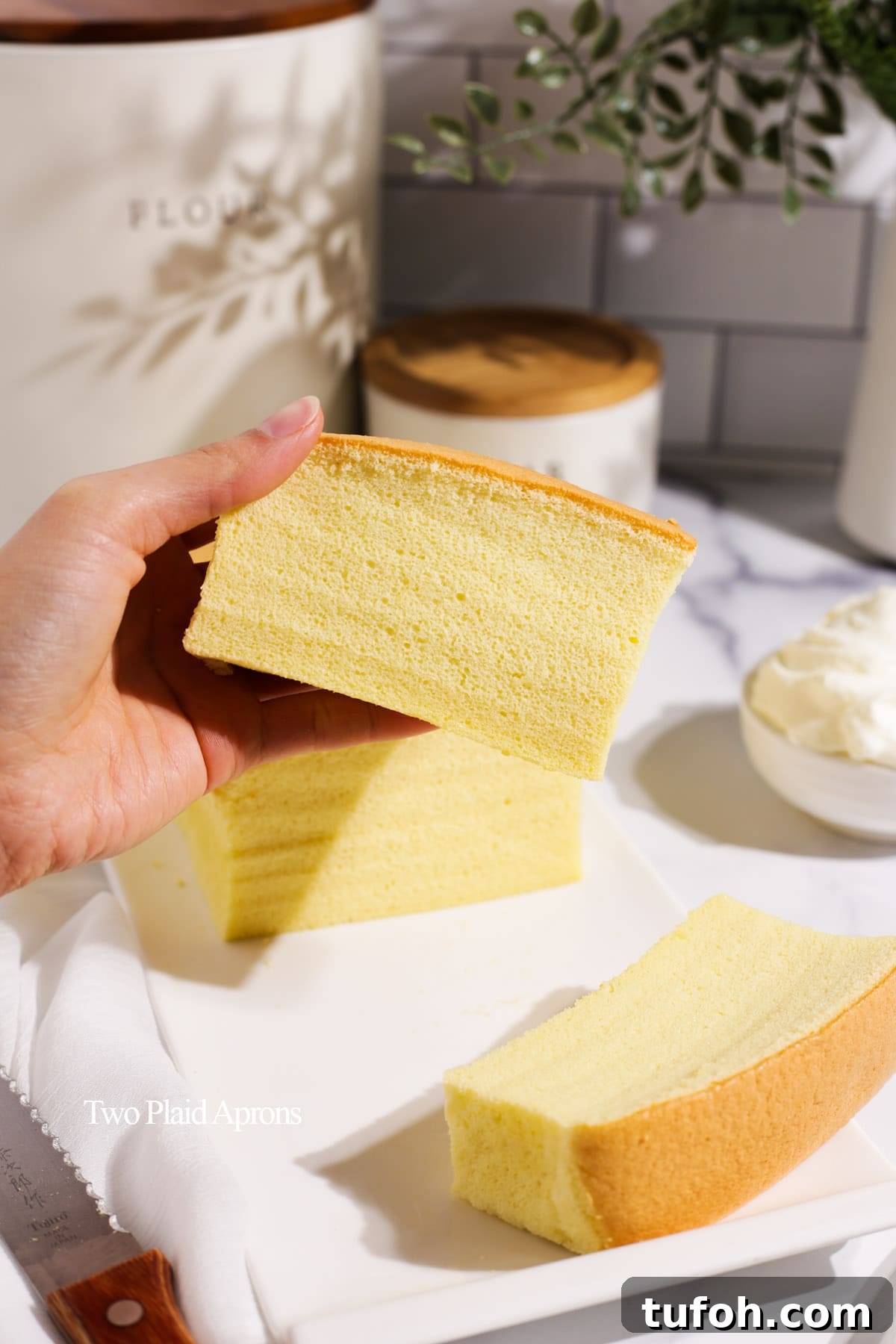
Taiwanese castella (soufflé castella) is a water-bath baked sponge characterized by a lightly caramelized top and an airy, bouncy crumb. When sliced, it often makes a soft “sha-la-la” sound from the springy texture. In Taiwan it’s commonly baked in long or deep pans and sold as large sliced rectangles.
Taiwanese vs. Japanese castella
Japanese castella was introduced to Japan centuries ago and is typically made from bread flour, eggs, honey, and sugar, resulting in a denser, fine-textured cake. The Taiwanese version uses eggs, milk, oil, sugar, and low-gluten cake flour, giving it the signature jiggle, lightness, and softness that define Taiwanese soufflé castella.
Ingredients
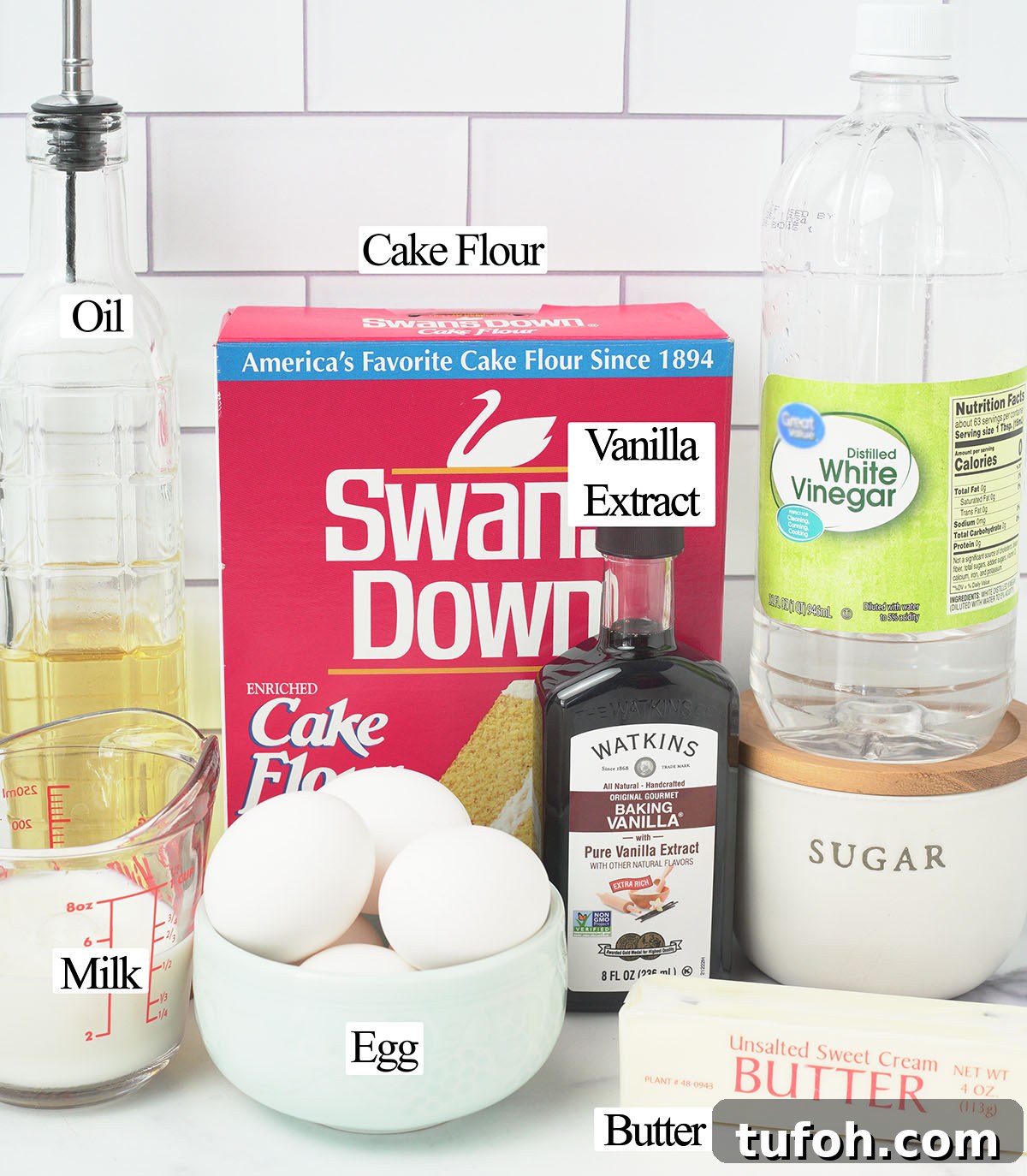
- Eggs – Recipe uses large eggs. Whites are whipped into a meringue while yolks enrich the batter.
- Cake flour – Lower gluten content than all-purpose flour; produces a tender, airy crumb.
- Oil – Neutral oil (vegetable, canola, or light olive) keeps the cake moist.
- Unsalted butter – A small amount of melted butter adds flavor while oil preserves the light texture.
- Milk – Whole milk thins the batter and adds flavor; low-fat milks also work.
- Granulated sugar – Sweetens and helps stabilize the meringue.
- White vinegar – Or cream of tartar or lemon juice; a little acid stabilizes egg whites.
- Vanilla extract – Optional, but recommended for flavor.
How to make Taiwanese castella cake
Preheat and prepare equipment
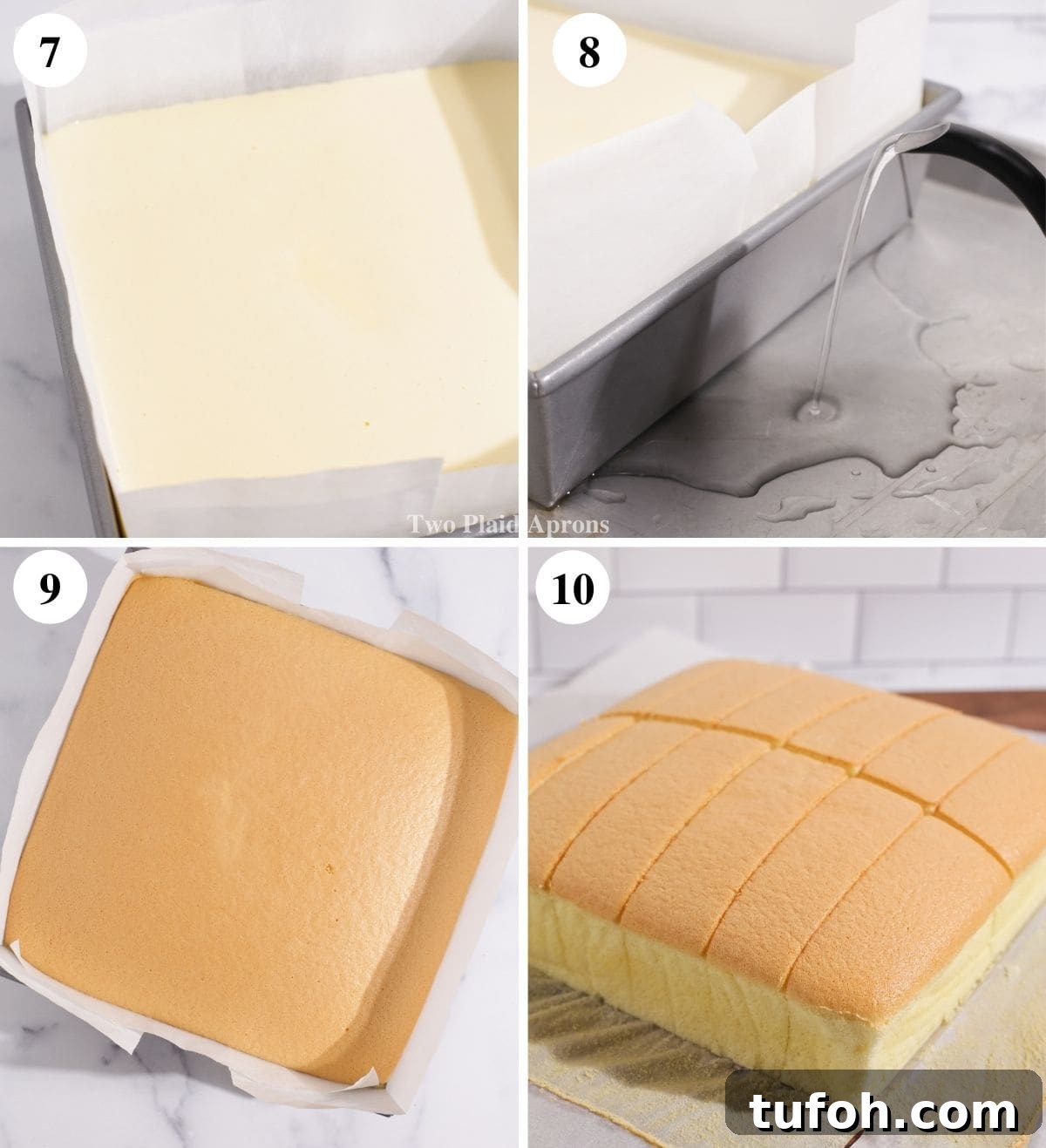
1. Preheat oven to 300°F (about 150°C). Line an 8 x 8 x 3 inch (20 x 20 x 7.5 cm) square pan with parchment paper, leaving a slight overhang to help lift the cake out later. Prepare a larger tray or pan and hot water for a water bath that will cradle the cake pan during baking.
Water bath: placing the cake pan inside a larger pan with hot water ensures gentle, even baking for a soft crumb.
Pro tip: let the parchment extend about ½ inch above the pan for easy removal.
Make the base batter
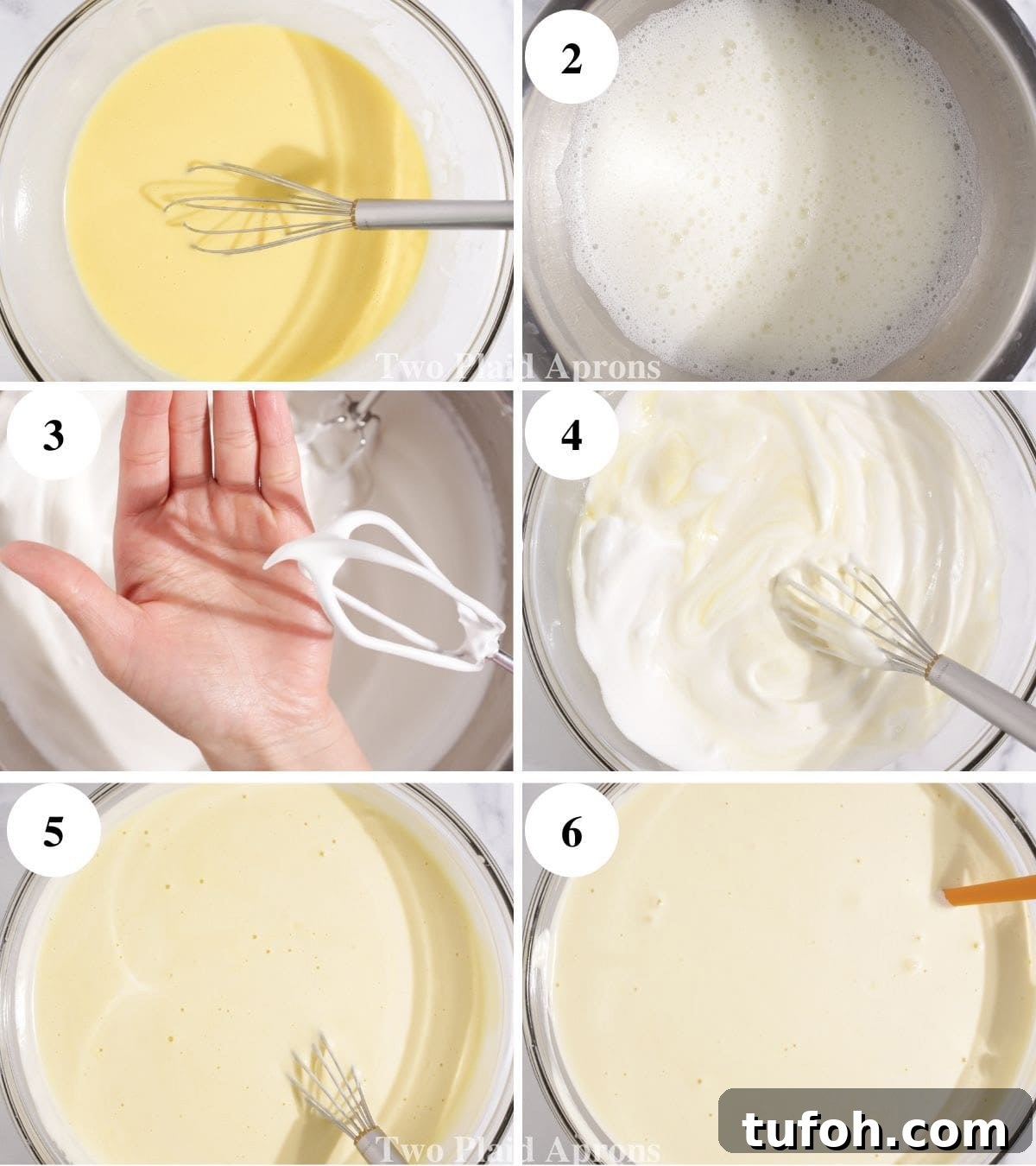
2. Sift cake flour into a large bowl to remove lumps. Add oil and melted butter; whisk until smooth.
3. Stir in the milk, then add the egg yolks and vanilla. Mix until homogeneous and set aside.
Make the meringue
4. In a clean bowl, combine egg whites with vinegar. Beat on medium-high until foamy.
5. Add sugar gradually while continuing to beat. Reduce speed to medium and whip to medium peaks—when lifted, the meringue holds a peak with a slight hook.
Pro tip: medium peaks are critical—too soft leads to excessive collapse; too firm risks cracking.
6. Fold one third of the meringue into the batter using a gentle “J” motion with a rubber spatula to lighten the base. Repeat with remaining meringue in two additions, scraping the bowl’s sides and bottom until uniform.
Bake the cake
7. Pour batter into the prepared pan, level gently, and firmly tap to release large air bubbles.
8. Place the cake pan inside the larger pan, pour hot water into the outer pan to reach about one-quarter to one-half up the sides of the cake pan, and bake 65–75 minutes. The cake is done when the top is golden and a toothpick inserted in the center comes out clean.
Pro tip: if you want a darker top, broil briefly—but watch closely, as it can burn quickly.
9. Remove from the oven and cool briefly. Lift the cake out using the parchment overhang, peel off parchment, and slice as desired.
10. The cake will be very jiggly and slightly eggy when hot. For best flavor and texture, let it cool completely or chill before serving; slight settling is normal.
Recipe tips
- Room temperature ingredients: Keep ingredients at room temperature to prevent fats from solidifying and to ensure even mixing.
- Use a tall pan: A deeper pan supports the cake during rising. If your pan is shallower, extra parchment can help support the sides.
- Color the top safely: If the top isn’t golden enough, use the oven’s broil briefly and monitor constantly.
Troubleshooting
Cracks on top
- Overwhipped meringue: Whip to medium peaks; stiffer meringue can cause cracking.
- Oven too hot: Use an oven thermometer to confirm accurate temperature.
- Pan too small: A small pan can cause the cake to expand and split.
Cake deflated
Some shrinkage is expected as the cake cools, but dramatic collapse indicates an issue.
- Meringue too soft: Very soft peaks create extra jiggle but increase collapse risk.
- Undercooked center: If not fully baked, the cake will sink—check doneness with a toothpick.
Inconsistent crumb or large bubbles
This is mainly cosmetic; flavor remains good.
- Over-aerated meringue: After adding sugar, beat at medium speed to avoid large bubbles.
- Rough folding: Fold gently with a “J” motion to preserve a fine, uniform crumb.
Storage
Once fully cooled, wrap slices individually in plastic wrap or store in airtight containers. Keep refrigerated up to 7 days or freeze for up to 2 months. Thaw overnight in the fridge or at room temperature. The cake is enjoyable chilled or at room temperature, and many people like it slightly frozen for a different texture.
FAQ
Cracks are usually caused by over-whipped meringue, an oven that’s too hot, or using a pan that’s too small.
A slight shrink is normal. To minimize significant deflation, whip the meringue to medium peak and ensure the cake is fully baked.
A dense bottom often means the meringue was under-whipped. Aim for medium peaks to avoid separation.
Made this recipe? Share your results on Instagram with #twoplaidaprons — it brightens our day!
📖 Recipe
Taiwanese Castella Cake
Ingredients
- 10 large eggs, room temperature and separated
- 125 g cake flour
- 70 g unsalted butter, melted
- 70 ml neutral oil
- 118 ml milk, room temperature
- 15 ml vanilla extract
- 125 g granulated sugar
- 10 ml white vinegar (or cream of tartar or lemon juice)
Instructions
- Preheat and prepare: Preheat oven to 300°F and line an 8x8x3 inch pan with parchment. Prepare a larger oven-safe tray and hot water for the water bath.
- Make the base batter: Sift cake flour into a bowl. Whisk in oil and melted butter until smooth. Stir in milk, then egg yolks and vanilla until combined. Set aside.
- Make the meringue: Beat egg whites and vinegar until foamy. Gradually add sugar and beat on medium until medium peaks form (peak with a slight hook).
- Incorporate the meringue: Fold one third of the meringue into the batter to lighten it, then fold in the remaining meringue in two additions using a gentle “J” motion. Scrape the bowl to fully combine.
- Bake: Pour batter into pan, level, and tap to release large bubbles. Place the cake pan in the larger pan, add hot water to reach about 1/4–1/2 up the sides of the cake pan, and bake 65–75 minutes until golden and a toothpick comes out clean. If desired, broil briefly for a darker top—watch carefully.
- Cool and serve: Cool briefly, lift cake from pan using parchment, remove paper, and slice. The cake is jiggliest hot; for best flavor let it cool completely or chill before serving.
Notes
- Medium peaks matter: Aim for medium meringue peaks—too soft increases collapse; too stiff can cause cracking.
- Gentle folding: Fold carefully to preserve aeration. A rubber spatula and a “J” motion work best.
- Finish the top: If the surface lacks color, brief broiling will darken it—monitor closely.
Recommended equipment
- Hand mixer
- Mixing bowls
- Rubber spatula
- 8x8x3 inch square cake pan