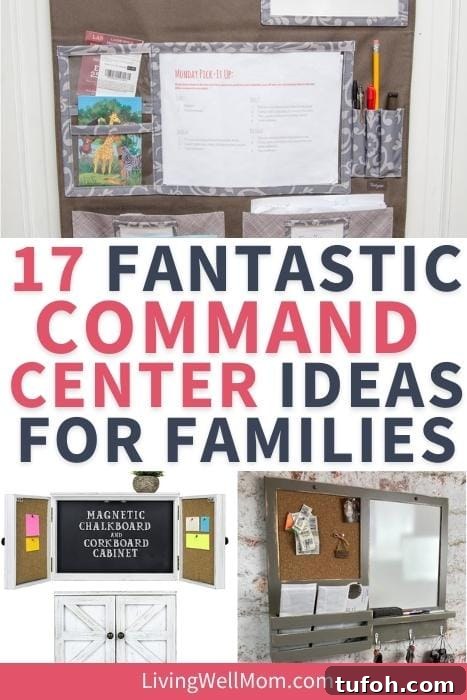
Parenting brings many rewards, but running a household can be one of the most stressful parts. With dishes, schedules, school forms and activities competing for attention, it often feels impossible to keep up. For our busy family, a home command center changed everything.
Even though I consider myself fairly organized, managing a household overwhelmed me at times. I either tried to do too much at once or let tasks slip until they were urgent. As the kids grew, the routine I once relied on didn’t cut it anymore. Random playdates turned into calendars full of practices, games, teacher notes and permission slips.
That’s when I created a simple home command center to keep important items and the family schedule in one visible place.
Why You Need a Command Center
Organizing systems need to evolve. What worked last year—or even last month—may no longer fit your family’s needs. That doesn’t mean the previous system failed; it simply means it’s time to adapt. Kids’ schedules change, seasons shift, and household priorities move. A command center makes it easy to adjust and keep everyone informed.
If something about your daily flow is causing stress, carve out a bit of time to focus on that area. You don’t have to build an elaborate DIY project—there are plenty of simple, ready-made solutions that require no construction skills.
My approach is the Simple Home Command Center: practical, low-effort and easy to maintain.
What is a home command center?
A command center isn’t high-tech or expensive. It’s simply the spot where you centralize your family’s calendar, bills, forms, reminders and anything else you need to run your home. Think of it as the household control hub for schedules, notes, homework, chores, and quick reference items.
A well-placed command center helps reduce mental clutter by giving everyone a single place to check for daily tasks, upcoming events and responsibilities. Best of all, creating one doesn’t require special skills or tools.
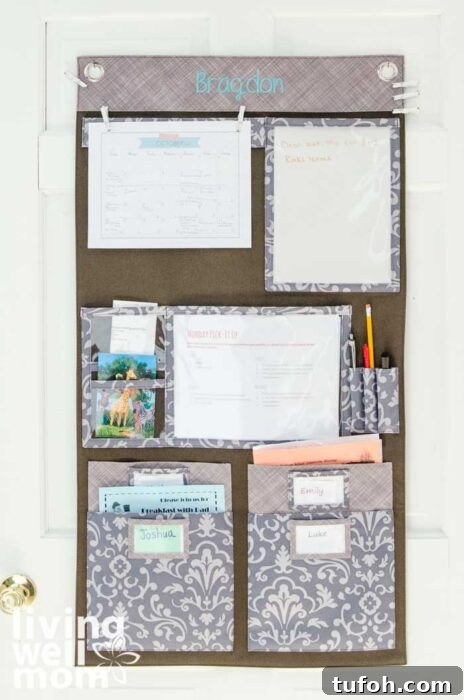
What should be in a home command center?
Design your command center around your family’s needs. There’s no single right way—tailor the elements to what will actually be used. Here are practical components to consider when building your own:
(The specific product shown in the photos may no longer be available, but the ideas apply to any purchased or DIY setup.)
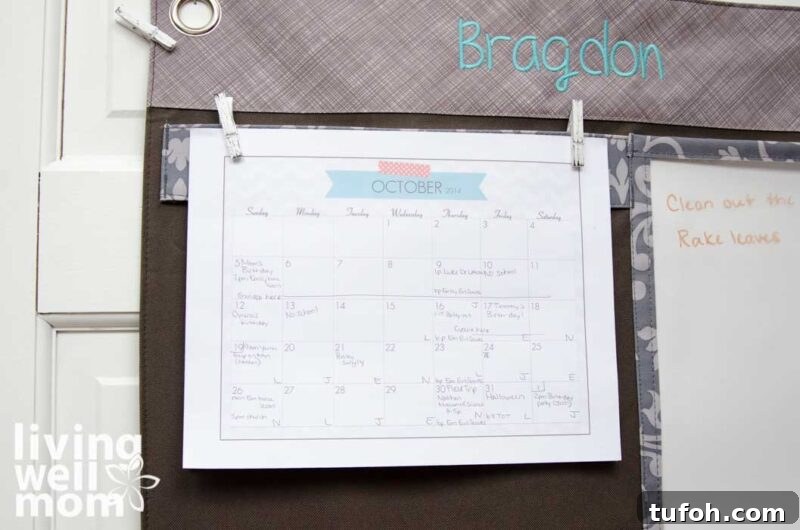
Calendar
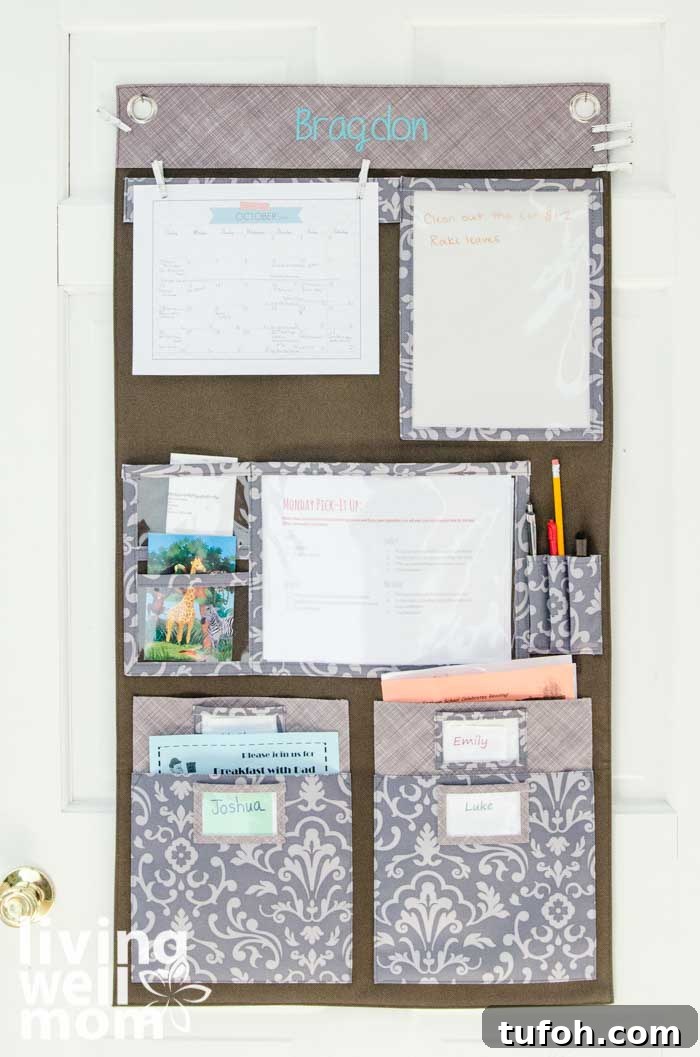
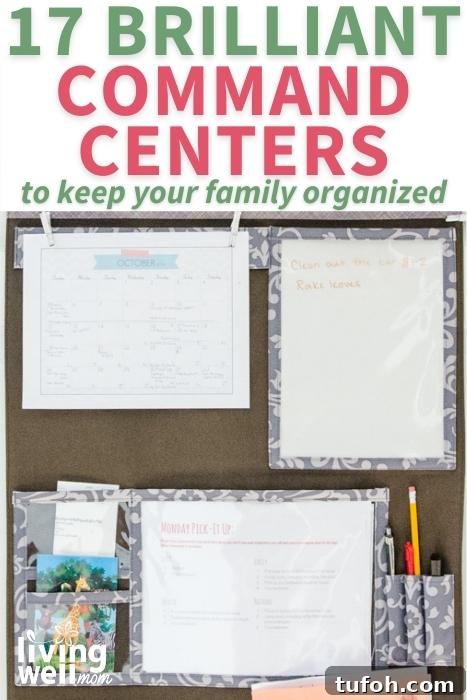
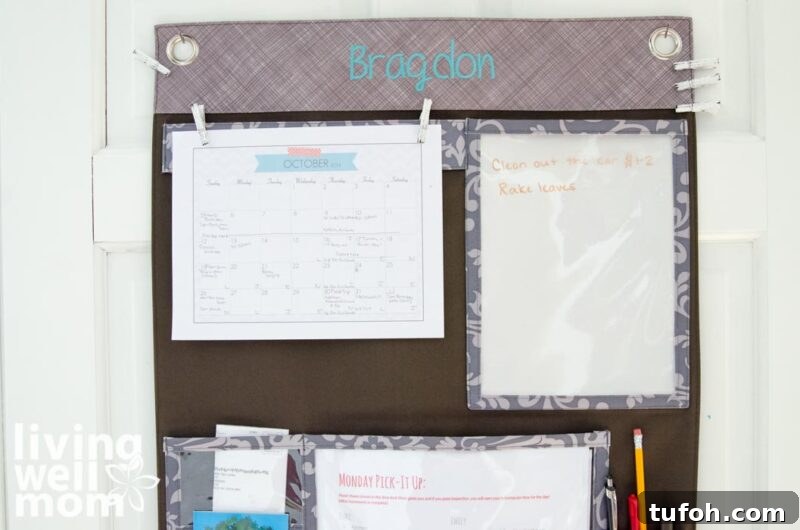
A calendar is essential. I keep my personal calendar on my phone, but post family events and kid-related activities on the command center calendar so everyone can see them at a glance. I use printable calendars I can clip up and change easily each month.
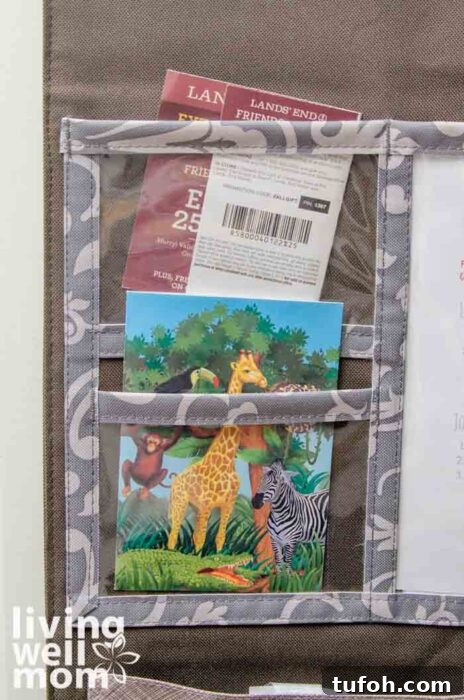
Coupons and Invitations
Small clear pockets are perfect for coupons, reward certificates, box tops, and birthday invitations—things you need to keep but don’t want scattered around. These pockets help you avoid missed redemption dates and misplaced invites.
Chore Charts
Chore charts can live in a full-sized clear pocket or on a hanging board. We swap charts daily, and the visual reminder helps kids take responsibility. Simple chart systems work better than overly complex plans.
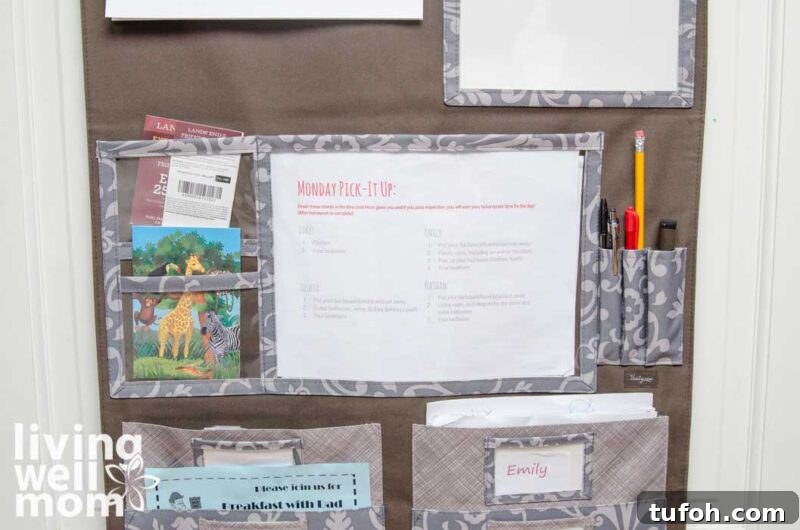
Homework
Separate pockets for each child keep permission slips, notes and homework organized. We have four kids, so four pockets—one for each—so papers don’t get mixed up and important items are easy to locate.
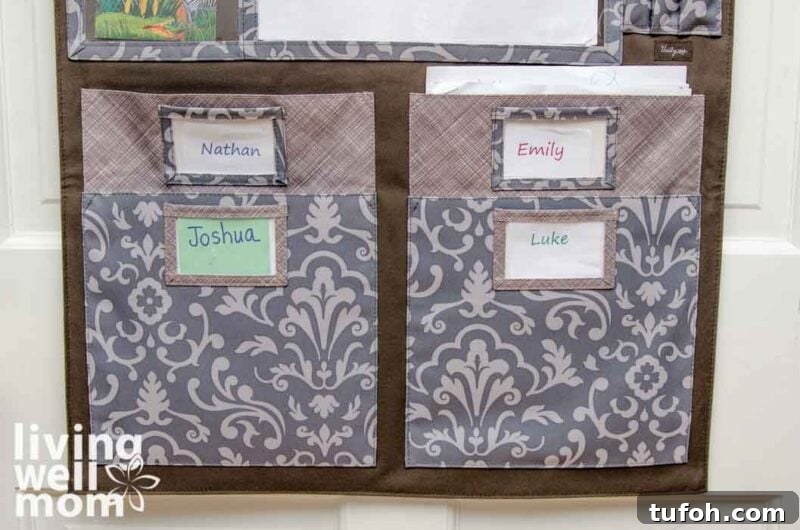
I routinely sort those pockets so completed work goes into a school bin and newsletters get filed. The pockets aren’t intended to store long-term archives; they’re a daily inbox to prevent clutter.
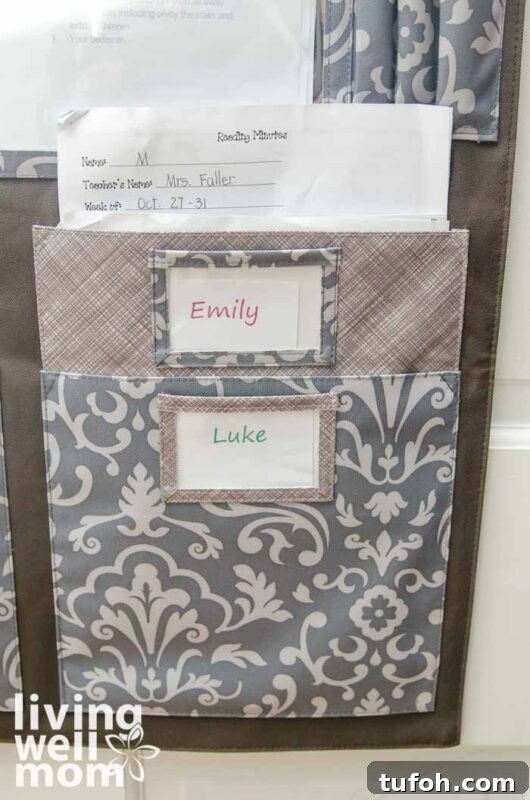
That’s the core of our simple family command center—visible, practical and easy to maintain.
Where should I keep my command center?
Put the command center where the family will see and use it. Avoid tucked-away corners. We hang ours on the back of a centrally located closet door so it’s accessible to everyone. Other good spots include the kitchen wall, refrigerator, mudroom, laundry room or pantry door.
How to Put Together a DIY Command Center
You don’t need to build anything from scratch. Combine ready-made pieces—pocket organizers, calendars, pinboards and file holders—to create a personalized command center. Below are popular elements and ideas to mix and match for an efficient system.
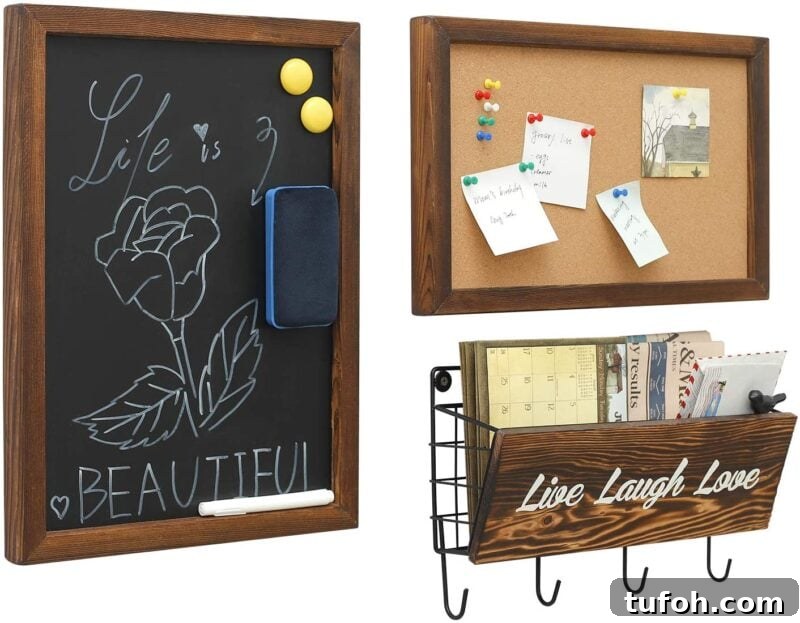
Chalkboard Calendar
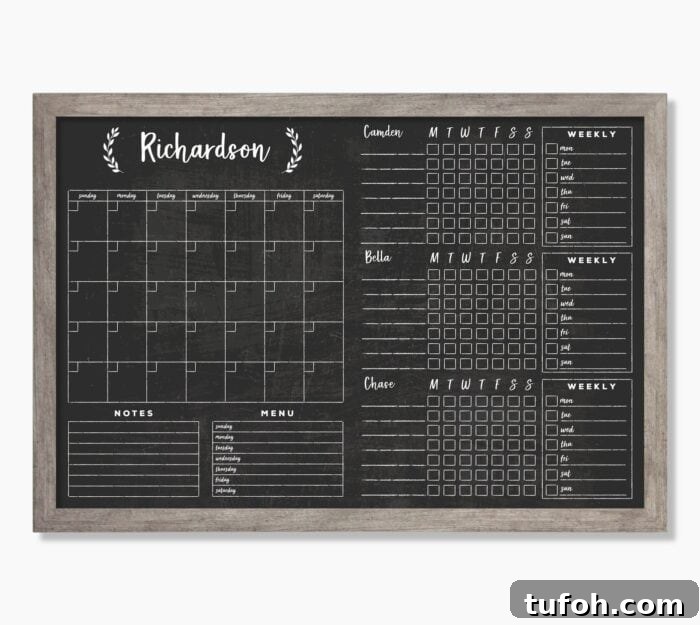
A chalkboard calendar gives a rustic, tactile way to track the month and weekly chores or events. Chalkboard paint on a framed board also works if you prefer a custom look.
Rustic Wall Organizer
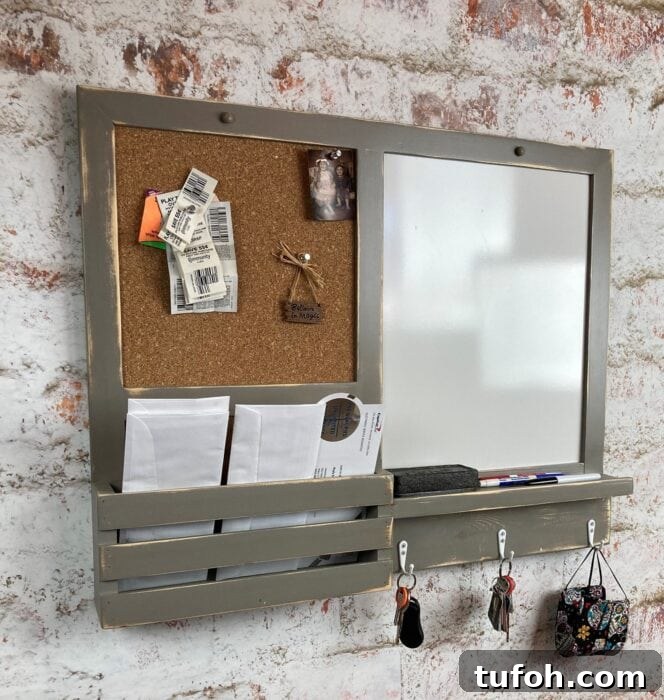
If your decor leans rustic, a wall organizer with corkboard and hooks gives a functional, attractive place for keys, notes and mail.
Whiteboard Organization Station
Whiteboards are great for quick notes and weekly planning. Choose one with a built-in marker holder to avoid lost pens.
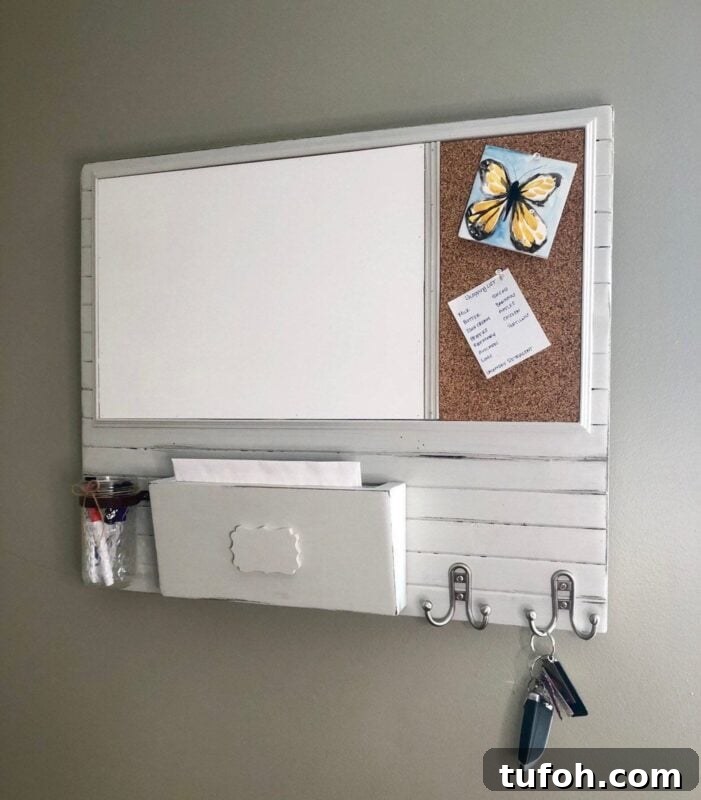
Message Center and Hanging Pocket Organizers
For narrow spaces, compact message centers with baskets or pockets keep mail, school papers and quick reminders tidy. Fabric pocket organizers or hanging file holders work well for sorting paperwork and small items.
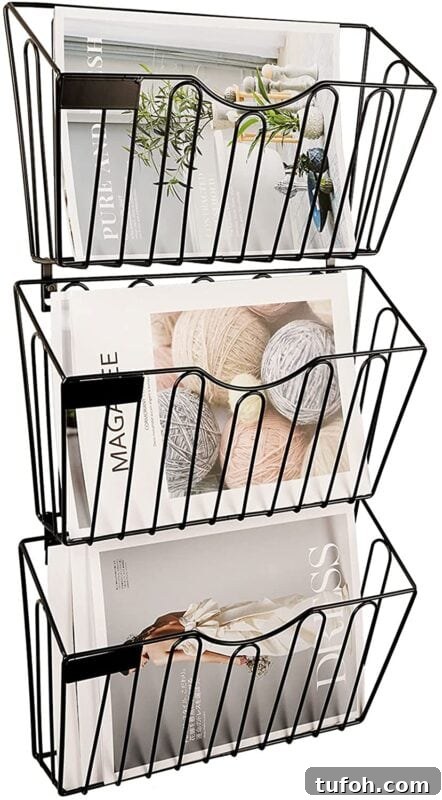
Wire File Holders and Wall-Mounted Bins
Wire holders and wall bins are perfect for corralling papers without taking up countertop space. They come in rustic and modern styles to suit your home.
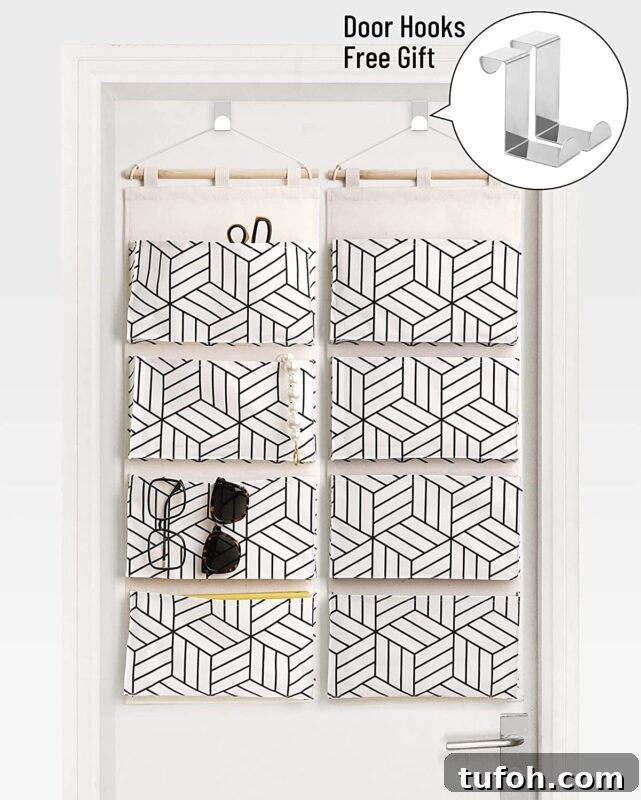
Over-the-Door Organizers and Cabinet Solutions
If space is tight, use the back of a door or a cabinet-mounted organizer to keep the center accessible but tucked away when you prefer a cleaner look.
Pinboard and Tear-Off Planners
A pinboard provides space for invitations, quick reminders and timely notes. Tear-off family planner sheets or dry erase weekly planners are handy for meal plans and chores.
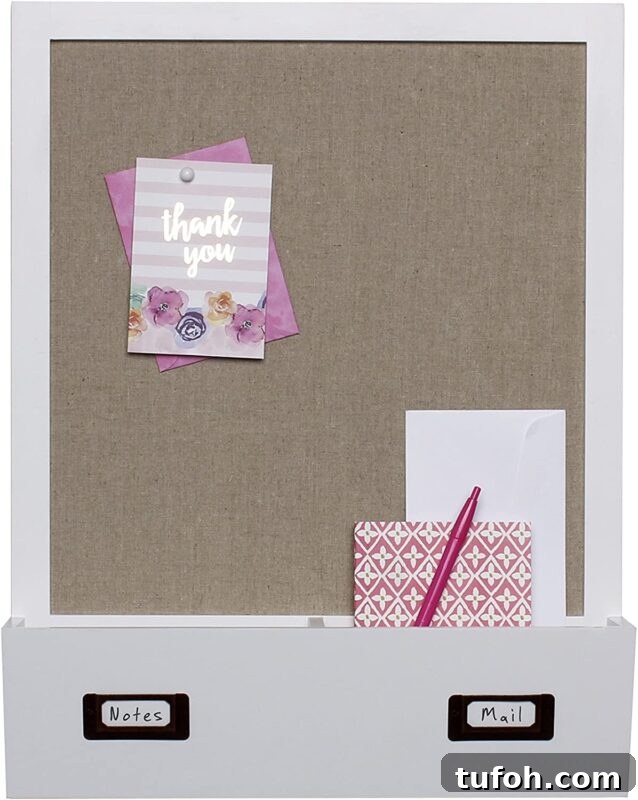
Putting Together a Home Command Center
Combine a calendar, family mail slots, a pinboard and a few labeled pockets to create a functional center. You can add personal touches such as photos or inspirational notes to make the space feel welcoming while staying useful.
Examples to Inspire
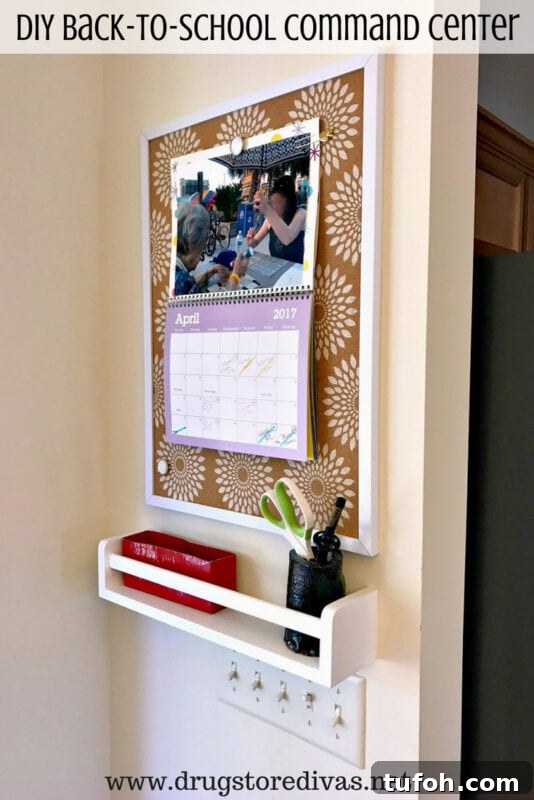
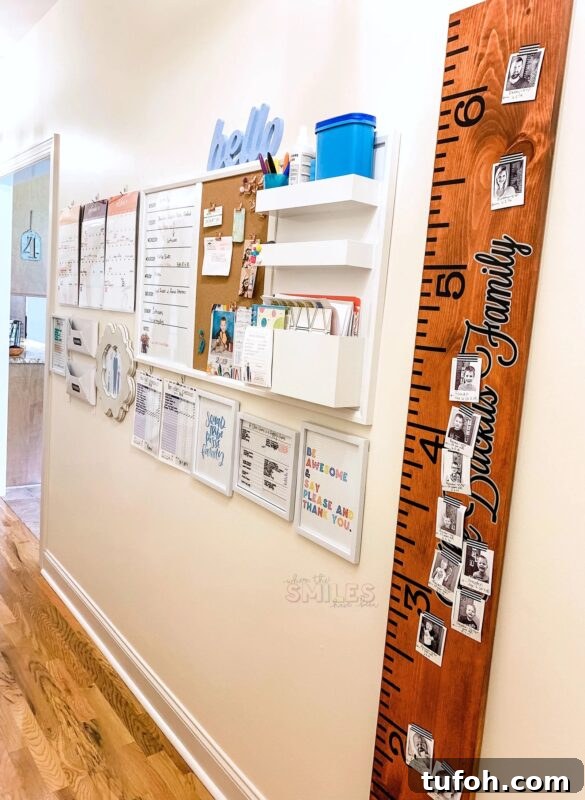
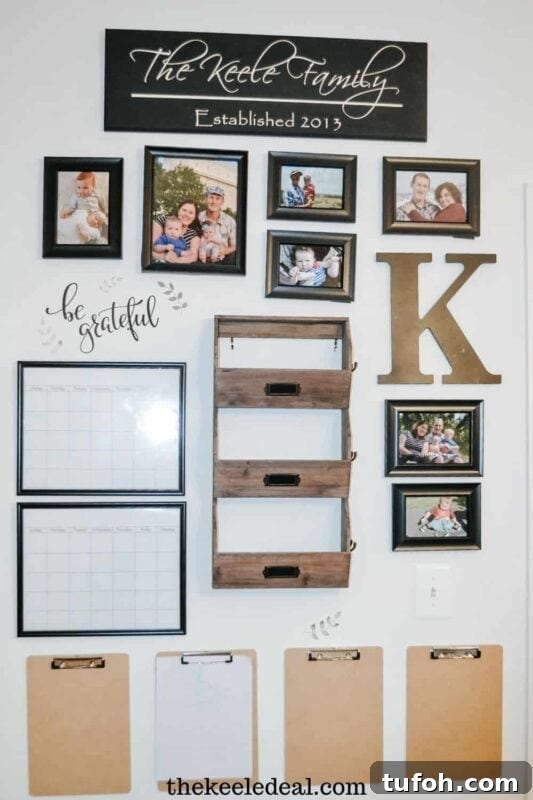
A back-to-school command center with a pinboard, calendar and shelf looks attractive and keeps essentials handy. A hallway setup with multiple calendars, chore lists and uplifting quotes blends function and personality. A full wall command center can include family photos alongside calendars and pockets for an organized, homey display.
A command center is a simple, effective way to reduce household stress by keeping important information visible and organized. Start small, customize for your family, and adjust as needs change. I’d love to hear which ideas you try out in your home.
More Home Organization Ideas
- 5 Creative and Easy Tips for Organizing Toys
- The Easy Way to Organize Kids’ Clothing
- DIY Recipe Binder to Organize Your Recipes
- Organizing Essential Oils the Easy Way