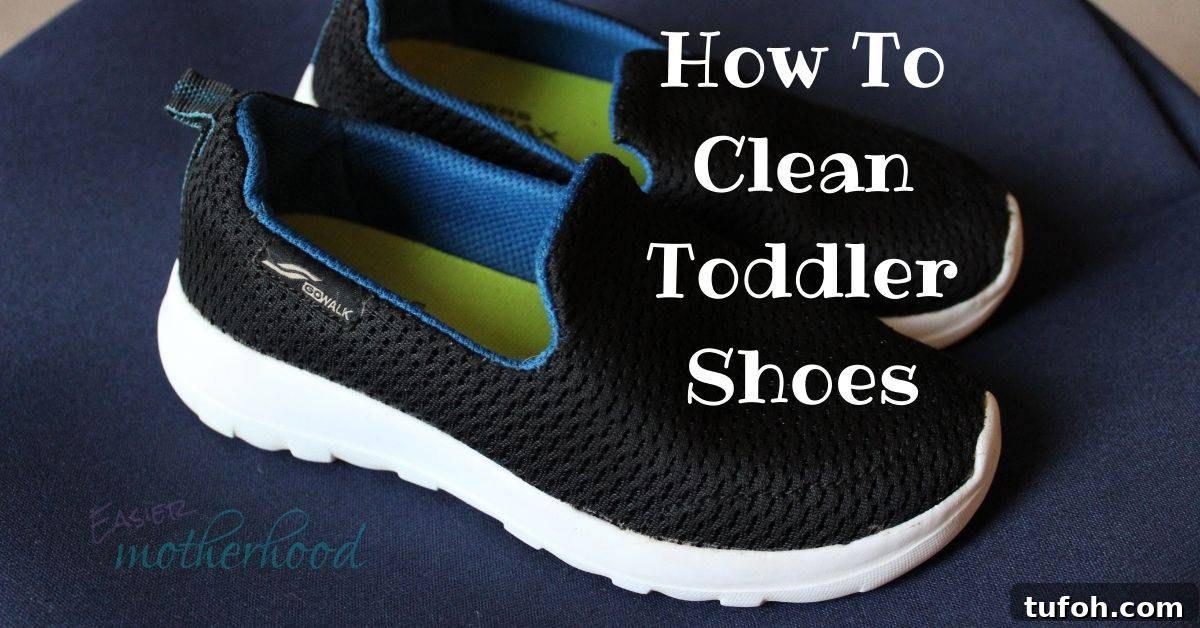
There are many good reasons to clean your toddler’s shoes. Children are active and often messy, but their shoes don’t have to look worn out or stained. Shoes pick up dirt quickly—especially when kids play outside—so a regular, simple cleaning routine can keep them looking fresh. I was rough on shoes as a child, and my son seems to have inherited that habit, so I’ve learned a few practical, gentle ways to restore footwear.
I also buy second-hand shoes and clothes when I can. Babies and toddlers outgrow items so fast that buying used saves money and reduces waste. Anything purchased used should be cleaned before wearing, and shoes are no exception.
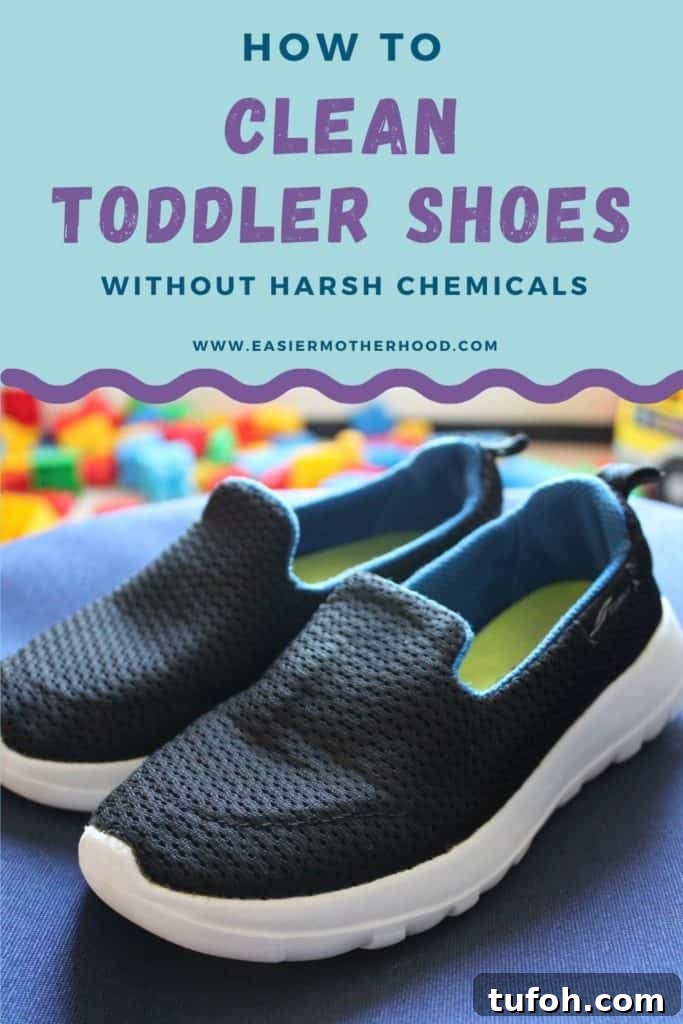
The pair shown above are Skechers I found at a consignment sale for $3. They were in decent condition but had noticeable stains—likely from hiking or outdoor wear. A little cleaning refreshed them nicely without harsh chemicals.
What You Need to Clean Toddler Shoes
Cleaning toddler shoes is simpler than it seems. Instead of strong bleaches or bleaches that only work on white shoes, I prefer a mild, versatile method that works on most fabrics. For a reliable clean you’ll need dish soap (or a mild laundry detergent), baking soda, a sponge, and an old toothbrush for detail work. These supplies are inexpensive and usually already on hand.
This approach works well for canvas shoes, flip-flops, many sneakers, Velcro closures, and slip-ons like the pair pictured. I don’t recommend it for leather or suede because those materials need special care. For delicate fabrics, skip the baking soda since its abrasiveness can be too harsh. For sturdier shoes, the baking soda adds useful scrubbing power.
How to Wash Toddler Shoes with Dish Soap and Baking Soda
Initial wash
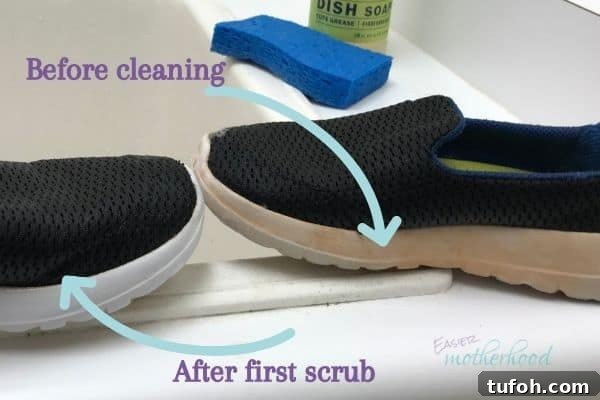
Start by filling a bucket or laundry sink with warm water deep enough to cover at least the soles. Add a small amount of dish soap or laundry detergent and submerge the shoes for about five minutes to loosen surface grime. After soaking, apply a dime-sized amount of dish soap to a sponge and scrub the shoes, beginning with the soles. Use an old toothbrush to work into seams, grooves, and textured areas where dirt hides.
Detail wash
Rinse the shoes after the initial scrub—this often removes a large portion of the dirt. If you want a deeper clean, put another small dab of soap on the sponge and sprinkle a little baking soda on the damp sponge, then scrub again. The baking soda adds gentle abrasion to tackle stubborn stains and ingrained dirt. For delicate materials, omit the baking soda to avoid scratching or discoloration.
Drying
Rinse the shoes thoroughly to remove all soap and baking soda residue. Shake out excess water or lightly tap the soles together, then blot with a towel. Allow the shoes to air dry indoors, in the garage, or outside out of direct sunlight. Avoid high heat from a dryer or prolonged sun exposure, as heat can warp footwear or weaken glues and adhesives.
Why air dry?
Heat can deform shoes, damage materials, and loosen adhesive that holds soles and uppers together. Air drying preserves shape and material integrity. If a shoe loses structure when wet—such as some canvas styles—stuff it with a towel or paper to help it keep shape while drying.
How Often to Clean Kids’ Shoes
If you buy used shoes, wash them before your child wears them. After that, cleaning frequency depends on use and personal preference. Some sources suggest cleaning every two weeks, but for many families that’s more often than necessary. If you leave shoes at the door and avoid wearing them inside, dirt isn’t tracked through the house and you may only need to clean them a few times a year. Families who wear shoes indoors or use them heavily outdoors may want to clean them more regularly.
Ultimately, clean shoes when they look noticeably dirty or stained, or after particularly muddy or messy outings. A quick rinse-and-scrub session can restore most pairs and keep them presentable and comfortable for continued use.