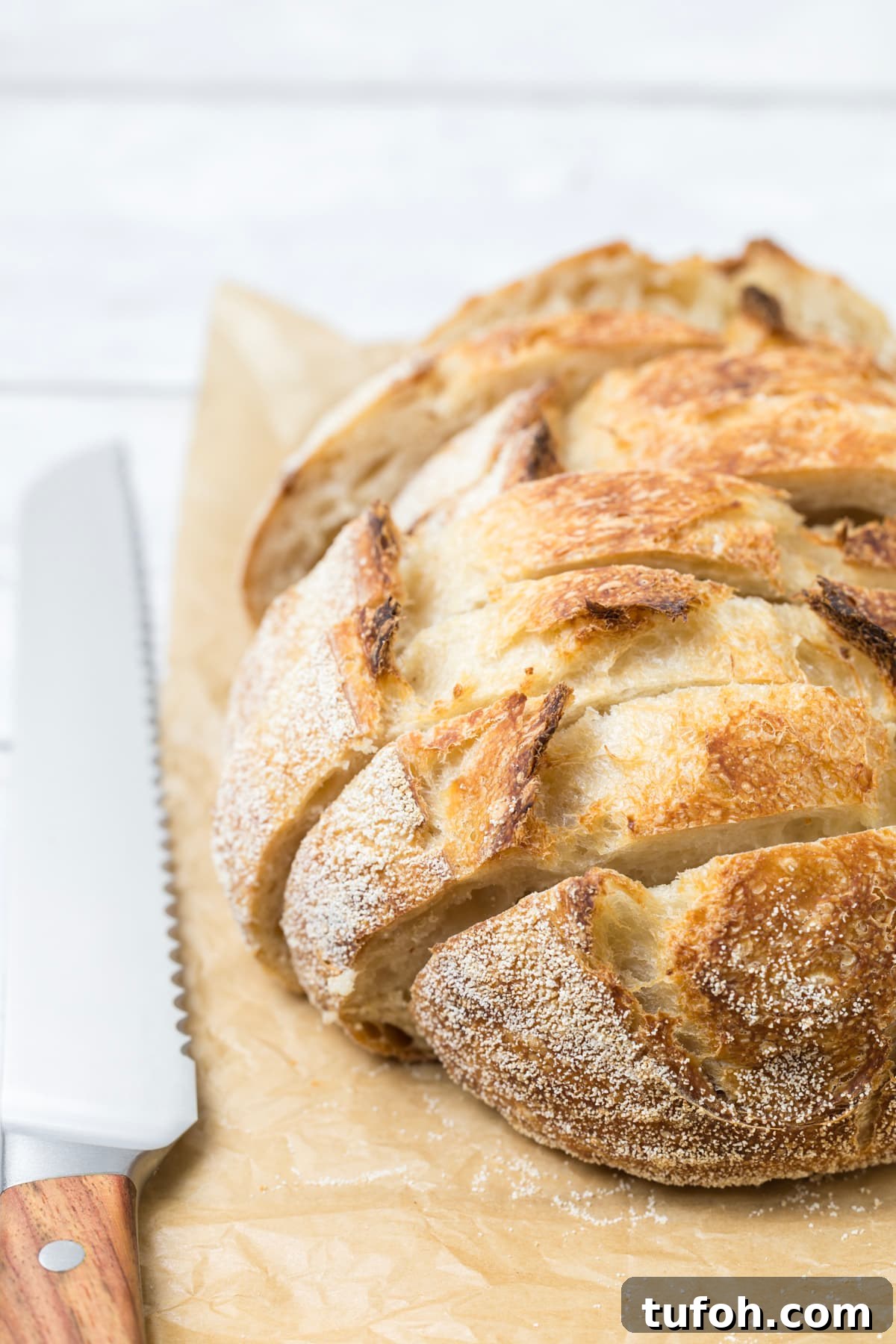
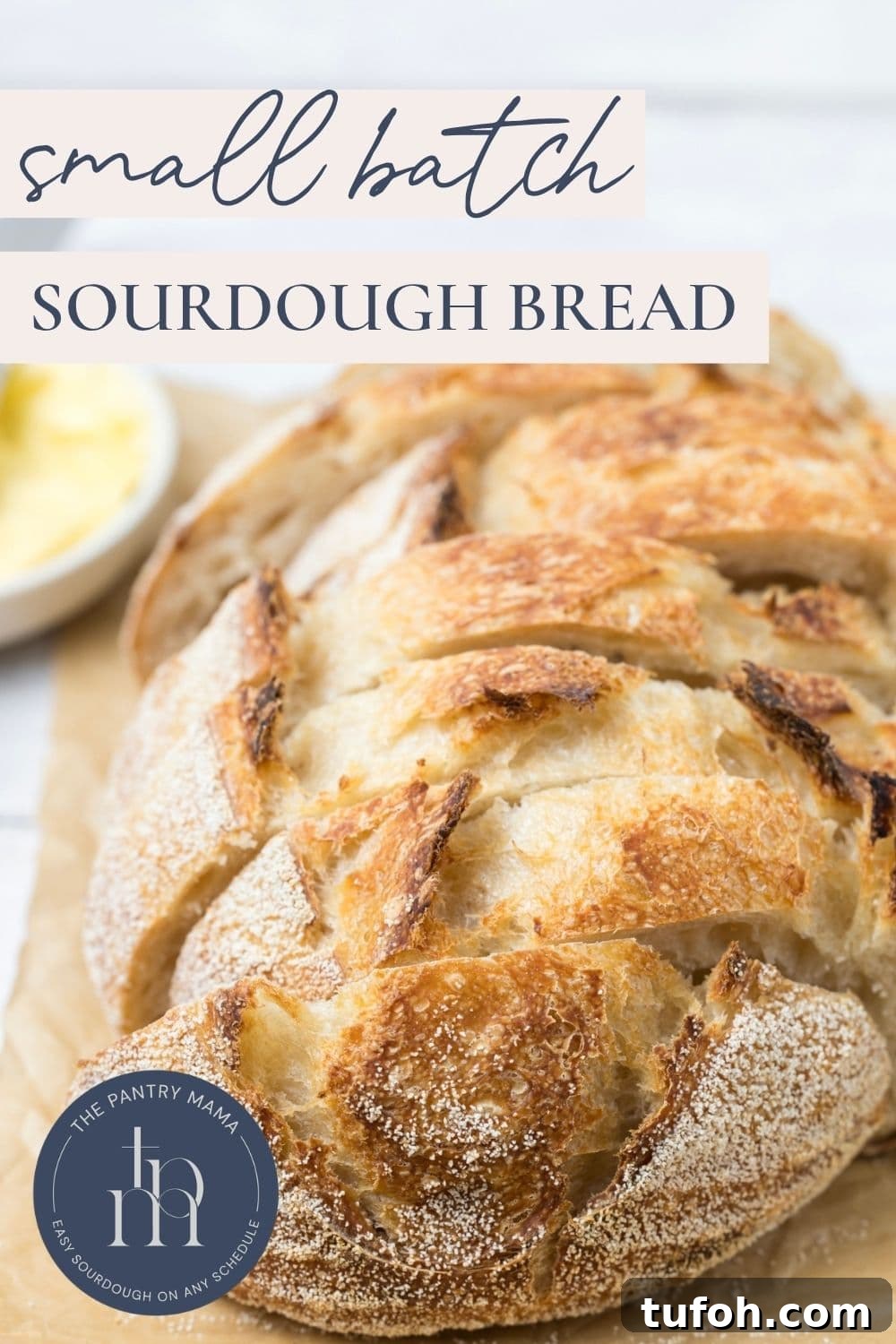
This small-batch sourdough loaf is ideal for anyone who wants a smaller, easier-to-handle sourdough that uses less flour and produces less waste. With just 250 g of flour, this recipe yields a compact loaf with a pleasing sour tang, an open, airy crumb and a crisp crust — all the hallmarks of a great sourdough, but sized for one or two people.
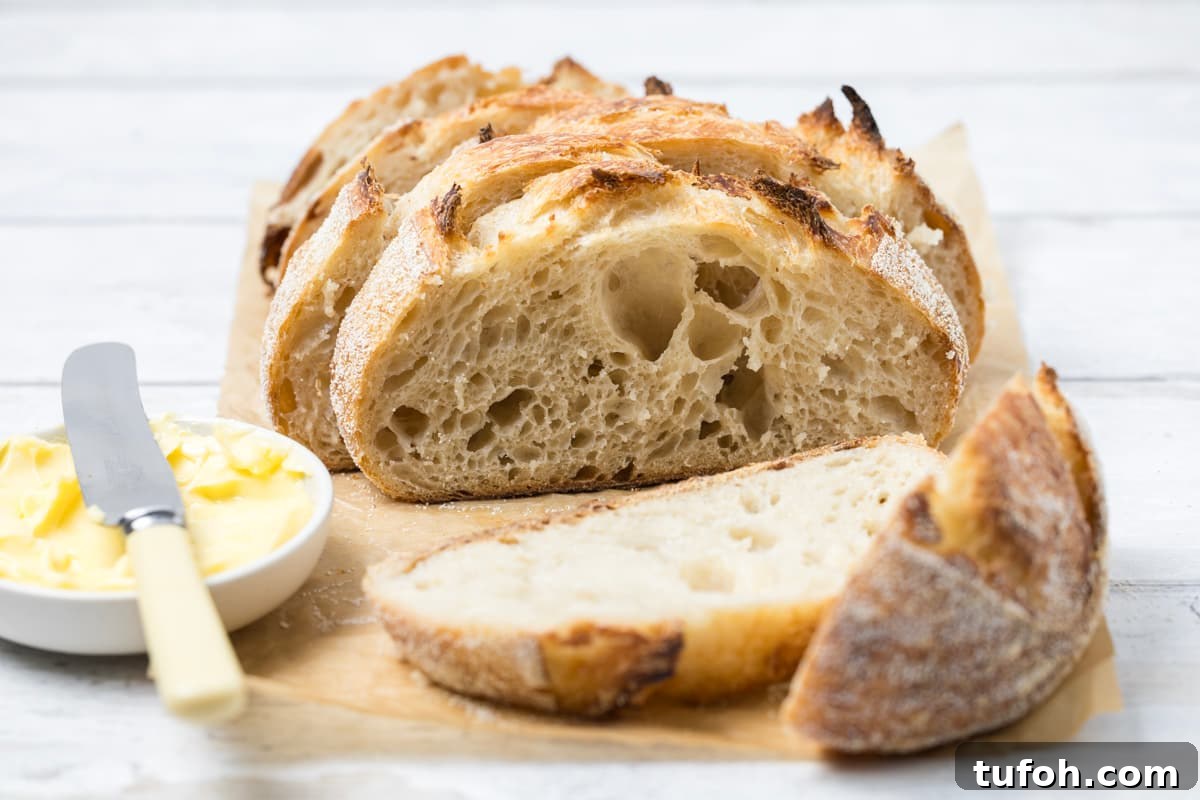
Why Make a Smaller Loaf of Sourdough Bread?
Large sourdough loaves often use about 500 g of flour, which can be a lot if you only need a little bread or if you’re experimenting. A 250 g flour sourdough loaf has several advantages:
- Less waste — less flour is required, so failed bakes or leftovers are less costly.
- Perfect for small households — makes just enough for one or two people over a day or two.
- Great gift size — a small loaf is perfect to share with butter or a jar of jam.
- Easy to test flours — convenient for trying out new flours without committing a large amount.
- Fits smaller equipment — ideal for smaller Dutch ovens, bannetons or toaster ovens.
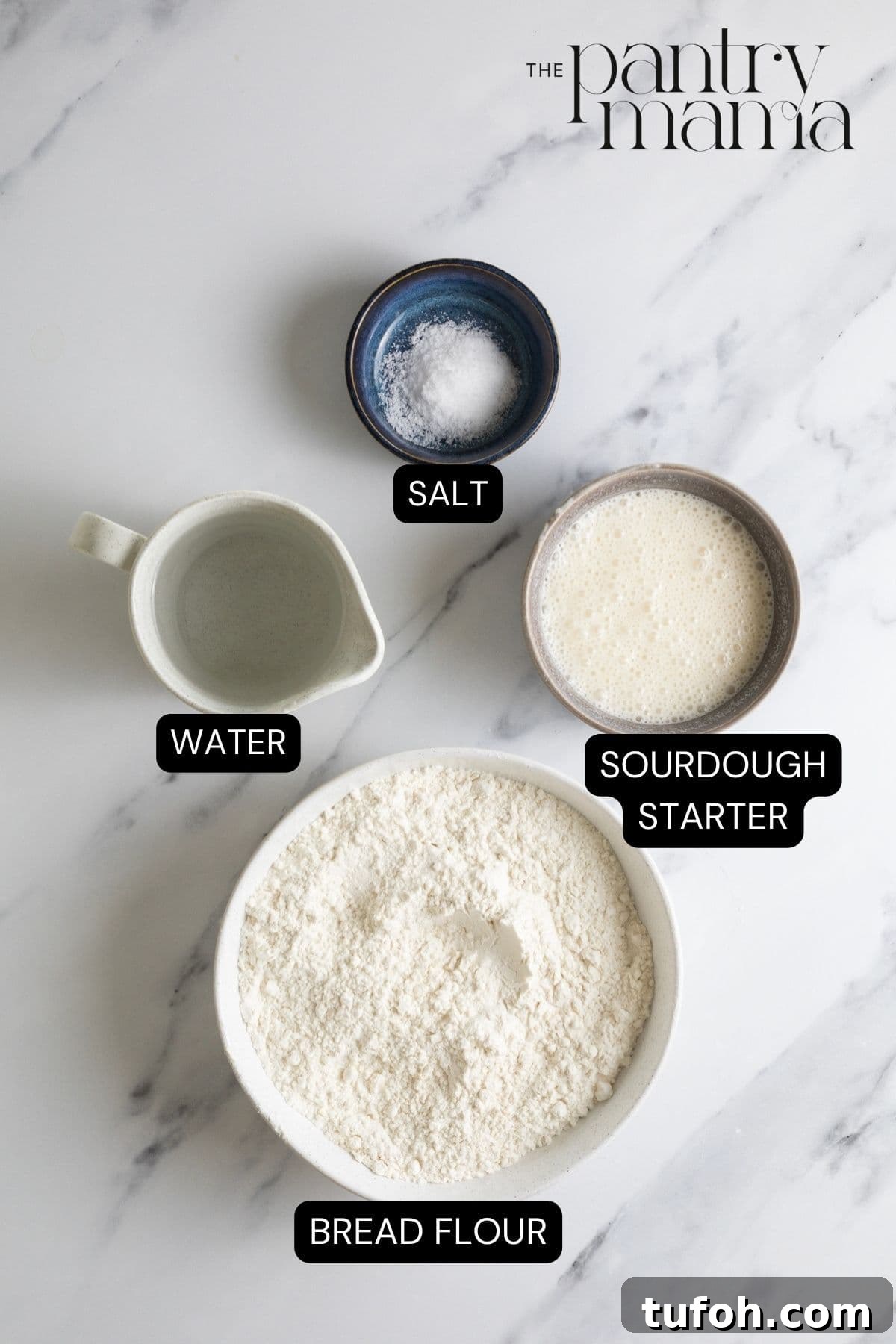
Ingredients
- Bread flour — I recommend a high-protein bread flour for best structure. You can substitute up to half with whole wheat or rye if you prefer (see notes below).
- Water
- Sourdough starter — use an active, recently fed starter. The amount of starter you use can be adjusted for ambient temperature.
- Salt
How to Make Small Batch Sourdough Bread
The method is the same as for a standard sourdough loaf, just scaled down. Start with an active starter that’s been fed and is bubbly. Warmth helps, so keep your starter and dough in a comfortably warm spot if possible.
Weigh the water and active starter into a bowl and mix briefly to combine. Add the flour and salt, then mix until a dry, shaggy dough forms. Cover and rest for about an hour for the fermentolyse/autolyse stage.
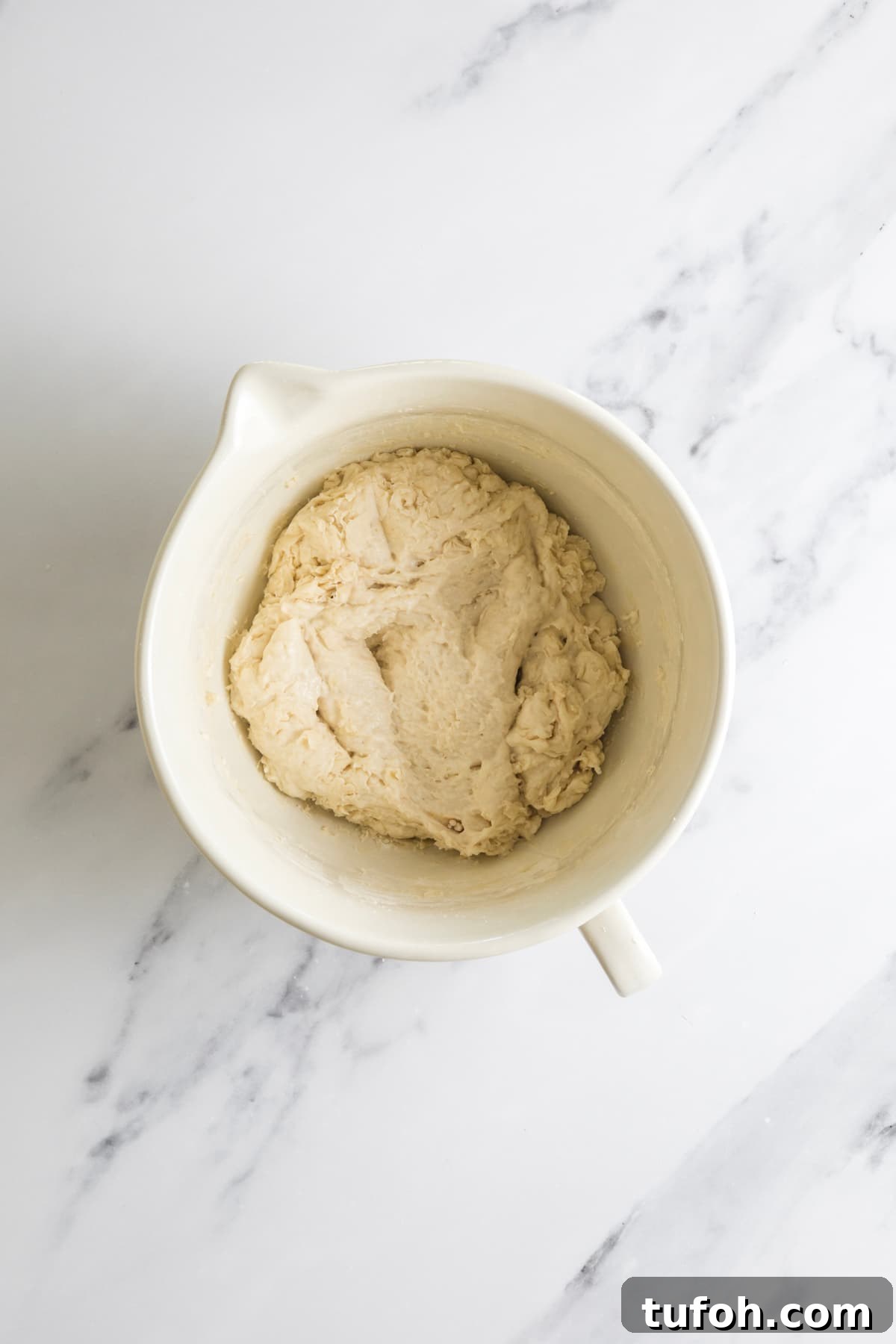
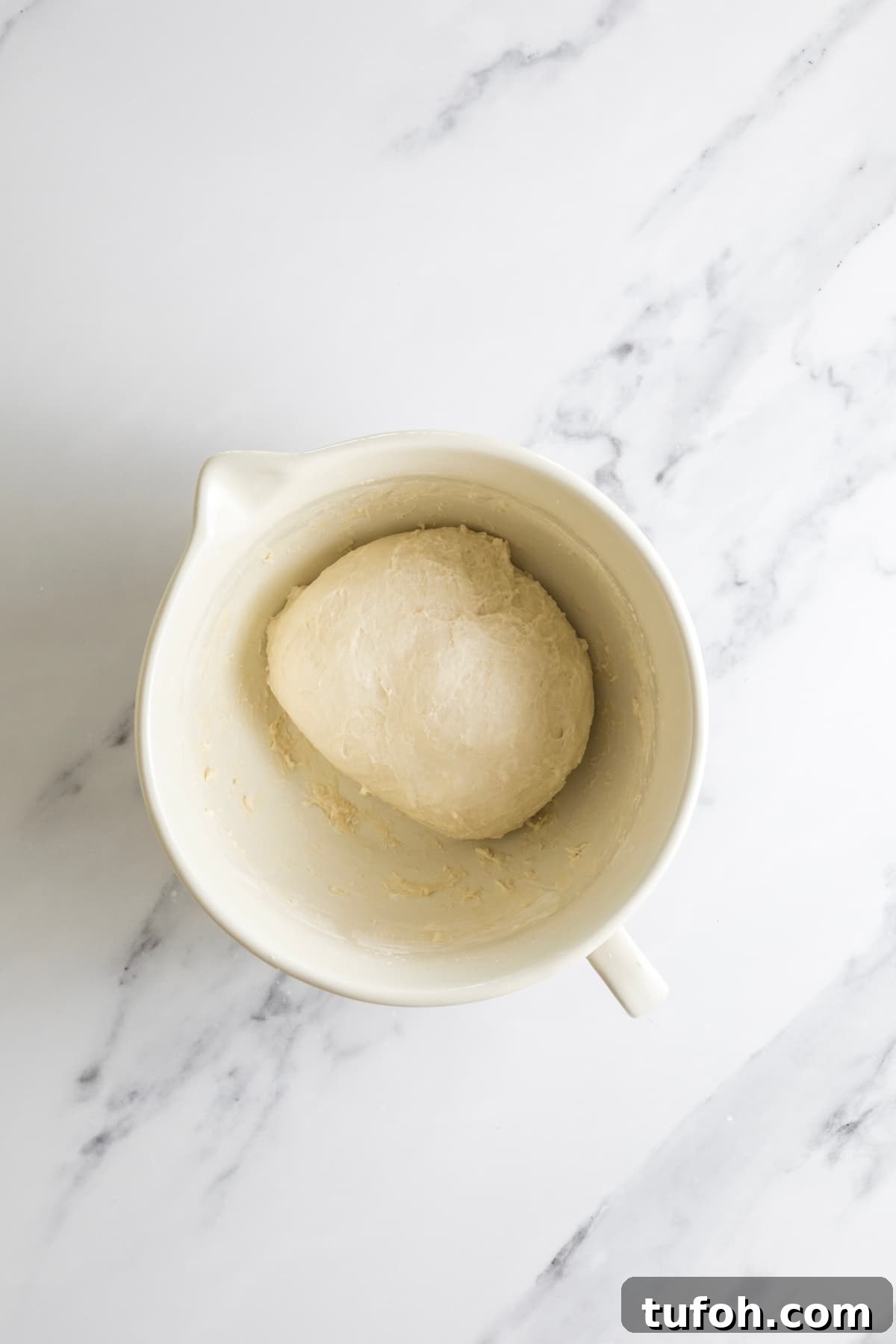
After the rest, bring the dough together into a smooth ball by working around the bowl: grab the dough from the edge, stretch it up and fold it into the center until the surface smooths out (usually 20–25 stretches). Cover and rest for 30 minutes.
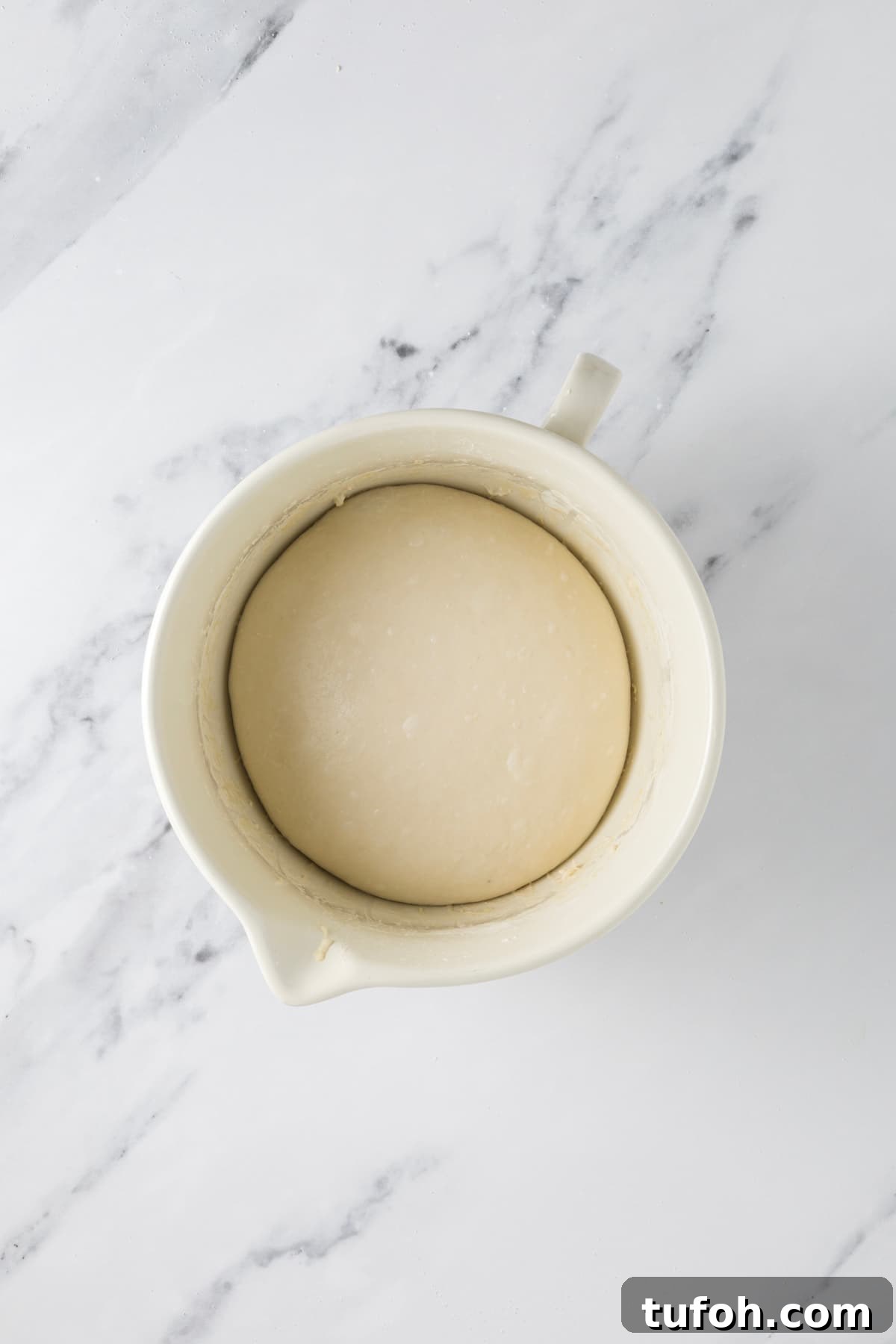
Over the next couple of hours develop gluten and strength with 4–6 sets of stretch-and-folds. For each set, stretch the dough up and fold it over itself 4 times, spacing sets about 15 minutes apart. After the sets are complete, cover the dough and allow it to bulk ferment at room temperature until it roughly doubles in size.
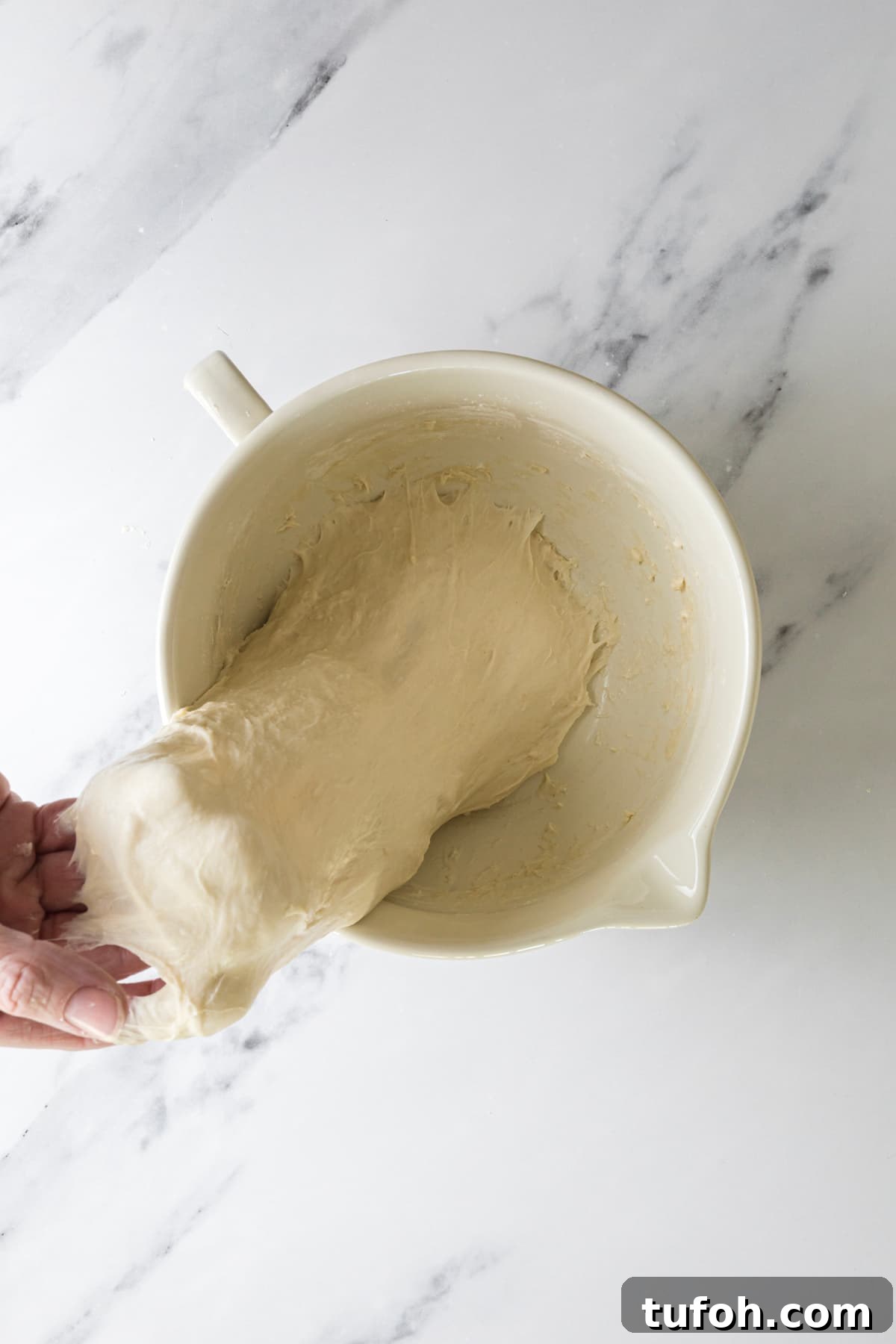
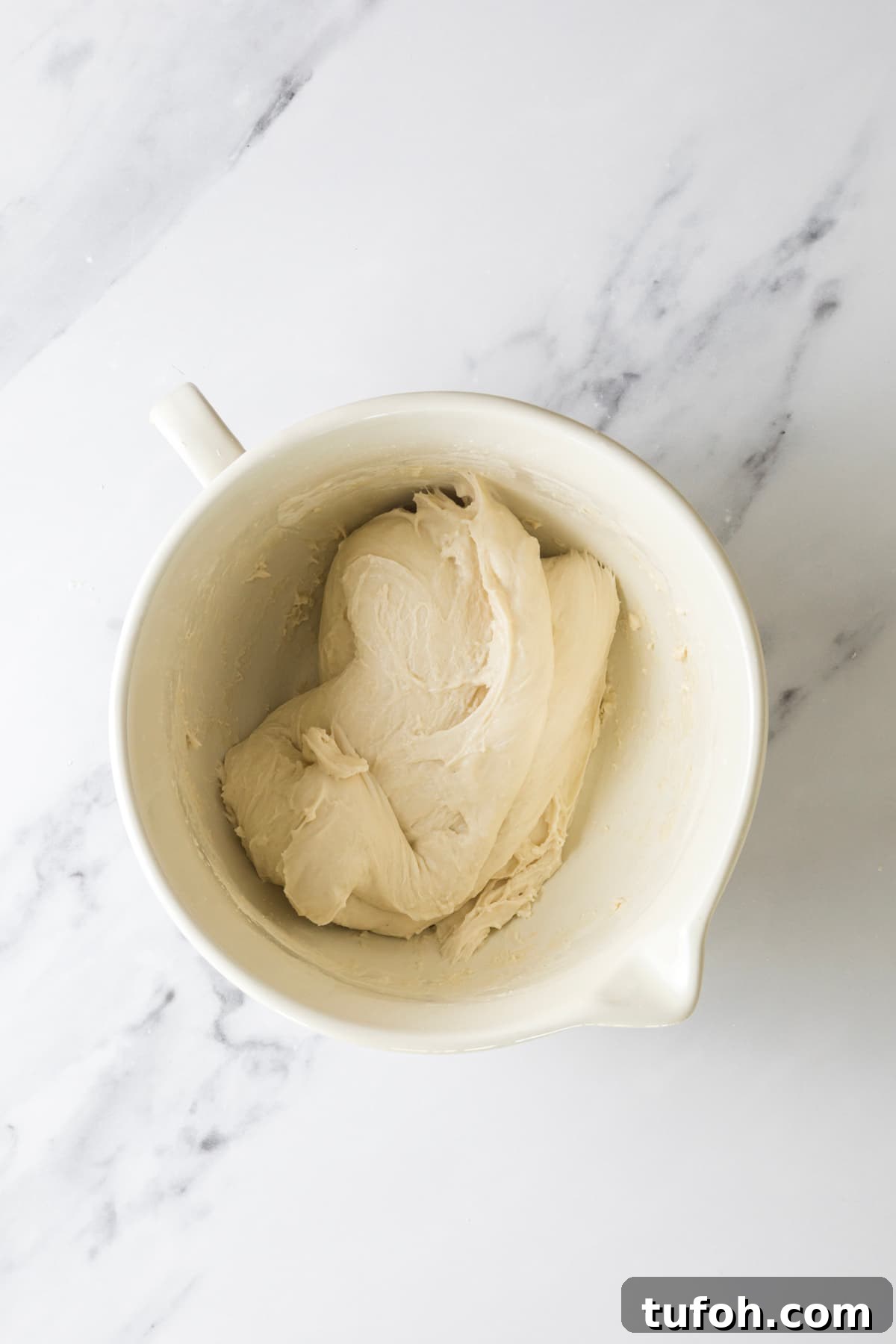
When the dough has developed, shape it into a boule or batard. Turn the dough out onto a lightly floured surface (rice flour is ideal because it’s non-glutenous) with the smooth side down so the seam is up. Pull the edges toward the center, flip and tighten the surface into a taut ball. Place the shaped dough seam-side up into a floured banneton or a bowl lined with a well-floured tea towel.
Kate’s Pro Tip
Fermentation Tip
Monitor your kitchen temperature: fermentation speeds up in warmth and slows down in cooler conditions, so adjust starter amount and timings accordingly.
Cover the proofing container loosely and refrigerate for at least 5 hours and up to 36 hours. A longer cold ferment develops a deeper sour flavor, encourages crust blistering and firms a light skin so scoring is easier.
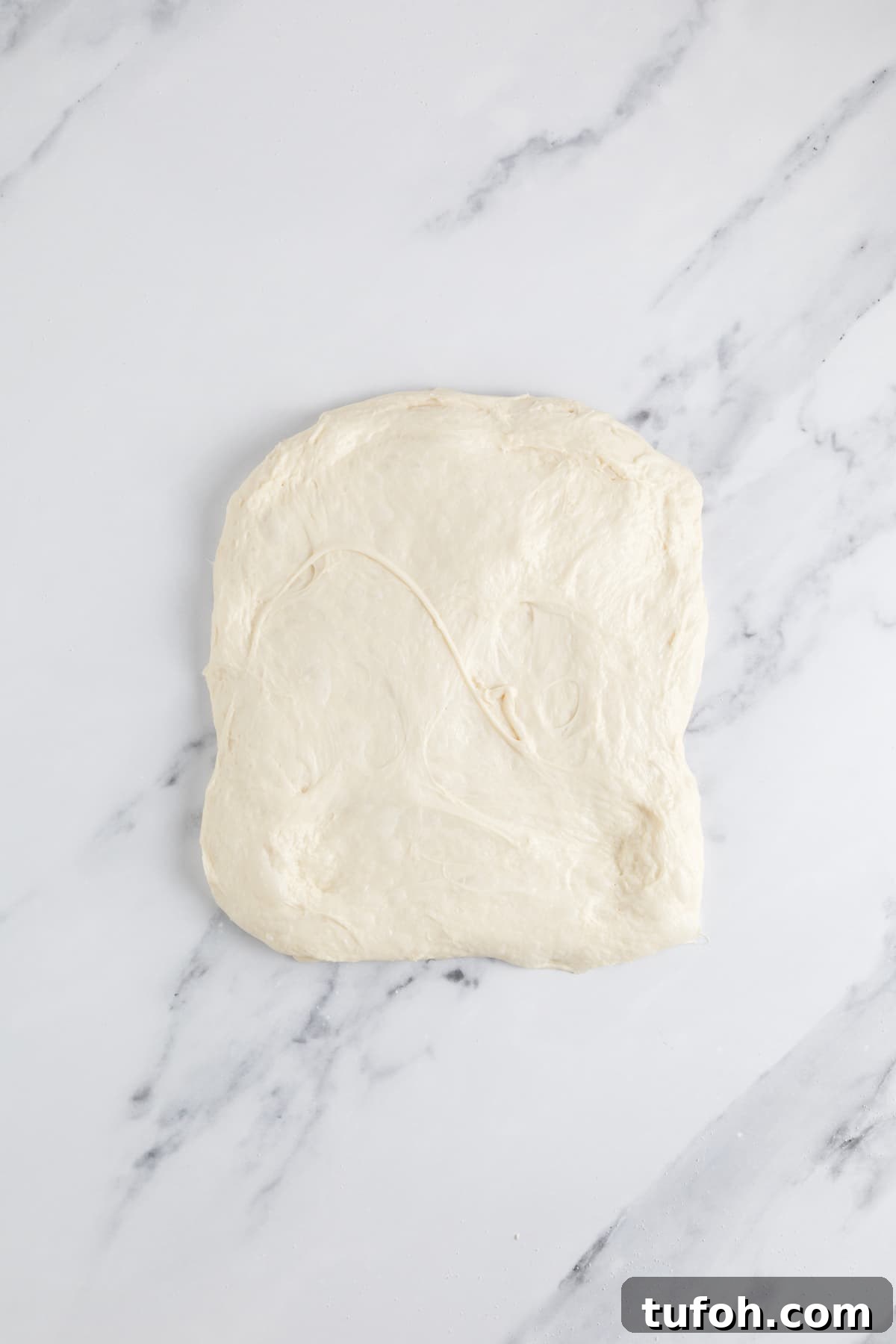
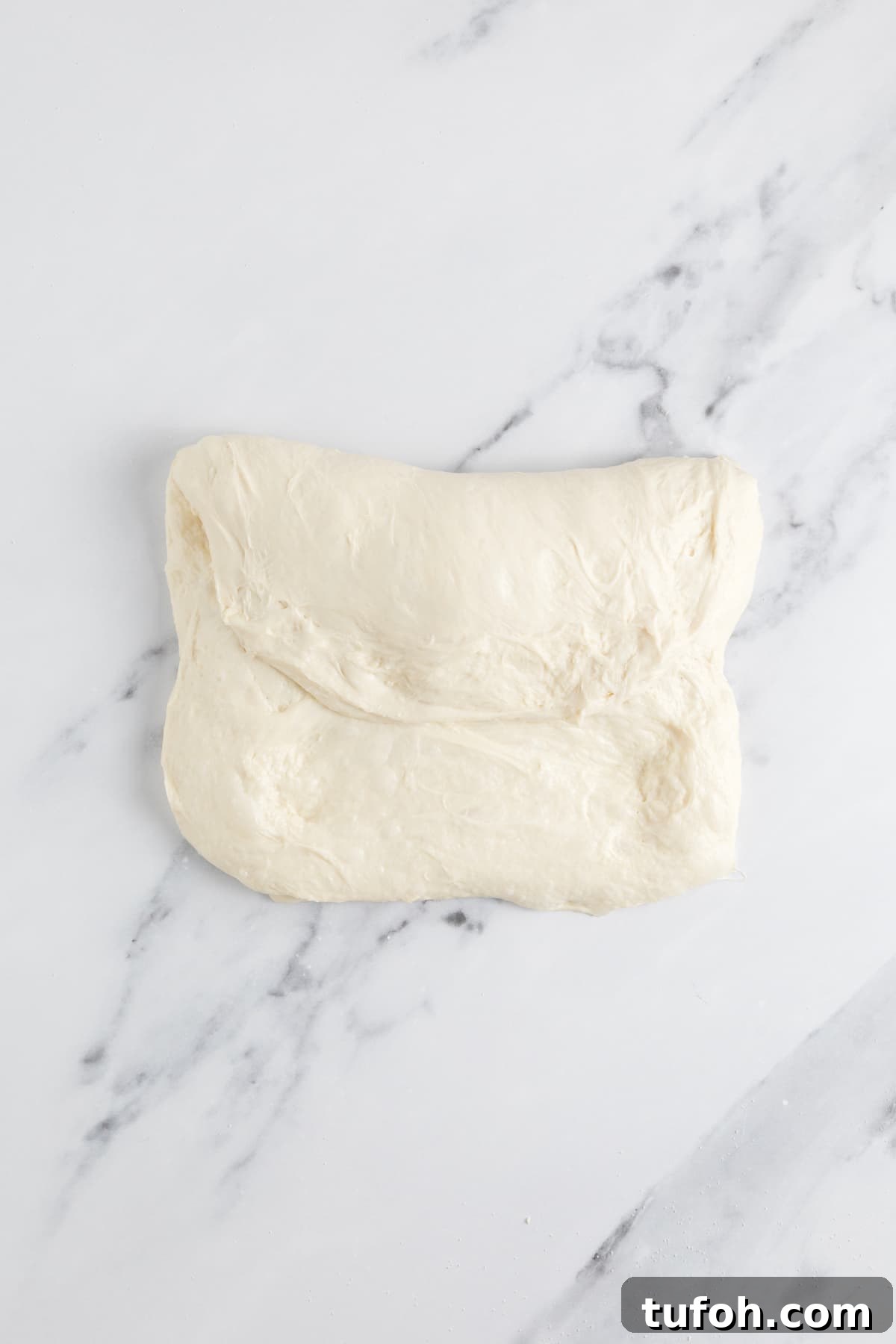
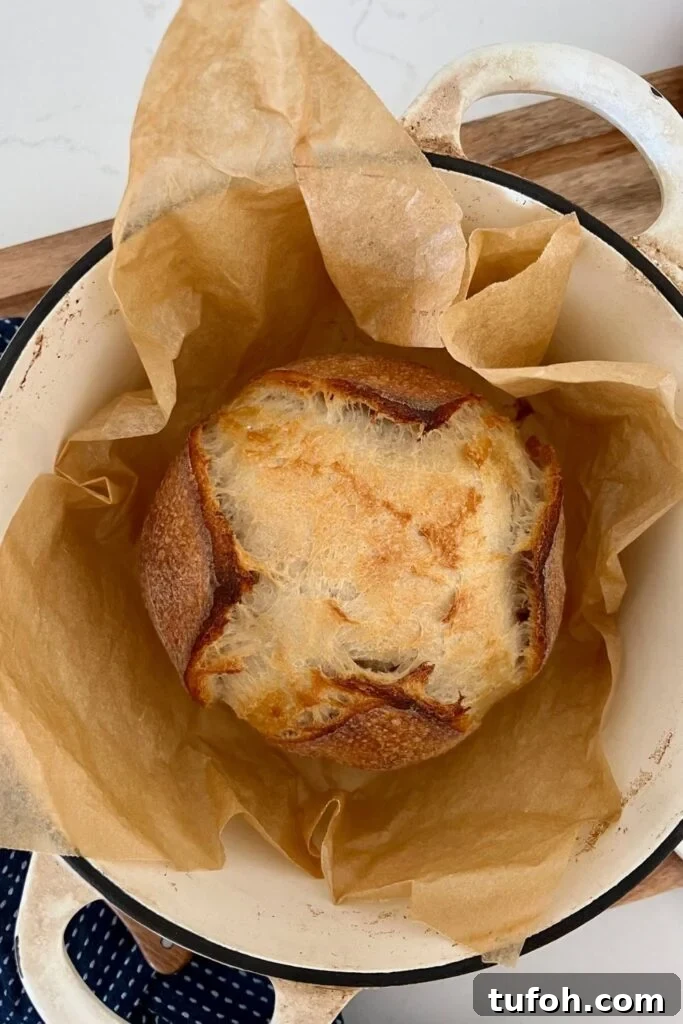
When ready to bake, preheat your oven to 230°C (450°F) with your Dutch oven inside. Remove the dough from the fridge at the last moment and transfer it to parchment paper. Score the top with a razor or lame to control expansion. Carefully place the dough into the preheated pot, replace the lid and bake 30 minutes with the lid on at 230°C, then 10–15 minutes with the lid off at 210°C (410°F) until the crust is deep golden.
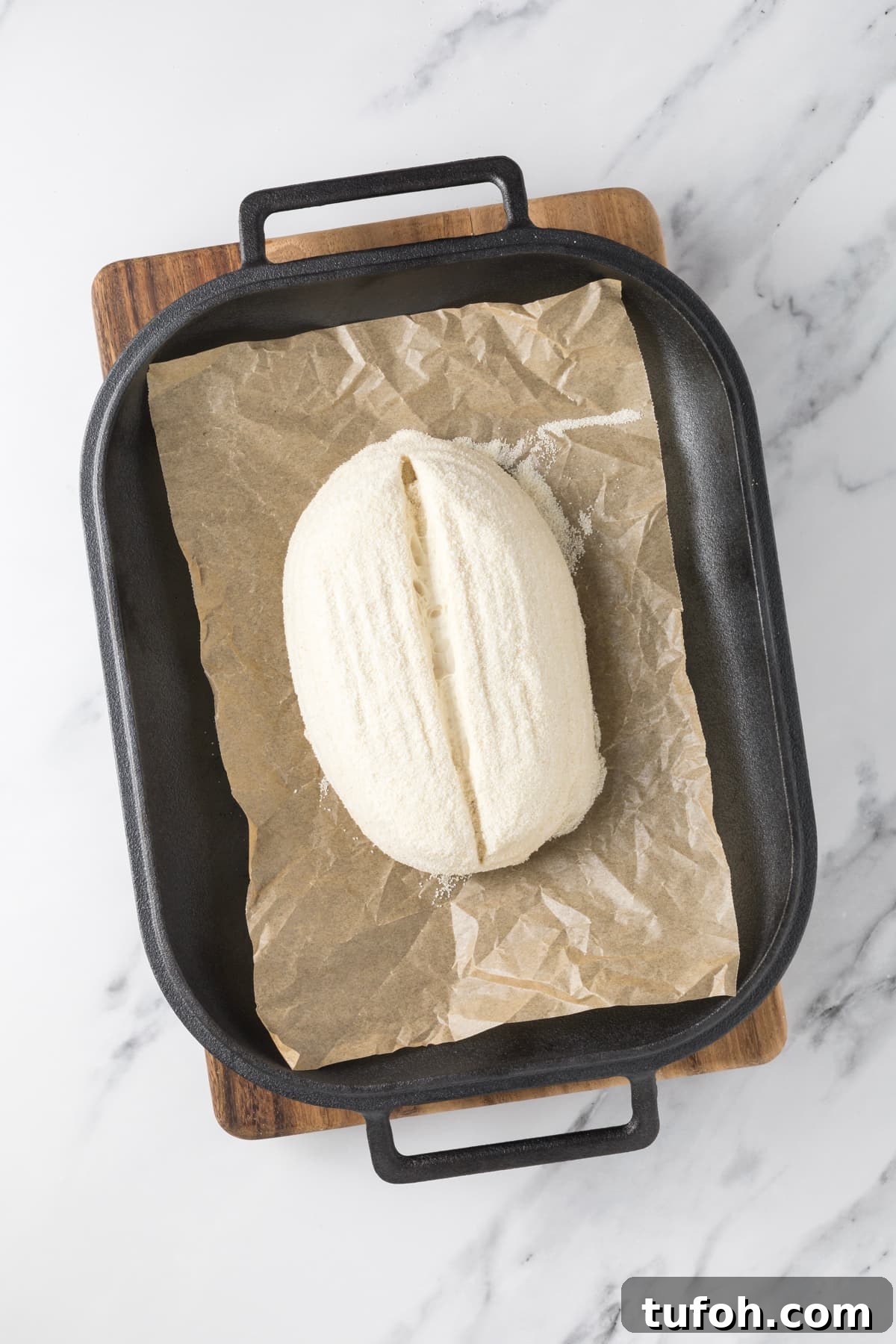
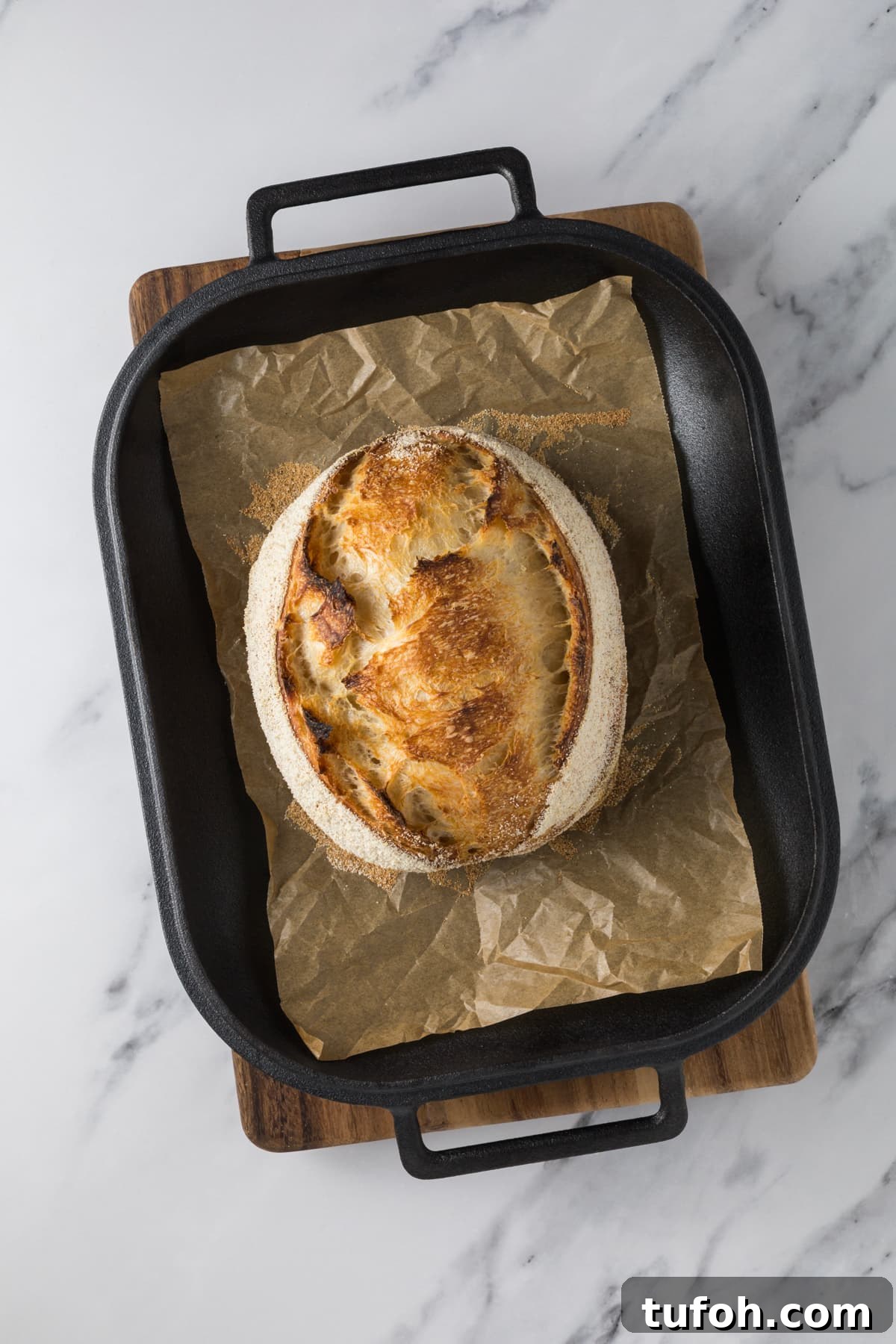
Kate’s Pro Tip
What Dutch Oven to Use?
A 3.1 L / 3.2 Q Dutch oven works well for this size loaf. You can also bake these small loaves in a toaster oven if that’s more convenient.
Baker’s Timeline
Plan a timeline so you’re not doing stretch-and-folds late at night. A sample schedule that works well for this small loaf is:
| TIME | PROCESS |
|---|---|
| 9 am | Mix and fermentolyse for about an hour, then form the dough and rest 30 minutes before the first stretch-and-fold. |
| 11 am | 1st stretch-and-fold |
| 11:30 am | 2nd stretch-and-fold |
| 12 pm | 3rd stretch-and-fold |
| 12:30 pm | 4th stretch-and-fold |
| 1 pm | Bulk fermentation at room temperature |
| 6 pm | Shape into a batard, place in banneton and refrigerate for cold fermentation |
| 9 am | Bake the loaf the next morning |
Best Bannetons for Small Batch Sourdough Loaf
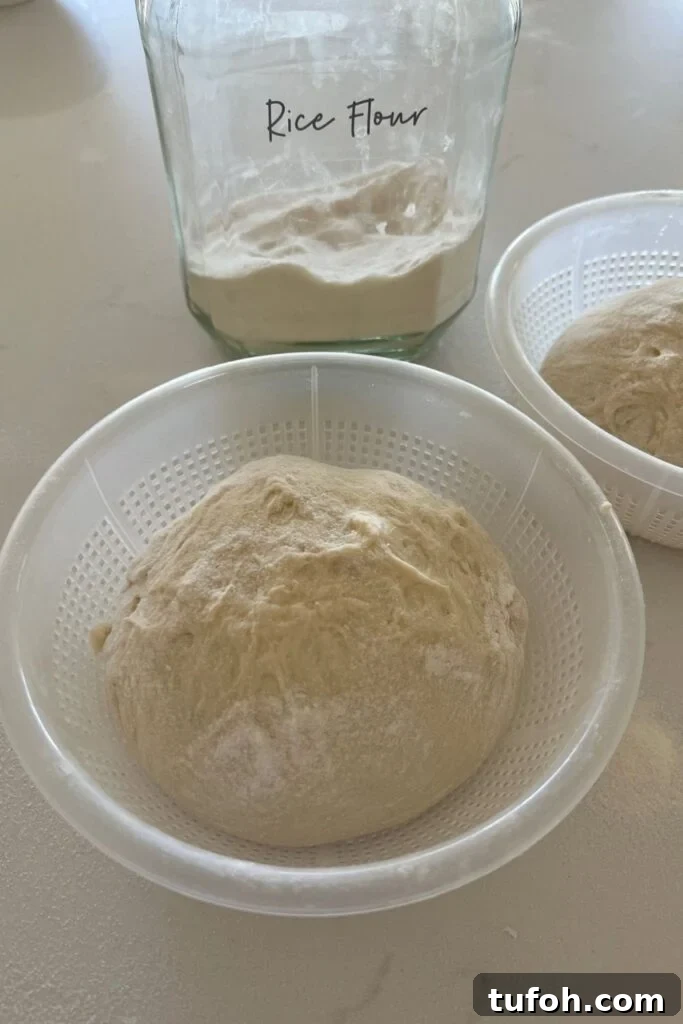
A regular banneton may be too large for a 250 g loaf. Instead, use what you already have: a small soup or cereal bowl works well, and 500 g ricotta baskets are an excellent size for these loaves. Dust with rice flour to prevent sticking, or line a bowl with a rice-floured cloth.
Frequently Asked Questions
Yes. If a recipe is written in grams, you can halve it using baker’s percentages (baker’s math) to keep proportions accurate.
A loaf made with 250 g of flour is a good size for a sourdough bread bowl. Multiply the recipe if you need multiple bowls.
You usually don’t need to change bake time drastically. The same overall times often apply, but watch the final browning period with the lid off so the smaller loaf doesn’t over-brown.
Yes. Substitute up to half the bread flour with whole wheat or rye, keeping in mind that whole grains can reduce oven spring and produce a denser crumb. Adding a small amount of vital wheat gluten can improve structure if needed.
Yes. A common maintenance size is 50 g starter fed with 50 g flour and 50 g water, but you can maintain a smaller starter (25 g or even 5–10 g) as long as you keep feeding ratios consistent. Smaller starters produce less discard and can be scaled up when you’re ready to bake.
Small Batch Sourdough Bread
Equipment
-
Basic kitchen scale
Ingredients
- 250 g Bread flour
- 175 g Water
- 50 g Sourdough starter (fed and bubbly)
- 5 g Salt (adjust to taste)
Instructions
-
Fermentolyse – Premixing the dough
Combine starter and water, mix briefly, add flour and salt, then mix into a shaggy dough. Cover with a damp towel and rest ~1 hour.
-
Forming up the dough
Gather and stretch the dough around the bowl to form a smooth ball (about 20–25 stretches). Cover and rest 30 minutes.
-
Stretch & fold – creating structure
Do 4–6 sets of stretch-and-folds over roughly 2 hours. For each set, stretch and fold 4 times, leaving ~15 minutes between sets.
-
Bulk ferment
Cover the dough and let it bulk ferment at room temperature until it roughly doubles.
-
Shaping the dough
Turn the dough out onto a lightly rice-floured surface with the smooth side down. Pull edges to the center, flip and tighten into a ball. Prepare a floured banneton or bowl to proof.
-
Placing into a proofing container
Place the shaped loaf seam-side up into the prepared container.
-
Cold ferment
Cover loosely and refrigerate for 5–36 hours. Longer cold fermentation enhances flavor, crust development and scoring.
Bake your small batch sourdough loaf
-
Preheat oven to 230ºC/450ºF with a Dutch oven inside. Remove dough from fridge at the last minute, place on parchment, score, and transfer to the hot pot. Bake 30 minutes with the lid on at 230ºC, then 10–15 minutes with the lid off at 210ºC/410ºF.
-
Finishing the bake
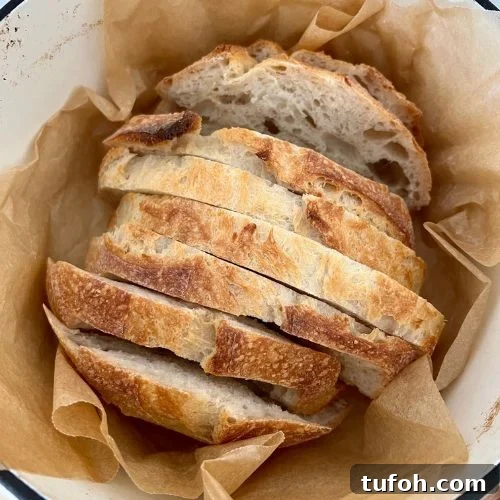
Remove from the oven and cool on a wire rack before slicing.
Nutrition
Nutrition information is automatically calculated and should be used as an approximation.
Like this? Rate and comment below!