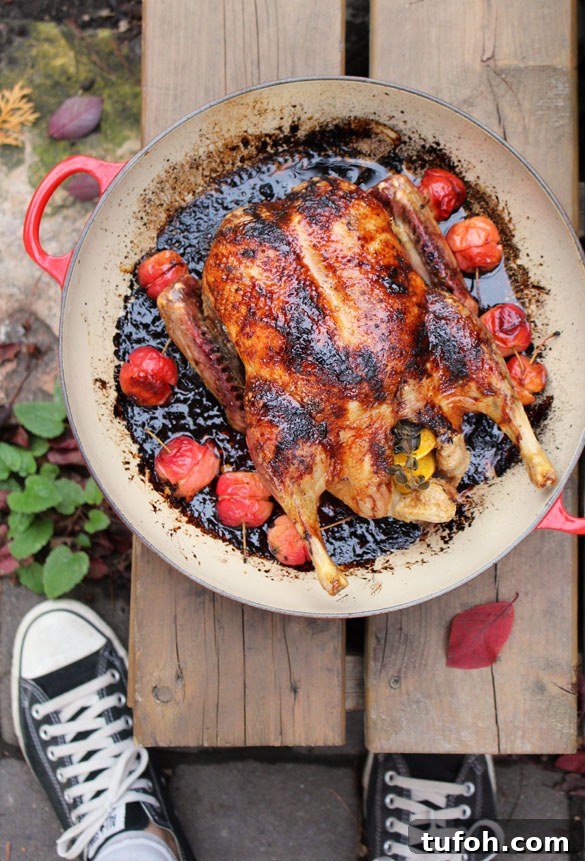
I’ve been cooking a lot of duck recently. It feels like a fresh alternative for holiday meals or any time you want something a little more special than the usual roast poultry. If you like leftovers, a turkey still makes sense, but duck offers a different, richer flavor and a lovely contrast of crisp skin and succulent meat.
Duck has a thicker skin than chicken or turkey and a generous layer of fat beneath. The upside: as it cooks you render a valuable byproduct—duck fat—which stores well in the refrigerator and elevates roasted potatoes, fries, and many other dishes. To render the fat efficiently, prick the skin in a few places with a skewer or fork. Pinching the skin and poking through without piercing the underlying meat helps release fat while keeping the breast intact.
Begin roasting the bird at a moderate temperature so the fat can melt slowly. About halfway through cooking, pour off the rendered fat from the roasting pan; reserve it for potatoes or future use. At this point you can add aromatics—herbs, citrus, garlic—or small fruits like crabapples to flavor the pan and the duck. Toss halved potatoes or crabapples in some of the reserved fat and spread them in the pan so they roast and caramelize during the second half of cooking. The result is crisp skin, glossy caramelization on the fruit and potatoes, and richly flavored meat.
I didn’t take many process photos this time—partly because I was working early in the morning when it was still dark. Early starts can make documentation difficult, but the method is straightforward and forgiving. If you like a sticky, glazed finish, brush the duck with a fruit jelly or glaze during the final minutes of roasting. I had a jar of crabapple jelly that hadn’t fully set during the canning process, so I set a small amount aside and used it to glaze the duck toward the end. Glazing late in the roast lets the skin crisp first and prevents the sugars from burning. You can use any fruit jelly or preserve you prefer; a well-balanced sweet-tart jelly complements the duck’s richness.
Key tips for a great roast duck:
- Pat the duck dry before cooking to encourage crisp skin.
- Prick the skin in several places without piercing the meat to render fat effectively.
- Start at a moderate oven temperature so fat renders gradually, then increase slightly at the end for crisping.
- Reserve and reuse rendered duck fat for potatoes or frying—it’s intensely flavorful and keeps well in the fridge.
- Glaze at the end of cooking if you want a shiny, flavored crust; apply glazes only once the skin is already crisping to avoid burning.
Duck is forgiving once you understand the fat-rendering step. By removing excess fat partway through the roast and concentrating flavors in the pan, you get a beautifully textured bird with layered savory and sweet notes. Serve with roasted potatoes, caramelized fruits, or a simple green salad to balance the richness.
Whether you’re planning an alternative holiday centerpiece or a special weekend meal, roast duck rewards the extra attention with bold flavor and satisfying results. Keep a jar of rendered duck fat in your fridge for future roasting and frying projects—you’ll find it an indispensable ingredient once you start using it.