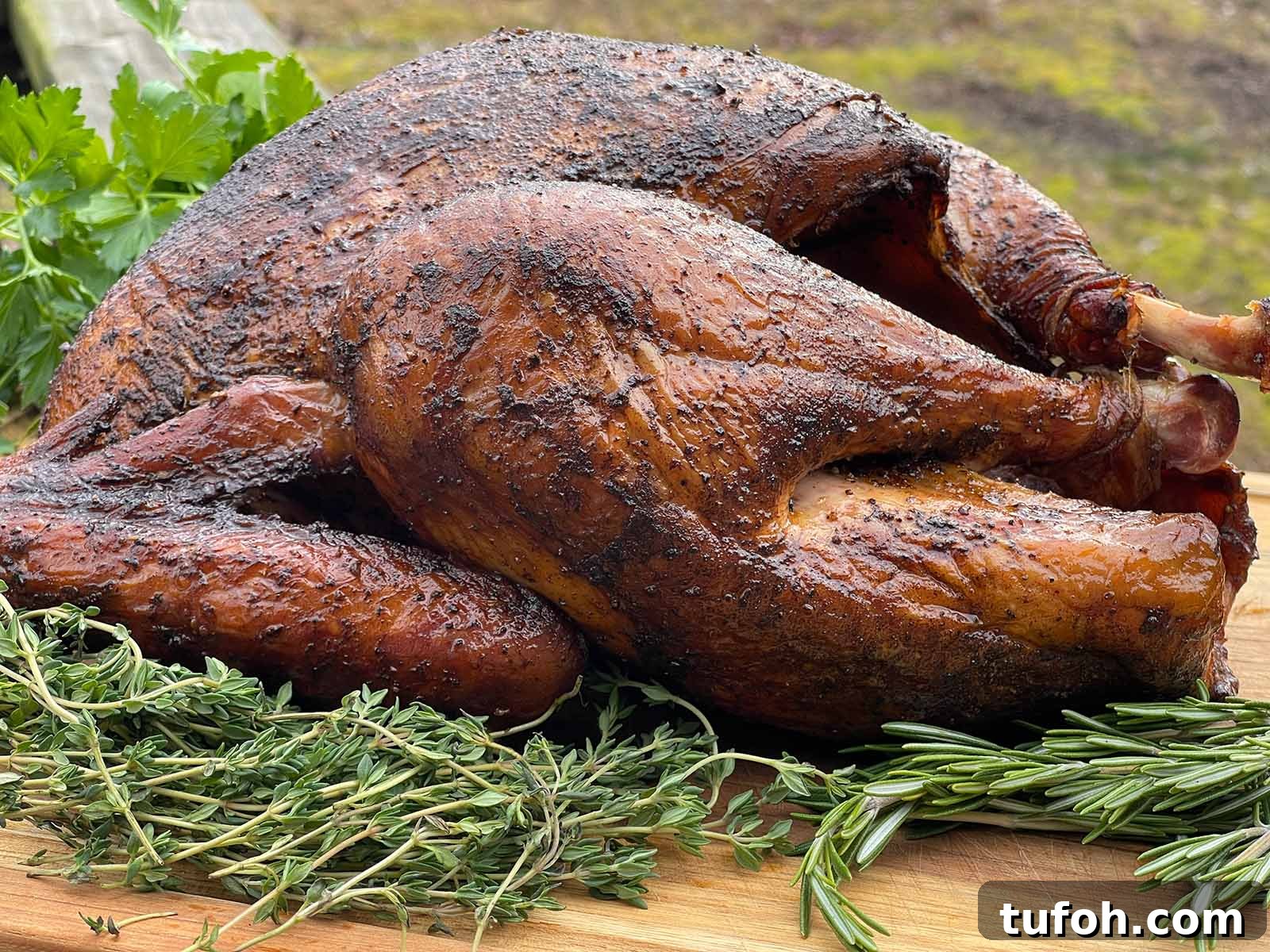
Smoking a whole turkey isn’t just for holidays — it’s a reliably delicious technique you can use any time. A dry-brined bird cooked over steady smoke produces juicy breast meat, tender dark meat, and a versatile finished product that works for main meals, sandwiches, soups, and stock.
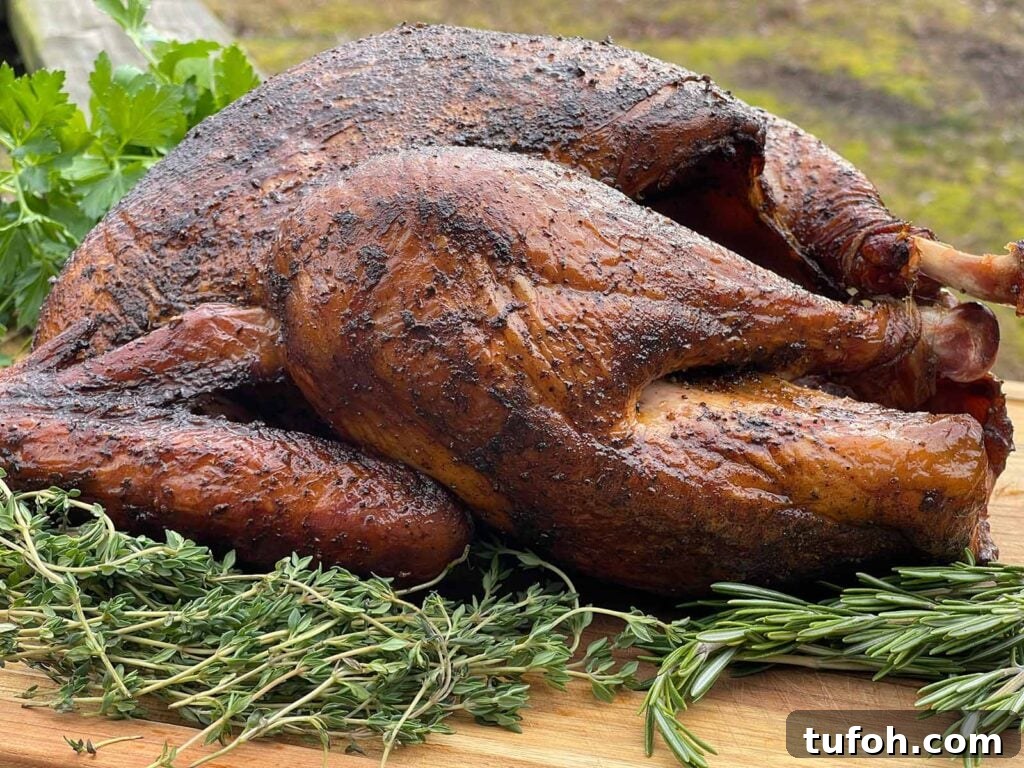
Why You Will Love This Recipe
This method delivers rich, smoky flavor with minimal fuss. A simple dry brine of common spices and a bit of time creates one of the most moist and flavorful smoked turkeys you’ll make at home. The result is versatile: serve it as the centerpiece of a meal, use leftovers in sandwiches, turn meat into soups or stews, and save the carcass for stock. It’s efficient cooking that rewards planning.
How To Smoke A Whole Turkey
Step 1: Thaw the Turkey
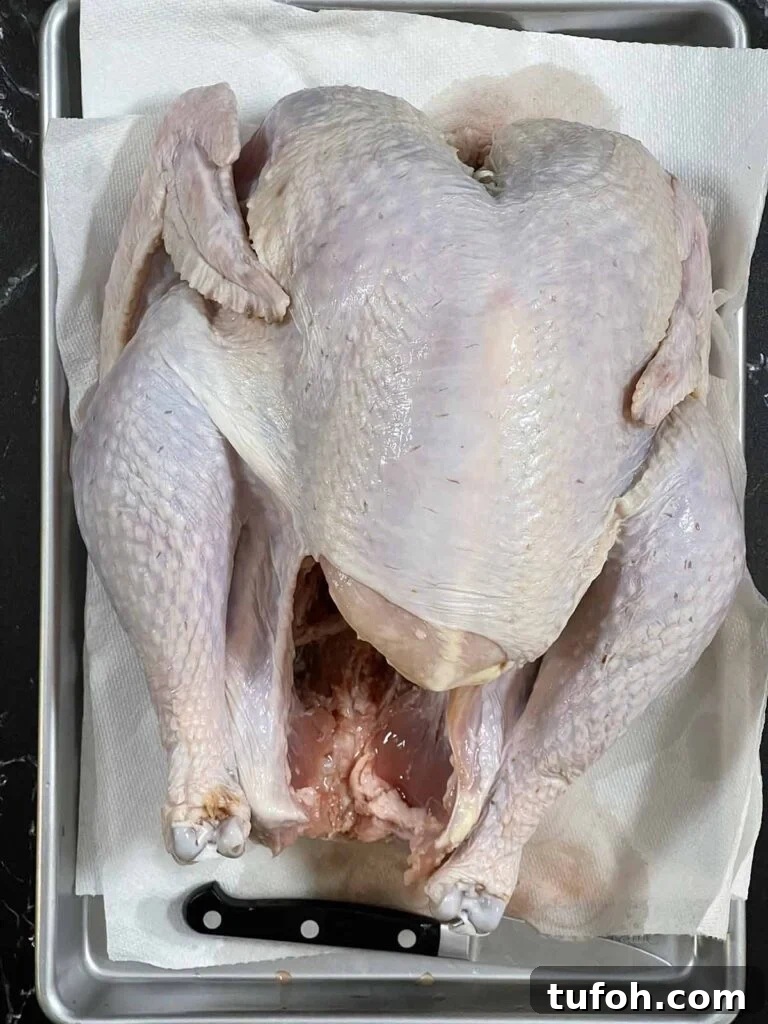
Fully thaw the turkey in the refrigerator. Plan on about one day of fridge thawing for every 4–5 pounds: a 10-pound bird usually takes 2–3 days; larger birds may need up to a week. Leave the turkey in its original packaging on a rimmed tray to catch any liquid. Remove the giblets and neck before seasoning and pat the bird dry with paper towels. Save the giblets if you plan to make gravy or stock.
Refrigerator thawing guide
- 8–12 lb turkey: 2–3 days
- 12–16 lb turkey: 3–4 days
- 16–20 lb turkey: 4–5 days
- 20–24 lb turkey: 5–6 days
Step 2: Make the Dry Brine
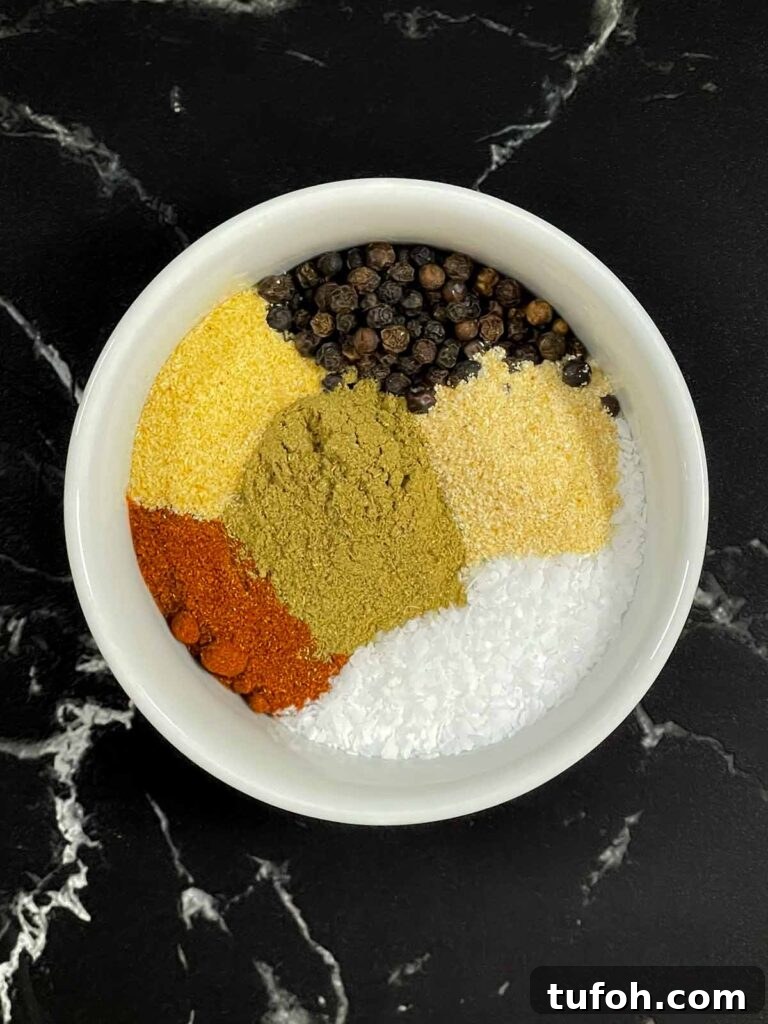
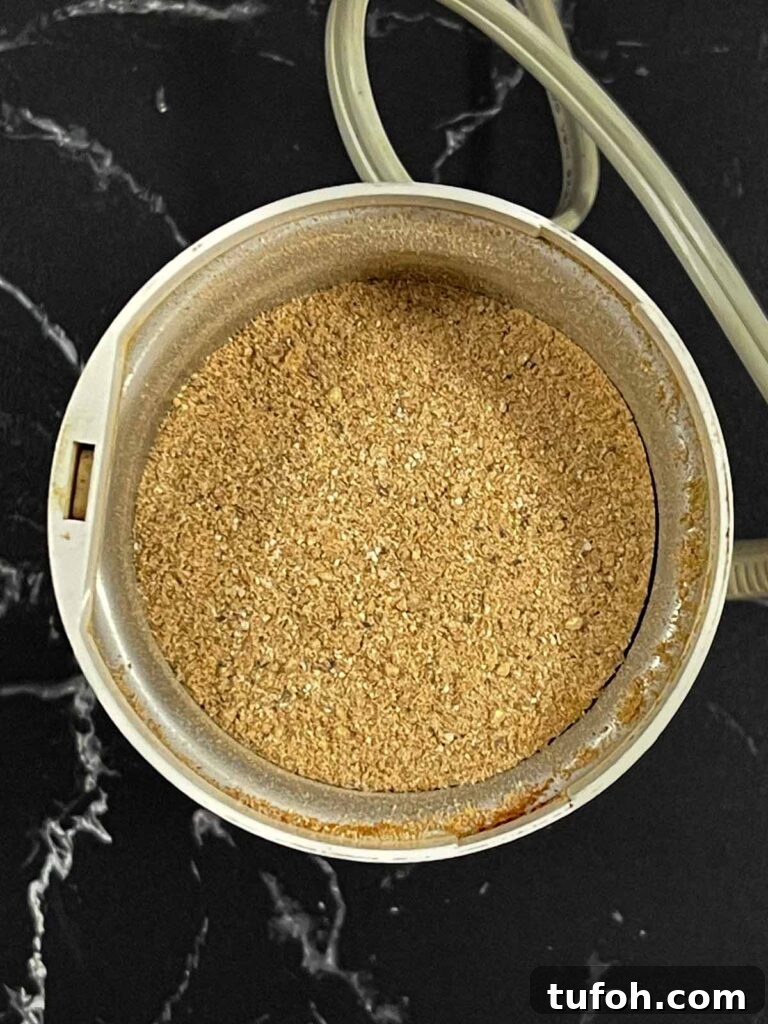
This dry brine uses classic poultry flavors. If you have whole peppercorns, grind them with the other spices for an even blend that adheres well to the turkey.
Add these to a spice grinder and pulse until fairly fine:
- 2 tbsp kosher salt
- 1 tbsp black peppercorns
- 1 tbsp paprika
- 2 tsp poultry seasoning
- 1 tsp garlic powder
- 1 tsp onion powder
If you don’t have a grinder, substitute 1 tablespoon freshly ground black pepper and mix everything in a bowl. Grinding yields a more uniform seasoning, but the substitution still works well.
Step 3: Apply the Dry Brine & Rest
Place the thawed turkey on a cutting board and pat it dry. Sprinkle the dry brine evenly over the entire bird, coating all sides. Working the seasoning under the skin over the breast can speed seasoning, but it isn’t necessary if you allow the turkey to dry-brine for 24 hours or longer — the salt will penetrate the meat from the surface.
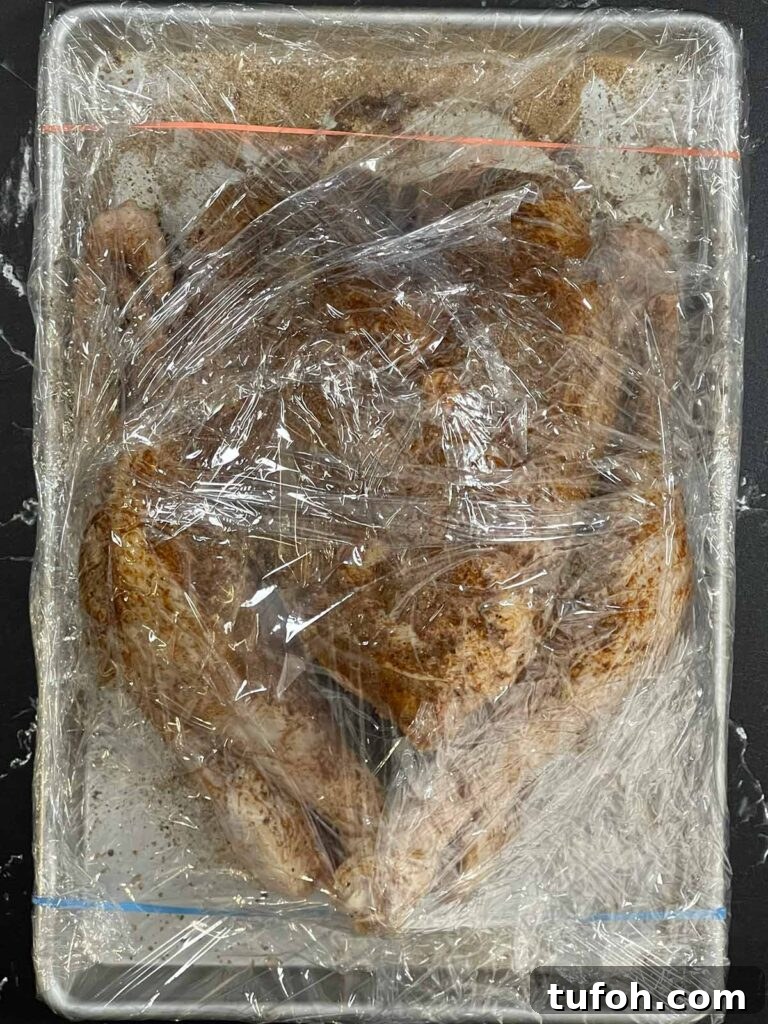
Wrap the seasoned turkey tightly in plastic wrap and refrigerate for 24–48 hours. This time allows the brine to do its job and improves moisture and flavor. After brining, unwrap, pat dry, and move to the next step.
Step 4: Air-Dry the Turkey
Unwrap the turkey, pat it dry again, and place it on a rack over a sheet pan in the refrigerator, uncovered, overnight. Exposing the skin to the cool, dry air helps it dry out so it takes on smoke and color more evenly during cooking. If fridge space is tight, leave some airflow around the bird and avoid pressing it against other items.
Step 5: On the Smoker
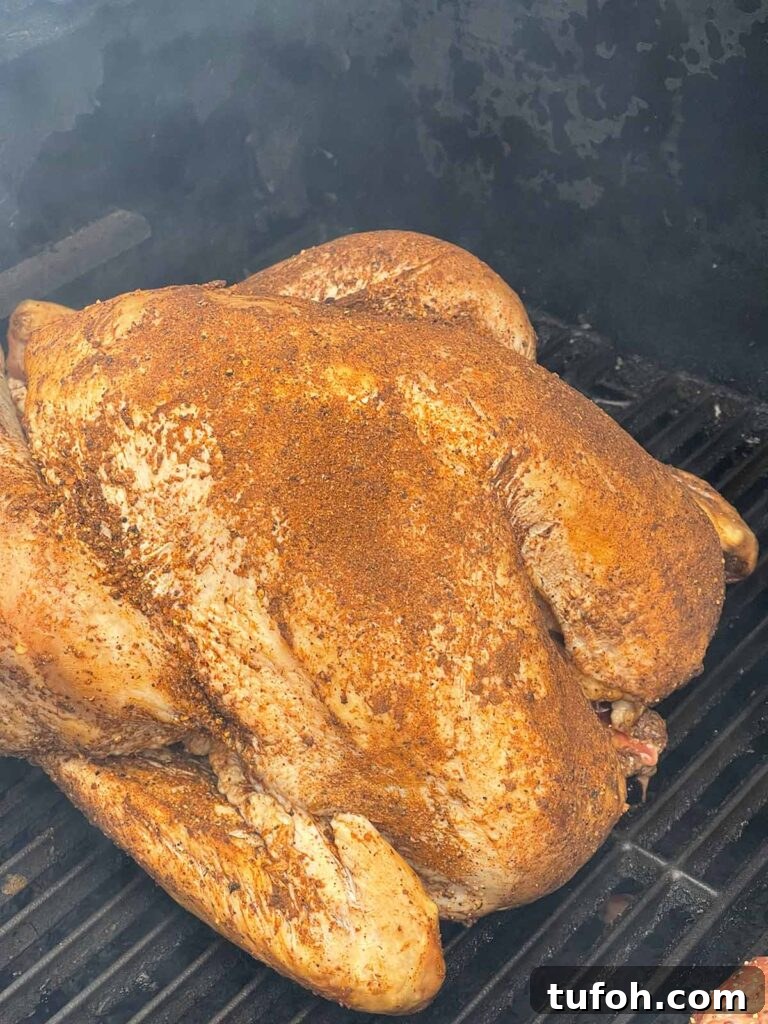
Preheat your smoker to 250°F and set it up for indirect heat. Place the turkey on the grate breast side up. Rotate the bird 90 degrees every 30–45 minutes so the parts that need more heat (usually the thighs) face the hotter side of the smoker. Lightly spritz with a mixture of apple cider vinegar and water as needed — this helps prevent the surface from drying out too quickly and improves color, not to add moisture to the meat.
At 250°F, expect roughly 4 hours for a 10-pound turkey, but let internal temperatures guide you rather than time alone. Keep the heat steady, make small position adjustments, and let the smoker work its magic.
Step 6: Finish & Temperature Targets
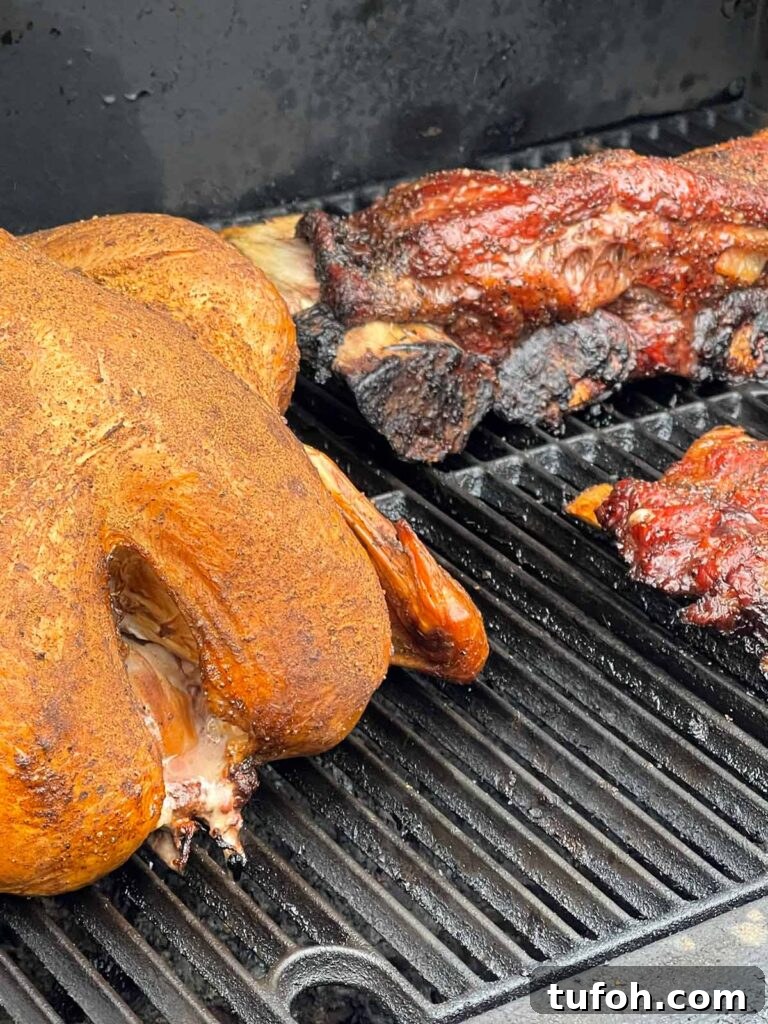
During the final hour to hour and a half, baste the turkey once or twice with melted butter to enhance color and add richness without overpowering the smoke. When the turkey is within about 10–15°F of the target, raise the smoker temperature to around 375°F and cook for 15–20 minutes to tighten and lightly crisp the skin.
Target internal temperatures:
- 160°F in the thickest part of the breast
- 170°F in the deepest part of the thigh
Remove the turkey when those temperatures are reached. Carryover cooking while the bird rests will bring it the rest of the way. If tips of legs or wings brown too quickly during the high-heat finish, loosely tent them with foil to protect those thin areas.
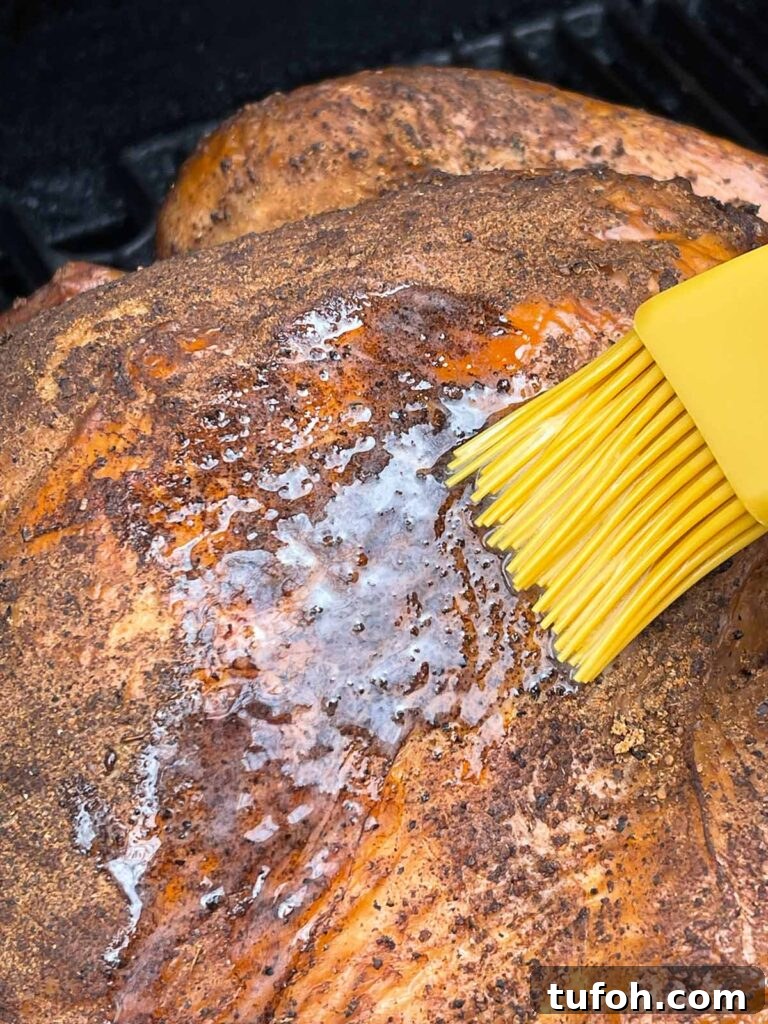
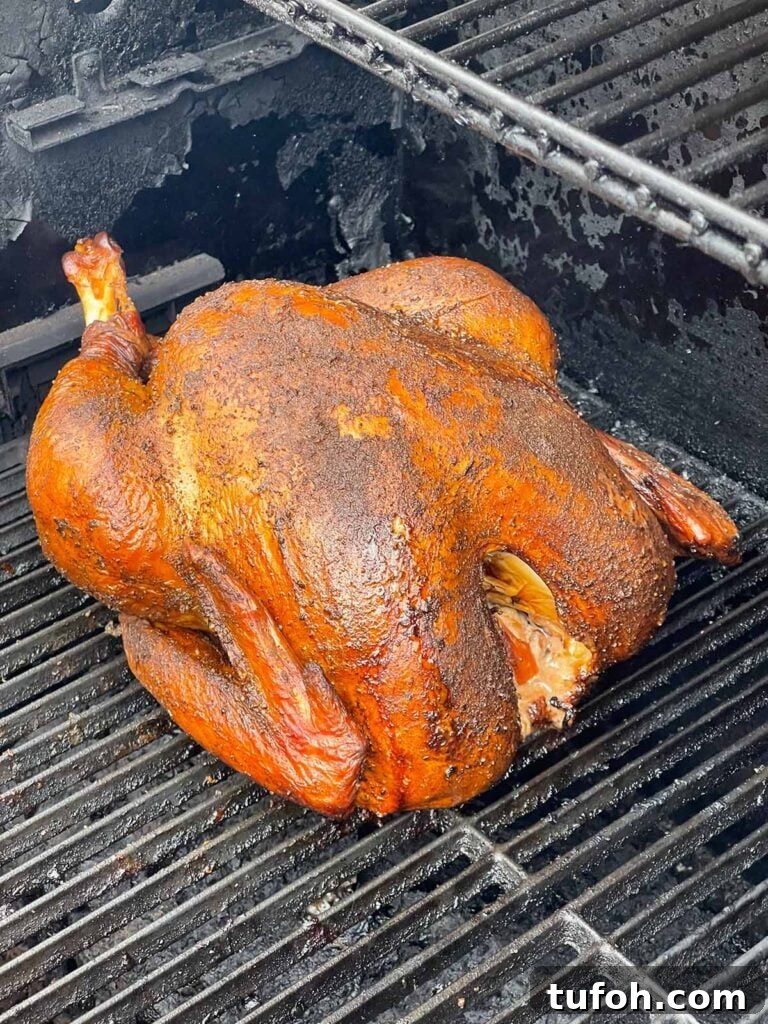
Step 7: Rest the Turkey
Transfer the turkey to a cutting board and let it rest about 20 minutes before carving. Resting lets the juices redistribute so the meat stays moist when sliced. There’s no need to tent tightly — a relaxed rest produces the best texture. After resting, carve and serve or let it cool slightly before breaking down for leftovers.
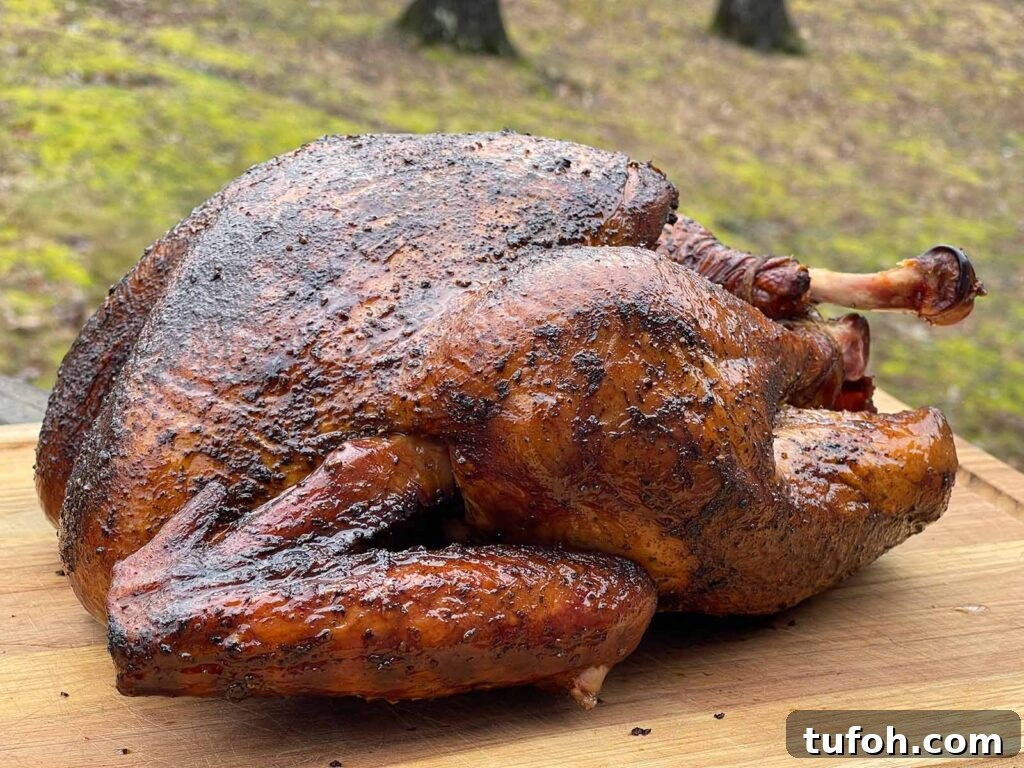
Smoking a whole turkey may seem like a big project, but it pays off: smoked turkey freezes well and makes excellent leftovers for sandwiches, soups, and casseroles. Use the carcass to make flavorful turkey stock. Once you try it, you’ll likely keep smoked turkey in your cooking rotation year-round.
Tips
- Use a light hand with smoke. Turkey absorbs smoke quickly. Apple or cherry offer a milder profile; hickory gives a stronger barbecue flavor — use sparingly if you choose a bold wood.
- Let temperature, not time, drive the cook. Rely on internal temperatures for doneness and adjust positioning on the smoker as needed.
- Rotate and reposition the turkey. Turn the bird every 30–45 minutes and face the thighs toward the hotter side so everything finishes evenly.
- Protect the thin parts. If the tips of legs or wings brown too fast, loosely tent them with foil.
- Finish hot for better skin. A short blast of higher heat at the end tightens and crisps the skin without drying the meat.
Variations
- Wood choice: Apple or cherry give a lighter smoke; hickory yields a bolder barbecue note.
- Herb-forward finish: Add dried thyme or sage to the dry brine or finish with fresh herbs while the turkey rests.
- Spatchcocked turkey: Spatchcocking speeds and evens the cook; use the same dry brine and smoking technique.
- Skip the hot finish: If you prefer, keep the smoker at 250°F the entire cook — the turkey will still be tender and flavorful.
FAQ’s
At 250°F, expect about 4 hours for a 10-pound bird, but times vary. Cook to internal temperature rather than a set time.
Start at 250°F for a steady smoke, then raise to around 375°F for the final 15–20 minutes to tighten the skin.
Remove the turkey when the breast reaches 160°F and the thigh reads 170°F; carryover cooking during resting will finish it safely.
Yes. Smoked turkey reheats well and is excellent for sandwiches, soups, and casseroles.
Other Smoking Recipes
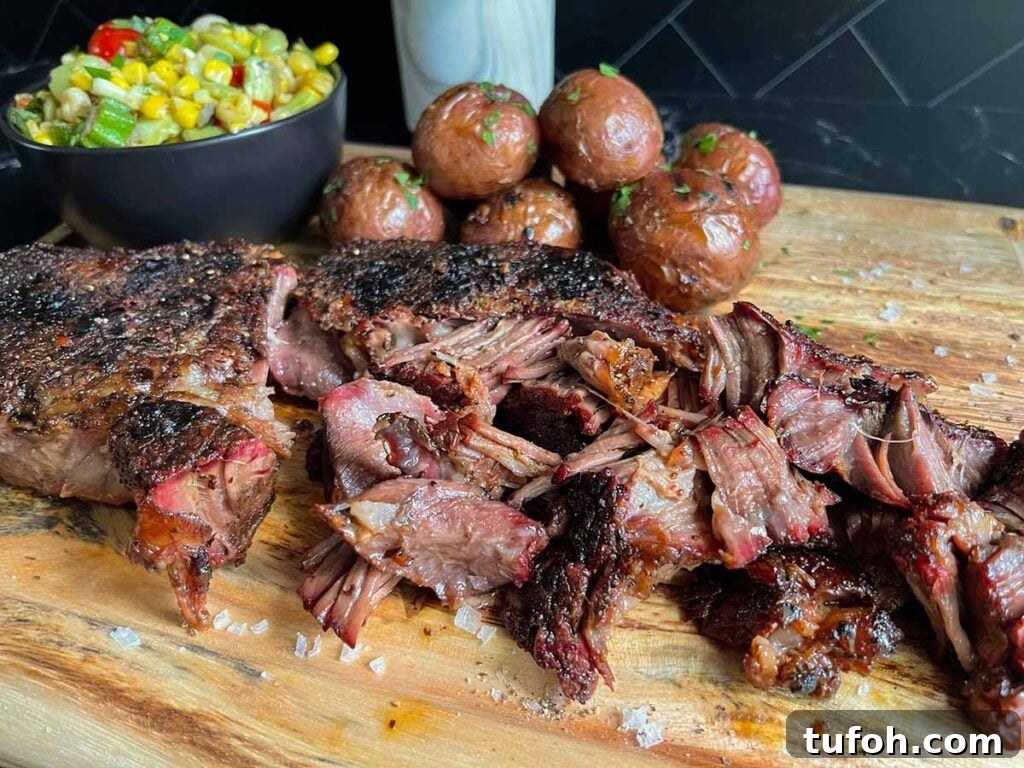
Fall-Apart Smoked Chuck Roast Recipe
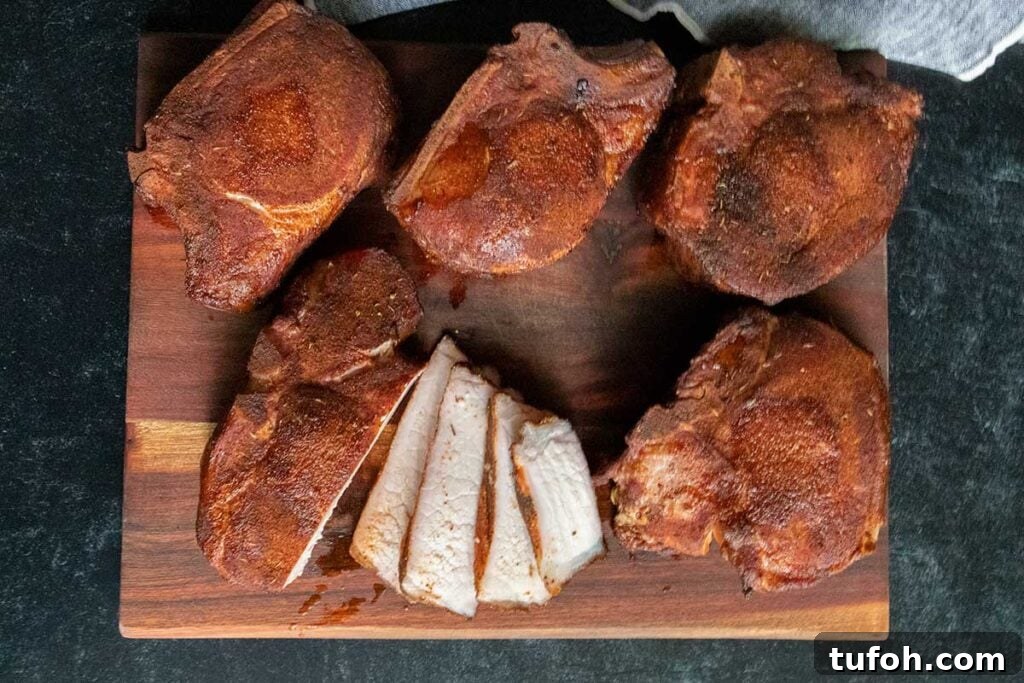
Double Bone-In Smoked Pork Chops
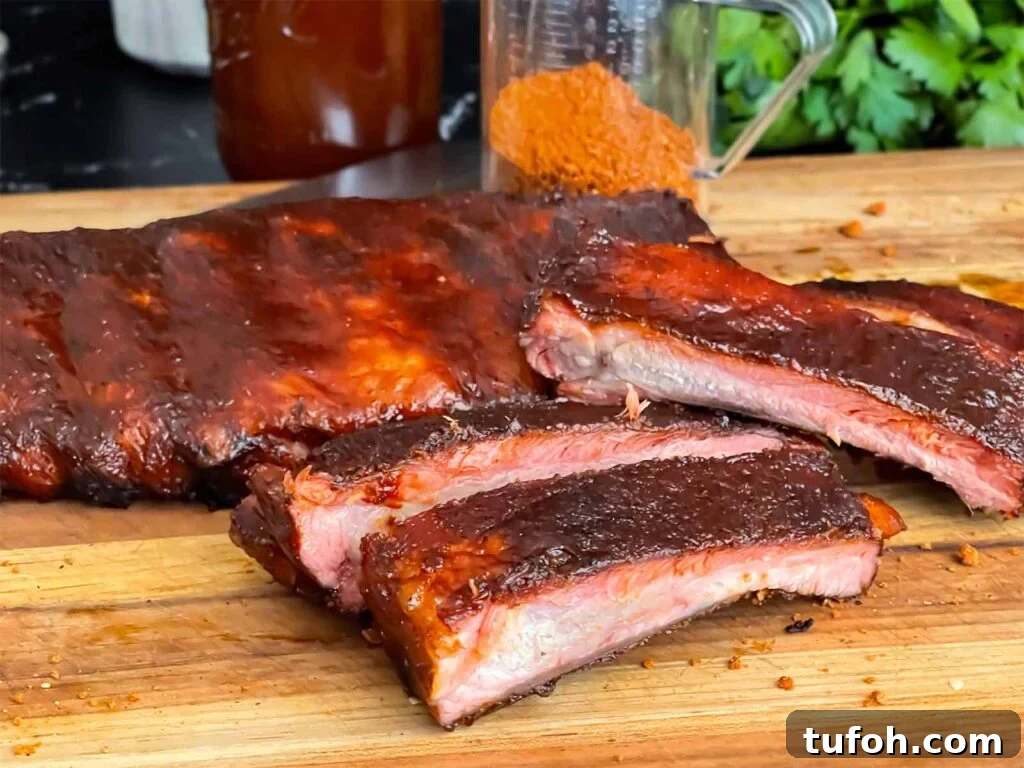
Kansas City Barbecue Ribs
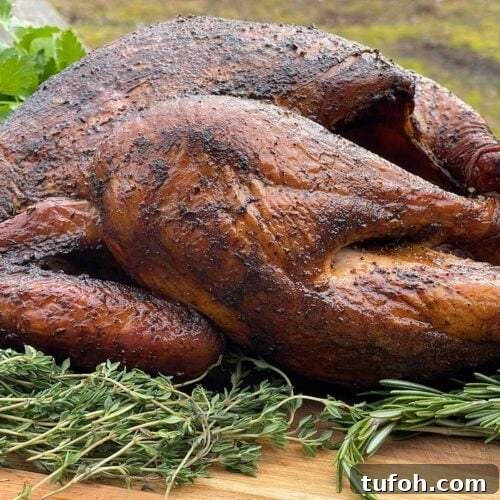
Whole Smoked Turkey
Ingredients
Dry Brine Ingredients
- 2 tbsp Kosher salt
- 1 tbsp Black peppercorns
- 1 tbsp Paprika
- 2 tsp Poultry seasoning
- 1 tsp Garlic powder
- 1 tsp Onion powder
Turkey
- 1 10 lb Turkey (not pre-brined)
Instructions
- Thaw the turkey completely in the refrigerator (about 1 day per 4–5 pounds). Remove giblets and neck; pat dry.
- Make the dry brine by grinding together the salt, peppercorns, paprika, poultry seasoning, garlic powder, and onion powder until well combined.
- Season the turkey evenly on all sides with the dry brine. Wrap tightly in plastic wrap and refrigerate for 24–48 hours.
- Air-dry the turkey by unwrapping it, patting it dry, and refrigerating uncovered on a rack overnight.
- Preheat the smoker to 250°F for indirect heat. Place the turkey on the grate, breast side up.
- Smoke the turkey, rotating it 90 degrees every 30–45 minutes and positioning the bird so the thighs face the hotter side of the smoker. Lightly spritz with an apple cider vinegar and water mixture as needed.
- Baste with butter once or twice during the last hour to hour and a half of cooking.
- When the turkey is within 10–15°F of being done, increase the smoker temperature to 375°F and cook for 15–20 minutes to tighten and lightly crisp the skin.
- Remove the turkey when the breast reaches 160°F and the thigh reaches 170°F. Tent leg or wing tips with foil if needed.
- Rest the turkey for 20 minutes before carving.
Notes
- Storage: Refrigerate leftover smoked turkey in an airtight container for up to 4 days.
- Freezing: Portion the meat, wrap tightly, and freeze for up to 3 months.
- Reheating: Reheat gently to avoid drying; a covered skillet, low oven, or a splash of broth works well.
- Use the carcass: Smoked bones make excellent stock for soups and sauces.