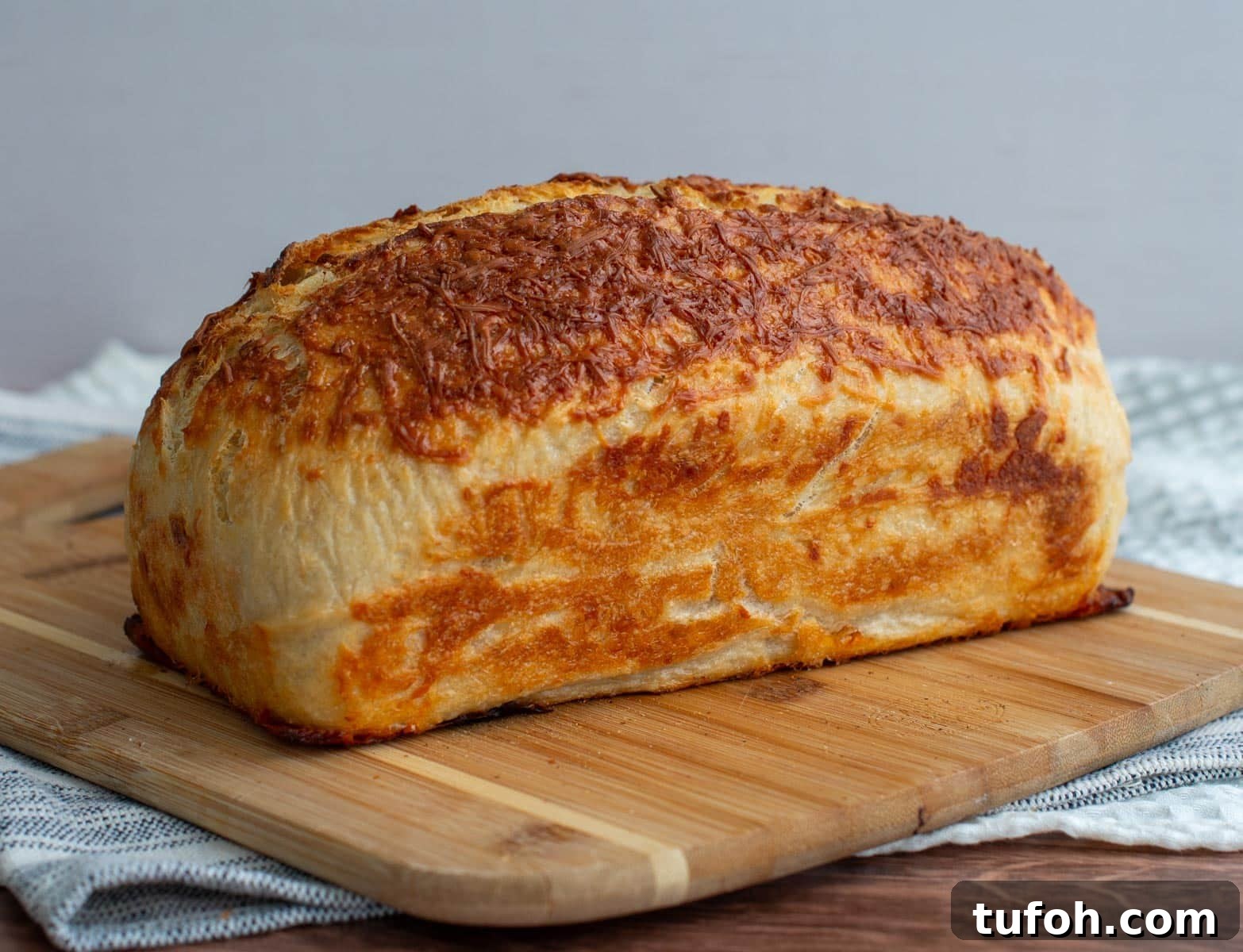
If you love the flavor and chew of a classic asiago bagel but want an easier way to bake and slice it, this Asiago Sourdough Bagel Loaf is an ideal solution. Made with an active sourdough starter and plenty of asiago cheese, the loaf delivers the familiar bagel chew in a single, sliceable loaf. A brief boil before baking produces a chewy, golden crust and that signature bagel bite—yes, it may look unusual at first, but the method works beautifully.
After my original Sourdough Bagel Bread gained attention, I experimented with variations and this asiago version is a favorite. The finished loaf is golden, cheesy, and slices cleanly—delicious toasted with cream cheese, used for sandwiches, or enjoyed plain.
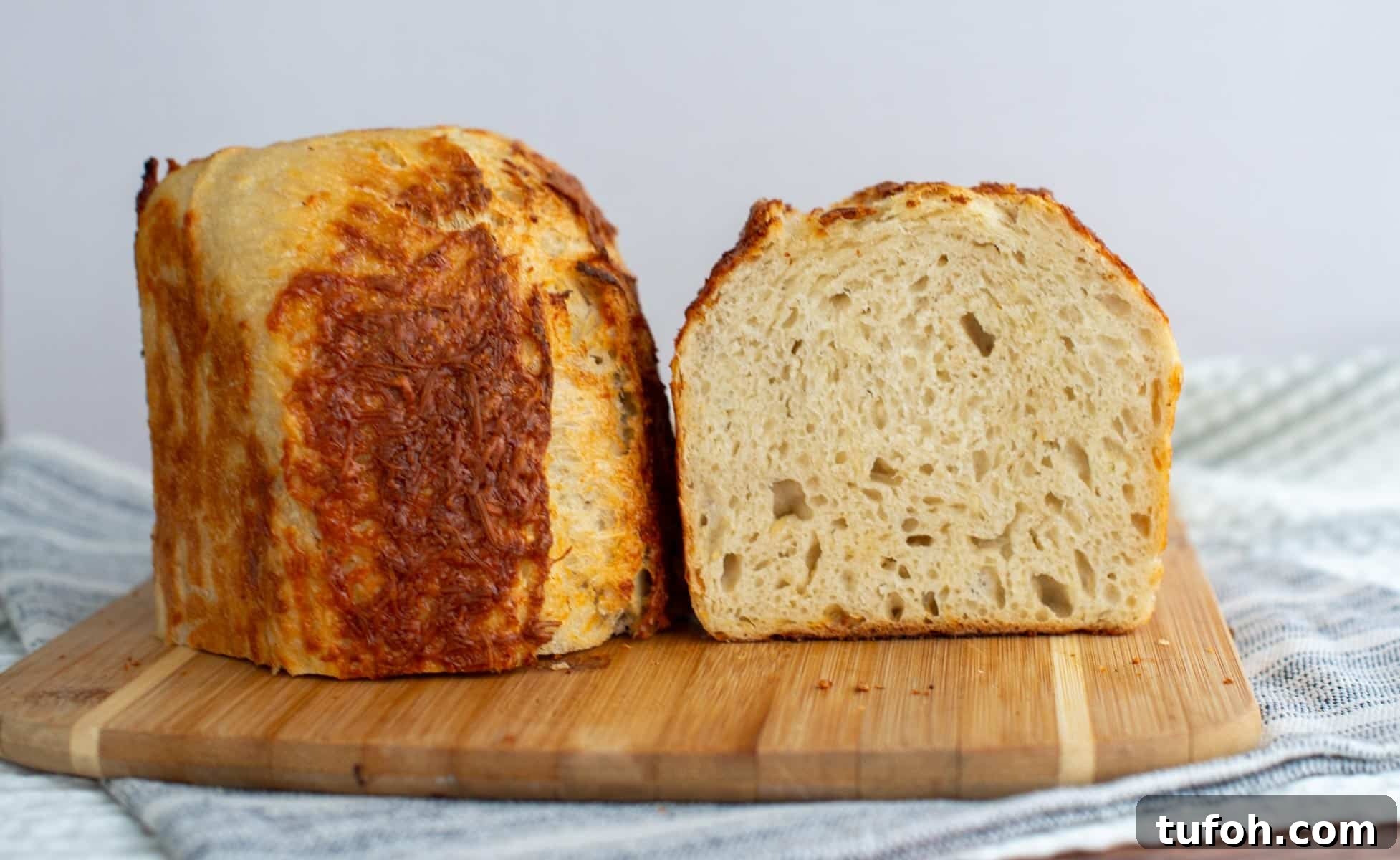
Table of Contents
- Quick Look: Asiago Sourdough Bagel Bread
- Why You’ll Love Sourdough Asiago Bagel Bread
- Ingredients You’ll Need
- Substitutions and Variations
- Sourdough Baker’s Timeline
- How to Make Sourdough Asiago Bagel Bread
- How to Store Leftovers
- Amy’s Recipe Tip
- Frequently Asked Questions
- Popular Sourdough Bagel Recipes
- Sourdough Asiago Bagel Bread Recipe
Quick Look: Asiago Sourdough Bagel Bread
- Active/Hands On Time: 45 minutes
- Fermentation Time: 24 hours
- Bake Time: 50 minutes
- Total Time: 26 hours
- Servings: 12 slices
- Calories: ~198 kcal per slice (approx.)
- Cook Method: boiled like a bagel and baked like a loaf
- Flavor & Texture: chewy crust, soft interior, prominent asiago flavor
- Difficulty: Moderate — higher hydration sourdough with a pre-bake boil
Save this recipe for later to try at home.
Why You’ll Love Sourdough Asiago Bagel Bread
This version builds on the original sourdough bagel-bread idea, adding bold asiago flavor and an even more satisfying texture. It’s a great option when you want bagel-style bread without forming individual bagels.
- Big Asiago Bagel Flavor – The loaf tastes like an asiago bagel in bread form: great sliced, toasted, or as sandwich bread.
- Convenient for Breakfast – Easy to slice and share, it’s perfect for busy mornings and makes multiple servings from one bake.
- Classic Bagel Chew – The short boil before baking develops a chewy, slightly glossy crust that mimics bagel texture while keeping the convenience of a loaf.
New to sourdough? If you’re starting out, learn how to make and maintain a starter and follow a beginner guide to sourdough fermentation—naturally fermented dough takes longer but yields superior flavor and texture.
Ingredients You’ll Need
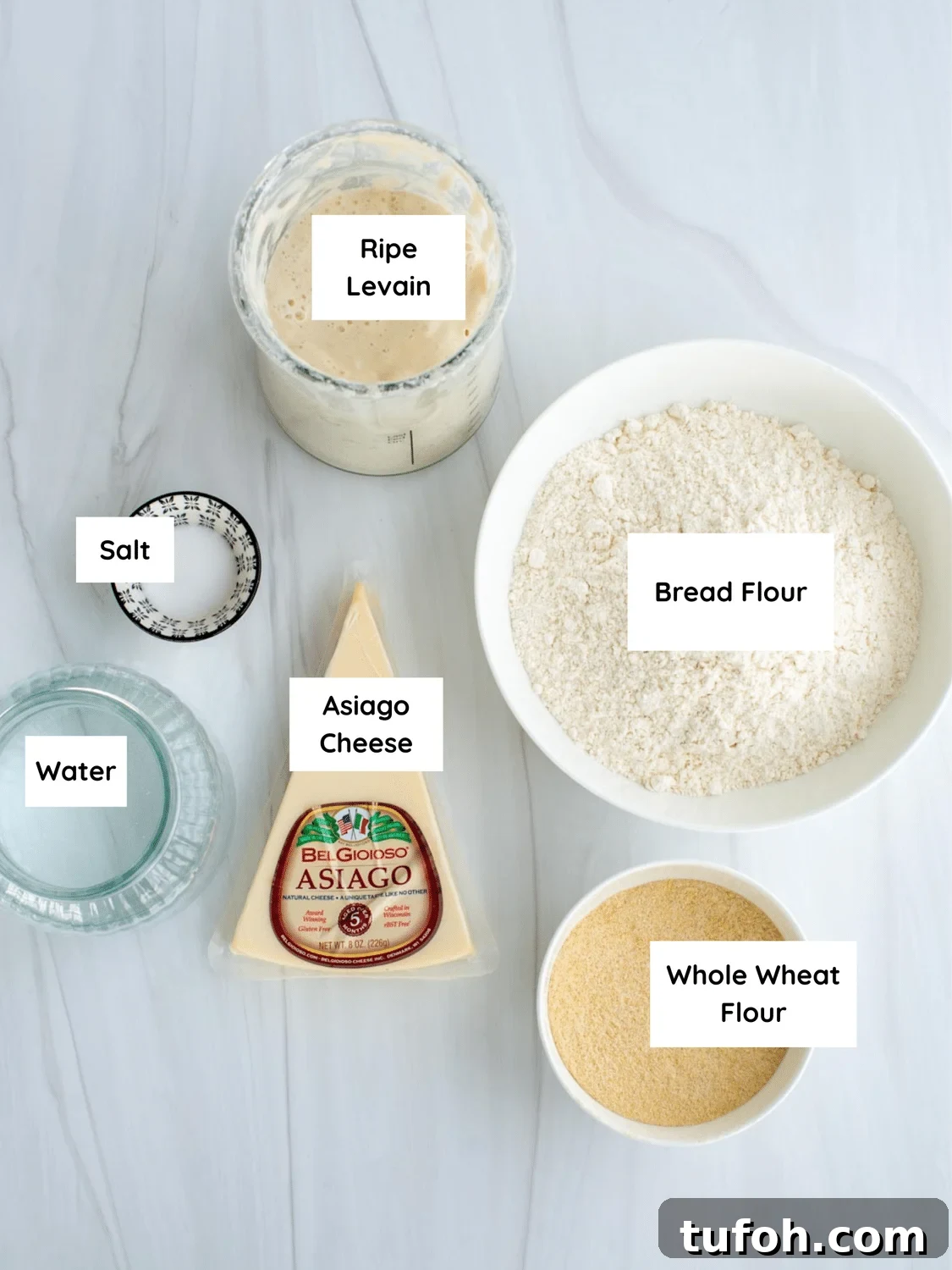
- Levain – made from your active sourdough starter to leaven the loaf.
- Flour – a mix of bread flour and some whole wheat gives structure and flavor; bread flour around 12.5% protein works well.
- Salt – table salt is used to season the dough.
- Asiago Cheese – shredded asiago folded into the dough and sprinkled on top creates the characteristic flavor; other semi-hard cheeses can be substituted.
See the recipe card below for exact quantities and full ingredient list.
Substitutions and Variations
- Levain: Use 100 g of active, bubbly sourdough starter in place of the levain if preferred.
- Flour: Swap whole wheat for more bread flour or use all-purpose with added vital wheat gluten to raise protein if needed.
- Cheese: Swap asiago for sharp cheddar, parmesan, provolone, or a mix.
- Flavor Variations: Add roasted garlic, jalapeños and cheddar for spice, or caramelized onions for a sweet-savory loaf. For a sweeter loaf, try cinnamon raisin or blueberry.
Sourdough Baker’s Timeline
This sample schedule assumes a dough temperature near 78°F during fermentation. If you prefer same-day baking, skip the cold fermentation and allow a warm rise in the pan before boiling and baking.
| Day 1 | Levain, mix, rise, shape, refrigerate |
| 8:00–11:30 AM | Mix levain and let it become doubled and bubbly (~3–4 hours). |
| 11:30 AM | Mix the dough. |
| 12:00–1:30 PM | Perform stretch-and-folds and add asiago during the second set. |
| 1:30–3:30 PM | Bulk fermentation. |
| 4:00 PM | Shape and refrigerate for cold fermentation. |
| Day 2 | Boil and bake in the morning. |
How to Make Sourdough Asiago Bagel Bread
Mix the Levain
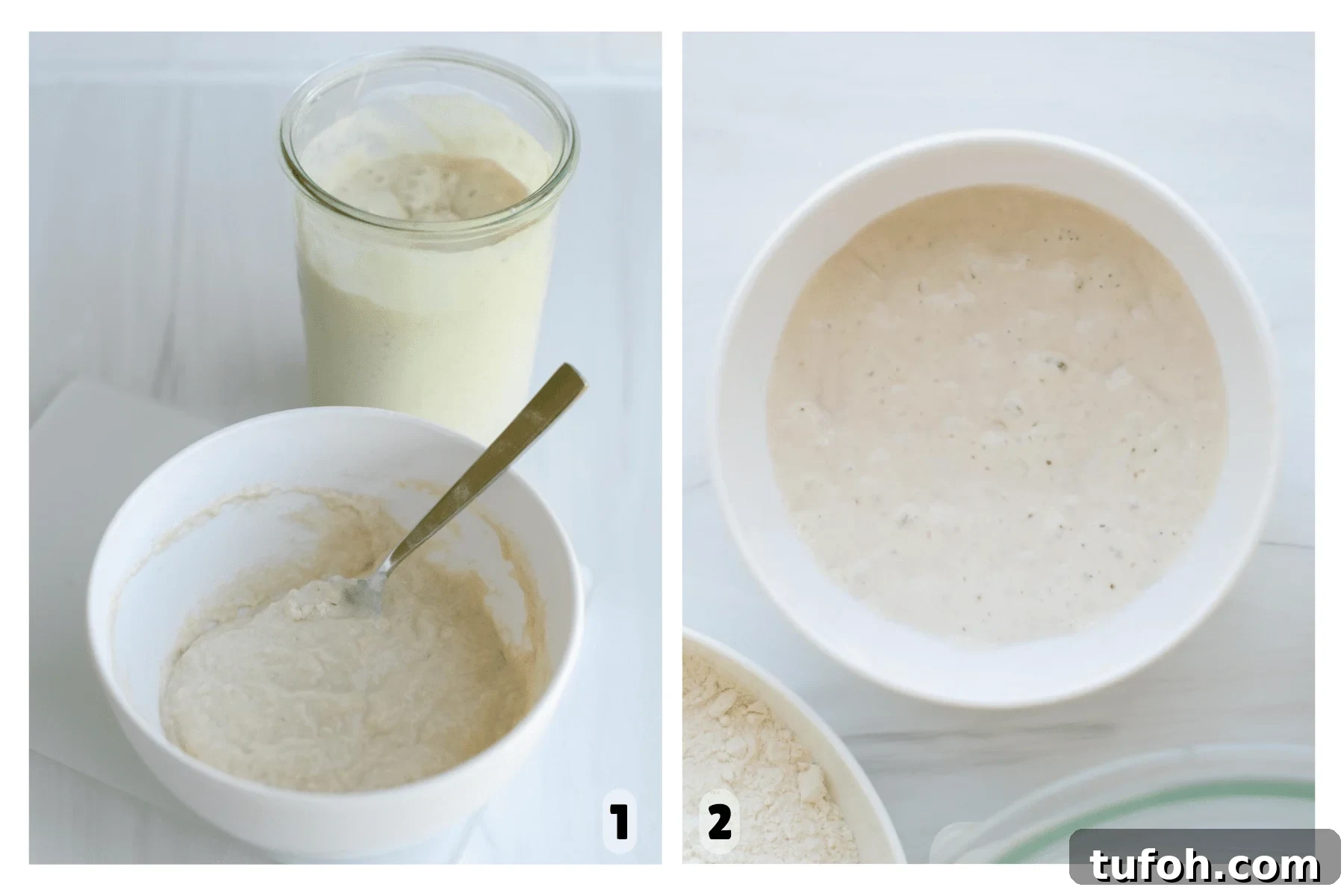
Mix active starter with flour and water, cover, and let it sit for 3–4 hours at 78–80ºF until doubled and bubbly. A ripe starter can substitute for the levain by weight.
Mixing the Dough
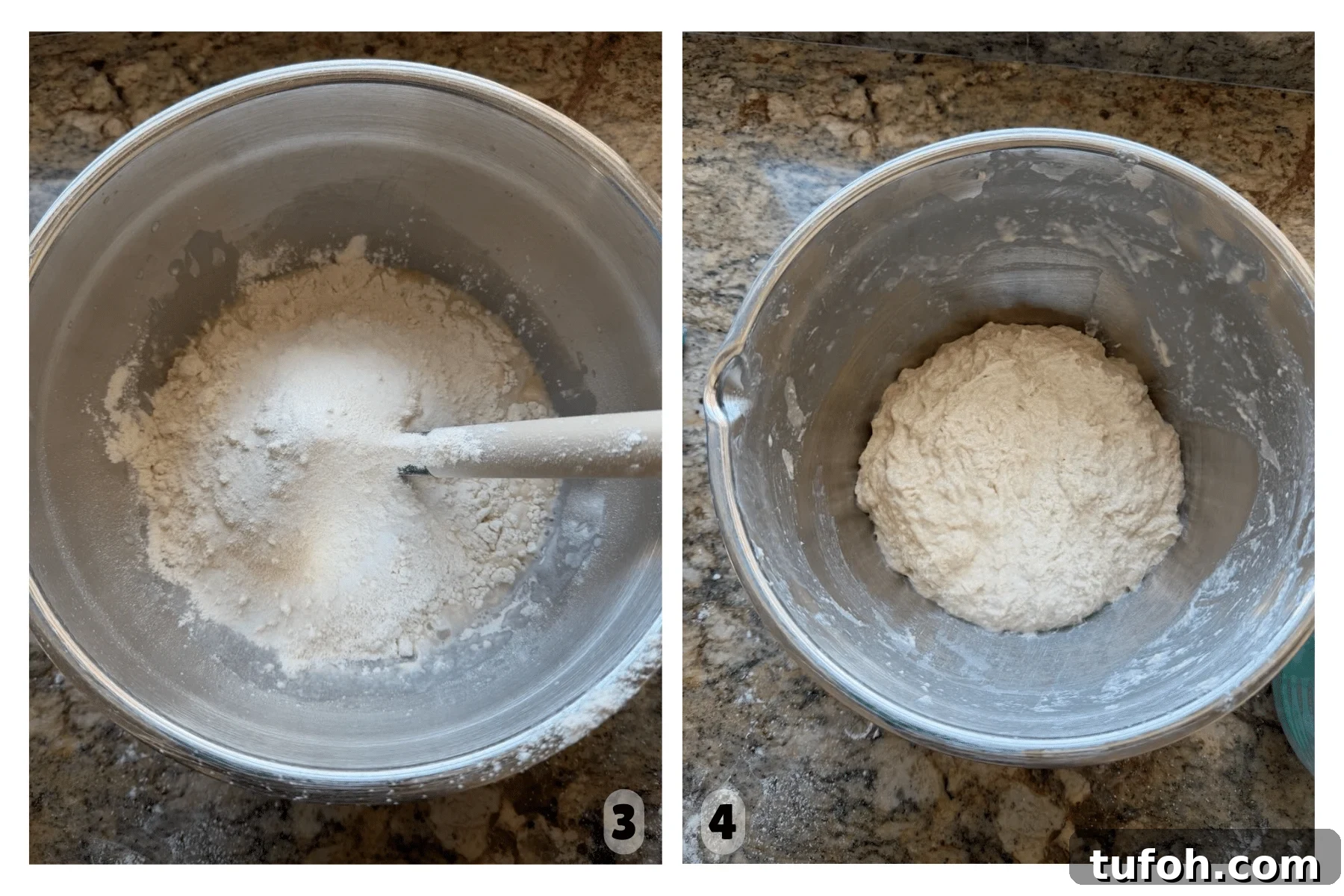
Combine levain, water, whole wheat and bread flour, and salt. Mix to a shaggy dough, cover, and rest 30 minutes.
Bulk Fermentation
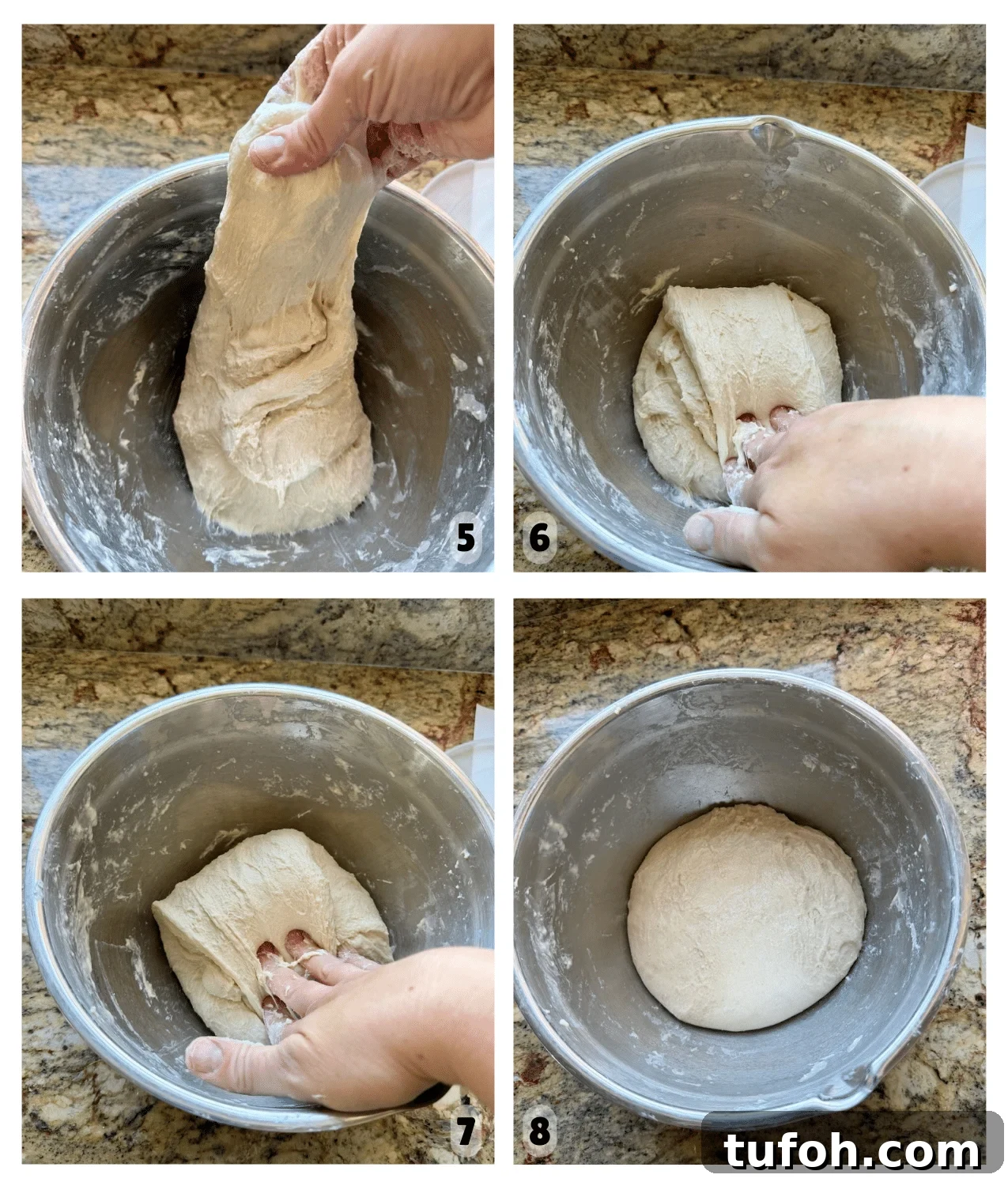
Strengthen the dough with 3–4 sets of gentle stretch-and-folds over about two hours at 78°F. Before the second fold, sprinkle 75 g of shredded asiago and incorporate it into the dough. After the final set, let the dough rest 2–2.5 hours until risen about 40% with visible bubbles.
Shaping the Dough
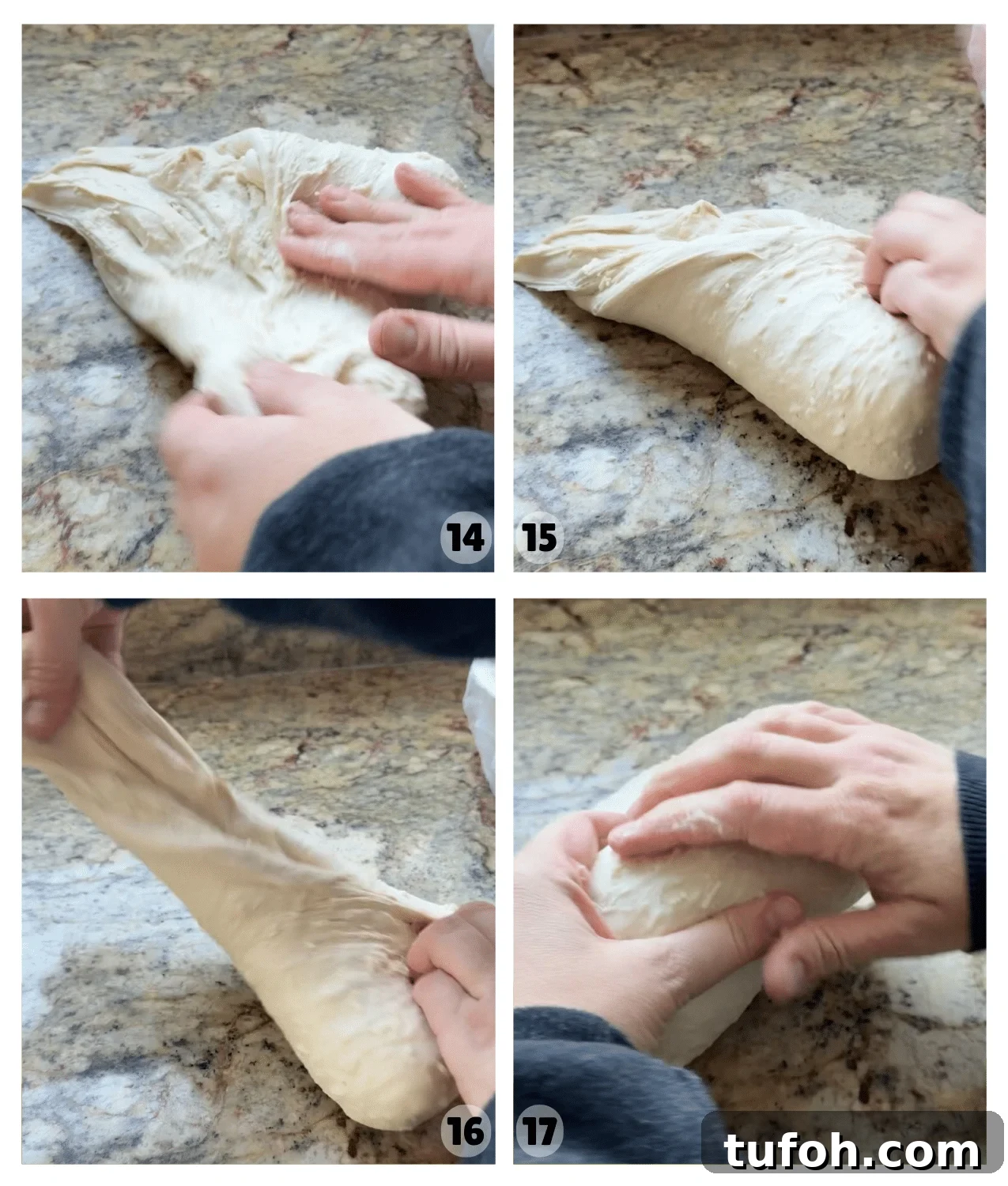
Pre-shape into a tighter round, bench rest 30 minutes, then shape into an oval and place into a parchment-lined 9×5 loaf pan or a lined banneton. Build surface tension when shaping so the loaf holds together during the boil and bake.
Cold Fermentation
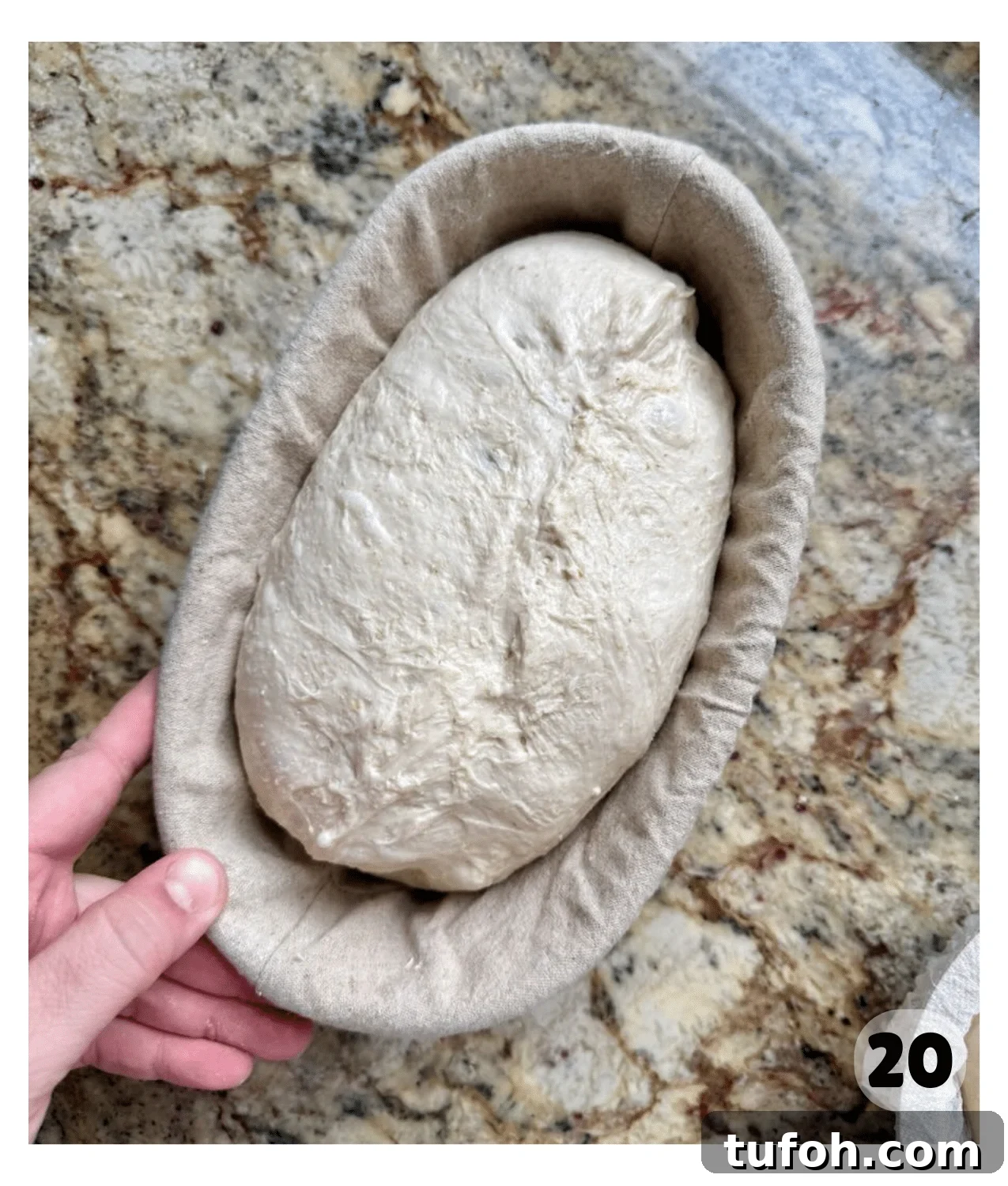
Cover and refrigerate overnight, up to 14–20 hours. The dough will puff and take on structure during this chilled second rise. If baking the same day, let the shaped dough rise 2–3 hours at room temperature until puffed.
Boiling & Baking
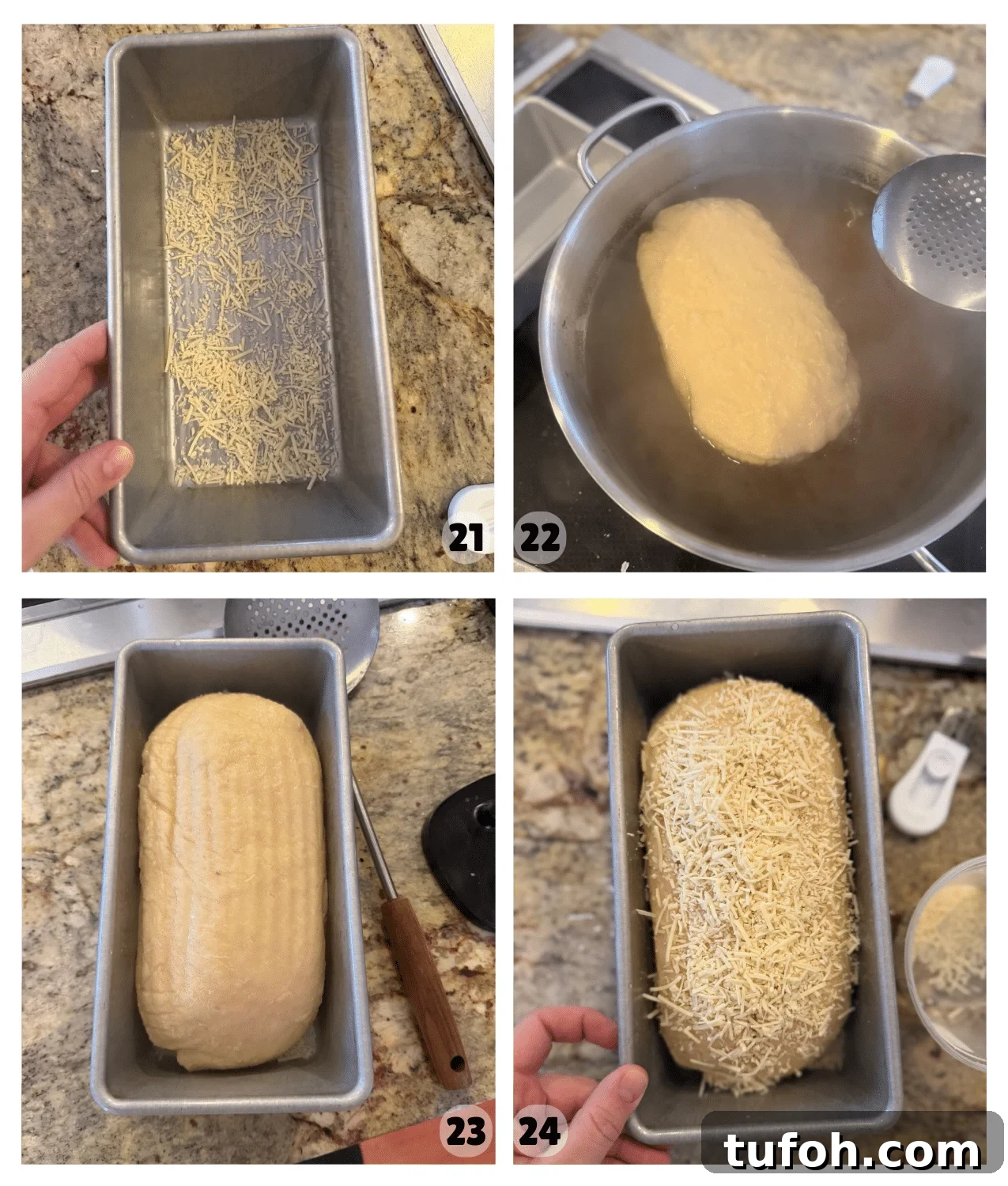
Preheat the oven to 450°F. Fill a large pot about two-thirds full with water and bring to a boil. Sprinkle asiago across the bottom of the loaf pan (or line the pan with parchment). Remove the loaf from the fridge, gently lower it into the boiling water using parchment or spatulas, and boil 1 minute per side. Remove from the water and return the loaf to the pan. Top with additional asiago, score down the center, and place the pan in the oven.
Cover the pan with a second loaf pan or baking shell to trap steam and bake for 30 minutes. Remove the top pan, lower the oven to 400°F, and bake another 15–20 minutes until the internal temperature reads 205–210°F and the crust is deep golden. Cool in the pan 5 minutes, then transfer to a rack and cool completely before slicing (about 2 hours).
Boiling note: Adding baking soda or malt to the boiling water is optional. The author does not add these for bagels but does sometimes use baking soda for pretzels—it’s a matter of preference.
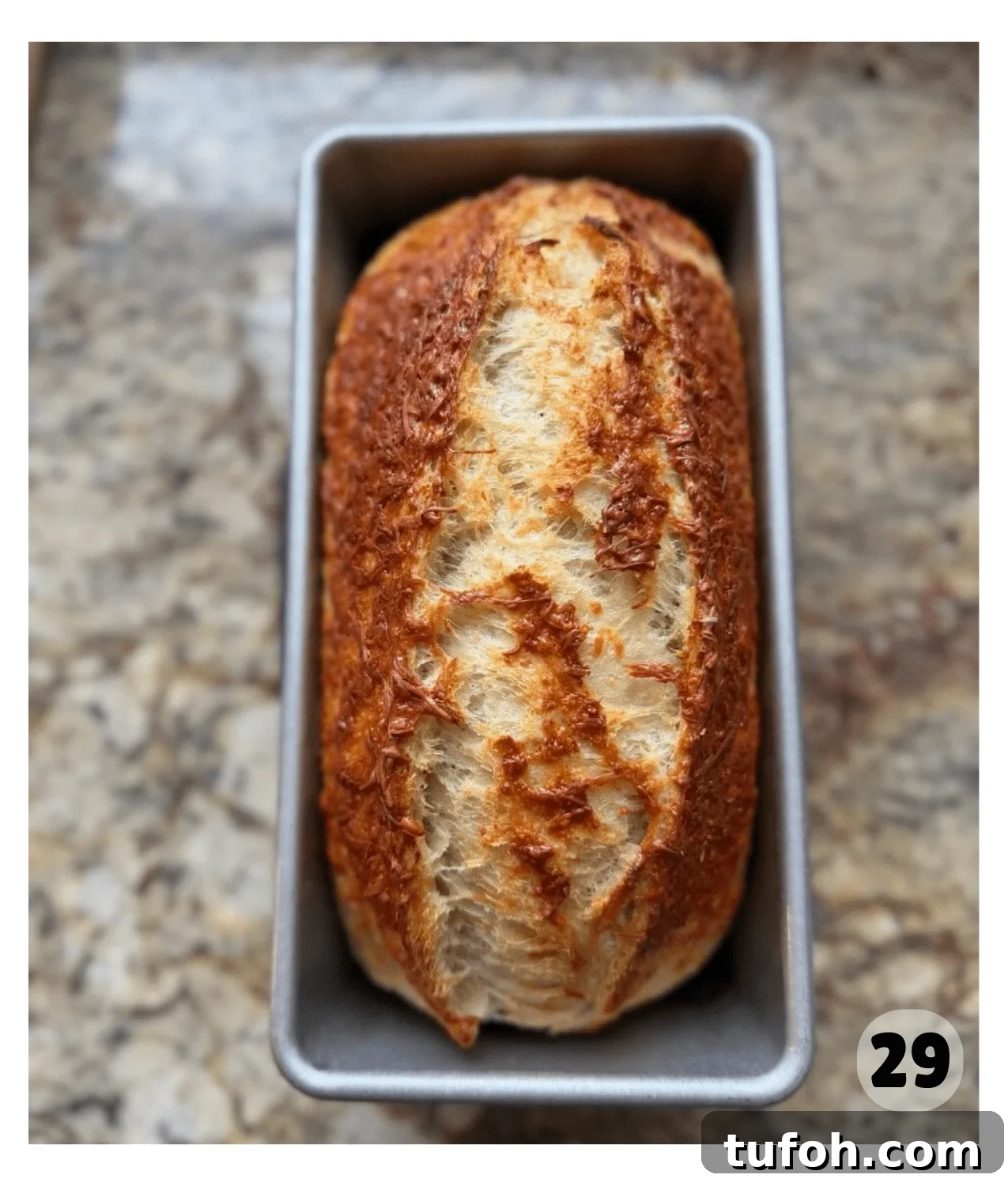
Alternative bake: Bake at 375°F for 45 minutes without added steam for a softer crust—still tasty though less crisp.
How to Store Leftovers
Cool the loaf completely before slicing. Store slices in an airtight container or bread bag at room temperature for up to 24 hours (separate slices with parchment if needed). For longer storage, freeze slices and toast directly from frozen for best results.
Amy’s Recipe Tip
Lowering the risen dough into boiling water may feel unusual, but that brief boil is what produces the bagel-like chew. The loaf pan helps the dough retain shape during baking—trust the process, it works.
Frequently Asked Questions
Yes. Instead of manual stretch-and-folds, you can let the dough rest while using short mixer intervals (10–15 seconds every 30 minutes) to develop gluten, following stand mixer sourdough methods.
It’s normal for the loaf to look wrinkly after boiling. Place it into the loaf pan as best you can; during baking the loaf will smooth and rise into shape.
No, but a loaf pan gives the nicest uniform shape. You can bake in a Dutch oven for a more free-form loaf, though it won’t be as evenly shaped.
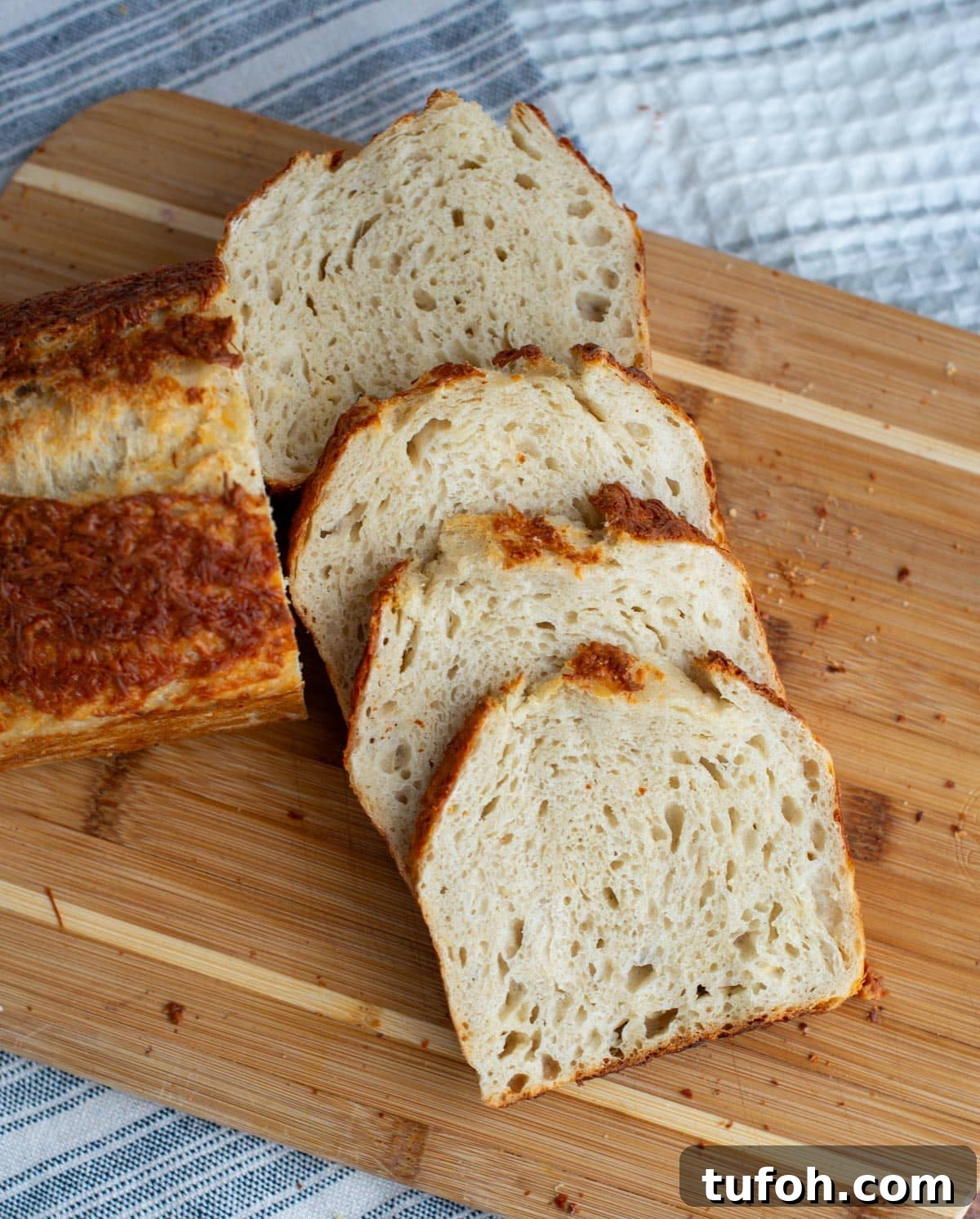
Yes—especially when toasted. The boil before the bake creates a bagel-like chew that many find surprisingly authentic in loaf form.
Yes, but skipping the boil will lose the true bagel-like crust. If you skip it, bake the loaf like a classic sourdough in a Dutch oven or loaf pan.
Popular Sourdough Bagel Recipes
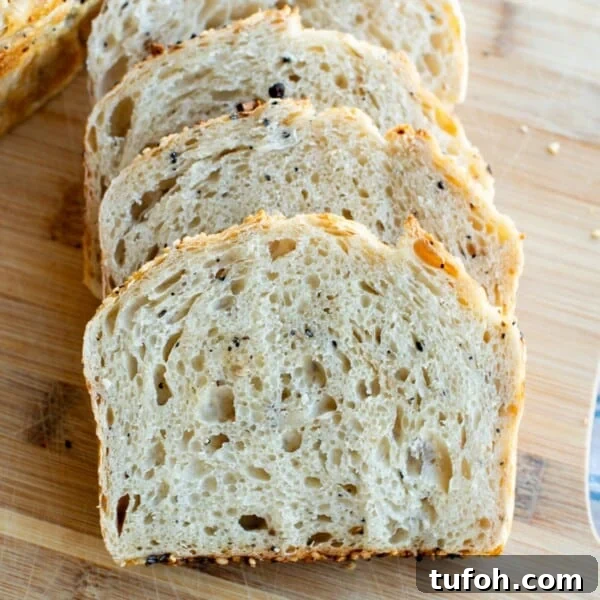
Sourdough Bagel Bread
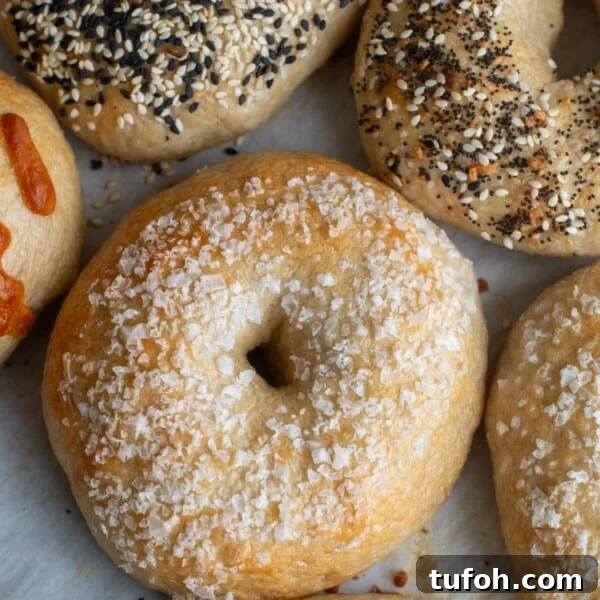
Easy Homemade Sourdough Bagels
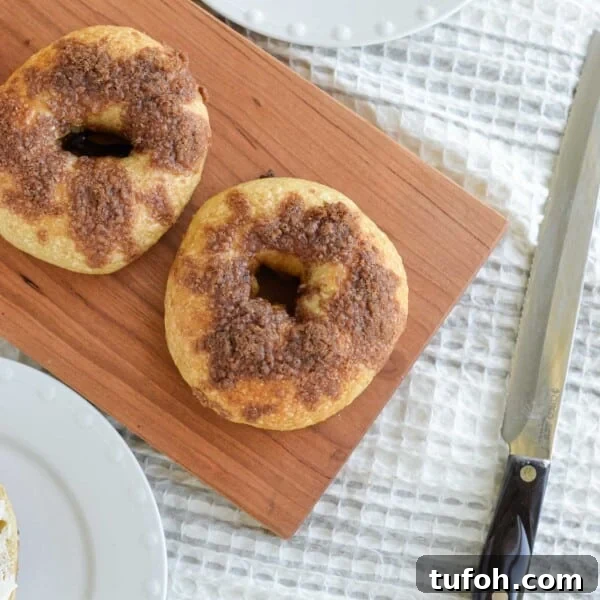
Cinnamon Crunch Sourdough Bagels
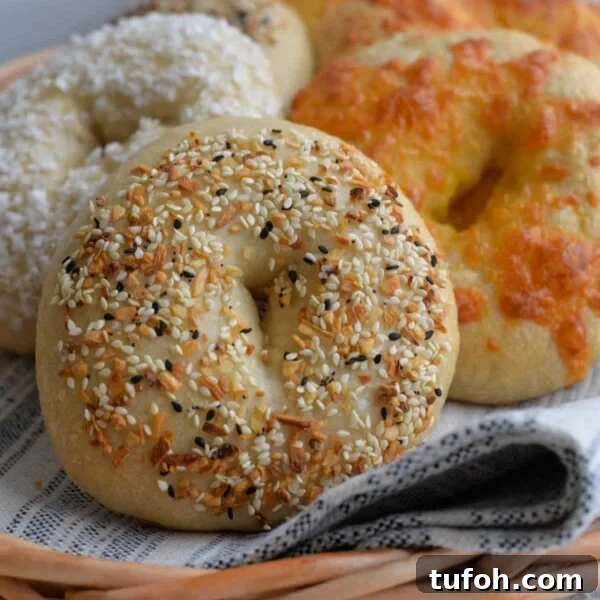
Sourdough Discard Bagels
If you try this Sourdough Asiago Bagel Bread, leave a rating and share how it turned out. Happy baking!

Sourdough Asiago Bagel Bread
Equipment
- sourdough tools
- mixing bowl
- 2 x 9 by 5 loaf pans (or alternative steam method)
- 2 large spatulas
- large pot for boiling water
Ingredients
Levain (1:1:1 ratio, 3–4 hours at 78–80ºF)
- 35 g sourdough starter, ripe and active
- 35 g water
- 35 g all-purpose or bread flour
Sourdough Asiago Bagel Bread
- 100 g levain, ripe and active
- 370 g water
- 50 g whole wheat flour
- 450 g bread flour
- 10 g salt
- 75 g asiago cheese, shredded (to fold into dough)
- 50 g asiago cheese, shredded (reserved for topping and pan)
Instructions
Levain
- Mix starter, flour, and water. Cover and let sit 3–4 hours at 78–80ºF until doubled and bubbly.
Sourdough Asiago Bagel Bread (78–80ºF dough temperature)
- Mix dough: Combine ripe levain, water, whole wheat and bread flour, and salt. Mix until sticky, cover, and rest 30 minutes.
- Stretch and folds: Perform 3–4 sets of stretch-and-folds over ~1.5–2 hours. Add 75 g asiago during the second fold and incorporate.
- Rest: After the folds, let dough rise 2–2.5 hours at 78ºF until puffy with bubbles.
- Pre-shape and bench rest: Gently pre-shape into a ball and let rest uncovered 30 minutes.
- Shape: Shape into an oval and place into a parchment-lined 9×5 loaf pan or a lined banneton.
- Cold fermentation: Cover and refrigerate overnight or up to 14–20 hours. For same-day baking, let rise 2–3 hours at room temperature.
- Boil the dough: Preheat oven to 450°F. Bring a pot of water to a boil. Carefully lower the chilled loaf into the boiling water and boil 1 minute per side. Remove and place back in the loaf pan that has been lined with asiago or parchment.
- Topping and scoring: Top with additional asiago and score straight down the center.
- Bake: Bake with a second pan on top (or other steam method) for 30 minutes. Remove the top pan, reduce temperature to 400ºF, and bake 15–20 more minutes until internal temp is 205–210ºF. Cool completely before slicing.
Notes
Active starter: If you have a ripe, bubbly active starter, you can substitute equal weight for the levain.
Loaf pans and steam: A second loaf pan on top creates steam for the first 30 minutes. Alternatively use a baking shell or a pan of water below the loaf. Baking at 375ºF for 45 minutes without steam yields a softer crust.
Same-day bake: If skipping cold fermentation, let shaped dough rise 2–3 hours at 78–80ºF until puffed, chill briefly to make handling easier, then boil and bake.
Nutrition
Nutrition information is an approximation.