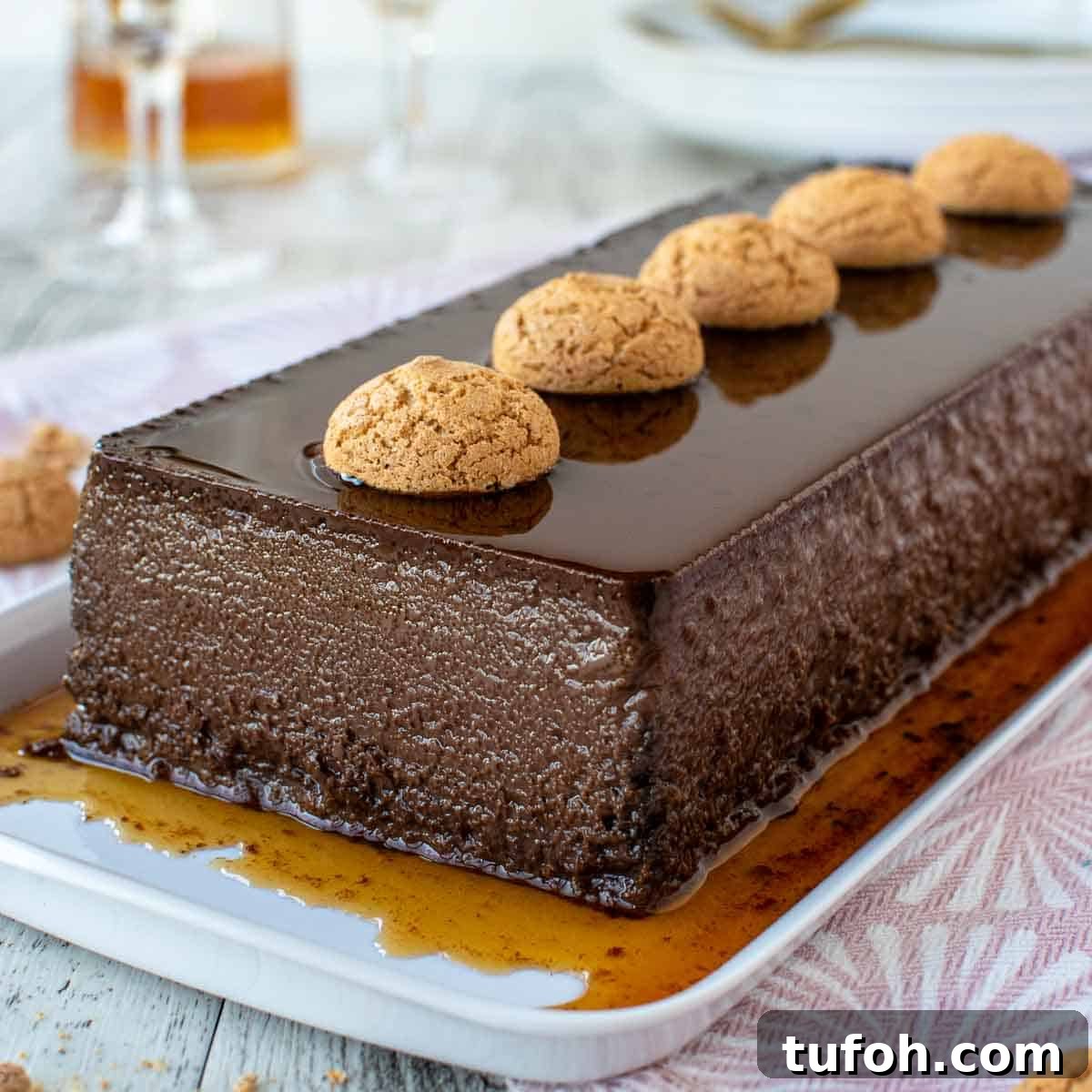
Bunet is a classic Piedmontese dessert, reminiscent of chocolate crème caramel, with a silky texture and deep, comforting flavors.
You don’t need to be from Piedmont or even Italy to make it. This straightforward recipe has clear steps so you can prepare a memorable dessert for family dinners or special occasions.
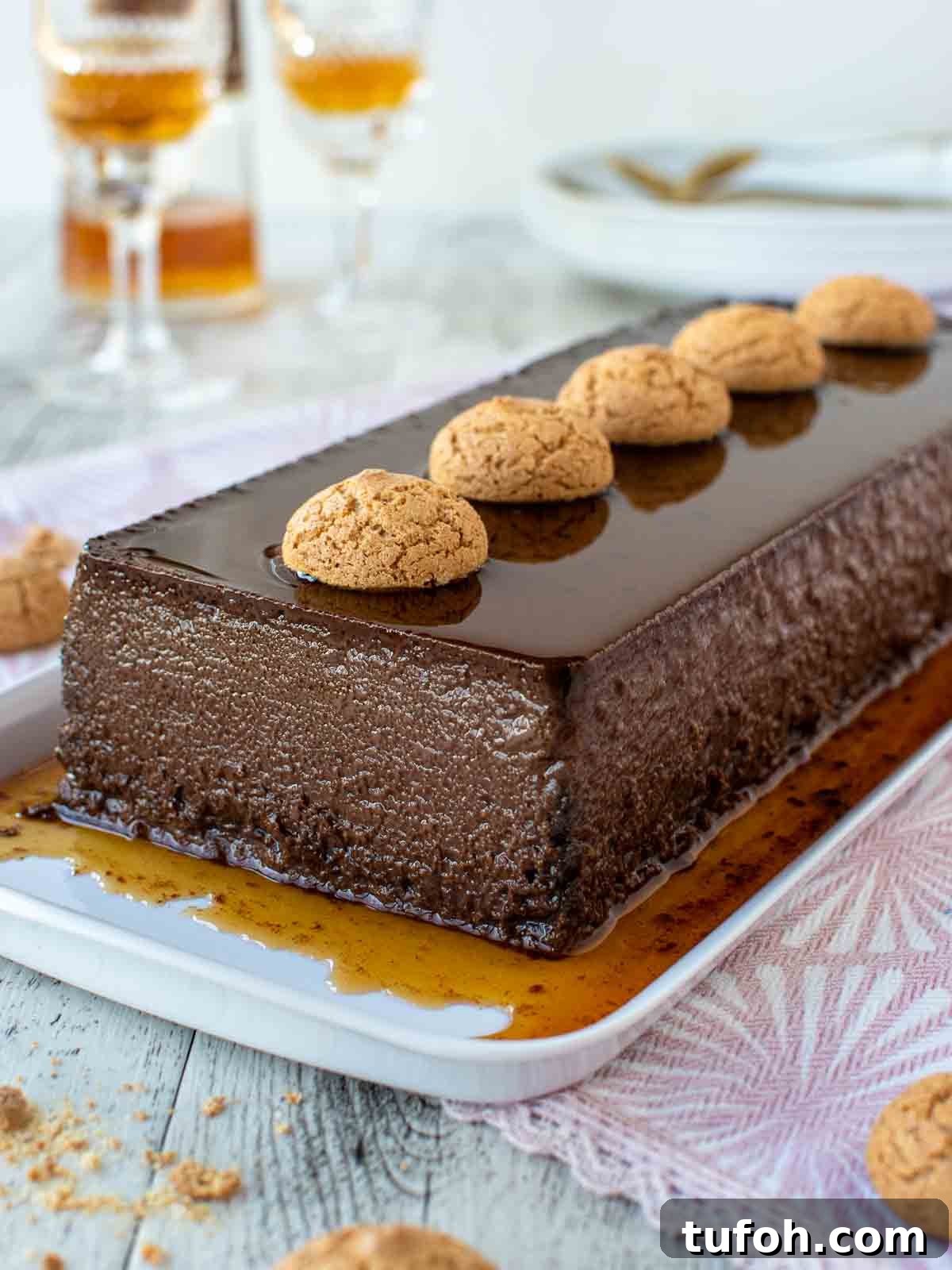
Although Bunet is little known outside Italy and especially outside Piedmont, its combination of amaretti cookies, cocoa, and caramel is timeless. The dessert has roots that reach back to the Middle Ages, when versions of it were served at court banquets in Turin.
This version of the recipe comes from Marina, our Piedmontese relative. I first tasted her Bunet after a meal of roasted peppers, fresh handmade pasta, local cheeses, and salami. Her dessert was flawless, and I have been making her Bunet alla Piedmontese ever since.
The name bunet or bonet in the Piedmontese dialect means “cap” or a rounded hat. Traditionally, it was prepared in a rounded mold resembling that shape, which likely inspired the name. Another charming idea is that dessert comes at the end of a meal just as one would put their hat back on when leaving the table.
Why you will love this recipe
- Satin-smooth texture – Bunet has a creamy consistency similar to pastry cream, making it a luxuriously smooth pudding.
- Complex, balanced flavor – The crushed amaretti cookies give Bunet its distinctive almond note, while cocoa and sweet Marsala add depth and warmth.
- Simple ingredients – With just a few common ingredients, this dessert feels elegant enough for celebrations yet easy enough for a relaxed Sunday lunch.
- Make-ahead friendly – Like tiramisu, Bunet benefits from chilling. Prepare it a day ahead to save time and allow flavors to meld.
- Authentic regional dessert – Bunet is a traditional recipe from Piedmont and is a lovely way to share a taste of that region.
For exact ingredient amounts and the printable recipe card, see the recipe section below.
Ingredients
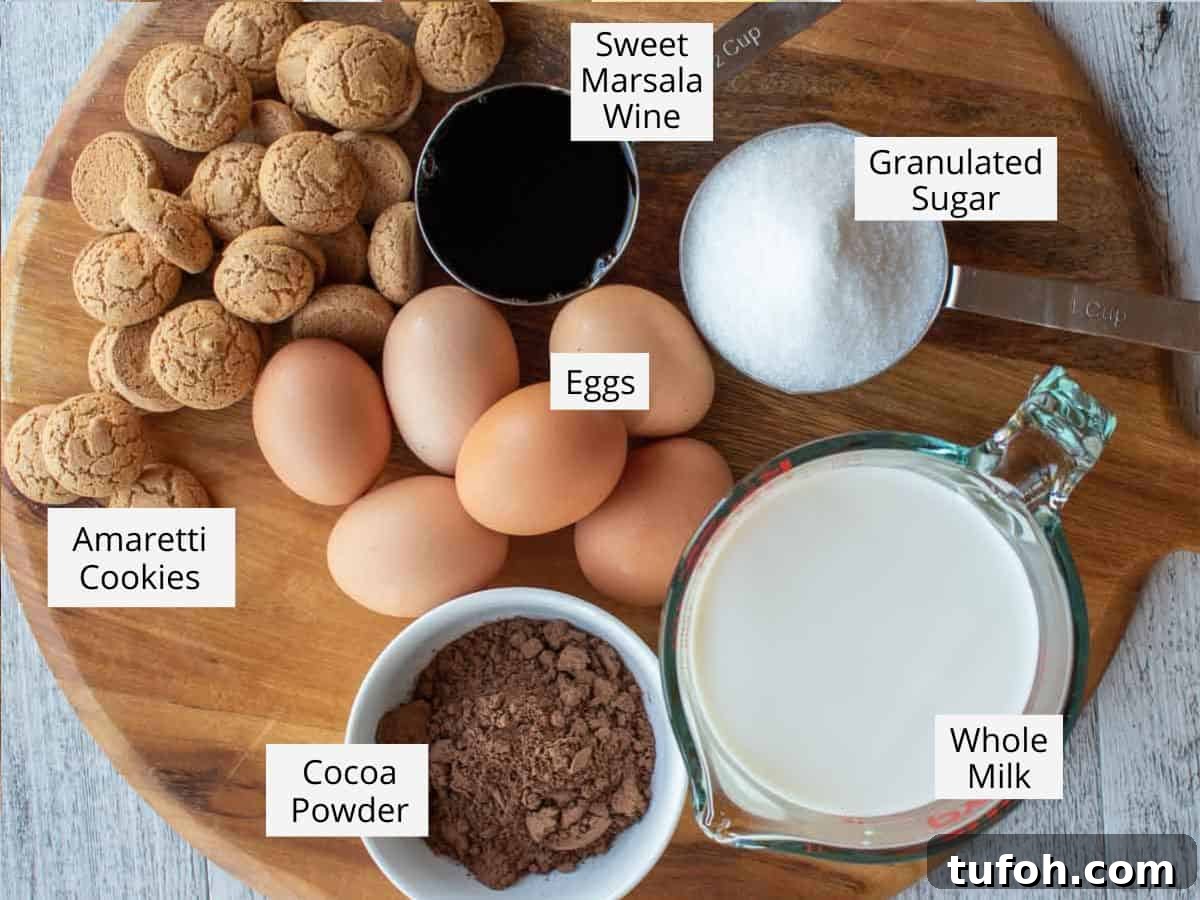
- Amaretti cookies – choose dry, crunchy amaretti; their flavor is central to the dessert.
- Granulated sugar – for the pudding and for making caramel.
- Whole milk – use full-fat milk so the custard sets properly and has a rich mouthfeel.
- Cocoa powder – unsweetened cocoa, Dutch-processed if preferred, for chocolate flavor.
- Eggs – fresh eggs are important for structure and texture.
- Sweet Marsala wine – a fortified wine commonly used in Italian desserts; see notes for non-alcoholic or alternative options.
See the recipe card below for precise quantities.
Instructions
Begin by crushing the amaretti cookies and preheating the oven to 300ºF (150ºC).
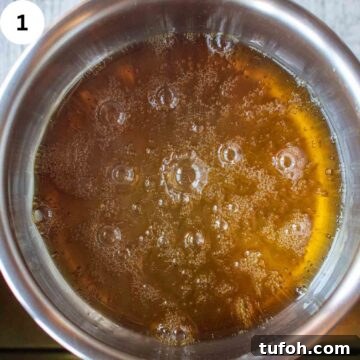
Make the caramel: in a saucepan combine sugar and water over medium heat until the sugar melts and turns a deep amber color. Be careful — hot caramel can cause severe burns.
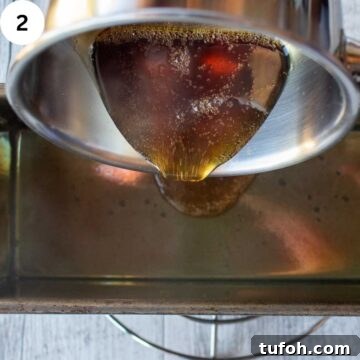
Pour the hot caramel into the base of a large loaf pan and tilt the pan to coat the bottom and a little up the sides. Set aside to cool and harden.
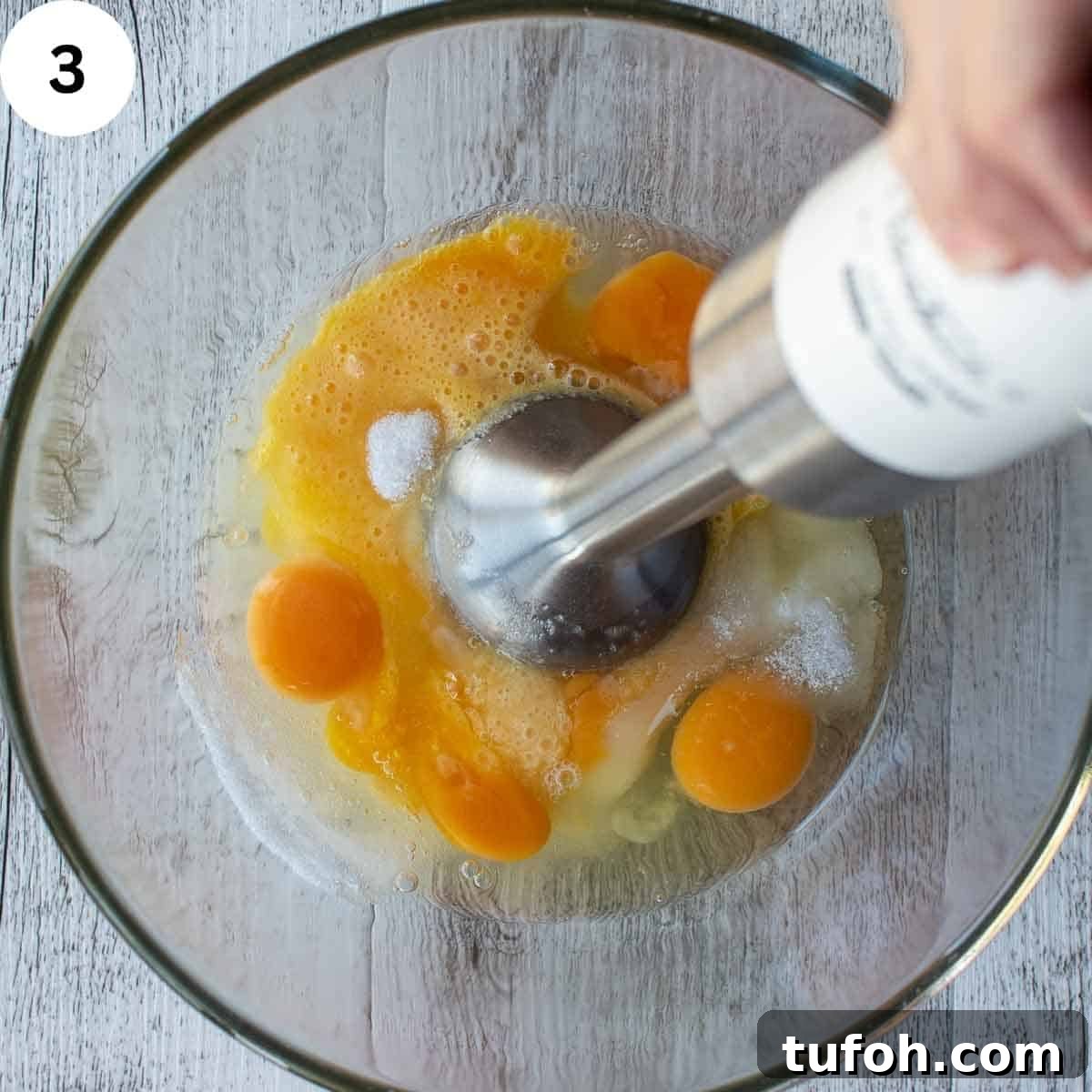
Heat the milk with the cocoa powder until steaming but not boiling, then stir in the crushed amaretti cookies and let the mixture cool slightly. Meanwhile, whisk together the whole eggs, one egg yolk, and sugar in a bowl—avoid incorporating too much air.
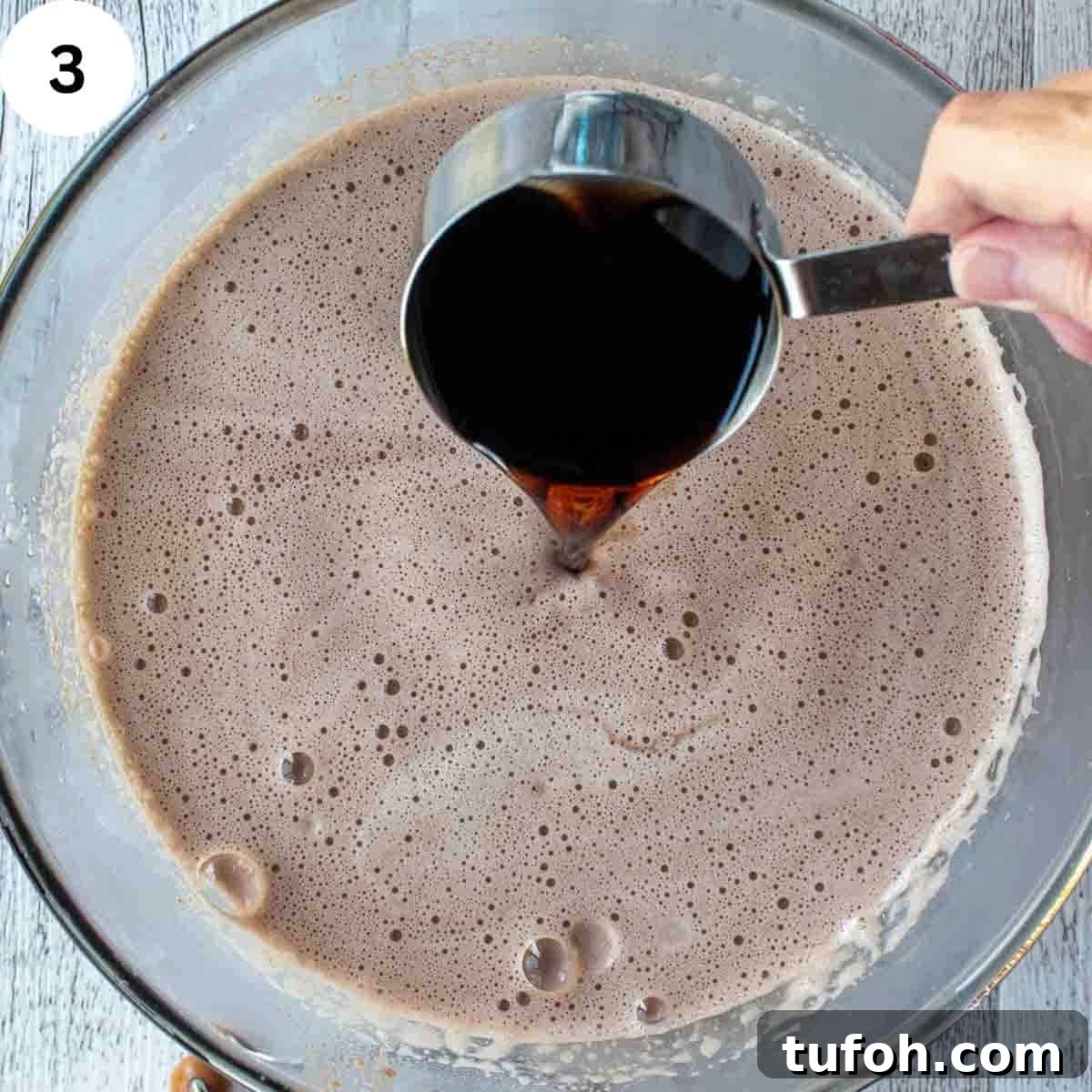
Temper the eggs by slowly whisking the warm milk mixture into them, then add the sweet Marsala wine and mix until smooth.
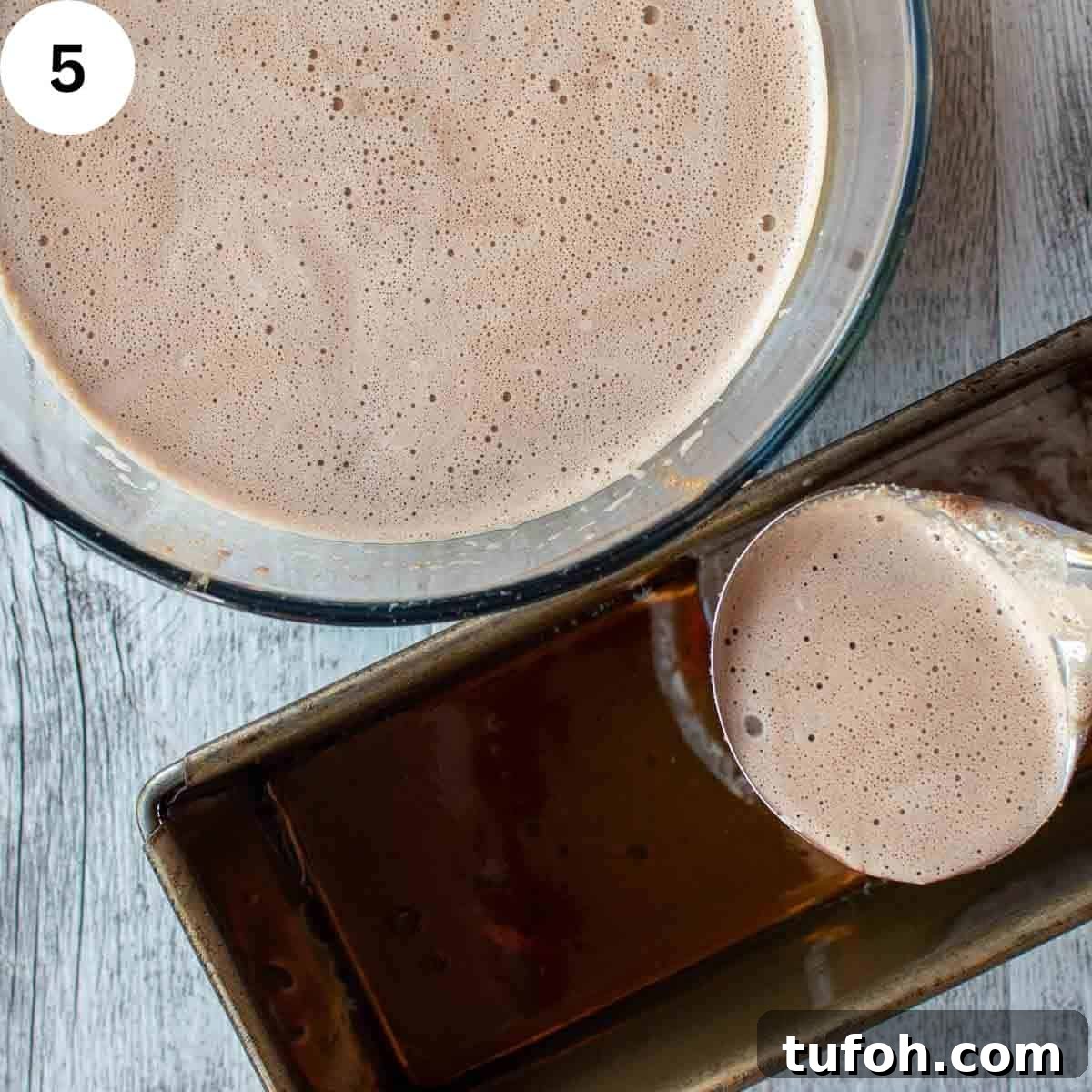
Use a ladle to pour the custard mixture over the set caramel in the loaf pan.
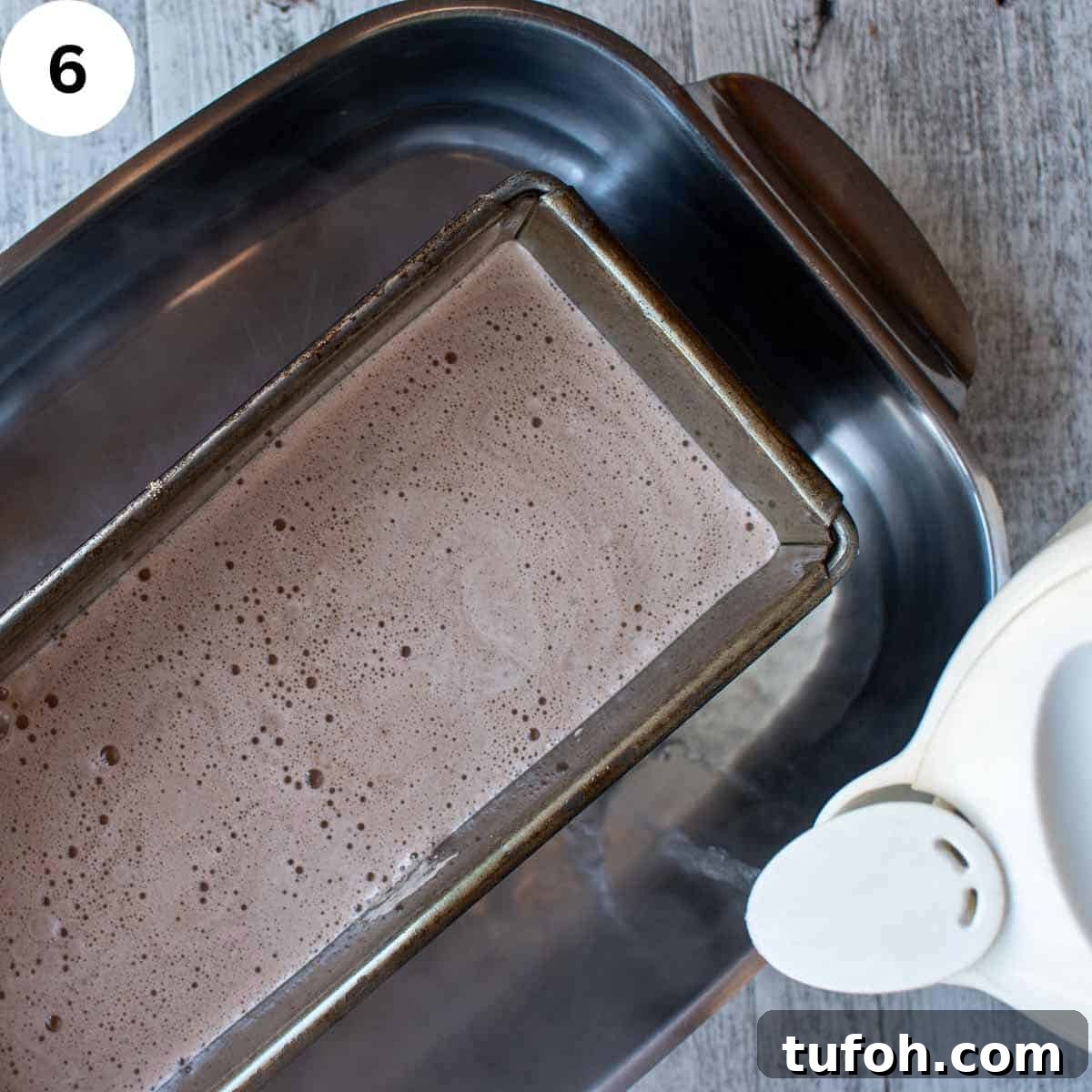
Place the loaf pan inside a larger baking pan and pour boiling water into the outer pan until it reaches about halfway up the sides of the loaf pan to create a bain-marie.
Carefully transfer to the preheated oven and bake for about 1 hour. When the custard is set, remove the loaf pan from the water bath, cool to room temperature, then refrigerate for at least four to six hours or overnight.
Note: Use boiling water for the water bath and remove the loaf pan promptly when the baking is finished to prevent overcooking.
Substitutions
- Alcohol-free: Replace the sweet Marsala with extra milk and add two teaspoons of vanilla extract for aroma.
Variations
- Rum or Amaretto: Substitute 3 tablespoons dark rum or amaretto liqueur plus 1/3 cup extra whole milk for the Marsala.
- Coffee: Replace the wine with a mixture of strong brewed coffee and extra milk for a coffee-toned version.
- Richer texture: Swap one cup of whole milk for heavy cream for a creamier, more indulgent bunet.
Equipment
A typical loaf pan around 10 x 4½ inches (25 x 11 cm) works well. You can also use a deep round pan with 5–6 cup capacity or eight individual ramekins (1 cup each). If using ramekins, reduce baking time to about 30 minutes.
Storage
Store leftover bunet on a shallow plate covered tightly with plastic wrap in the refrigerator for 2–3 days.
Top tips
- When making caramel, work carefully: use a large pan, keep a bowl of iced water nearby in case of splashes, and never leave hot sugar unattended.
- Have the loaf pan ready before the sugar caramelizes, as the caramel sets quickly and must be poured immediately and swirled to coat the pan.
- Crush amaretti in a food processor or in a heavy-duty plastic bag with a rolling pin.
- Always use boiling water for the bain-marie so the custard bakes gently and evenly.
- Remove the loaf pan from the water bath as soon as the bunet is cooked to avoid further cooking from residual heat.
Water bath baking
Water bath baking (bain-marie) gently surrounds the custard with hot water, moderating oven heat and reducing the chance of curdling or cracking. Use a large ovenproof pan to hold the loaf pan and pour in boiling water up to about halfway before placing in the oven.
FAQ
Bunet (also spelled bonet) is an old Piedmontese pudding similar to chocolate crème caramel. Today’s versions typically include cocoa, crushed amaretti, and a sweet liqueur such as Marsala or rum.
Bunet originates in Piedmont, northern Italy. The name refers to a cap-like mold traditionally used to shape the dessert, and it has long been part of regional culinary tradition.
Bunet is one of Piedmont’s oldest desserts, once served at medieval feasts. Over time it evolved to include chocolate and liqueurs, becoming the version commonly enjoyed today.
Serving Suggestions
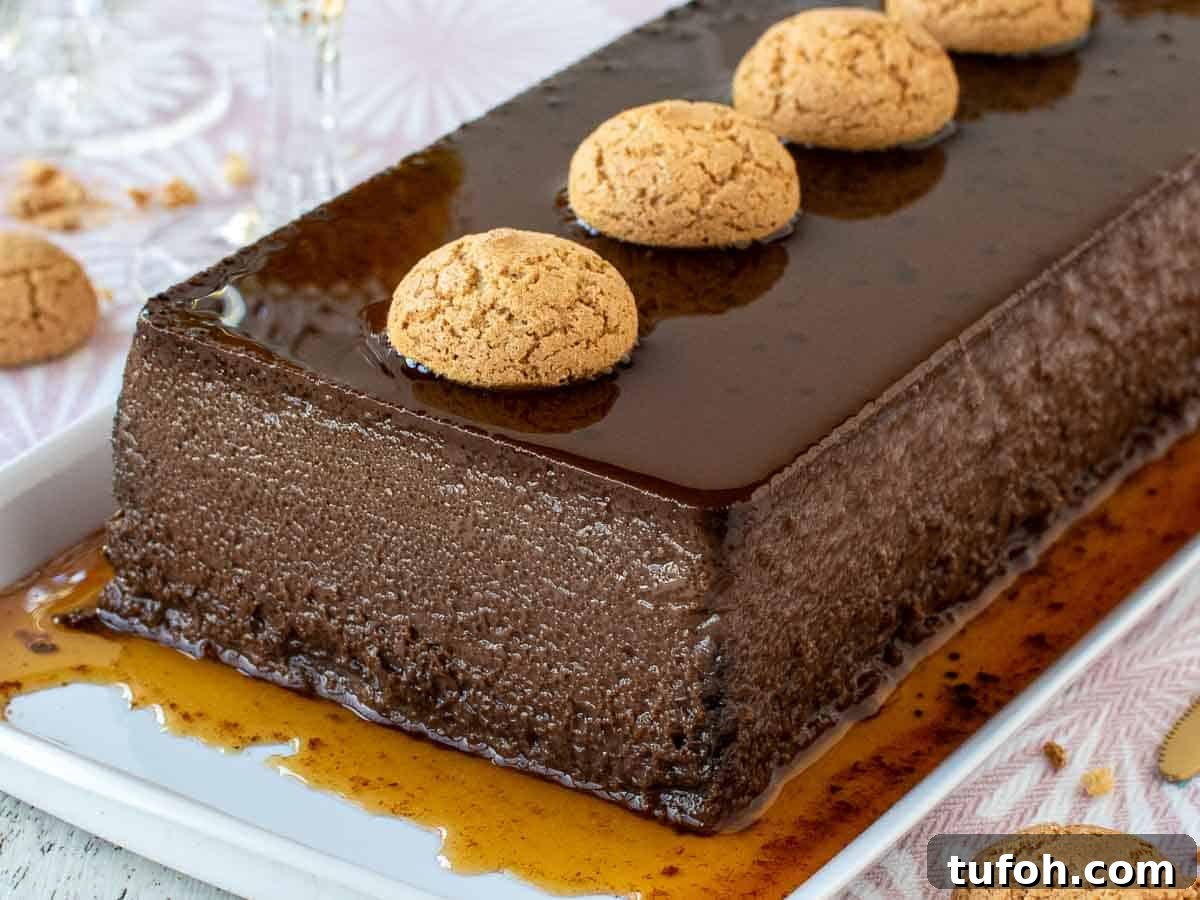
Bunet makes a fitting finale to an Italian-style meal. It pairs well with rustic first courses such as spinach and ricotta ravioli, fried calamari, or hearty pasta dishes.
Bunet Recipe
Equipment
- 1 large loaf pan (approximately 10 x 4½ inches / 25 x 11 cm)
- 1 baking pan with high sides large enough to hold the loaf pan for the water bath
Ingredients
For the caramelized sugar
- ½ cup (100 g) granulated sugar
- 3 tablespoons (45 ml) water
For the chocolate pudding
- 7 ounces (200 g) crunchy amaretti cookies, reserve a few for serving
- 3 cups (720 ml) whole milk
- 6 tablespoons cocoa powder
- 5 whole eggs
- 1 egg yolk
- ¾ cup (150 g) granulated sugar
- ⅓ cup (80 ml) sweet Marsala wine (see notes for alternatives)
Instructions
Caramel
- Prepare a large loaf pan. Dissolve sugar in water over low heat, then increase to medium and boil without stirring until it caramelizes. Pour immediately into the loaf pan and coat the bottom and a little up the sides. Allow to cool.
Chocolate pudding
- Preheat oven to 300ºF / 150ºC.
- Crush amaretti cookies in a food processor or in a sealed bag with a rolling pin.
- Heat milk and cocoa until steaming, stir in the crushed amaretti, then cool slightly.
- Whisk eggs, egg yolk, and sugar in a bowl without adding extra air.
- Slowly whisk the warm milk mixture into the eggs, then stir in the Marsala.
- Ladle the custard over the caramel in the loaf pan.
- Place the loaf pan into a larger baking pan and add boiling water to reach about halfway up the sides of the loaf pan.
- Bake for about 1 hour. Remove from the water bath, cool to room temperature, cover, and chill for at least 4–6 hours or overnight.
To serve
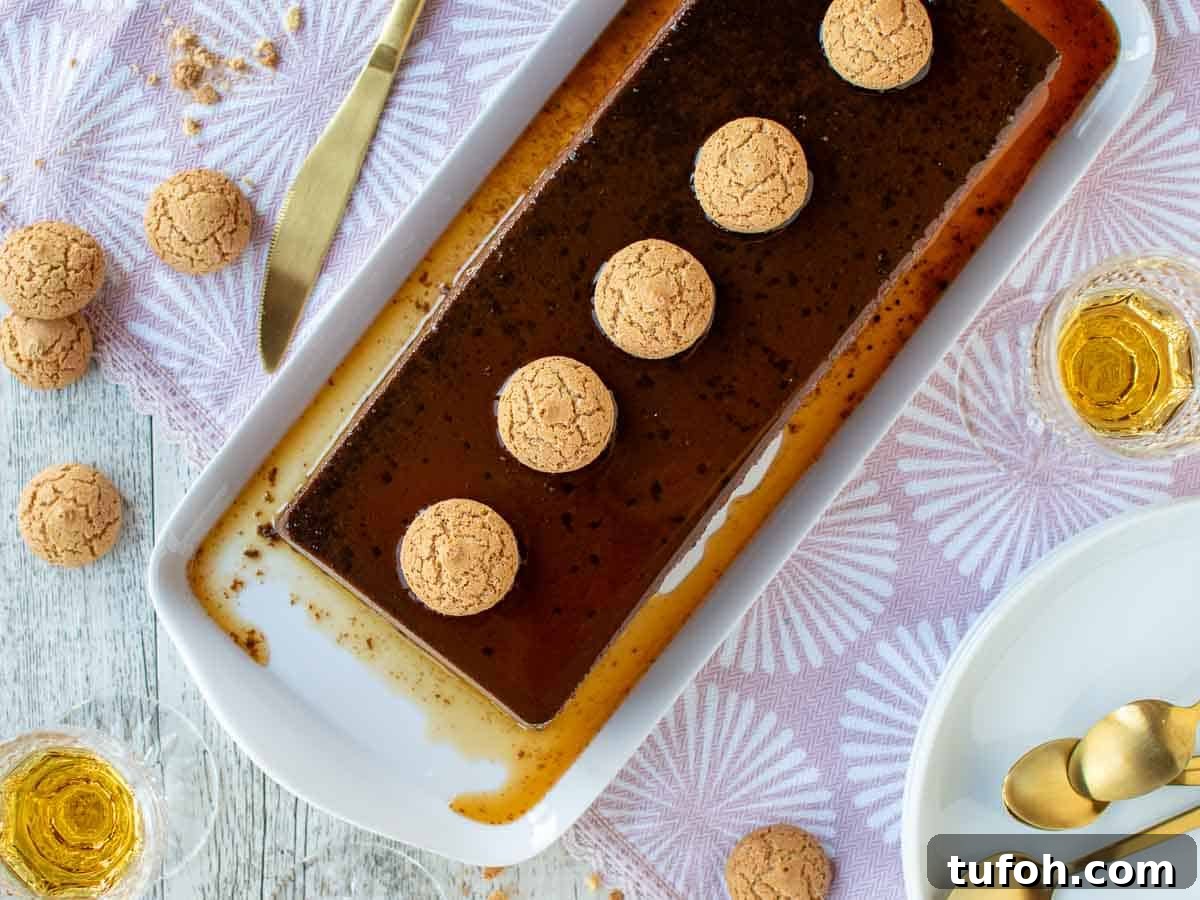
- Run a small knife around the edge to loosen, then invert the loaf pan onto an oblong serving plate so the bunet releases onto the plate. Decorate with reserved amaretti cookies.
Notes
- Alcohol-free option: replace the Marsala with extra milk and 2 teaspoons vanilla extract.
- Alternate spirits: use 3 tablespoons dark rum or amaretto plus 1/3 cup whole milk as a substitute for Marsala.
- Coffee variation: substitute 1/4 cup strong coffee and 1/4 cup extra milk for the Marsala.
Tips for success: Be cautious when making caramel; pour it immediately into the pan and use boiling water for the bain-marie. Remove the loaf pan from the water bath as soon as cooking is complete to avoid overcooking.
Nutritional Estimate Per Serving
Calories: 344 kcal | Carbohydrates: 64 g | Protein: 8 g | Fat: 6 g | Sugar: 59 g
Nutritional disclaimer: These values are estimates from an online calculator. For precise values, calculate based on the brands and ingredients you use.
This updated and improved recipe was originally posted September 25, 2013.