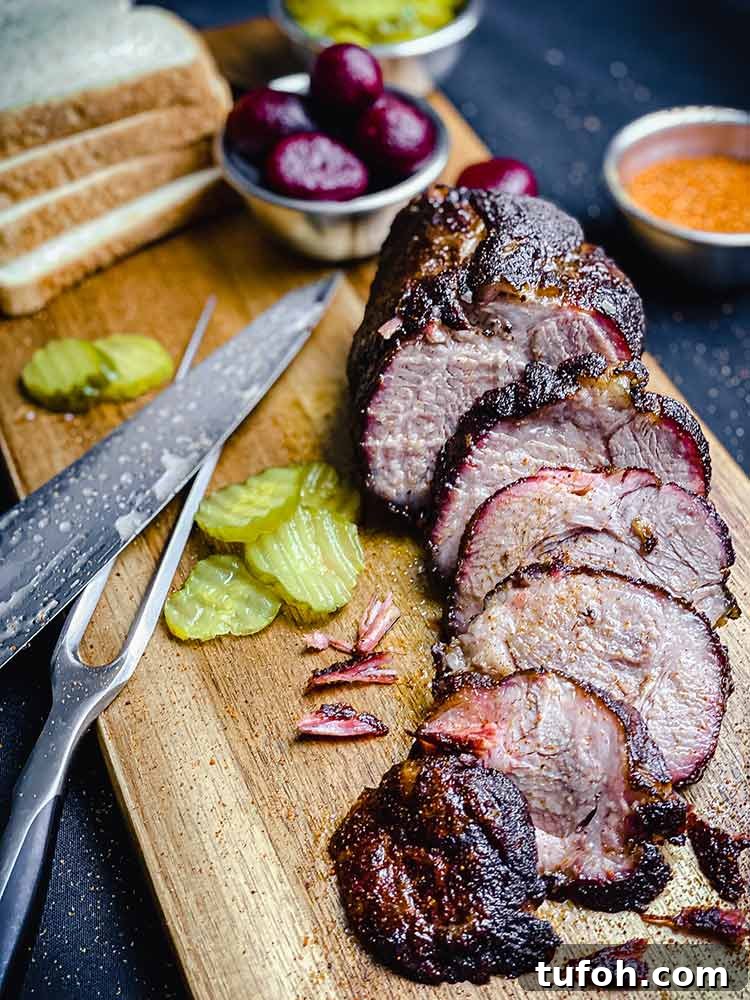
The smoked coppa roast may be the best piece of pork many home cooks have yet to try. If you’ve pulled a smoked pork shoulder into tender, juicy bites, you’ve already experienced coppa in another form. Often called the “money muscle,” the coppa is the most tender portion of the pork shoulder thanks to its generous marbling of intramuscular fat. This fat keeps the cut remarkably juicy and flavorful when cooked properly. Note: pork butt and Boston butt are other names for the pork shoulder, and the coppa sits on the opposite side of the bone from many other shoulder muscles.
Where to Get a Coppa Roast
You can buy a whole pork shoulder and trim out the coppa yourself if you’re comfortable with a boning knife and basic butchery. Trimming a coppa from a full shoulder gives you the remainder for grinding into sausage or slow-smoking as pulled pork. If you prefer convenience, many butchers and online meat suppliers sell hand-cut coppa roasts; buying it ready-trimmed saves time and yields a beautifully shaped roast ideal for slicing and serving.
What Is This Roast?
The coppa roast—also called the pork collar or capocollo in Italian—is a small, well-marbled muscle from the shoulder. Its fine intramuscular fat renders slowly, producing a silky texture that almost dissolves on the tongue when cooked right. In Italian delis coppa is often cured and thinly sliced for sandwiches and charcuterie, but when smoked and cooked fresh it becomes a savory centerpiece that’s excellent sliced and served warm.
How to Cook It
This cut shines when smoked low and slow, but it also roasts beautifully in an oven or performs well with a reverse sear on a hot grill or cast-iron pan. Smoking adds a depth of flavor that elevates the coppa, imbuing the meat with subtle woodsy notes. If smoking isn’t an option, a low oven roast or a gentle indirect grilling method will still yield tender results.
Tips for Cooking a Coppa Roast
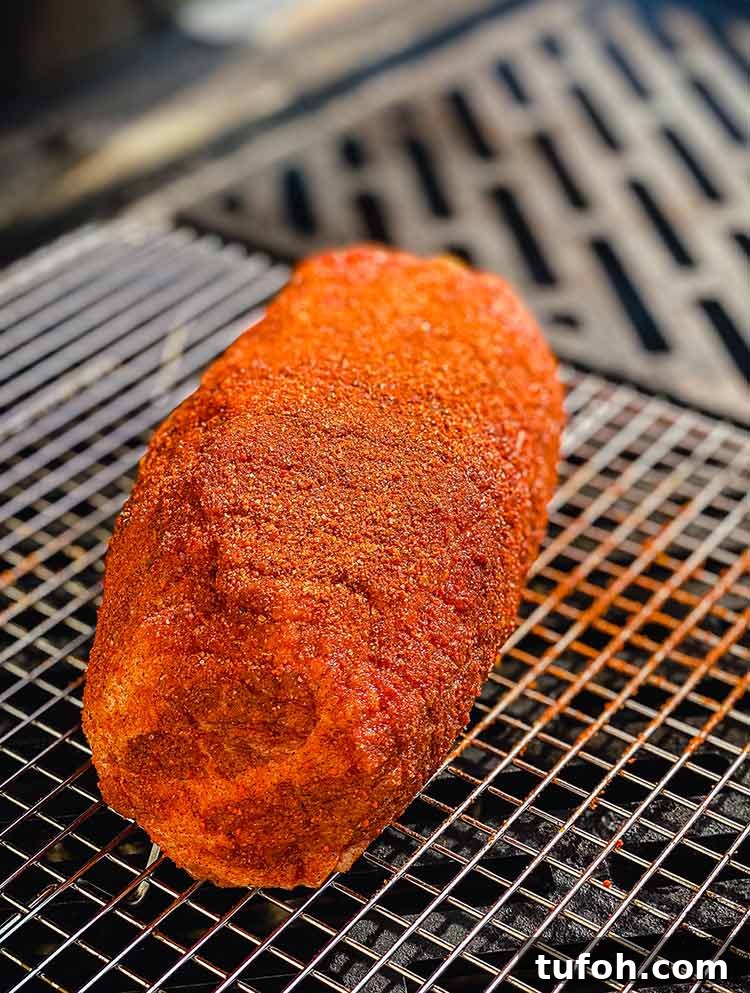
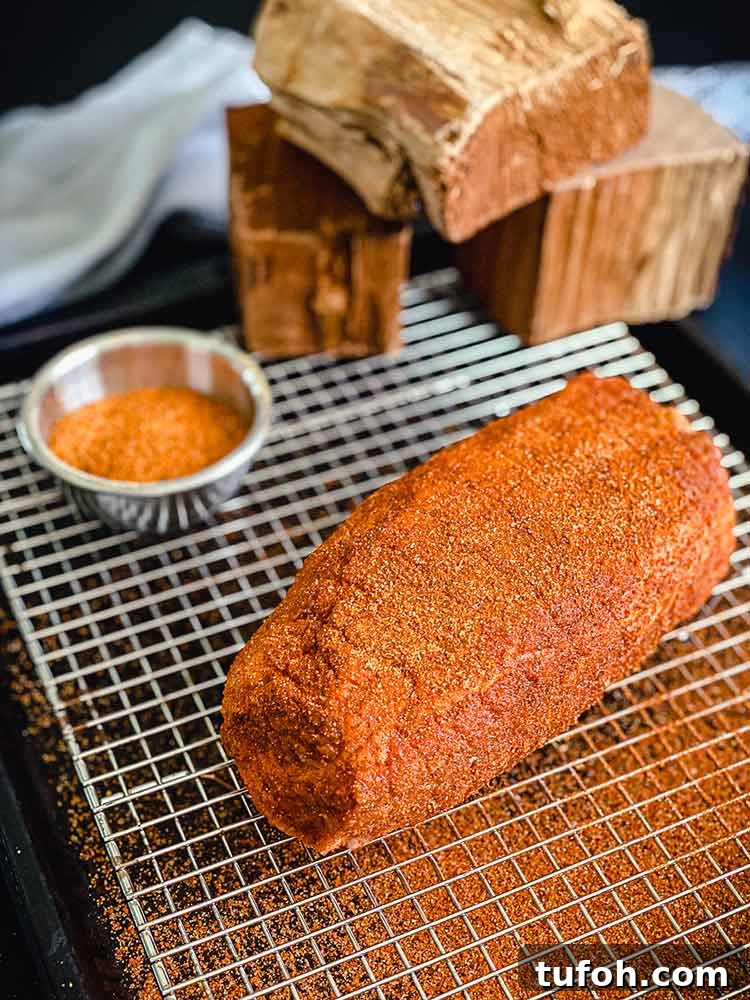
Rub: Use a bold barbecue rub to complement the rich pork flavor. The rub in this recipe is generous and makes more than needed for a single roast, so store leftovers in a sealed container for future use on ribs, pork loin, or chicken.
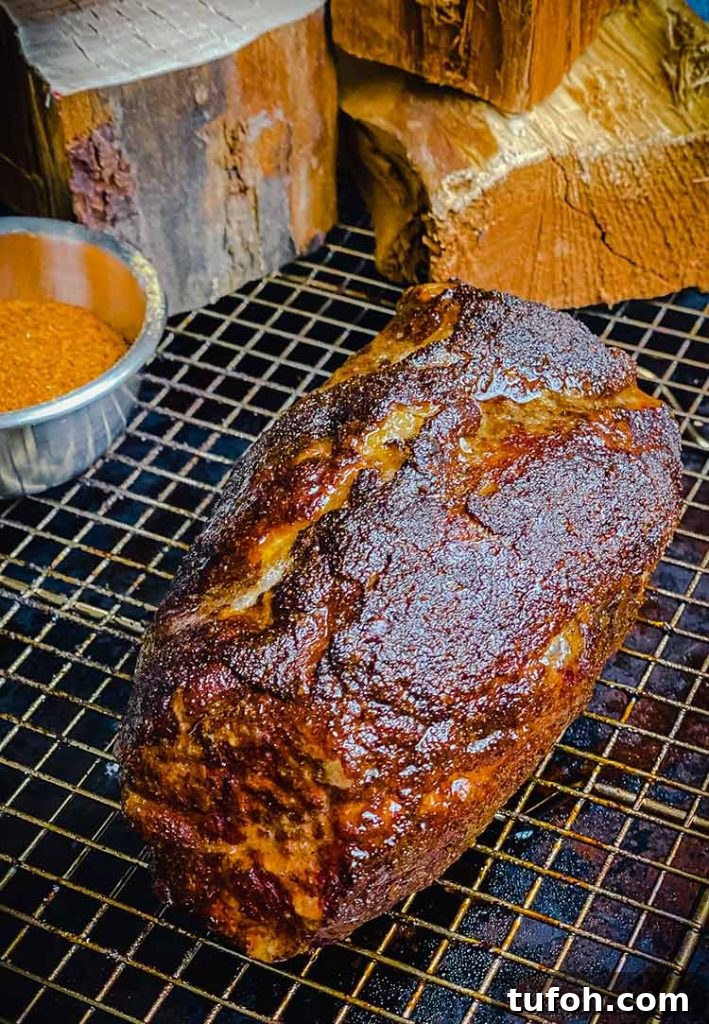
Wood choice: Fruit woods pair exceptionally well with pork. Cherry, apple, and pecan add a sweet, mellow smoke that complements the coppa’s fat without overpowering it.
Target temperature: A coppa roast cooks faster than a whole shoulder because it’s smaller and more uniform in shape. Aim for an internal temperature of about 190–195° F for moist, sliceable results. This is slightly lower than the 200°+ often required for a full shoulder destined for pulled pork.
Spritzing: Depending on your smoker or grill, an occasional spritz with water or apple juice every hour can help maintain moisture and encourage a beautiful bark. Check at the one-hour mark and spritz if the surface looks dry.
Finishing sauce: If you like a sweet finishing sauce, warm it and brush it on after the roast comes off the grill. Because the final grill temperature is often higher, applying a sugary sauce while the meat is still on heat can burn the sugars and create an overly smoky or bitter finish.
Smoked Coppa Roast Recipe
Serves: 4 | Prep Time: 5 minutes | Cook Time: About 3–4 hours
Ingredients
1 2-lb coppa roast
1 tbsp neutral oil (avocado or grapeseed)
For the rub:
½ cup light brown sugar
½ cup smoked paprika
1 tbsp fresh ground black pepper
1 tbsp kosher salt
1 tbsp ground savory
1 tbsp chili powder
1 tbsp garlic powder
1 tbsp onion powder
1 tsp ground cayenne pepper
1 tsp dried thyme
How to Smoke a Coppa Roast
Step 1: Set up your grill or smoker for two-zone cooking and stabilize the temperature at 225° F. Use wood chunks rather than chips for steady smoke delivery and monitor the chamber temperature with a reliable thermometer.
Step 2: While the smoker preheats, combine the rub ingredients in a bowl and mix thoroughly. Lightly coat the coppa with neutral oil, then season it liberally and evenly with the rub.
Step 3: Place the coppa over indirect heat and close the lid. Smoke until the internal temperature reaches about 175° F. Then raise the grill temperature to roughly 300° F and continue cooking until the roast reaches an internal temperature of 190° F, then remove it from the heat.
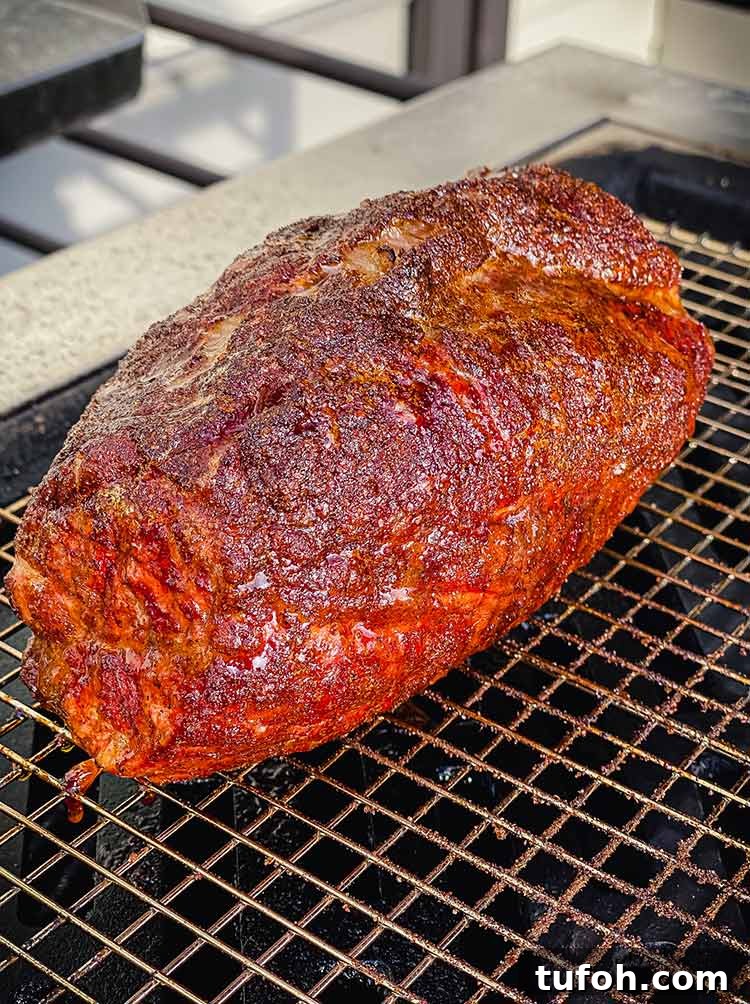
TIP: Carryover cooking will raise the internal temperature slightly while the meat rests.
Step 4: Let the roast rest for 10–15 minutes to allow juices to redistribute.
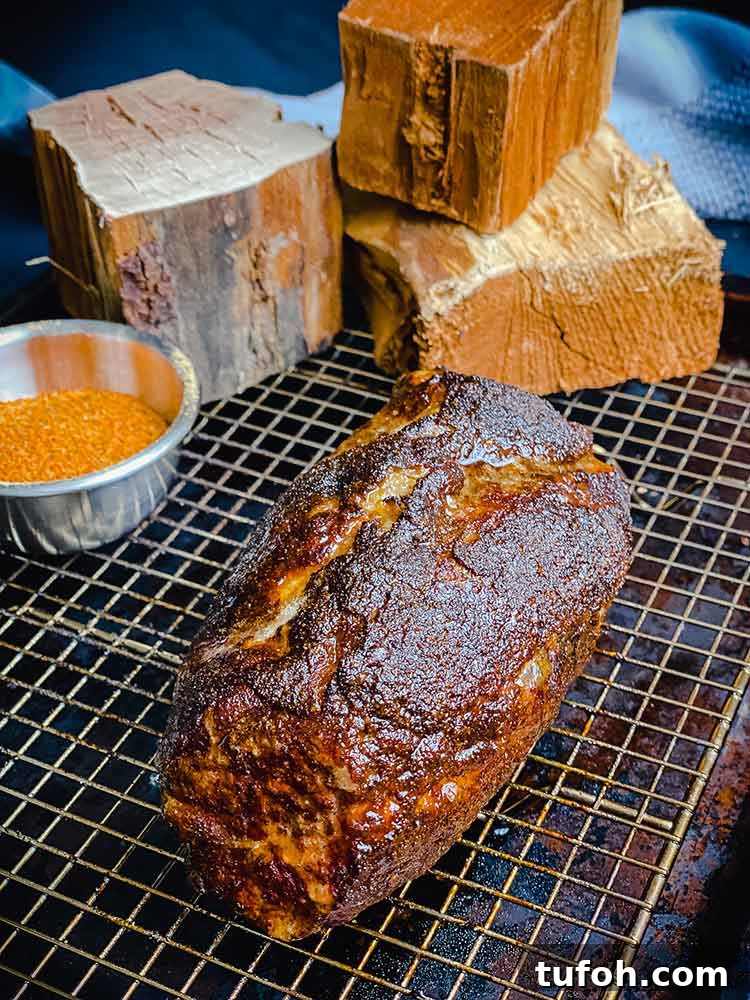
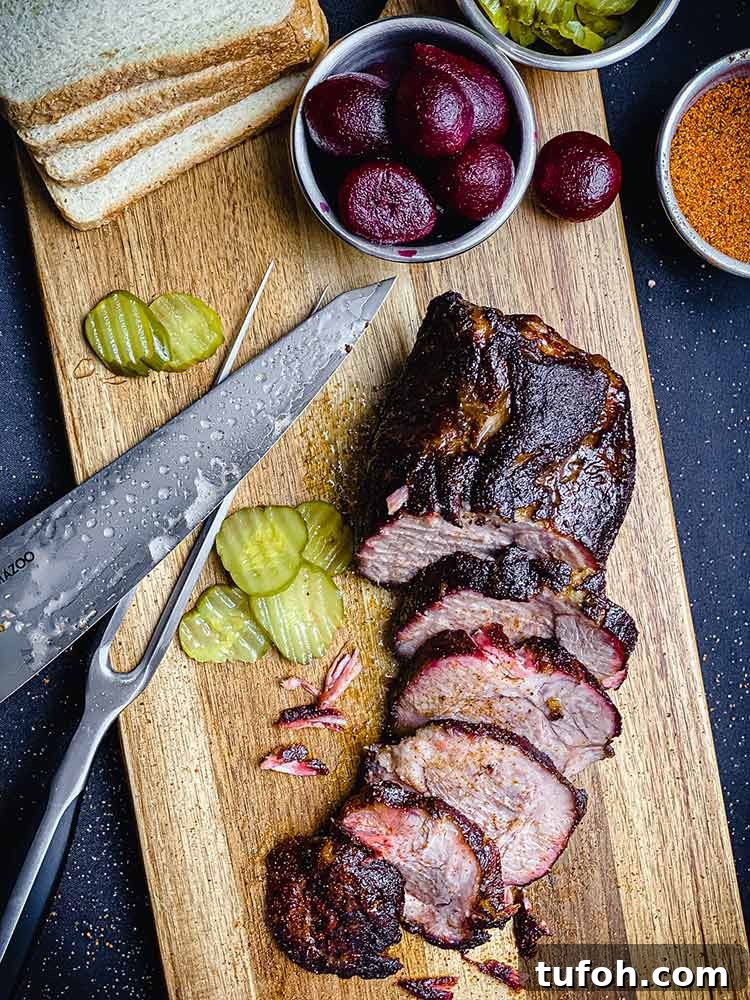
Step 5: Slice the coppa into 1/4-inch thick slices and finish with a light dusting of the rub before serving. Serve warm as a main course, on sandwiches, or as part of a charcuterie-style spread.
Notes
The coppa roast is a small but mighty cut. When cooked and sliced rather than shredded, its texture and flavor are much more pronounced. Because it contains so much intramuscular fat, the coppa stays moist and tender at slightly lower finishing temperatures than a whole shoulder. If you want to highlight the meat itself, slice and serve it simply with a light sauce or pickles on the side rather than heavy sauces that can mask its flavor. Economically, coppa gives you exceptional flavor for the price and is a great choice for a standout, budget-friendly roast.
Ingredients
- 1 2-lb coppa roast
- 1 tbsp neutral oil (avocado or grapeseed)
For the rub:
- ½ cup light brown sugar
- ½ cup smoked paprika
- 1 tbsp fresh ground black pepper
- 1 tbsp kosher salt
- 1 tbsp ground savory
- 1 tbsp chili powder
- 1 tbsp garlic powder
- 1 tbsp onion powder
- 1 tsp ground cayenne pepper
- 1 tsp dried thyme
Instructions
- Set up the grill or smoker for two-zone cooking and stabilize at 225° F with wood chunks for smoke.
- Mix all rub ingredients. Lightly coat the roast with oil and rub the seasoning all over the meat.
- Place the roast on the grill over indirect heat. Smoke until the internal temperature reaches 175° F.
- Increase the grill temperature to about 300° F and continue cooking until the roast reaches 190° F internally, then remove.
- Rest the roast 10–15 minutes, then slice into 1/4-inch thick pieces and serve with a light dusting of rub.