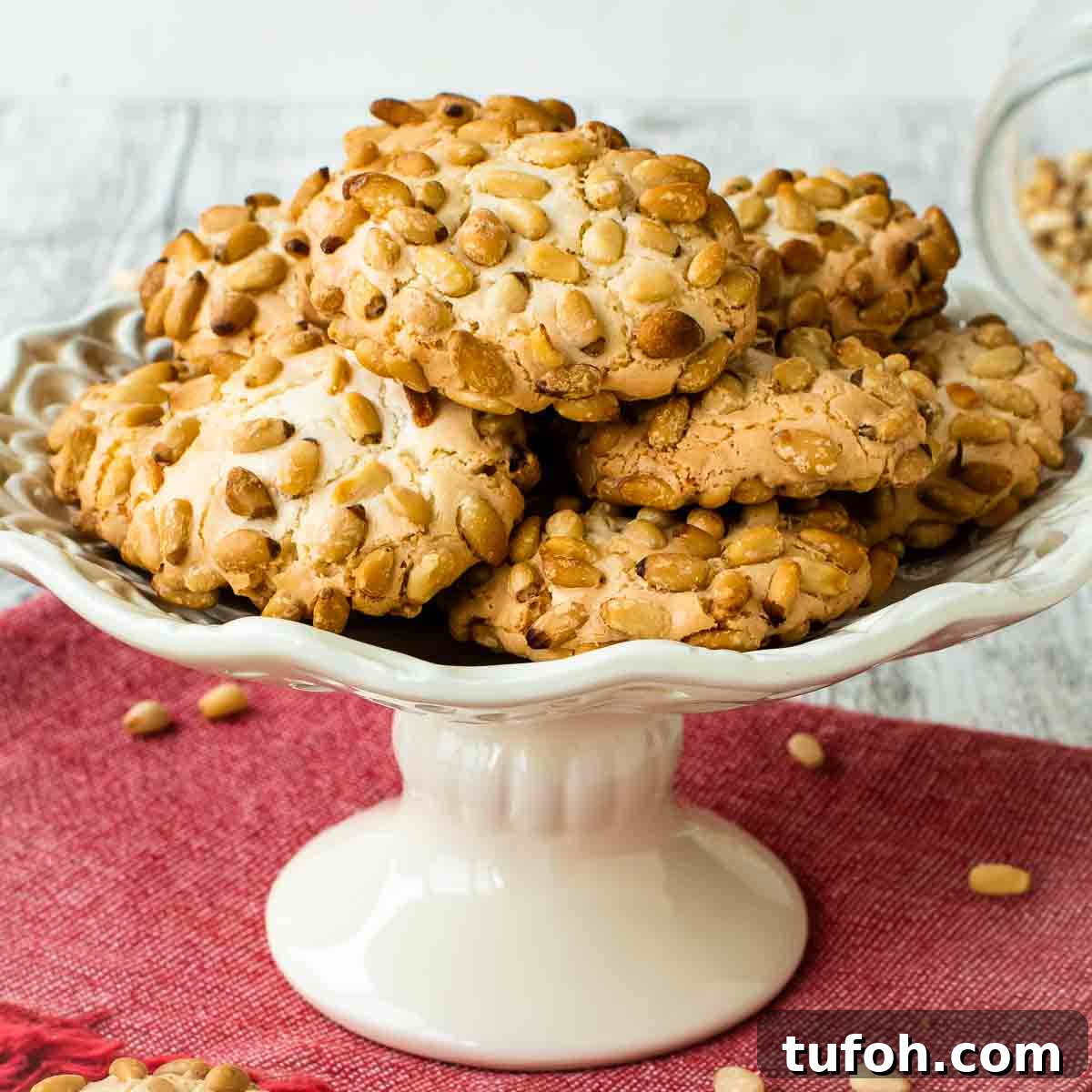
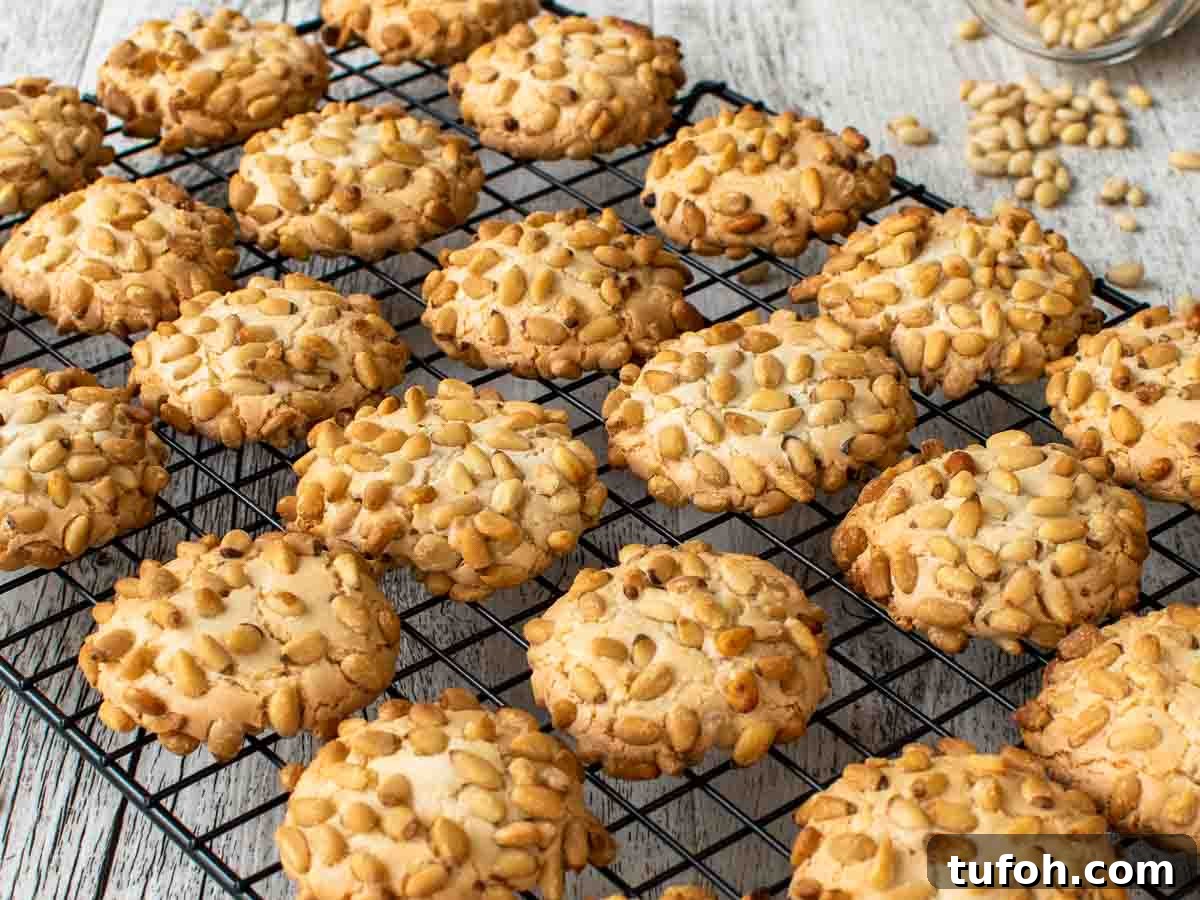
These Italian Pignoli Cookies are perfect for Christmas or any special occasion. Soft almond-flavored centers, a lightly crisp exterior and a buttery pine nut coating make them irresistible.
They’re simple: almond paste combined with sugar and egg white, then rolled in pine nuts and baked until pale golden.
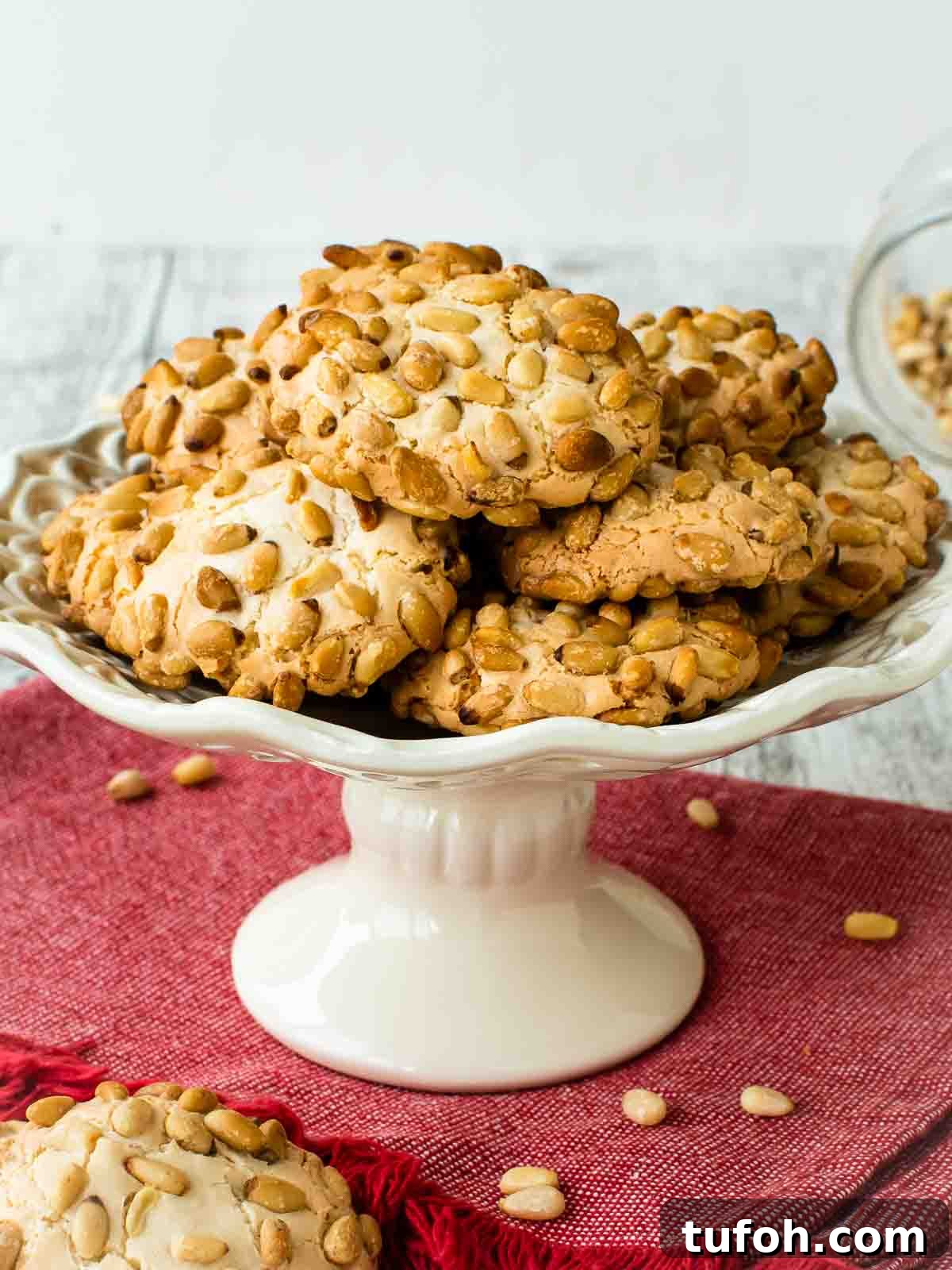
Coated in pine nuts, these cookies showcase a distinct almond taste. Pignoli cookies are a classic holiday treat and pair wonderfully with other festive cookies. The dough is forgiving: you can make it a day or two ahead and refrigerate it, and finished cookies freeze well for about a month.
Make them quickly using good-quality store-bought almond paste, or prepare the easy homemade almond paste included below. With the right timing you’ll get moist centers for several days and a gradually crisping texture afterward. These cookies aren’t overly sweet — the almond and pine nut flavors shine through.
Table of Contents
Why you’ll love this recipe
- Quick and straightforward to prepare.
- Make the dough ahead and refrigerate; cookies freeze well for about a month.
- Soft, chewy centers with a pleasantly crunchy pine nut exterior.
- Recreates a bakery-style favorite at home, saving money.
- Naturally gluten-free when prepared as written.
For full ingredient amounts and the printable recipe card, see the recipe section at the bottom of this page.
Ingredients
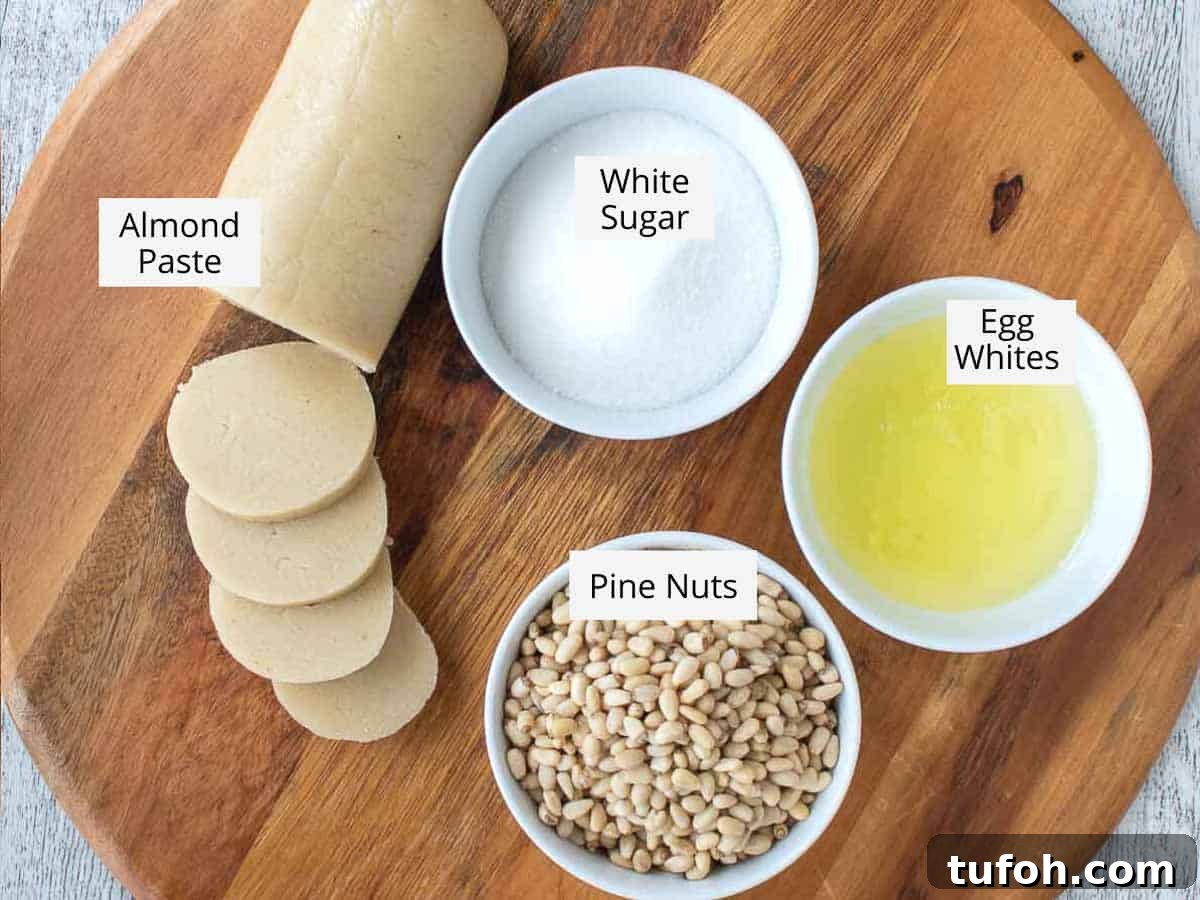
This recipe uses my homemade almond paste (recipe below) or a good-quality store-bought paste. Store brands vary in almond-to-sugar ratio, which can affect texture and spread. See the recipe notes for guidance.
- Almond Paste – homemade or store-bought (choose one with a high almond content).
- Egg Whites – only the whites are used; reserve yolks for other recipes if desired.
- Sugar – granulated white sugar; increase slightly if you prefer sweeter cookies.
- Pine Nuts – expensive but essential for the classic finish; store them refrigerated or frozen to avoid rancidity.
See the recipe card below for exact quantities.
How to Make Pignoli Cookies
Follow these key steps to make pignoli cookies at home.
Preheat the oven to 350ºF (180ºC) and line two baking sheets with nonstick parchment.
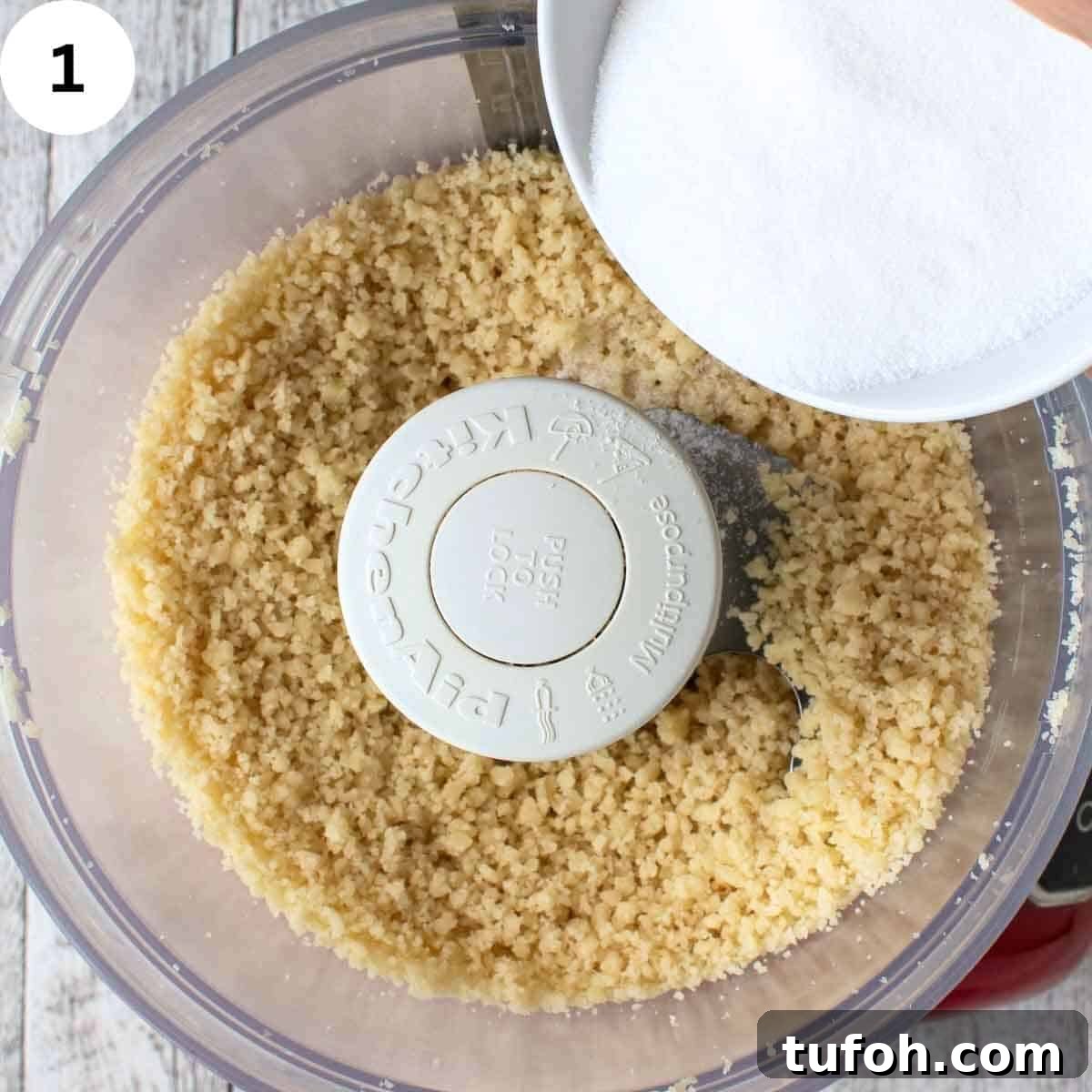
Break the almond paste into pieces and pulse in a food processor until crumbly. Add the sugar and pulse to combine.
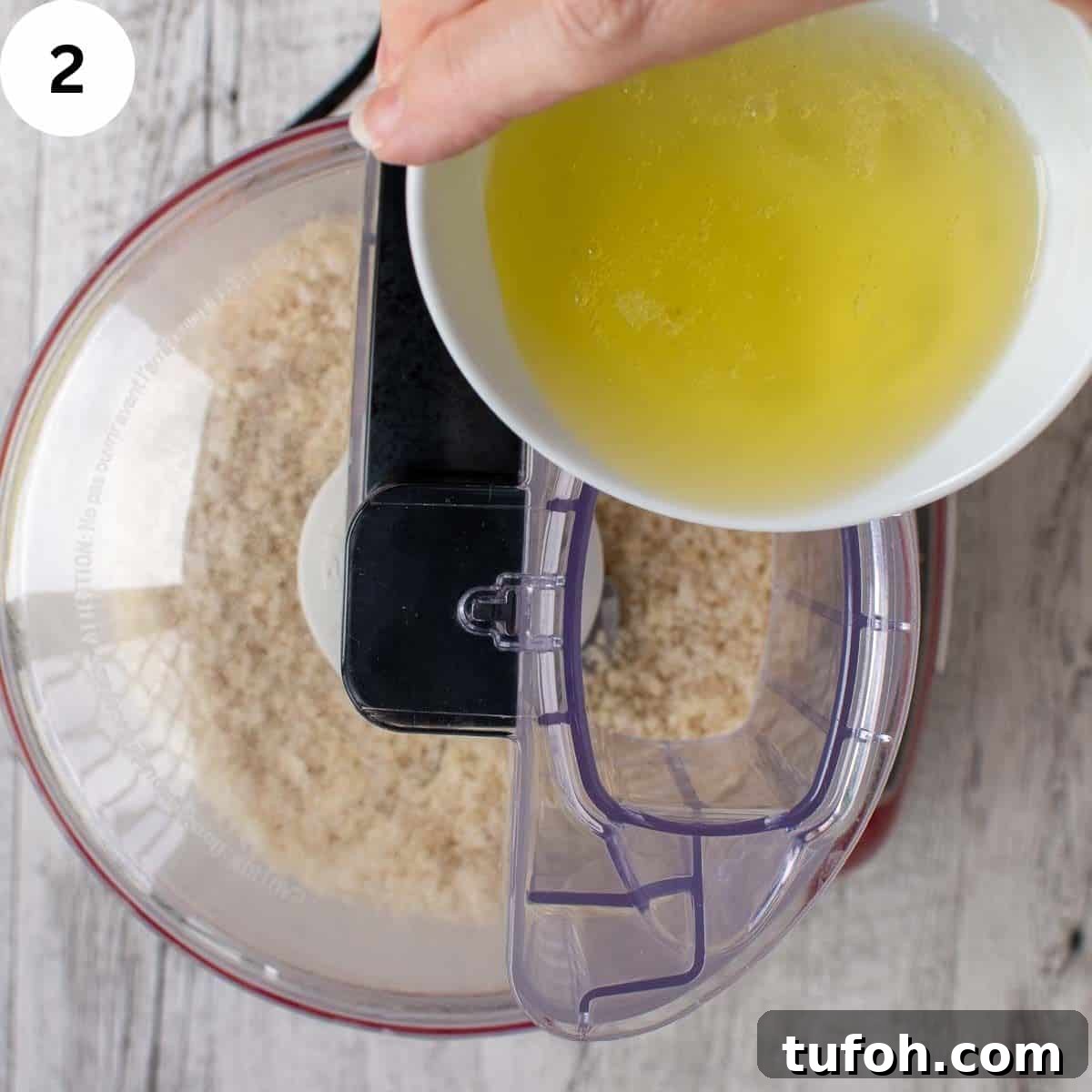
With the processor running, add egg white slowly until the mixture forms a thick, cohesive dough; you may not need all the egg white.
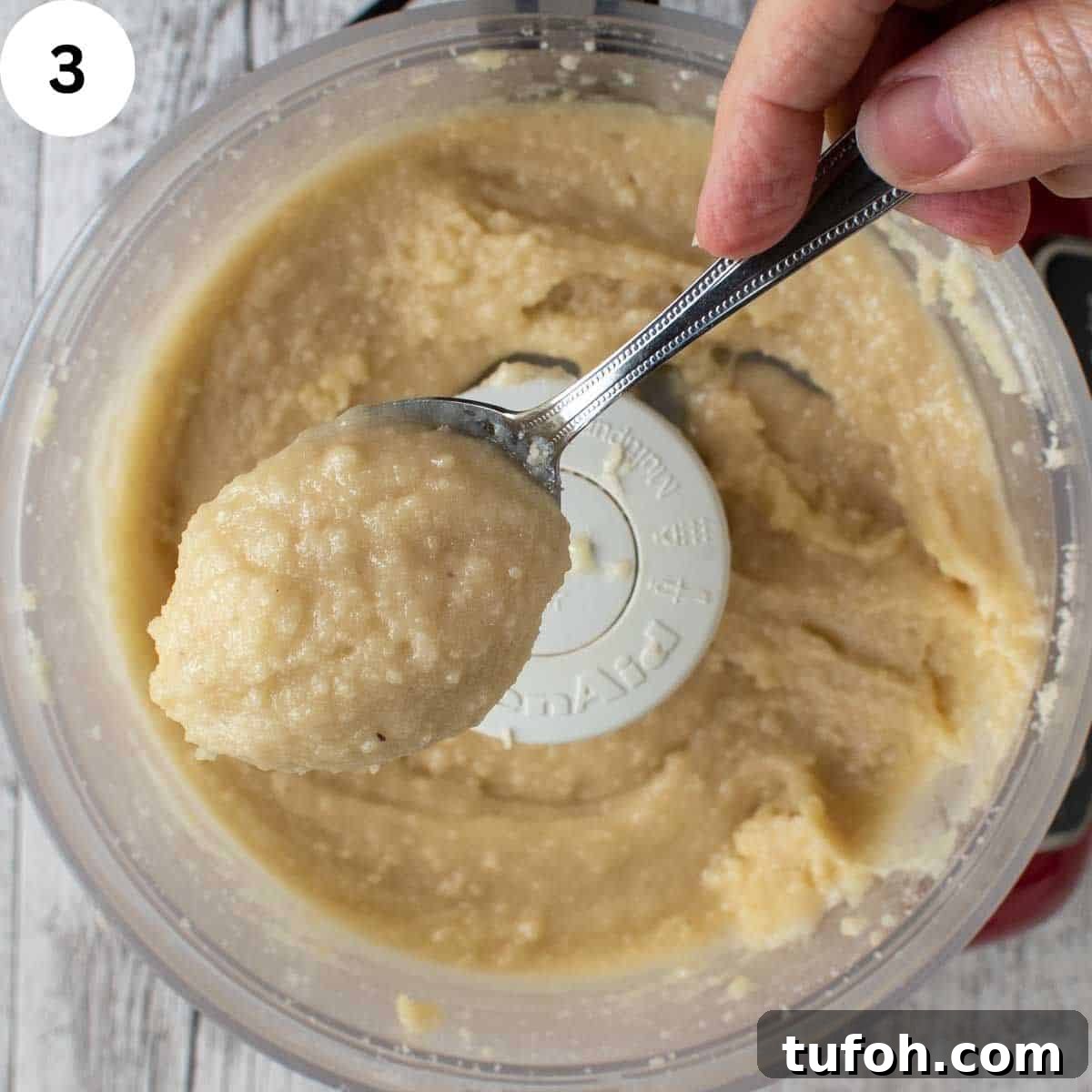
Pulse until the mixture is a thick dough with a soft, slightly grainy texture.
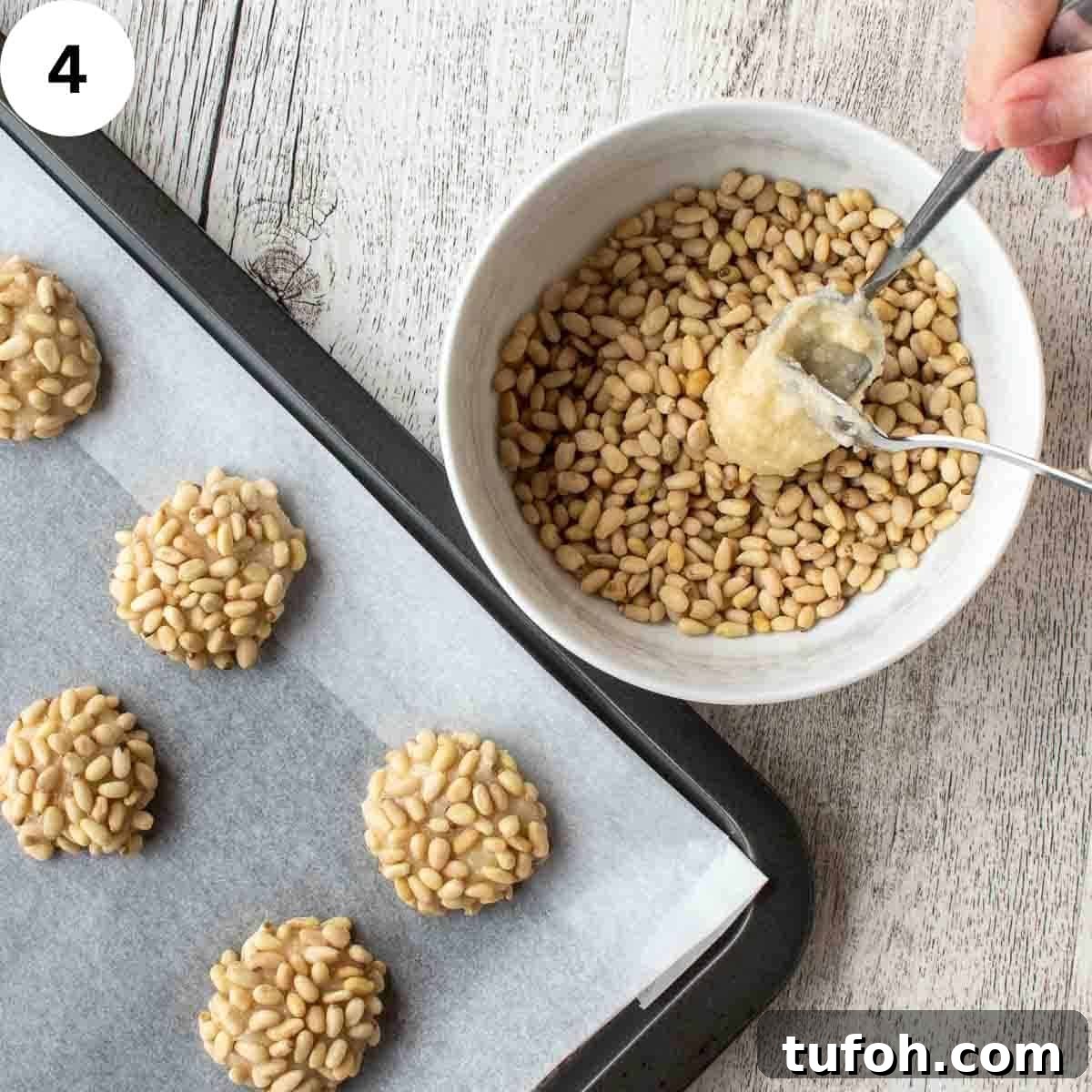
Spoon teaspoons of dough into a bowl of pine nuts, roll or press to coat fully, then place on the prepared sheets allowing room to spread.
Bake until the cookies are just beginning to turn pale golden. Watch them closely to avoid overbaking.
Marcellina’s Hint: Remove the cookies as soon as they show a pale golden edge — overbaking dries them and eliminates the desirable soft center.
Substitutions
- Granulated sugar can be swapped for powdered sugar if needed; texture and spread will differ.
- Frozen liquid egg whites work well if you don’t want to save yolks.
- If pine nuts aren’t available, chopped almonds or cashews can be used, though the cookies won’t be traditional pignoli.
Almond Paste Substitute
If almond paste is hard to find, make a quick substitute using almond flour, powdered sugar, egg white, almond extract and a pinch of salt. Process until it forms a pliable paste, then rest it to develop flavor before using in the cookie dough.
Variations
- Add vanilla extract for a different aromatic profile.
- A small pinch of salt will enhance the overall flavor.
- Stir in a teaspoon of finely grated orange zest for an orange-almond variation.
Equipment
A food processor or stand mixer makes quick work of breaking up almond paste and combining the dough. You can manage by hand, but it’s more effort.
Storage
Store cooled pignoli cookies in an airtight container at room temperature for 4–5 days. For longer storage, layer them with parchment in a sealed container and freeze for up to one month; thaw in wrapping before serving.
Tips for Success
- Pulse almond paste in a food processor until coarse and sandy before adding other ingredients.
- Add egg whites incrementally; you may not need them all. The dough should be sticky enough for the pine nuts to adhere but not too wet.
- Bake briefly and monitor carefully. Depending on the almond paste, baking time can vary; some batches may need longer than 8–10 minutes.
- Let cookies set for a couple of minutes on the baking sheet before transferring to a wire rack to avoid breakage.
FAQ
Cookies can flatten if the almond paste has too much sugar or if the oven temperature is incorrect. Using a paste with a higher almond-to-sugar ratio (or the homemade paste below) helps prevent spreading.
Pignoli cookies use almond paste and pine nuts, both relatively costly ingredients. Pine nuts, in particular, are expensive because of their harvesting and processing.
Yes. The traditional recipe contains no wheat flour, so the cookies are naturally gluten-free.
Yes. Properly baked pignoli cookies are chewy inside with a slightly crisp exterior.
Serving Suggestions
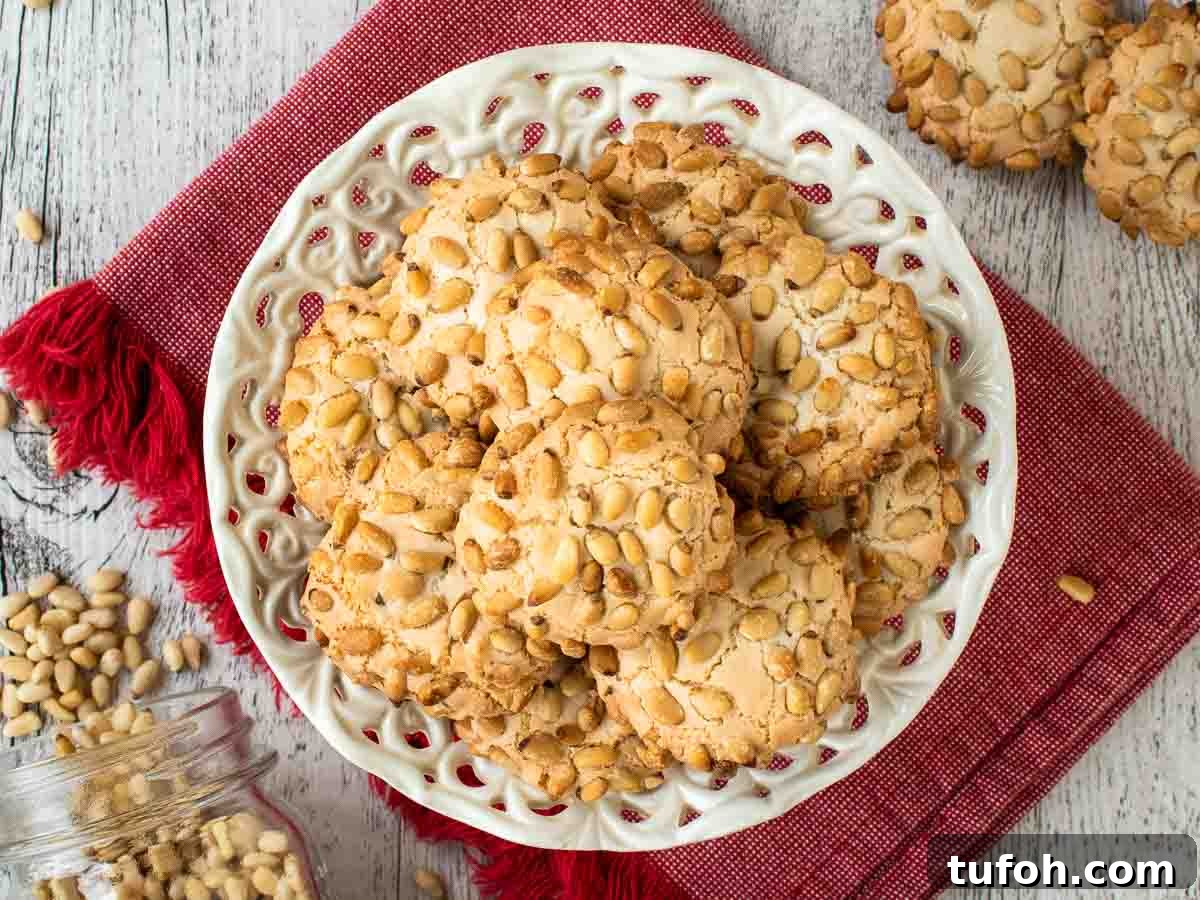
Serve these with a warm beverage for dessert or as part of a holiday cookie platter. Their rich almond and pine nut flavors make them a luxurious choice for festive gatherings.
Pignoli cookies are a special holiday treat—rich, nutty and elegant. Because they’re straightforward to make, they’re a great addition to any cookie assortment.
Made this recipe? If you tried it, share a star rating and a review below.
Pignoli Cookie Recipe
Ingredients
- 16 ounces (1 pound / 450 grams) almond paste homemade or store-bought
- 1 cup granulated sugar (200 grams)
- 2 egg whites
- 2 cups raw pine nuts (270 grams) more as needed
Homemade Almond Paste (if using homemade)
- 2½ cups almond flour (8 ounces / 226 grams)
- 2 cups powdered sugar (8 ounces / 226 grams)
- ¼ teaspoon salt
- 1 large egg white
- 1½ teaspoons almond extract
Instructions
-
Preheat the oven to 350ºF/180ºC and line two baking sheets with nonstick parchment paper.
-
Break almond paste into small pieces and pulse in a food processor until sandy. Add sugar and pulse to combine. With the processor running, add egg whites slowly until a thick dough forms; don’t overhydrate.
-
Place pine nuts in a shallow bowl.
-
Use a teaspoon to scoop dough and scrape it into the pine nuts; toss to coat, press the nuts in and shape into a ball.
-
Arrange the balls on the baking sheet, leaving room for slight spreading.
-
Bake 8–10 minutes, rotating trays for even browning, until edges begin to turn pale golden. Baking time varies with almond paste; some batches may take longer.
-
Remove from oven and let cool on the sheet for a couple of minutes until firm, then transfer to a wire rack to cool completely.
-
Store in an airtight container at room temperature for 4–5 days or freeze for longer storage.
Homemade Almond Paste (if using homemade)
-
Combine almond flour, powdered sugar and salt in a food processor.
-
With the motor running, drizzle in the egg white and almond extract until the mixture begins to come together.
-
Process 2–3 minutes; if needed, add a little more egg white so the mixture forms a stiff dough.
-
Scrape onto a surface and knead briefly; oil will release from the paste — that’s normal.
-
Form into a log or disc, wrap tightly and refrigerate at least one day for the flavors to develop.
Notes
- Cookies in this post were made with homemade almond paste; store-bought pastes can change texture and baking time.
Tips for Success
- Pulse almond paste until it resembles coarse sand before adding other ingredients.
- Add egg whites gradually — you may not need them all.
- Choose a store-bought almond paste with a high almond content if you don’t make your own.
- Allow homemade almond paste to rest overnight; it can also be made weeks ahead.
- Don’t overbake — aim for pale golden edges and a soft center.
- Freeze baked cookies sealed with parchment between layers for up to a month.
This recipe was adapted from Greg Patent’s “A Baker’s Odyssey”.
Nutritional Estimate Per Serving
Nutritional Disclaimer
Nutritional information is an estimate. For precise values, calculate based on the exact ingredients and brands you use.
This updated and improved recipe was first published on November 28, 2017.