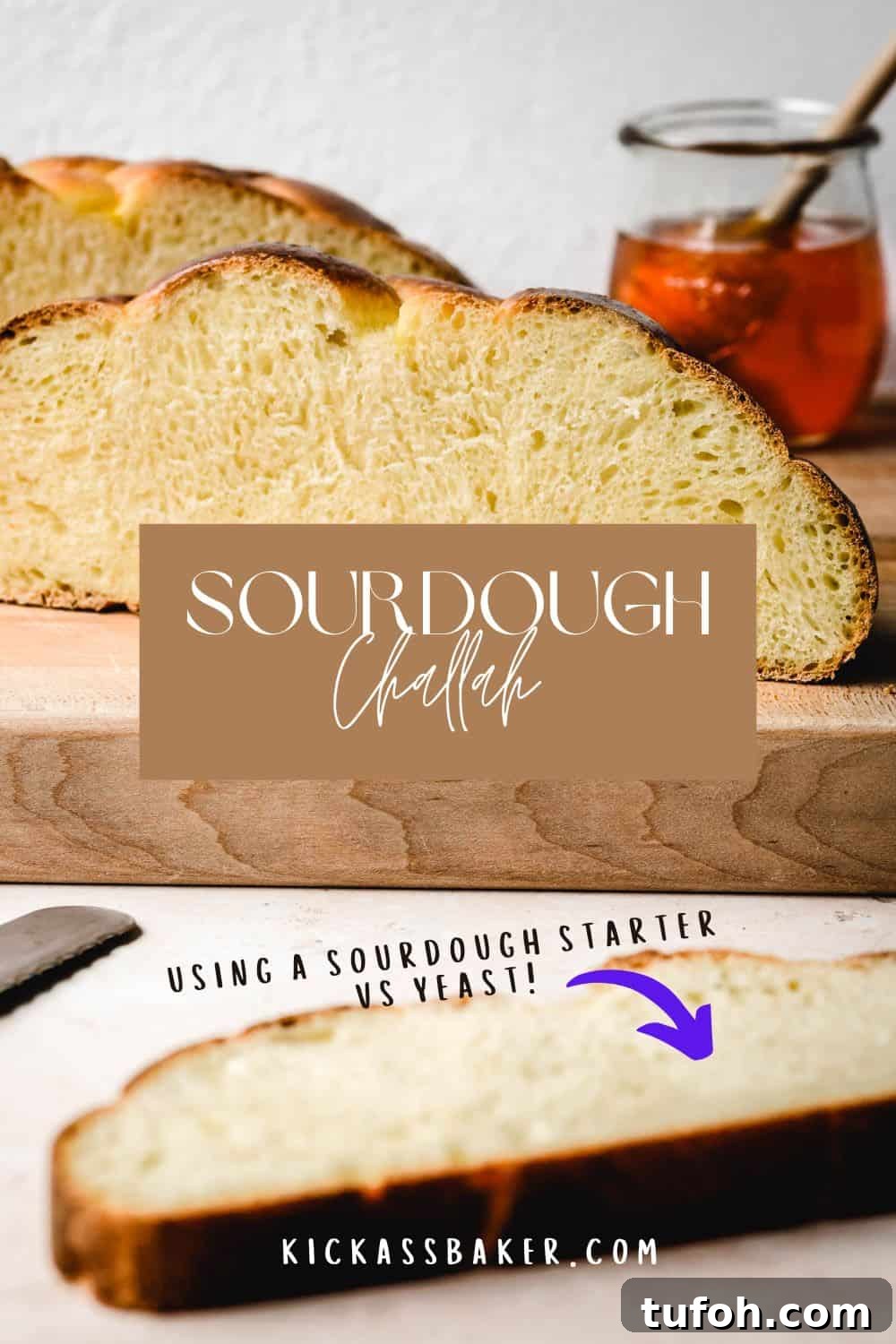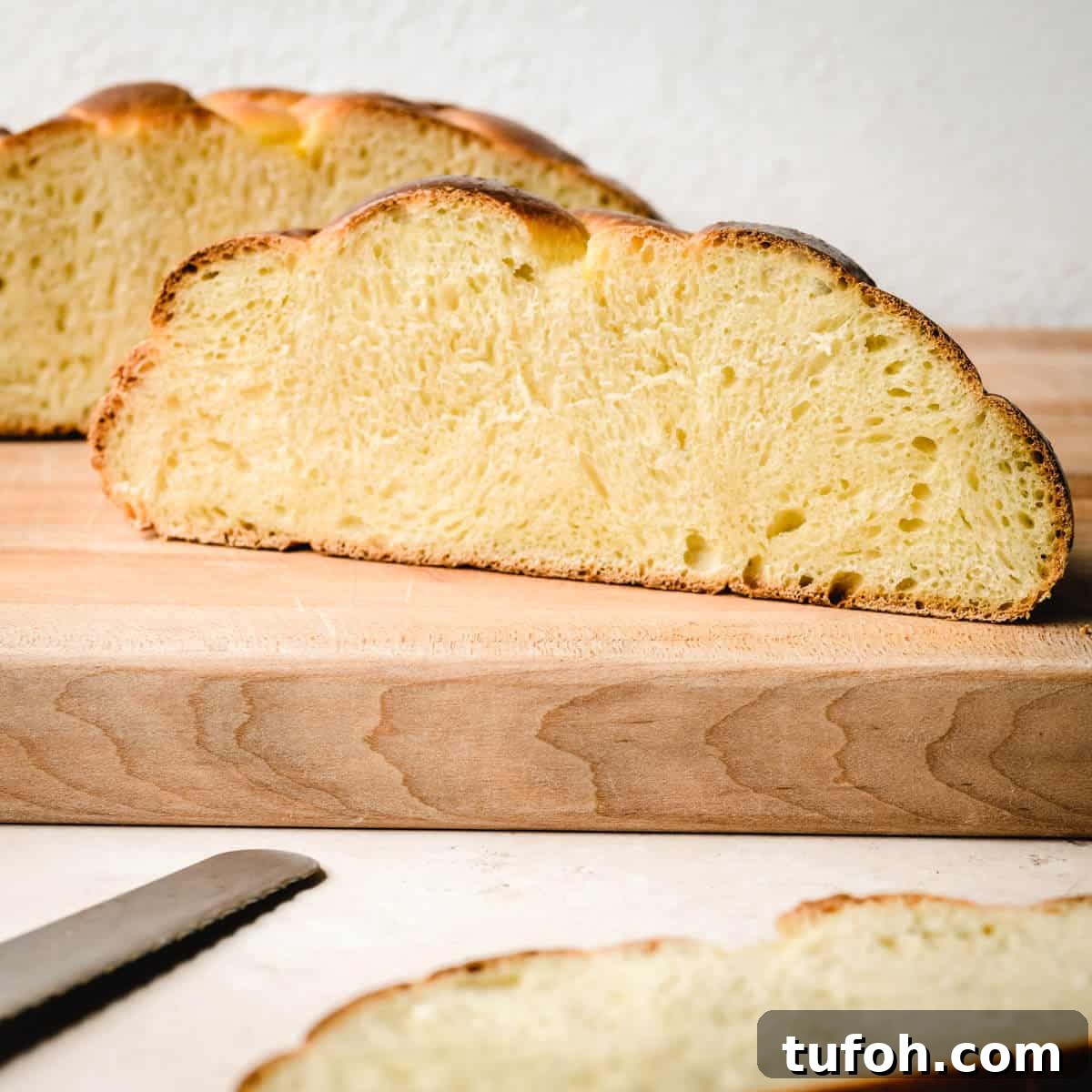
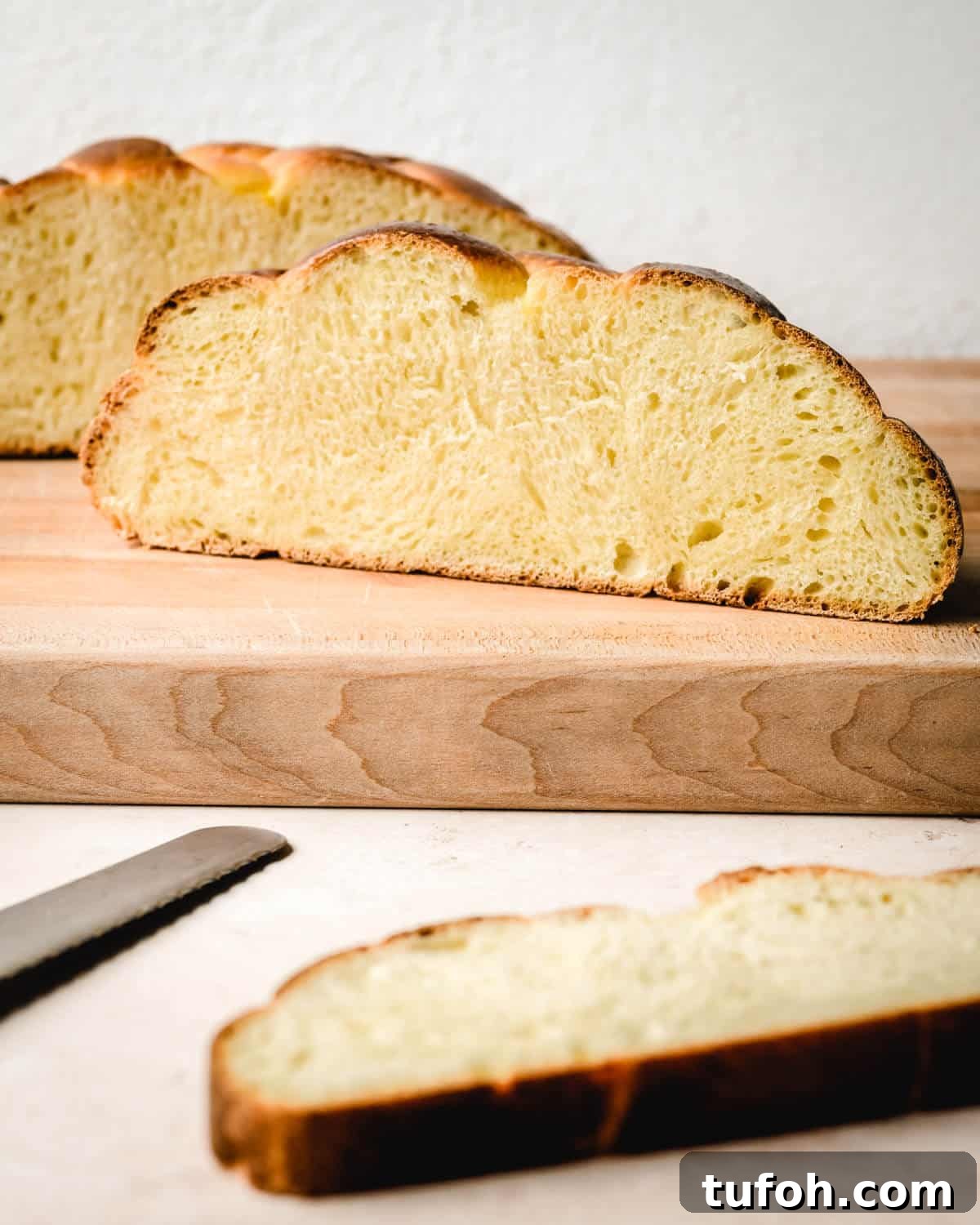
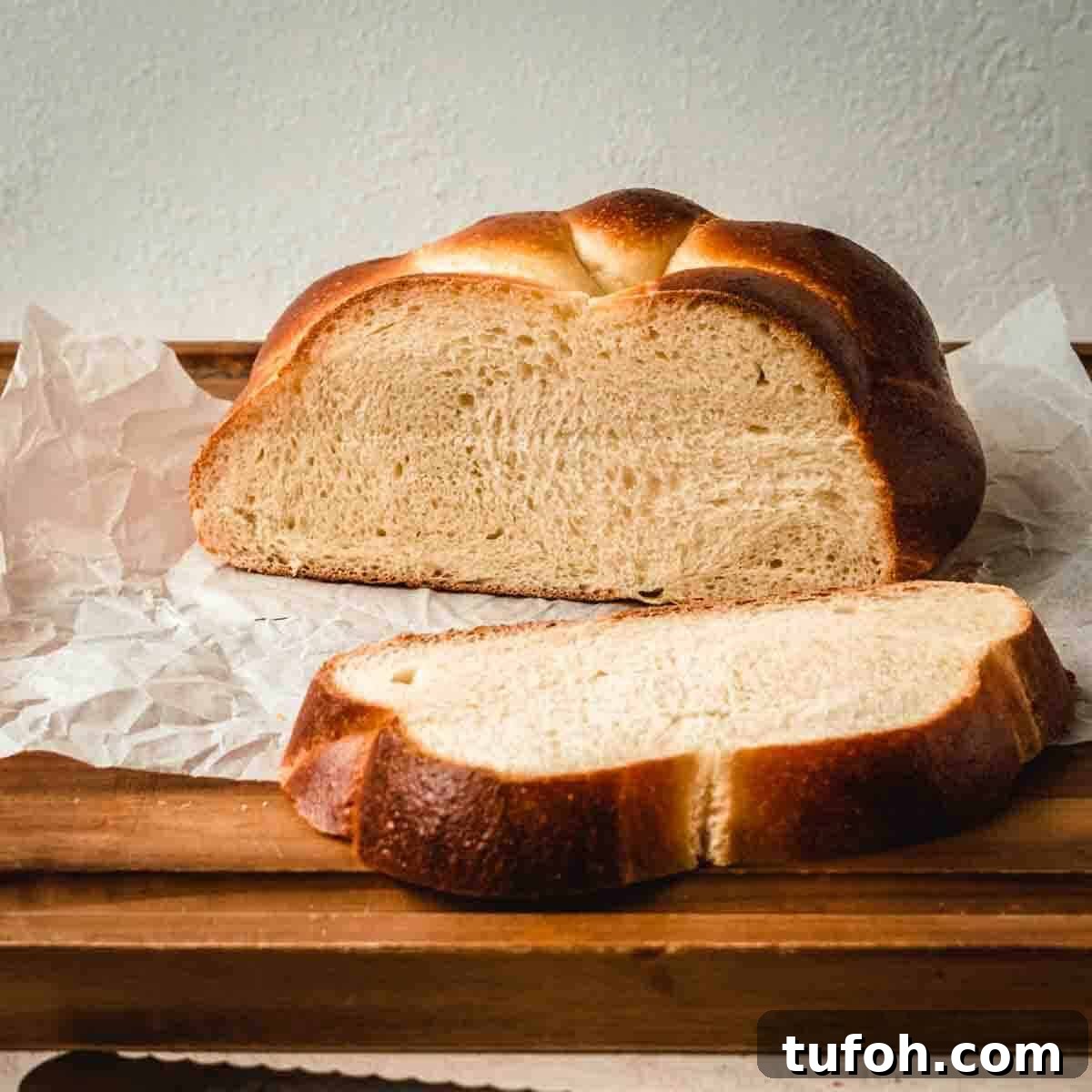
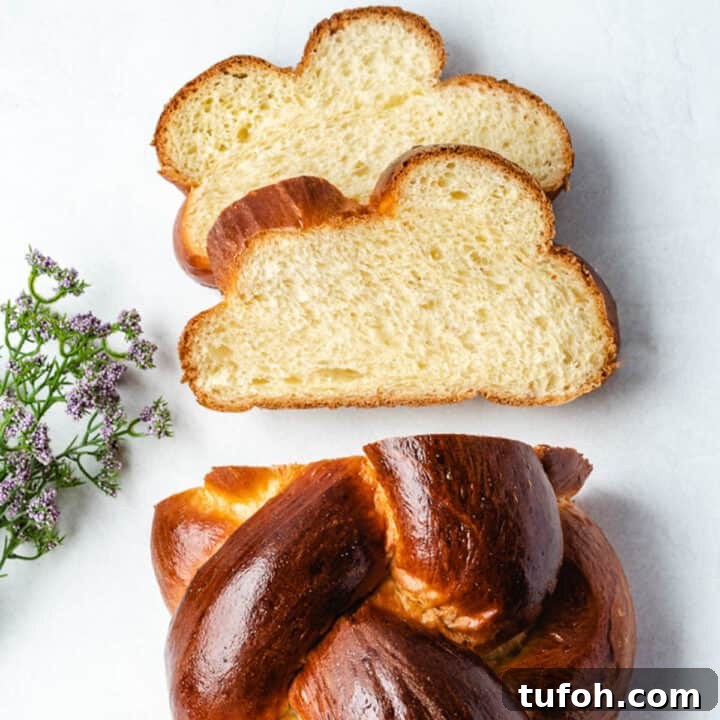
Challah is a traditional Jewish bread enriched with eggs and a touch of sugar or honey, commonly enjoyed on Shabbat and Jewish holidays. I adapted my original fluffy challah to use a sourdough starter instead of commercial yeast, giving the loaf deeper, nuanced flavor while preserving a light, tender crumb. Even if you’re new to sourdough baking, this recipe is approachable and rewarding.
Disclosure: As an Amazon Associate, I earn from qualifying purchases.
Why you’ll love this recipe
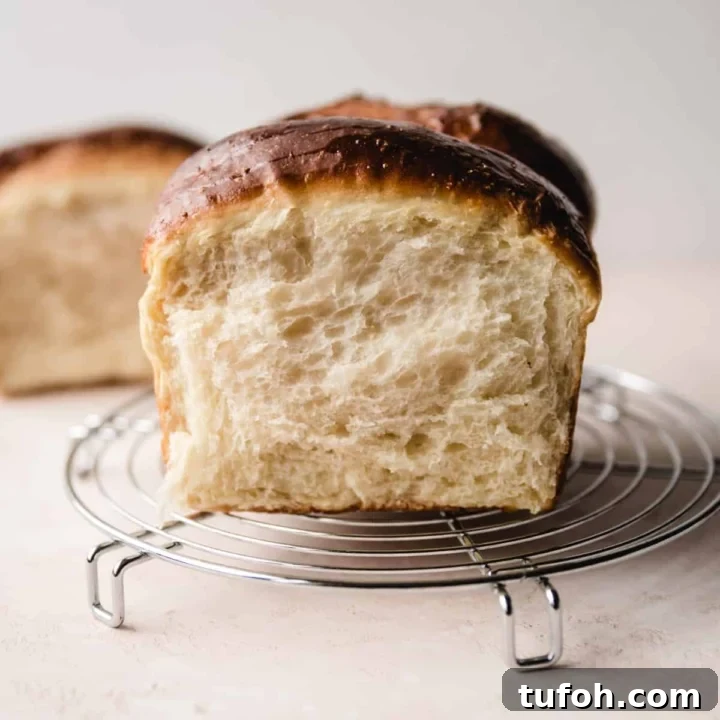
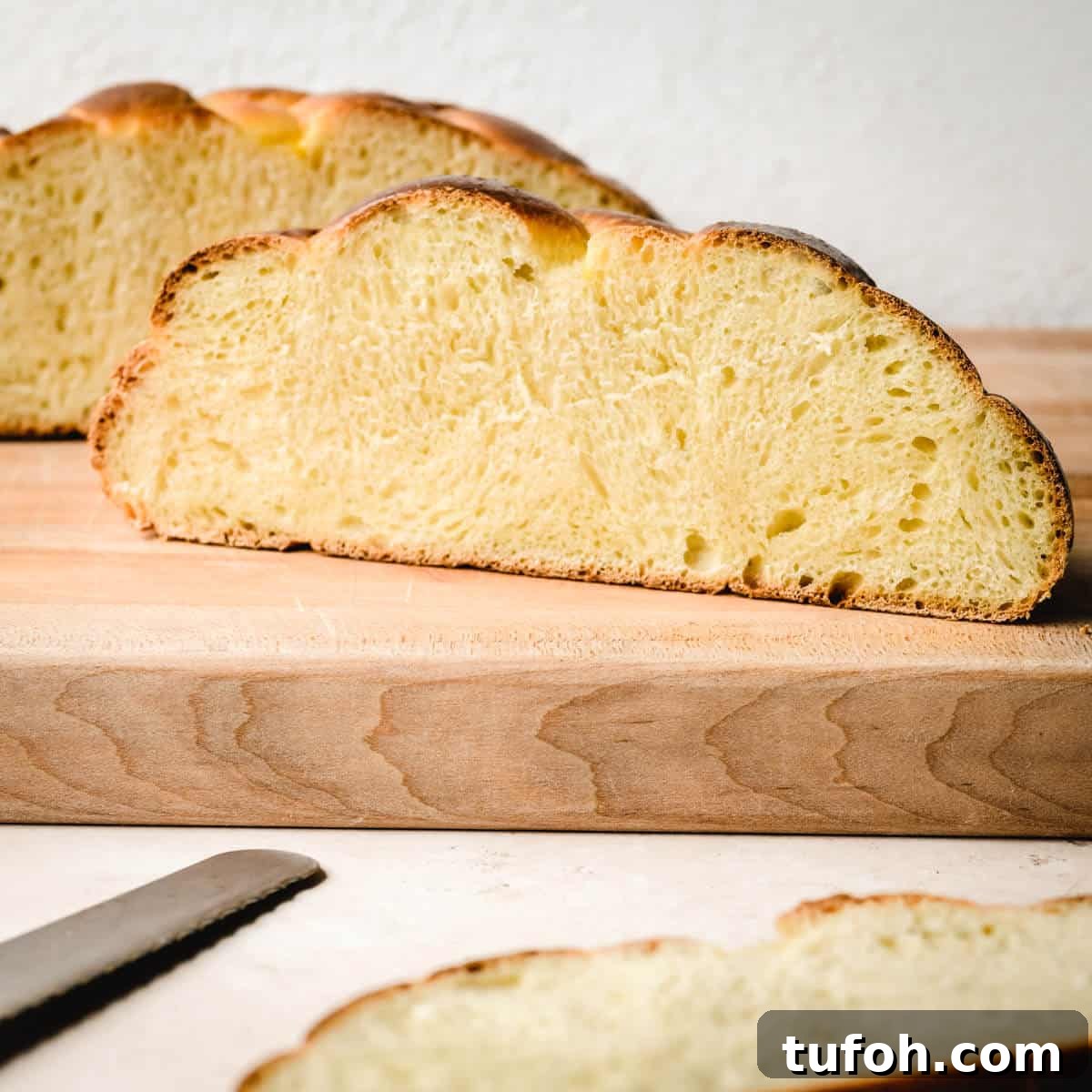
- The crumb is soft and pillowy, with a brioche-like richness from whole eggs and extra yolks.
- Sourdough fermentation adds depth of flavor that makes the wait worthwhile.
- Perfect for Shabbat, Rosh Hashanah, or simply sliced with butter or honey. It also makes exceptional French toast.
- Includes straightforward instructions for a three-strand braid and a simple method to shape a round challah.
Ingredients & substitutions
This version relies on an established sourdough starter as the leavening agent. Starter is simply flour and water maintained over time; a robust starter usually takes about two weeks to develop from scratch. You can also use starter you buy or borrow from a friend, but it needs to be active before you begin.
My starter is 100% hydration (equal parts water and flour by weight). A portion of that starter is used to build the levain, which is what replaces instant or active dry yeast in this recipe. Levain acts more slowly but yields excellent flavor and rise.
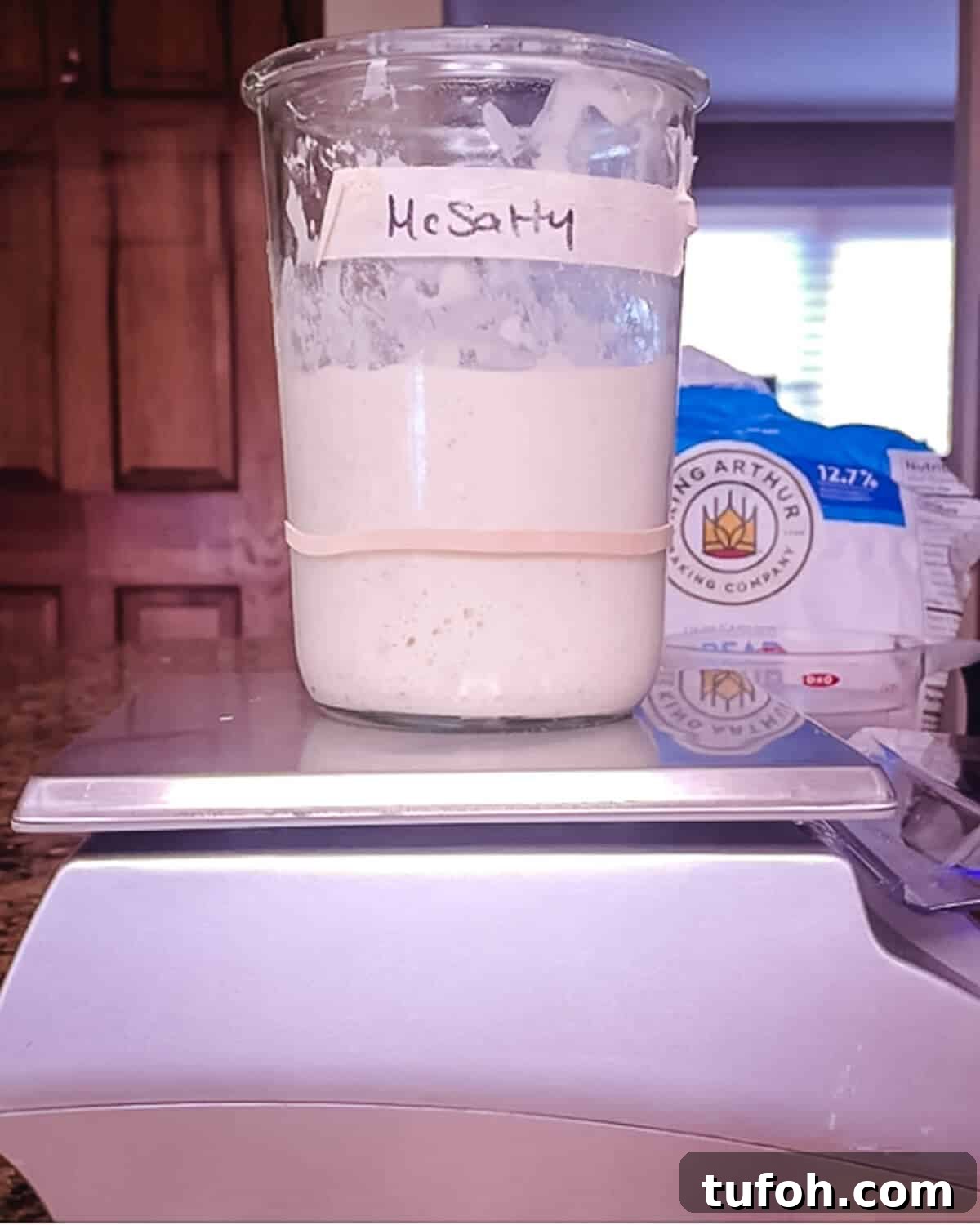
Levain vs. starter
Starter and levain are closely related. Starter is the ongoing “mother” culture you feed and maintain; levain is a portion you build from starter (often with different flour/water ratios) and use in the dough. Levain is typically used up in the recipe and can be a stiffer mixture depending on hydration needs.
What you’ll need:
For the levain:
- Active sourdough starter — fed and bubbly.
- Filtered warm water around 75–85°F (24–29°C).
- Bread flour (or all-purpose if that’s what you have).
Flour paste (tangzhong) to keep the crumb moist:
- Water
- Bread flour
For the challah dough:
- Whole egg and extra egg yolks
- Water
- Neutral oil (vegetable or similar)
- Bread flour
- Levain (made first)
- Granulated sugar (or swap for honey with adjustments—see notes)
- Kosher salt
For the egg wash:
- Whole egg or reserved egg whites
- Pinch of salt
- Sesame, poppy seeds, or everything seasoning (optional)
How to make sourdough challah
Below is the timeline I use; adjust start times to suit your schedule. Read the full recipe before you begin so each stage fits into your day.
Step 1 — Feed starter (about 12 hours before)
Feed your starter so it’s active the next morning. I feed 50 g starter with 50 g bread flour and 50 g filtered water around 8pm and leave it on the counter overnight.
Step 2 — Make the levain (morning)
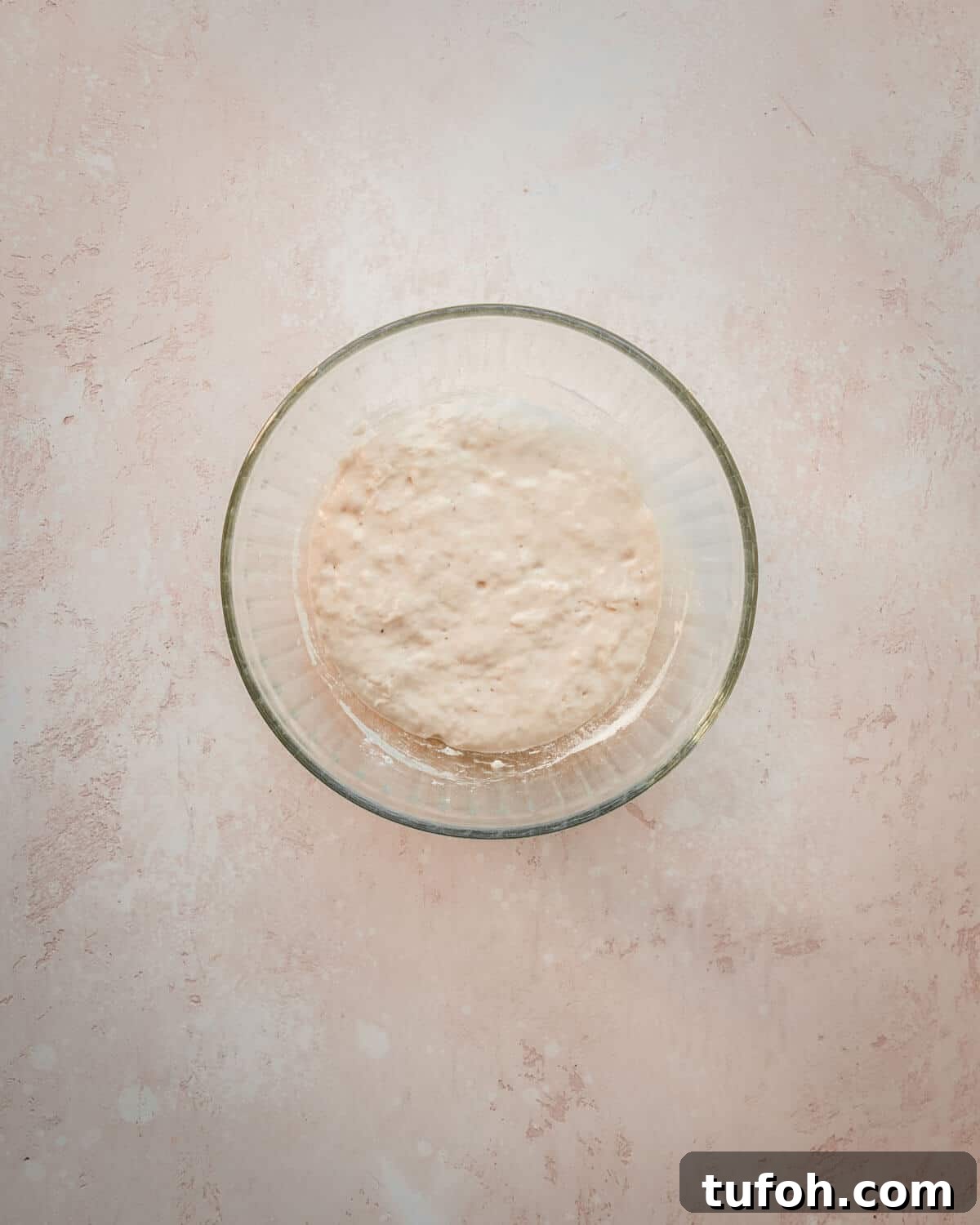
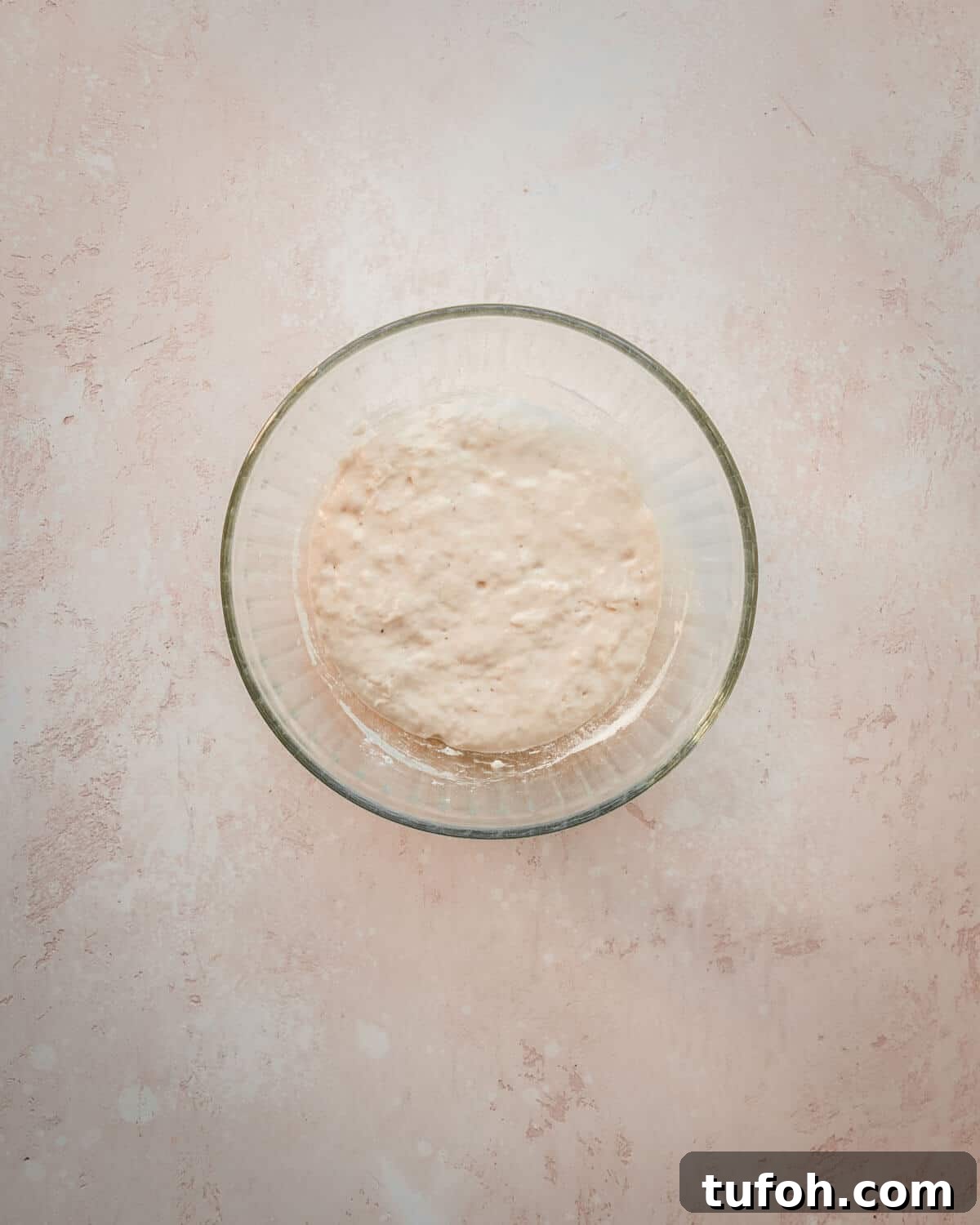
Mix active starter with warm water until dissolved, then stir in the flour. Cover and let rest in a warm spot for about 4 hours or until doubled. A clear bowl with a rubber band marking the starting level helps track rise.
Step 3 — Make the flour paste (tangzhong)
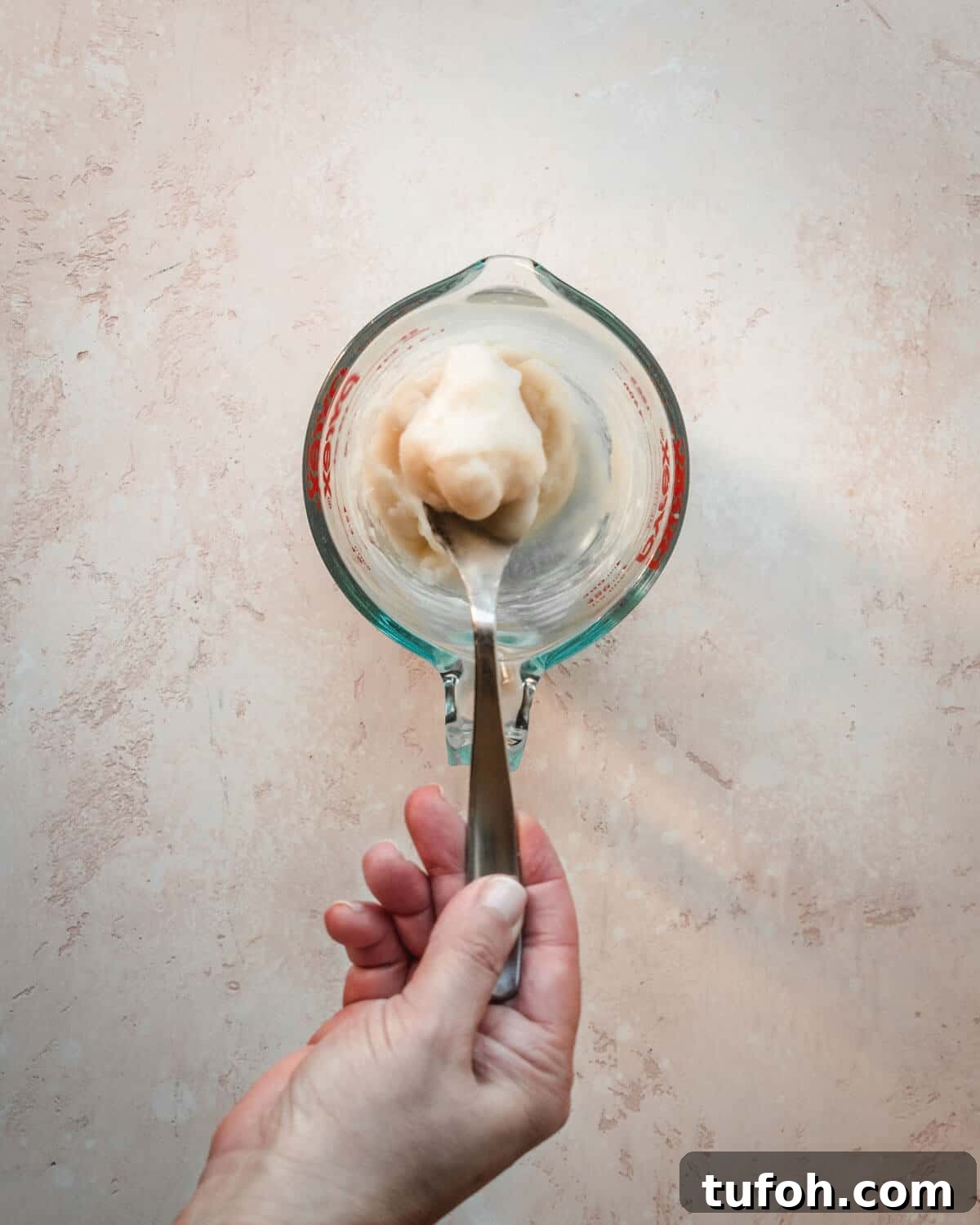
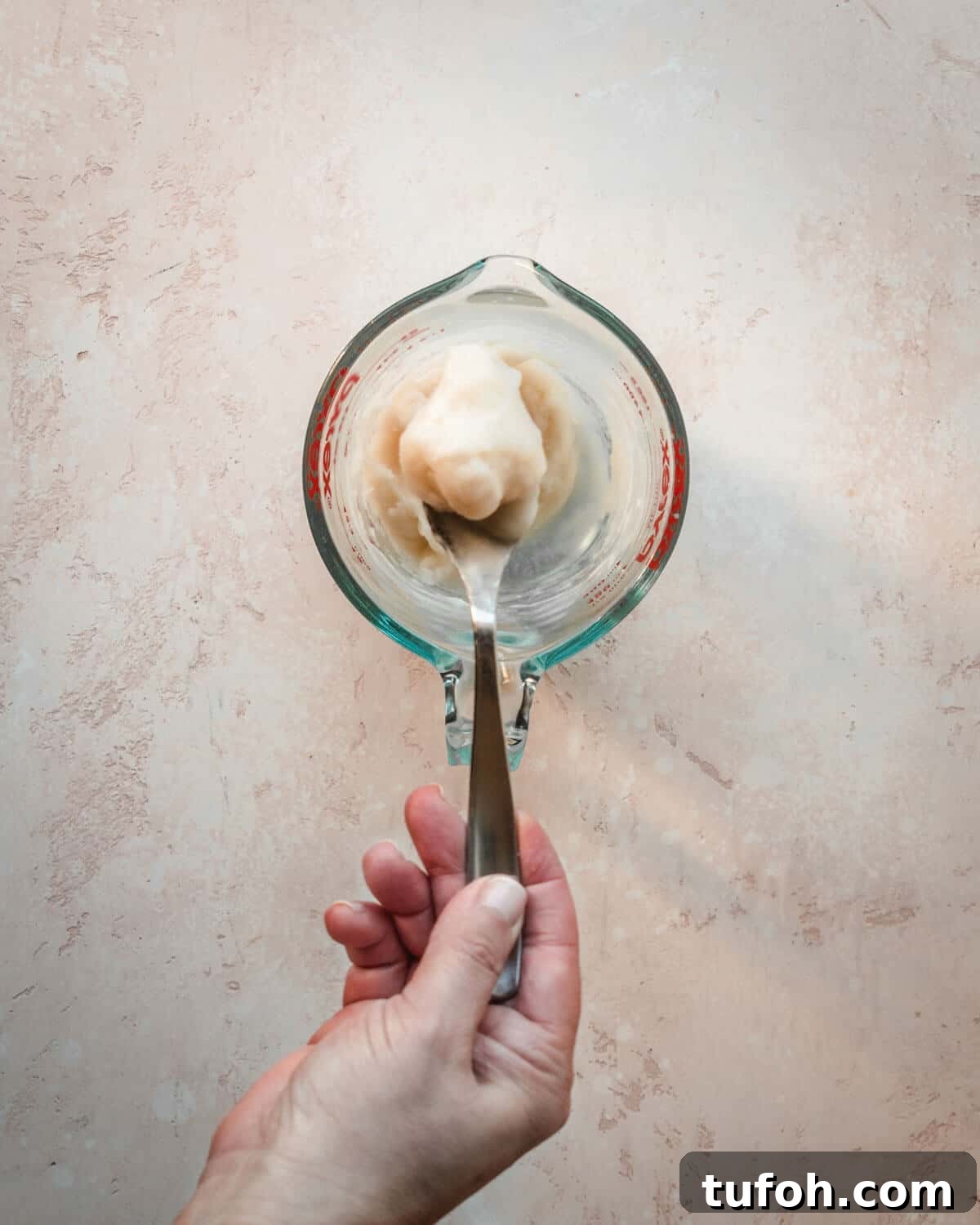
When the levain is nearly doubled, whisk water and flour until smooth. Heat gently—either in short bursts in the microwave, whisking every 20 seconds, or on the stovetop over low heat—until it thickens to a pudding-like paste.
Step 4 — Mix the dough
In a mixer bowl, combine water and levain, then add the flour paste, oil, whole egg, and yolks. Mix, then add the flour. Using a dough hook, mix on low until the flour is hydrated (3–4 minutes). Cover and rest 20 minutes.
Step 5 — Knead
Add sugar and salt, then knead on medium speed about 9 minutes until the dough wraps around the hook and doesn’t stick to the bowl. If it’s sticky, add flour 1 tablespoon at a time, up to 1/4 cup.
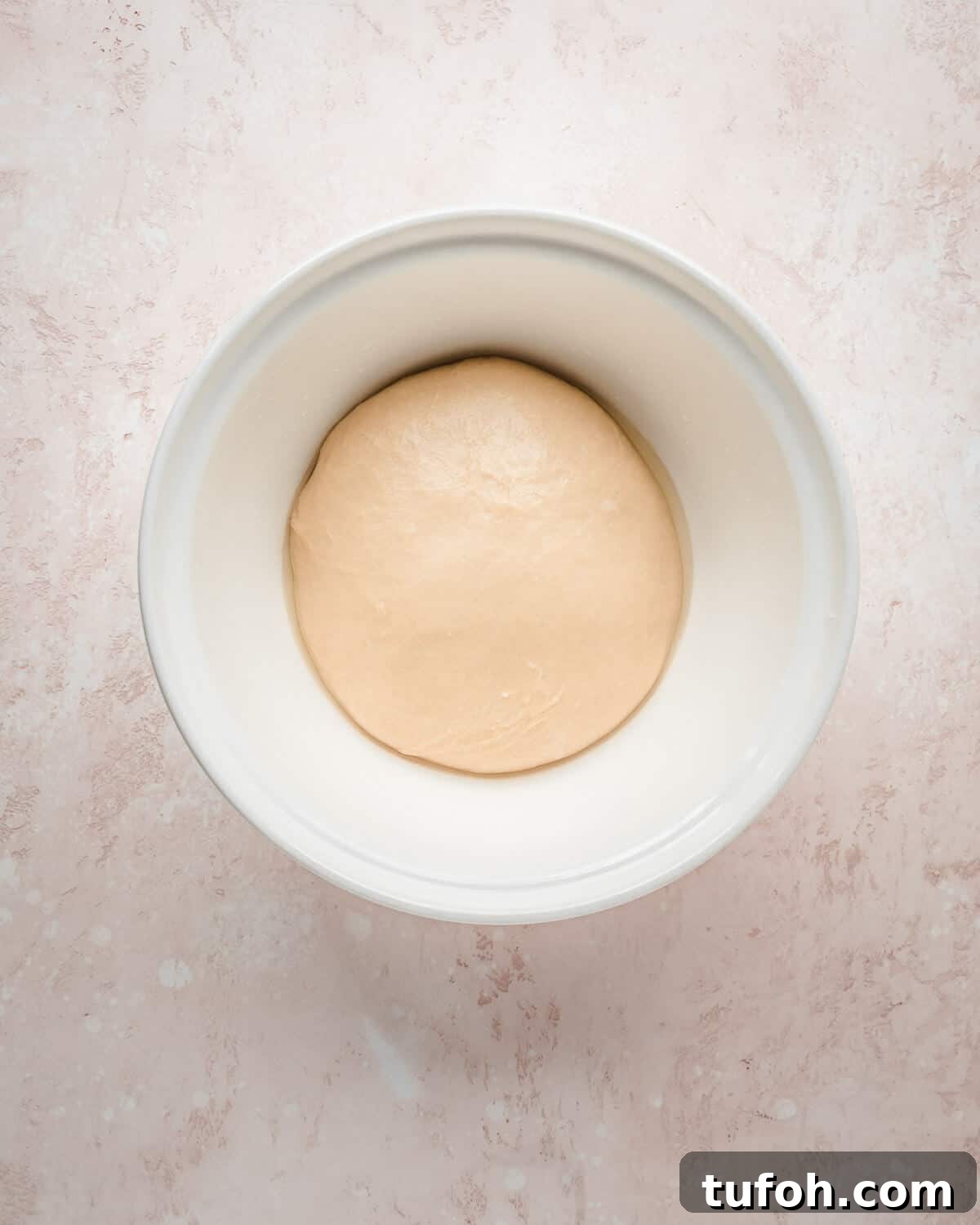
Step 6 — Bulk fermentation
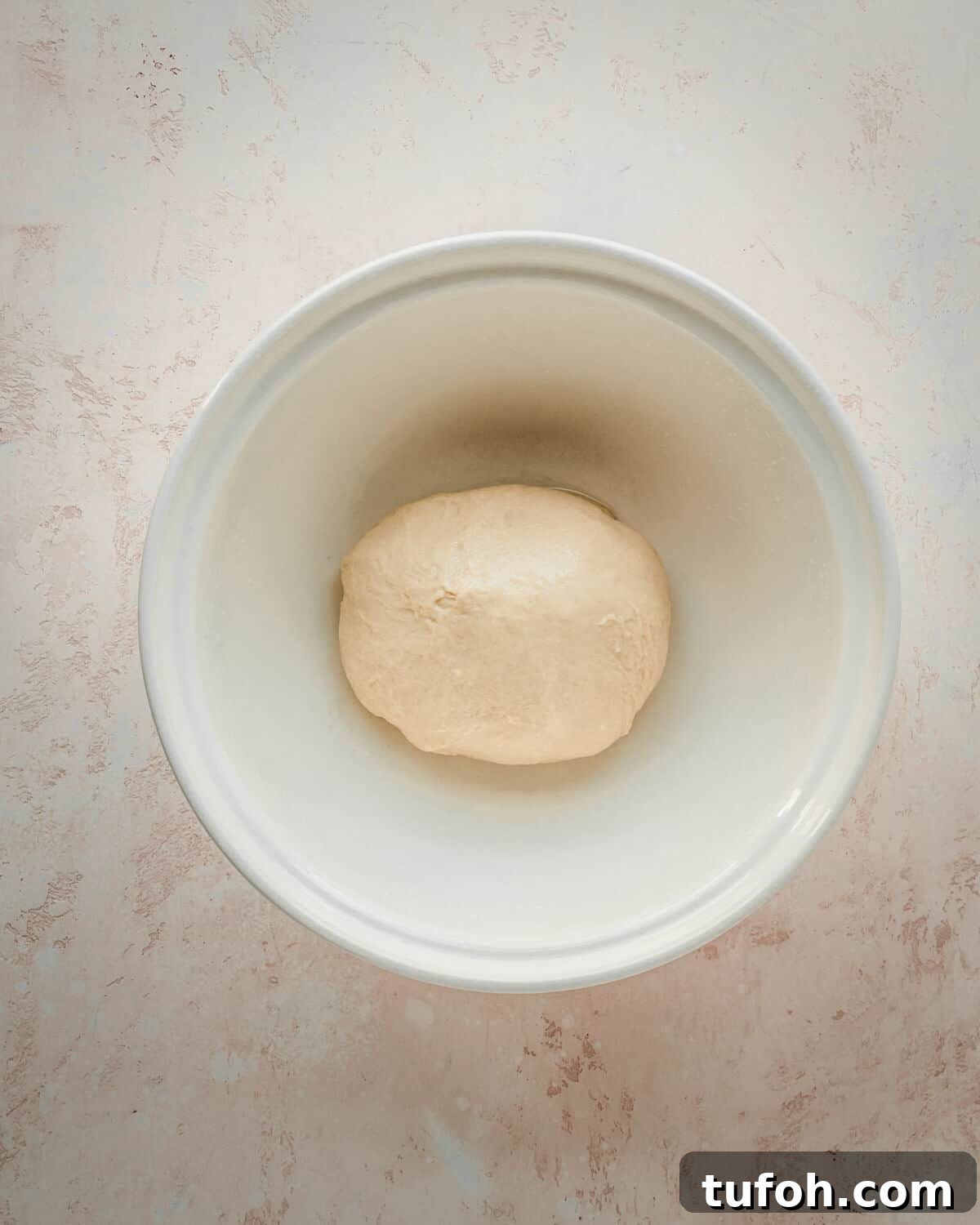
Turn the dough into a lightly oiled bowl, cover, and let rise until about doubled, roughly 5 hours. A warm but not hot environment works well.
Step 7 — Refrigerate overnight
After doubling, refrigerate the dough for 8–12 hours. Chilling improves flavor and makes shaping easier.
Step 8 — Shape (next morning)
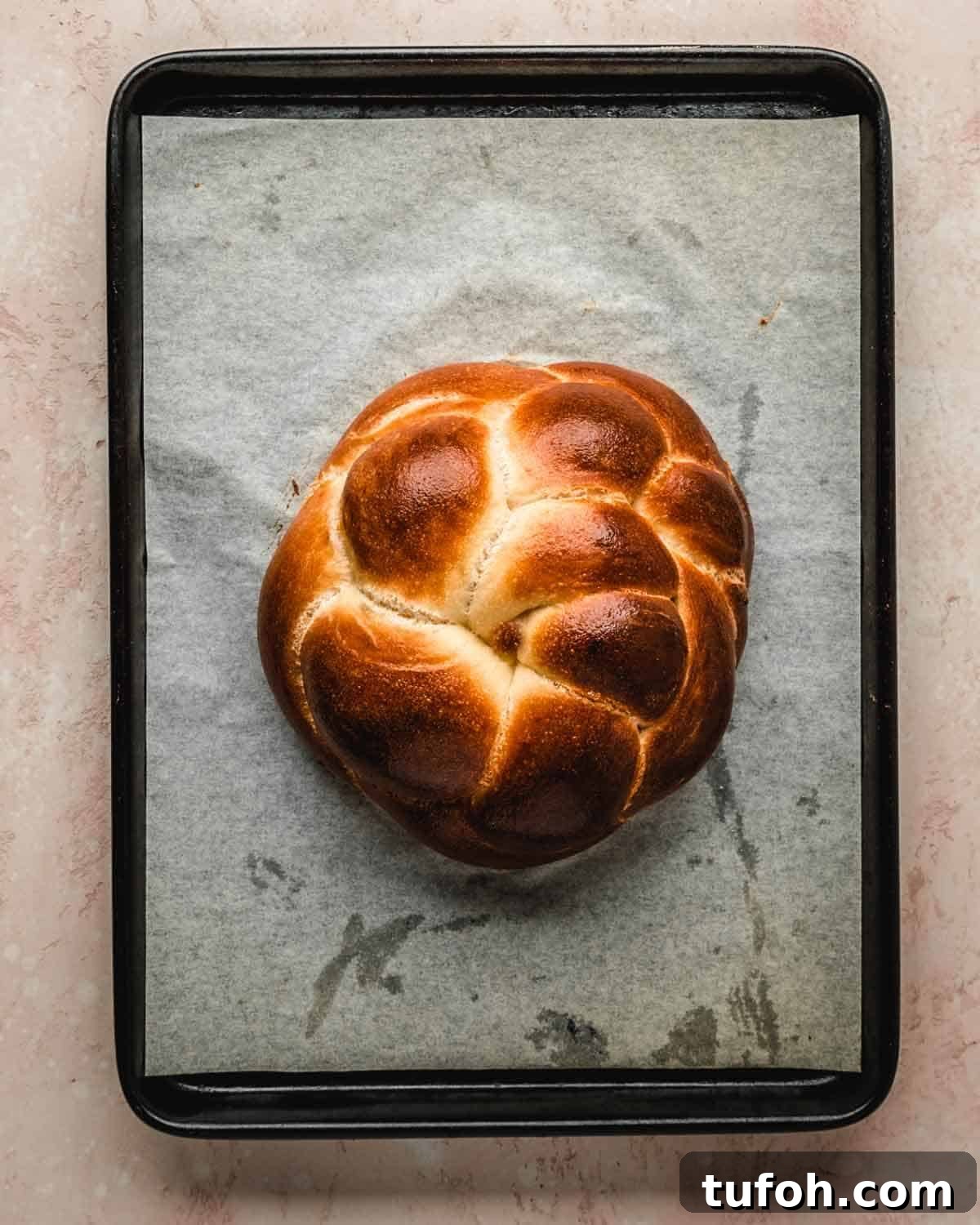
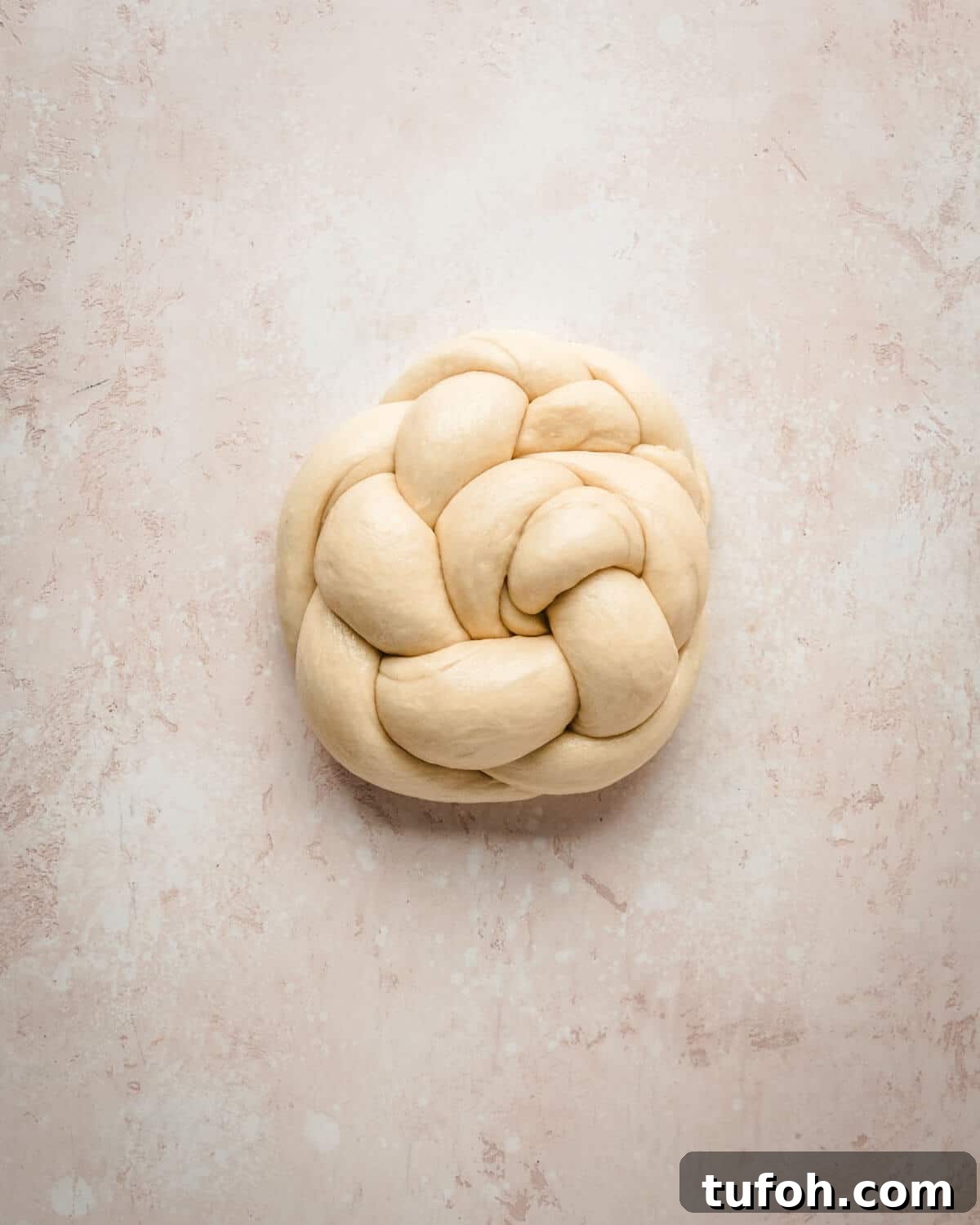
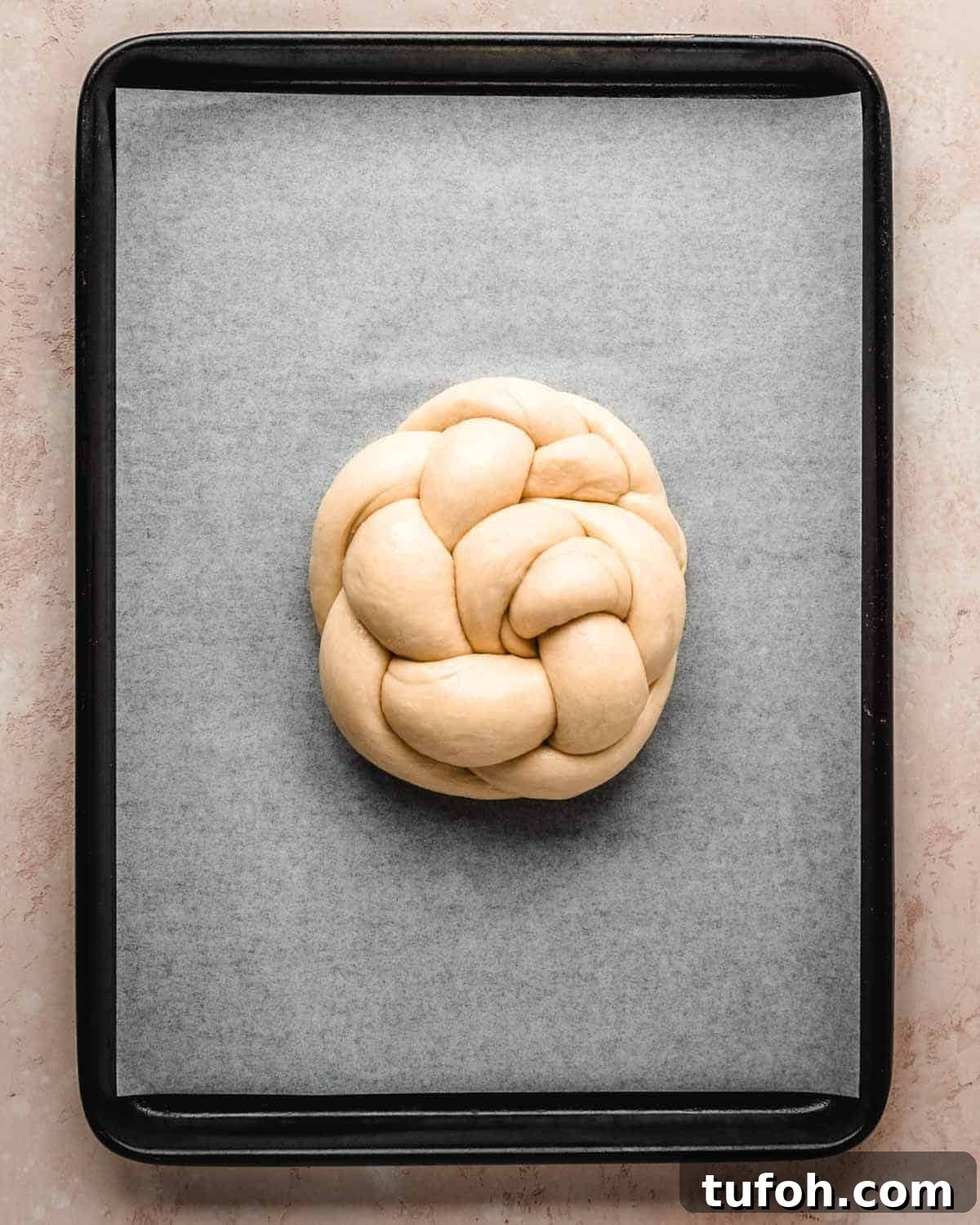
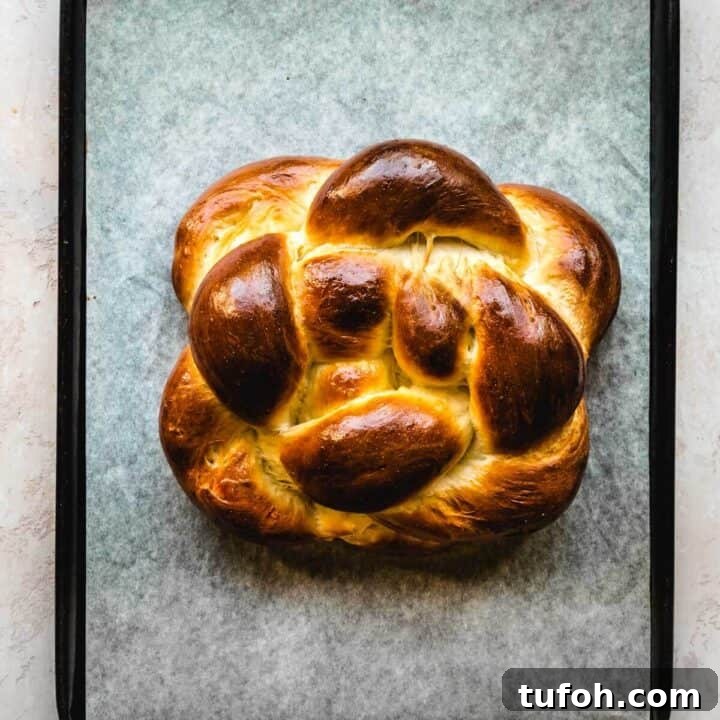
Prepare a rimmed baking sheet lined with parchment and set a second sheet beneath to prevent over-browning. Remove the chilled dough to a clean counter (do not flour). Press into an 8-inch square to expel air, then divide into three equal pieces. Roll each piece into a long rope about 16–18 inches, tapering the ends. Place the ropes side by side, seal the tops, and braid. Curl the braid into a round, tucking the end under to seal.
Step 9 — Final proof
Place the shaped loaf on the prepared sheet, cover loosely, and let rise 4–6 hours until puffy. To check readiness, poke lightly: if the dough springs back slowly, it’s ready to bake.
Step 10 — Egg wash and bake
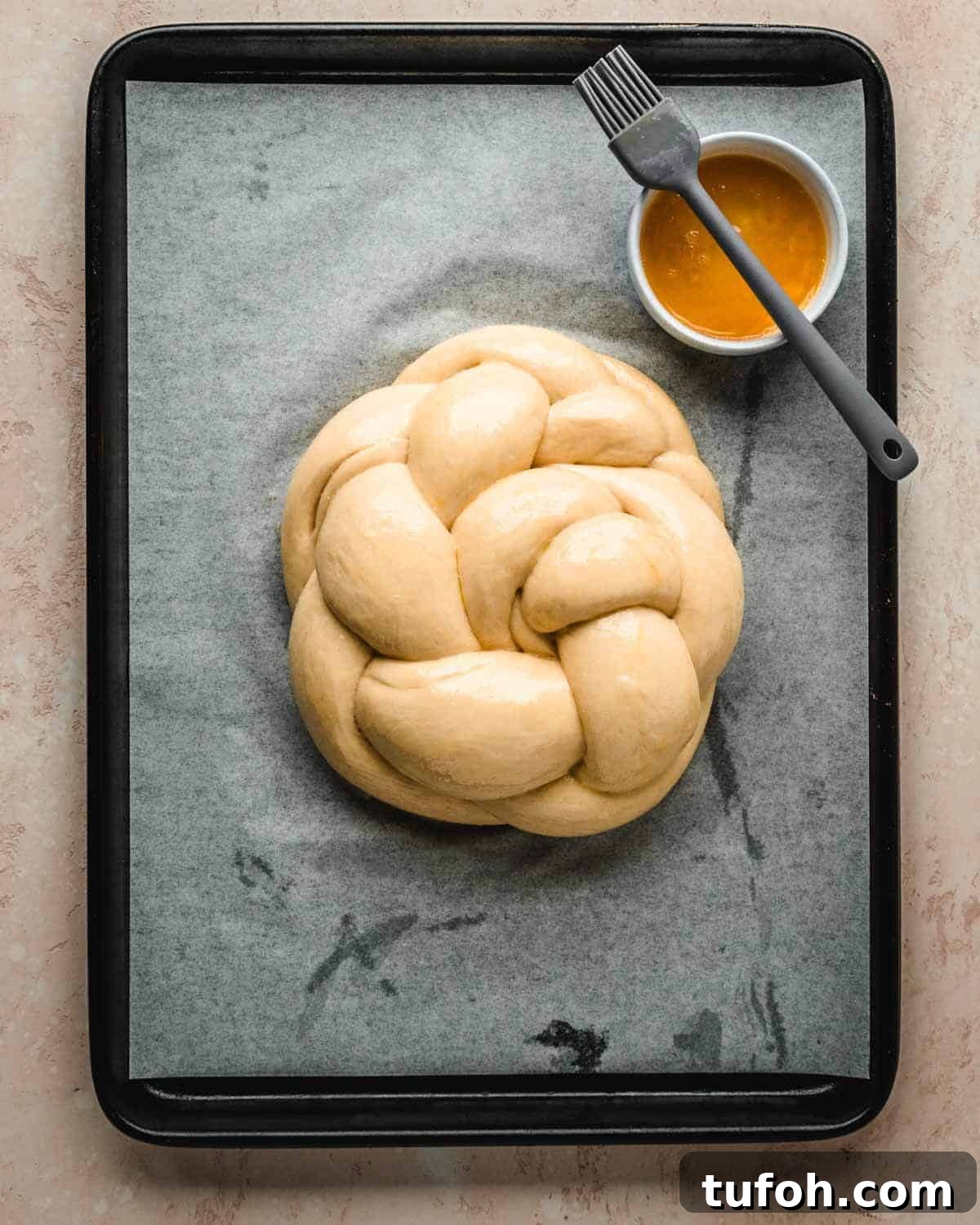
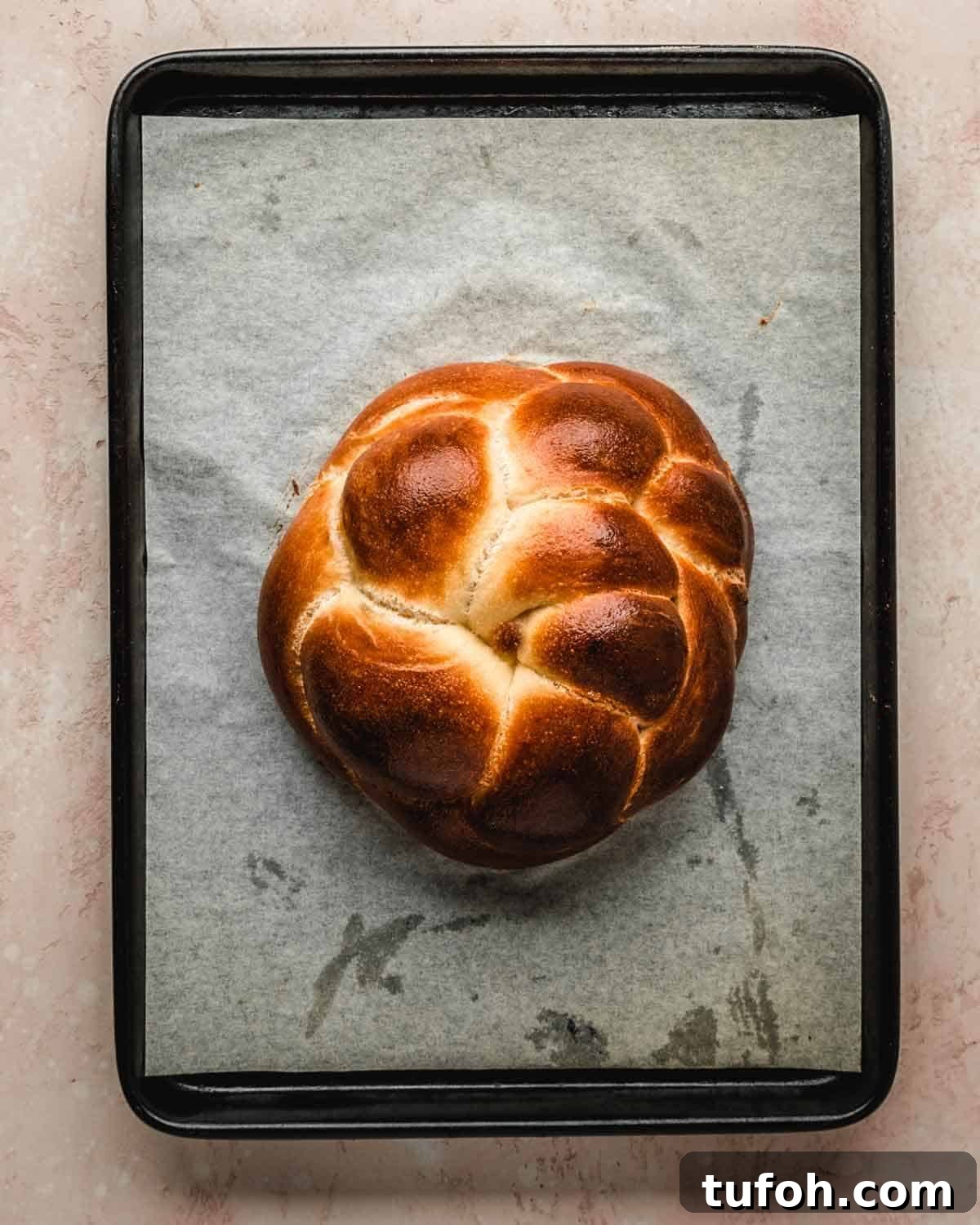
Preheat oven to 350°F. Whisk the egg or reserved egg whites with a pinch of salt and brush the loaf. Sprinkle seeds or seasoning if desired. Bake 25–35 minutes until deep golden and the internal temperature reaches about 195°F. If the top browns too quickly, tent with foil. Cool on the sheet 20 minutes, then transfer to a rack and cool completely before slicing (about 2 hours).
Storage
Store at room temperature in a bread bag, bread box, or wrapped for 3–4 days. Refrigerate up to one week. To freeze, slice, flash-freeze on a sheet for an hour, then store in a freezer-safe bag up to three months. Thaw at room temperature or defrost gently in the microwave at 50% power.
Pro tips
- Do not flour the shaping surface. This dough benefits from friction when rolling and braiding; extra flour will dry the dough and yield a denser loaf.
- Stack two baking sheets to keep the bottom from getting too dark.
- Let the baked challah cool completely (about 2 hours) before slicing to preserve structure—though it’s tempting to dig in sooner!
If you enjoyed this recipe, consider saving it for later or leaving feedback and a rating.
Best flour for challah
Bread flour (12–14% protein) yields the chewiest, most satisfying challah, but all-purpose flour will still produce a tasty loaf with a slightly softer texture.
More recipes
-
Fluffy Challah Bread
-
Round Challah Recipe
-
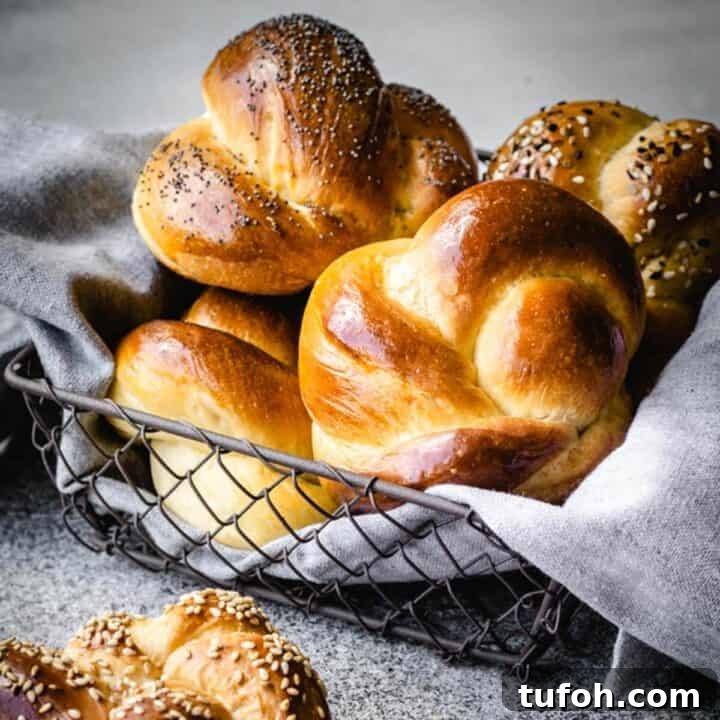
Challah Rolls
-
Condensed Milk Bread
Did you make this recipe? Please leave a comment and rating to let me know how it turned out!
Sourdough Challah Recipe