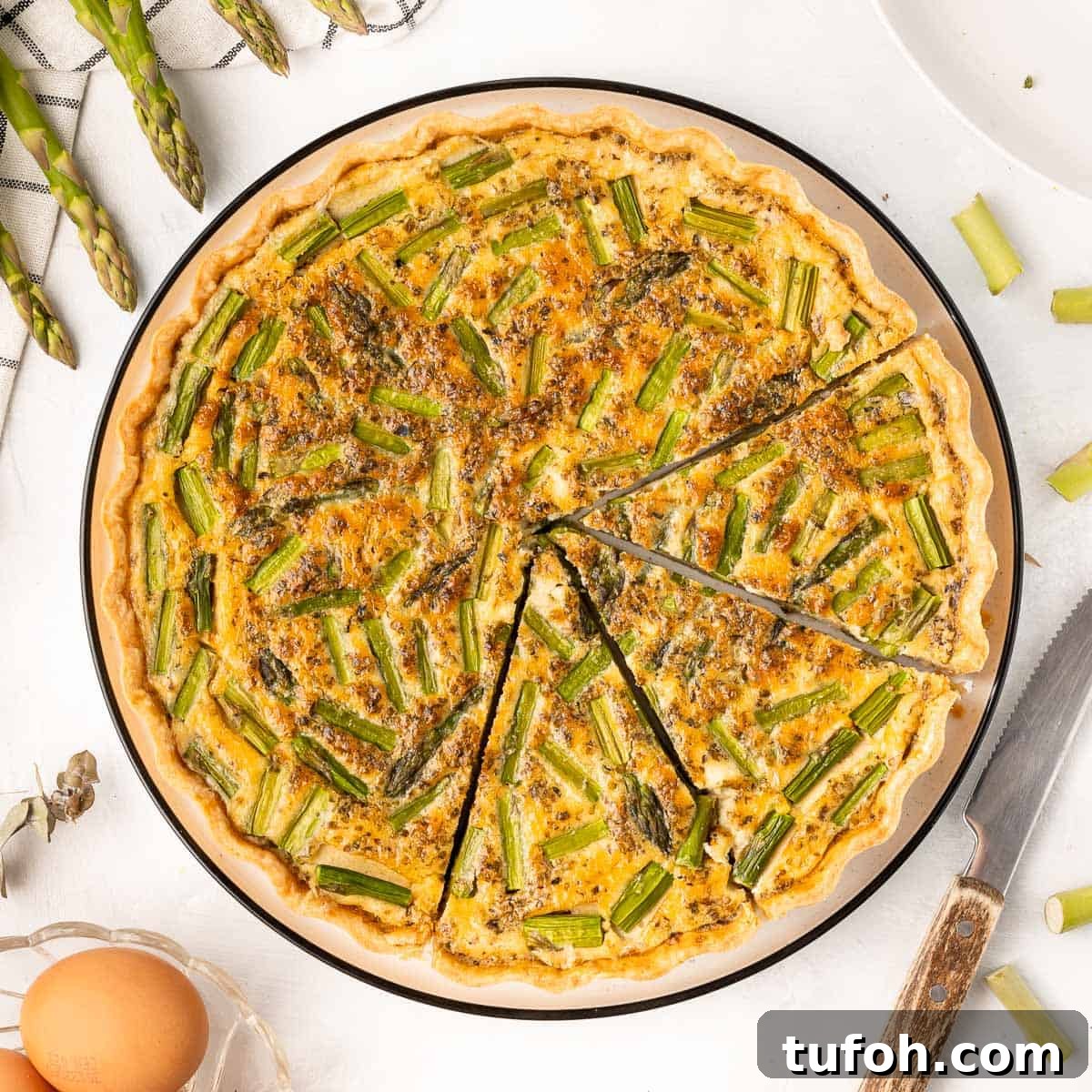
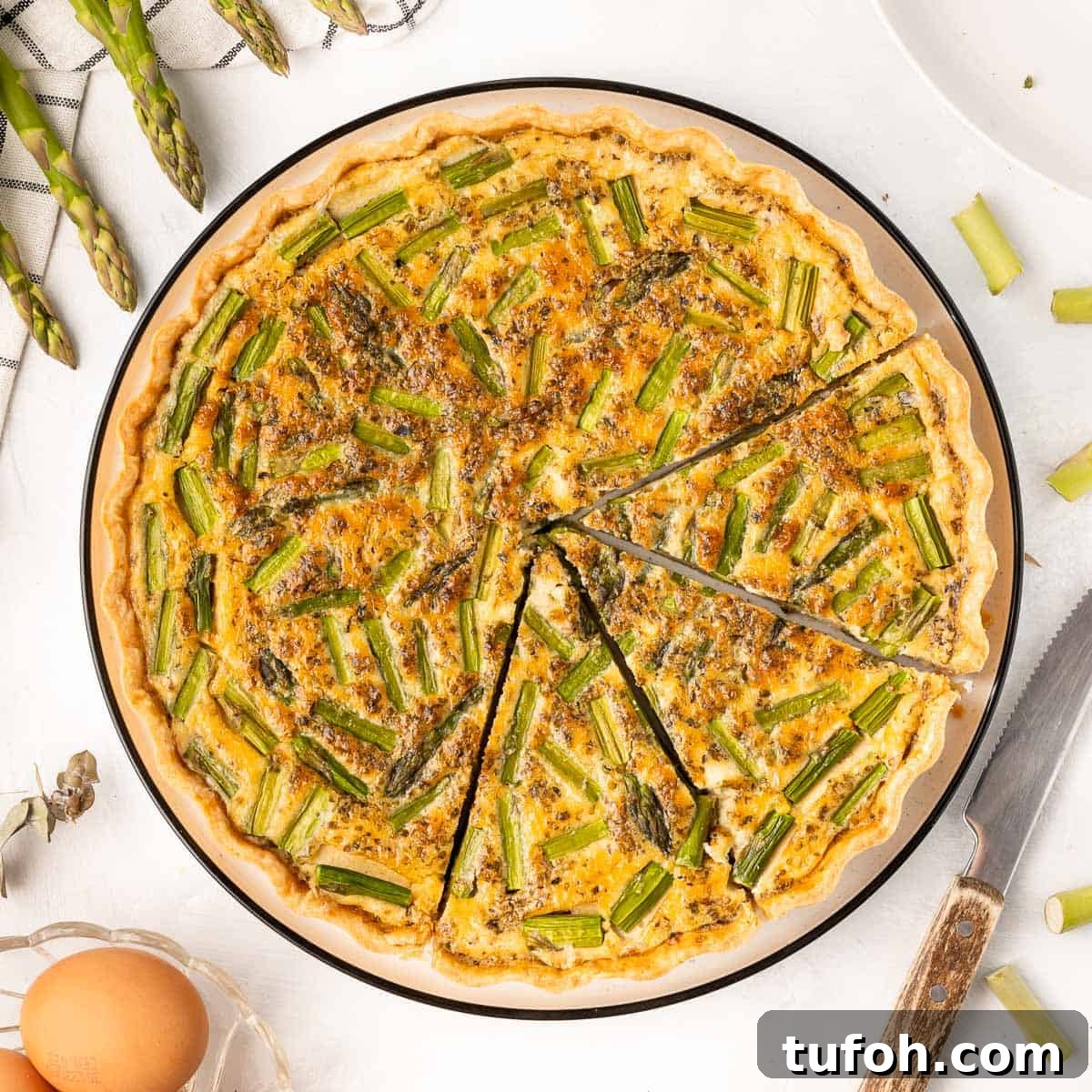
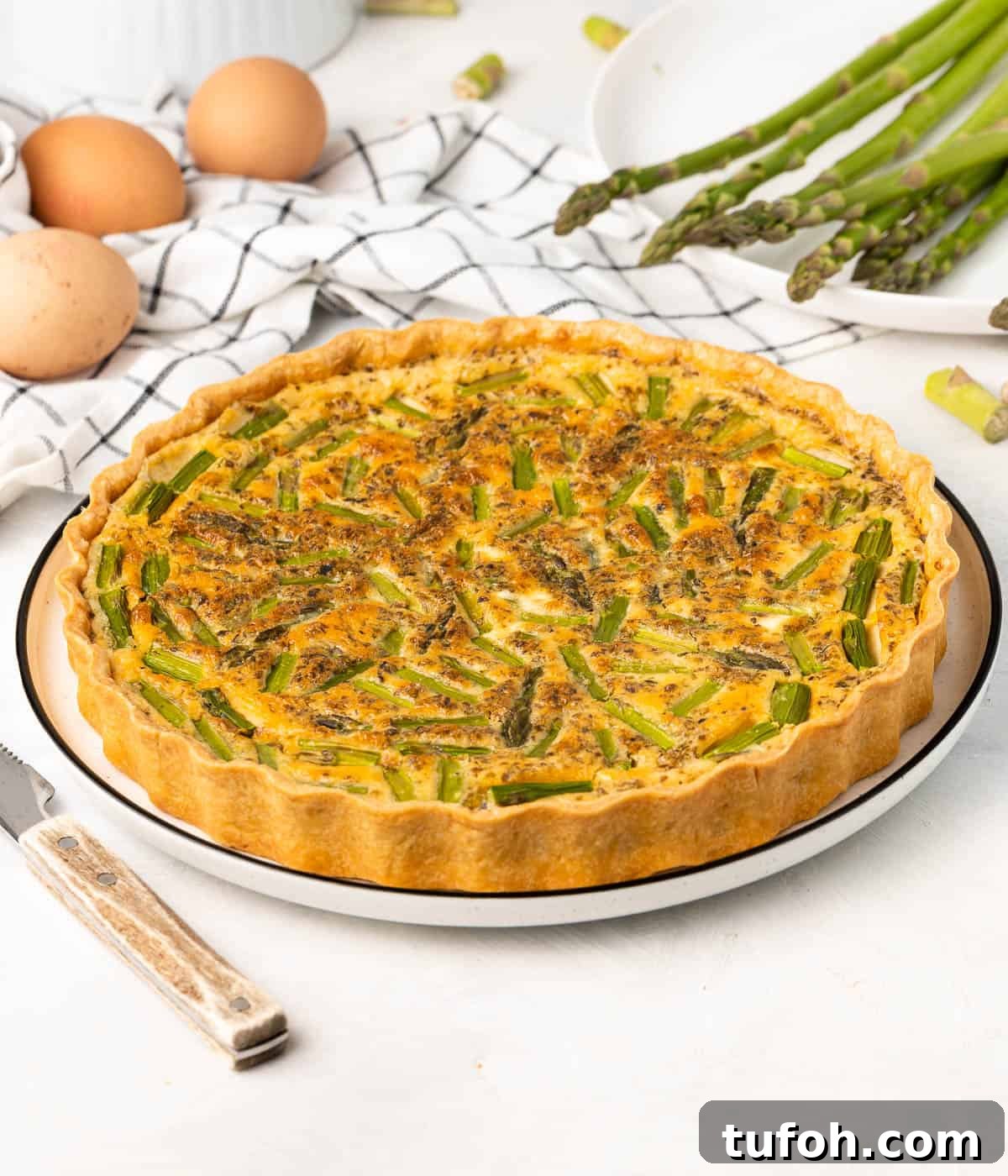
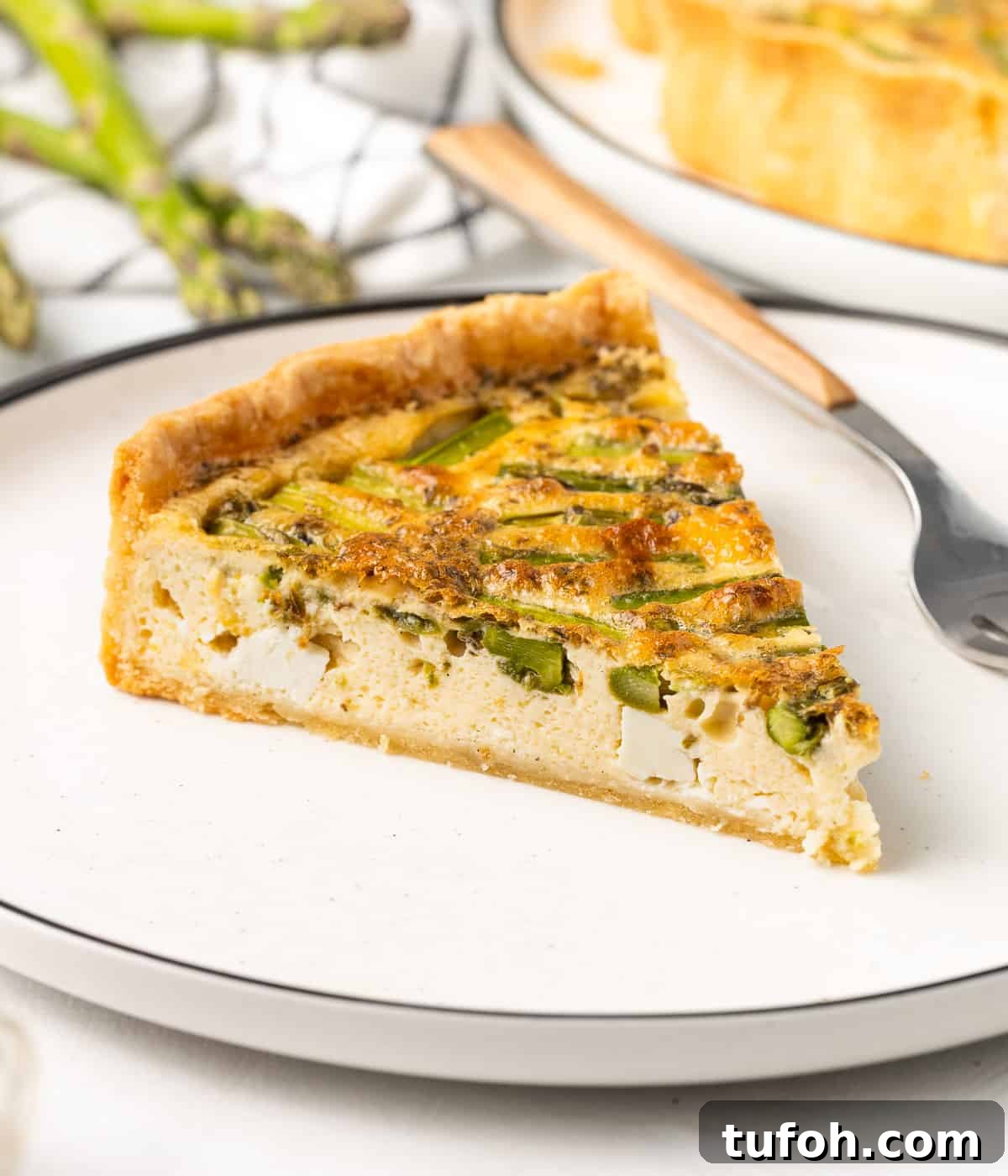
This Feta and Asparagus Quiche is a versatile dish suitable for breakfast, brunch, lunch or a light dinner. A flaky, buttery homemade crust holds a silky egg custard filled with tender asparagus and tangy feta for a satisfying vegetarian meal.
This recipe was first published in November 2018 and updated in January 2023.
Why we love this recipe
This easy Feta and Asparagus Quiche delivers a tender, flaky pastry paired with a rich, creamy custard. Chunks of asparagus and cubes of feta add texture and flavor, creating a dish that works equally well for a relaxed weekend brunch or a simple weeknight meal.
The quiche can be prepared ahead of time—perfect for hosting or meal prep—and it freezes well for future meals.
Ingredients
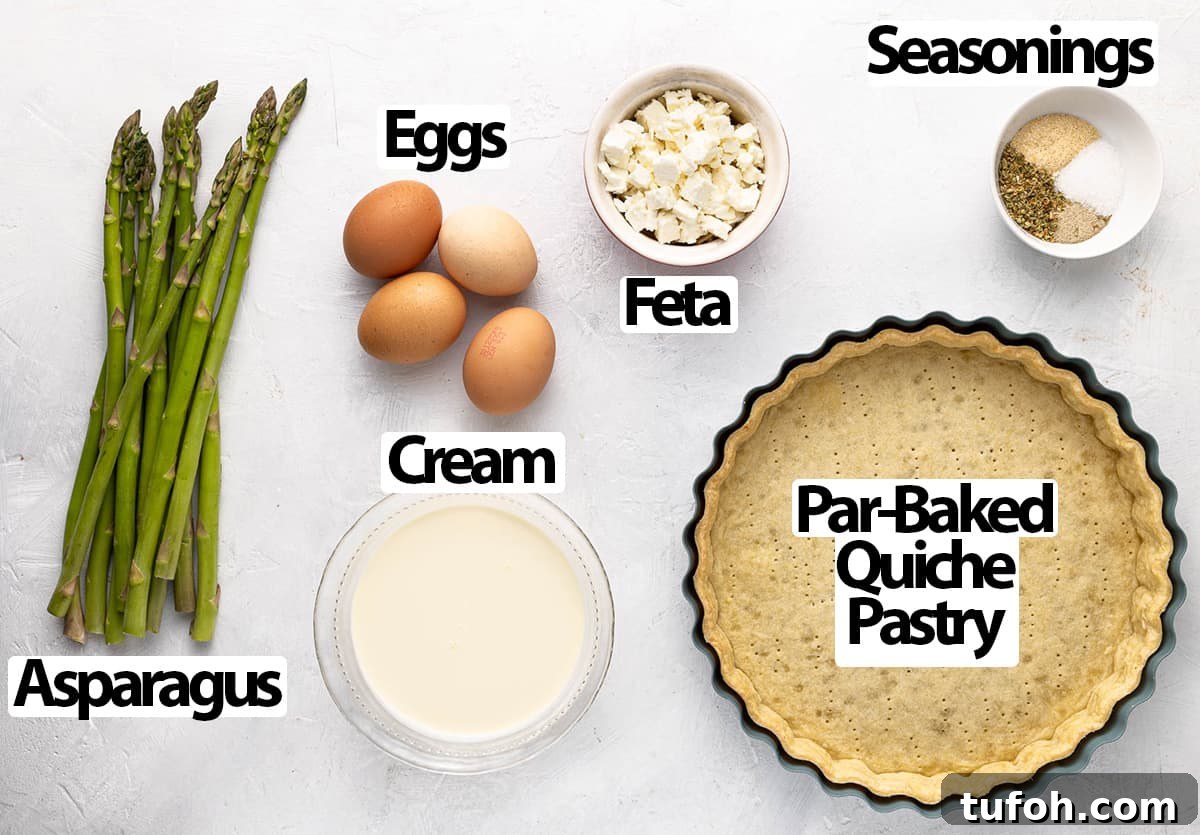
Scroll down to the recipe card below for exact quantities
This asparagus quiche is made from two components: a savoury shortcrust pastry and a creamy filling with asparagus and feta.
For the savoury shortcrust pastry:
- Flour + Salt: Plain (all-purpose) flour and fine table salt. You can add herbs or spices to the dry ingredients if desired.
- Butter: Unsalted, very cold and cut into small cubes.
- Water: Very cold. Add a little at a time to reach the right dough consistency.
For the feta and asparagus filling:
- Custard base: Heavy or thickened cream combined with large eggs at room temperature—use full-fat cream for best texture and flavor.
- Seasoning: Salt, white pepper, garlic powder and dried oregano. Adjust or add other herbs to taste.
- Asparagus: Green asparagus is used here; trim the woody ends and cut the stems into ~1 cm pieces.
- Cheese: Feta, cut into small cubes or crumbled. Greek feta is recommended for its tangy flavor.
Flavour variation
This quiche adapts well to substitutions and additions:
- Different cheese: Try crumbled goat cheese, grated parmesan, cheddar, or gruyère instead of—or in addition to—feta.
- More vegetables: Add mushrooms, onions, spinach or leeks for extra flavor and volume.
- Add protein: Cooked bacon, diced cooked chicken, or smoked salmon can be included for a heartier dish.
How to make Asparagus Quiche
Making the quiche pastry
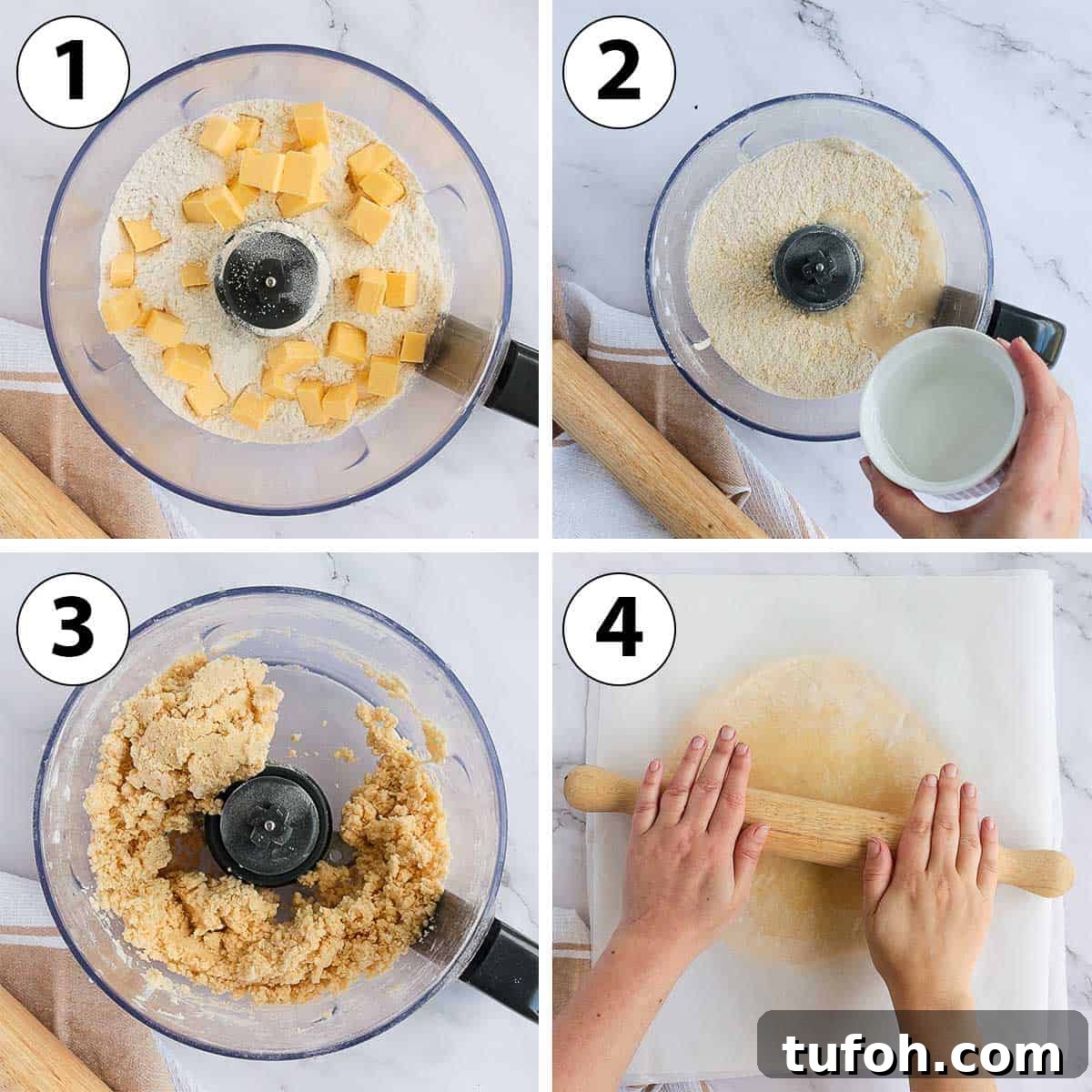
The pastry is quick to make in a food processor, though it can also be made by hand. Pulse flour and salt to combine, add very cold cubed butter and pulse until the mixture resembles fine crumbs. With the processor running, add very cold water gradually until a rough dough forms. Press some crumbs together—if they bind into a smooth dough, it’s ready.
Transfer the dough to baking paper, shape into a ball, cover with another sheet of paper and roll into a disk about 4 mm thick. Chill in the refrigerator for at least 1 hour or overnight for best results.
Lining the quiche pan & par-baking the crust
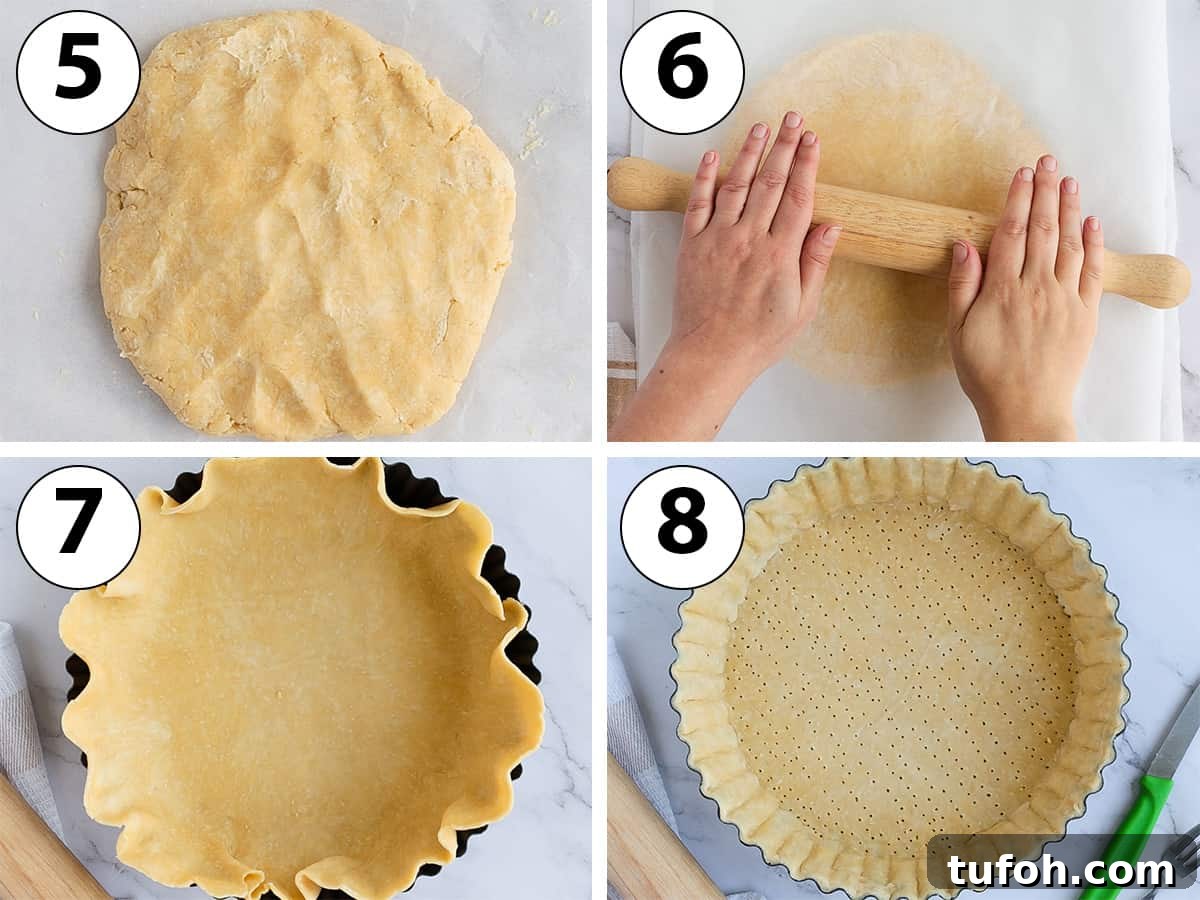
Allow the chilled dough to sit at room temperature for about 5 minutes so it softens slightly, then line a 25 cm (10-inch) quiche pan with the pastry. Trim any excess and press the dough into the corners so it sits flush. Return the lined pan to the refrigerator for at least 2 hours (or overnight) to minimize shrinking.
Preheat the oven to 160°C (325°F). Freeze the chilled crust briefly, then dock the base with a fork, line with parchment and fill with baking weights (or rice/dry beans). Par-bake for 15 minutes, remove weights and parchment, and bake another 10–15 minutes until lightly golden. Let cool while you prepare the filling.
Making the asparagus filling
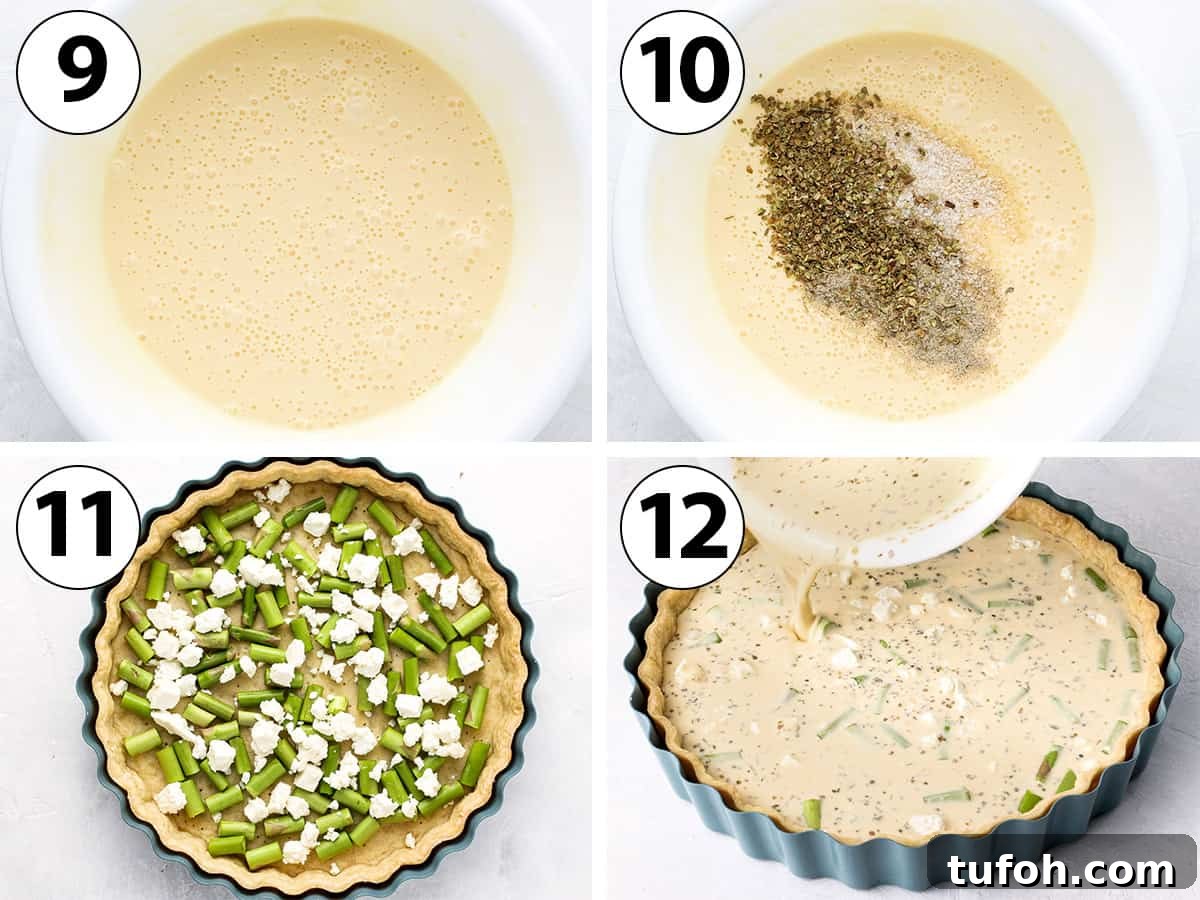
- Trim and wash asparagus, snap off the woody ends and cut stems into 1 cm pieces. Crumble or cube the feta and set aside.
- Whisk eggs and cream together until smooth. Stir in salt, white pepper, garlic powder and dried oregano.
- Arrange the asparagus pieces in the par-baked crust, scatter the feta over them, and pour the egg mixture on top. Optionally reserve a few pieces of asparagus and feta to garnish the top.
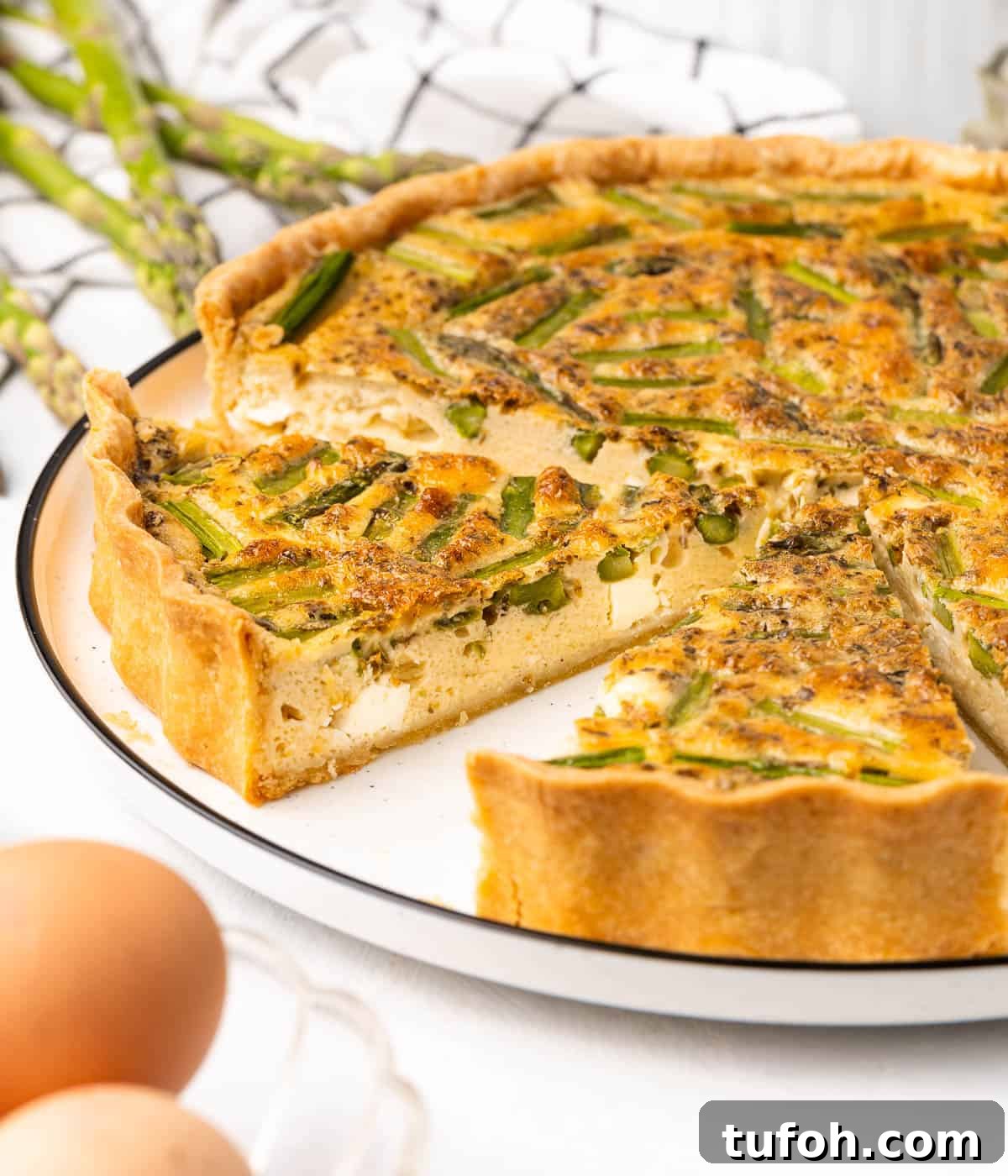
- Bake for 35–40 minutes or until the filling is lightly golden and fully set. Remove from the oven and cool for 10–15 minutes before slicing and serving.
Recipe FAQs
Key differences include: quiche has a pastry crust and a custard made with eggs and cream and is baked in a tart or quiche pan in the oven. A frittata is usually crustless, cooked on the stovetop in a frying pan and typically uses only eggs without added cream.
A quiche pan with a removable bottom is convenient, especially if it has higher sides to hold a generous custard. A tart pan can be used but may produce a shallower, more tart-like result.
Small asparagus pieces cook through during the quiche’s baking time. If you prefer very soft asparagus, sauté the pieces briefly in olive oil over medium heat before adding them to the crust.
Serve the quiche warm or at room temperature with a simple green salad or roasted vegetables. A spoonful of crème fraîche or a light sour cream on each slice makes a lovely finishing touch.
Tips & troubleshooting
- Par-bake the crust to avoid a soggy bottom—bake once with weights and then briefly without to dry the base.
- Prevent sinking: cut asparagus into small pieces so they’re light in the custard; if using whole spears, toss lightly in flour to help them stay suspended.
- Check doneness: the quiche is done when the center no longer jiggles. If the top browns too quickly, tent with foil until fully set.
Storing & freezing
- Storing: Refrigerate covered for up to 3 days; it’s best within 24 hours.
- Make ahead: underbake slightly and finish baking just before serving. Cover with foil if it browns too fast during reheating.
- Reheating: Reheat whole quiche in the oven (covered if needed). Individual slices can be reheated in the oven or microwave; the microwave will soften the pastry more.
- Freezing: Freeze baked or unbaked quiche, whole or in slices. Thaw in the refrigerator before reheating in the oven.
More quiche recipes
- Leek and Smoked Salmon Quiche
- Cheese and Tomato Quiche
- Leek Quiche with Gruyère
- Cheddar and Broccoli Quiche
- Mushroom and Leek Quiche
- Spinach and Mushroom Quiche
- 18 Vegetarian Quiche Recipes
My debut cookbook “Bite-Sized French Pastries for the Beginner Baker” is now available.
Recipe
Ingredients
Quiche Pastry
- 200 g (1 1/3 cup) plain / all-purpose flour
- 1/2 tsp fine table salt
- 100 g (6 1/2 tbsp) unsalted butter, very cold
- 65 ml (1/4 cup + 1 tsp) very cold water
Asparagus Quiche Filling
- 1 dozen asparagus
- 100 g (3.5 oz) feta cheese, crumbled
- 300 ml (1 1/4 cup) heavy / thickened cream
- 4 large eggs
- 1 tsp fine table salt
- 1/3 tsp white pepper
- 1 tsp garlic powder
- 1 tsp dried oregano
Instructions
Quiche Pastry
- Place flour and salt in a food processor and pulse to combine. Add cold cubed butter and pulse until the mixture resembles fine crumbs. With the processor running, slowly add very cold water until a rough dough forms.
- Transfer the dough to baking paper, bring together into a ball, cover with another sheet of paper and roll to about 4 mm thick. Chill at least 1 hour.
- Let the dough sit 5 minutes at room temperature, then line a 25 cm (10-inch) quiche pan, pressing the pastry into the sides and corners. Chill again for at least 1 hour, preferably overnight.
- Preheat oven to 160°C (325°F). Freeze the lined pastry briefly, dock the base with a fork, line with parchment and fill with baking weights. Par-bake 15 minutes, remove weights and bake 10–15 more minutes. Cool.
Quiche Filling
- Trim and wash the asparagus, snap off woody ends and cut stems into 1 cm pieces. Crumble or cube the feta.
- Whisk eggs and cream in a large bowl until smooth. Add salt, white pepper, garlic powder and oregano, and whisk to combine.
- Place asparagus pieces in the par-baked crust and scatter the feta over them. Pour the egg mixture on top.
- Bake 35–40 minutes until the filling is lightly golden and set. Cool 10–15 minutes before serving.
Notes
This recipe was first published in November 2018 and updated in January 2023.
For more detail on making savoury shortcrust pastry, see the full Savoury Shortcrust Pastry method.
- To make the pastry by hand: rub cold butter into the flour until pea-sized crumbs form, then add cold water and bring the dough together.
- Water amounts can vary by flour brand. Press crumbs together to check: if they bind into a smooth dough, it’s ready; if still crumbly, add a touch more water.
- Reserve a few asparagus pieces and some feta to arrange on top before baking if desired.
- To test doneness, gently shake the pan: if the center jiggles noticeably, bake a little longer. Tent with foil if the top browns too quickly.
Nutrition (per serving)
Carbohydrates: 21 g |
Protein: 9 g |
Fat: 29 g |
Saturated Fat: 18 g
Made this recipe? Let us know if you liked it by leaving a comment below, and tag us on Instagram @a.baking.journey with a photo of your creation!