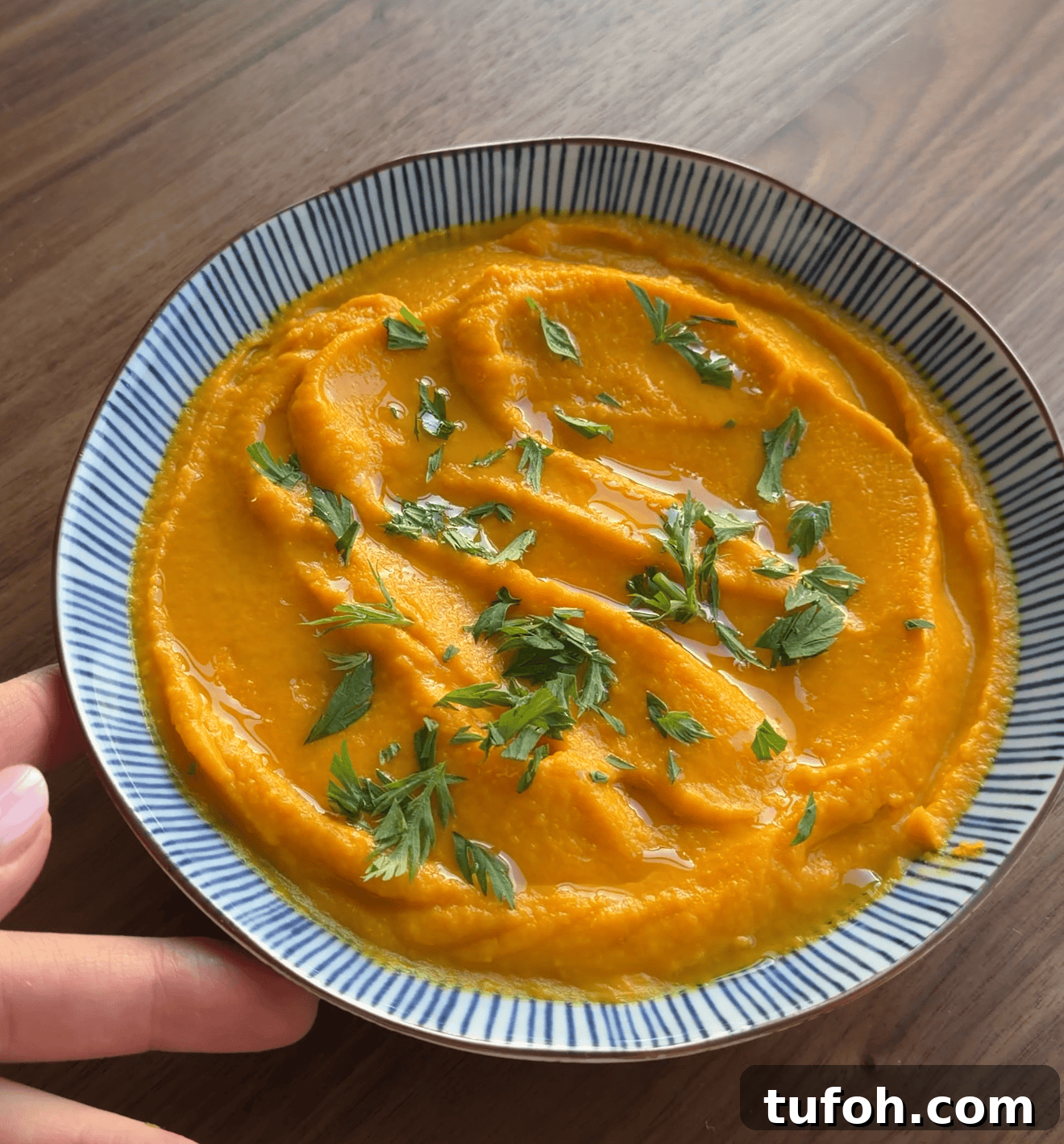
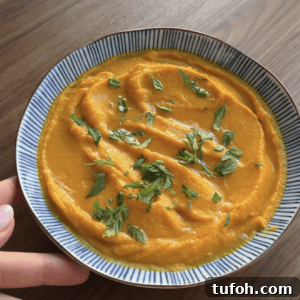
Ginger Carrot Puree is a side that lands between a classic purée and mashed potatoes: slightly rustic, yet refined enough for a spring table. It’s silky with body, offering gentle texture that feels comforting without weighing the meal down.
I first created this recipe while attending culinary school and even used it in my final exam. It’s a simple, intentional preparation that focuses on the right balance of texture and flavor.
The natural sweetness of the carrots, the warm brightness of fresh ginger, and a finishing drizzle of extra virgin olive oil combine into a dish that tastes effortless and addictive.
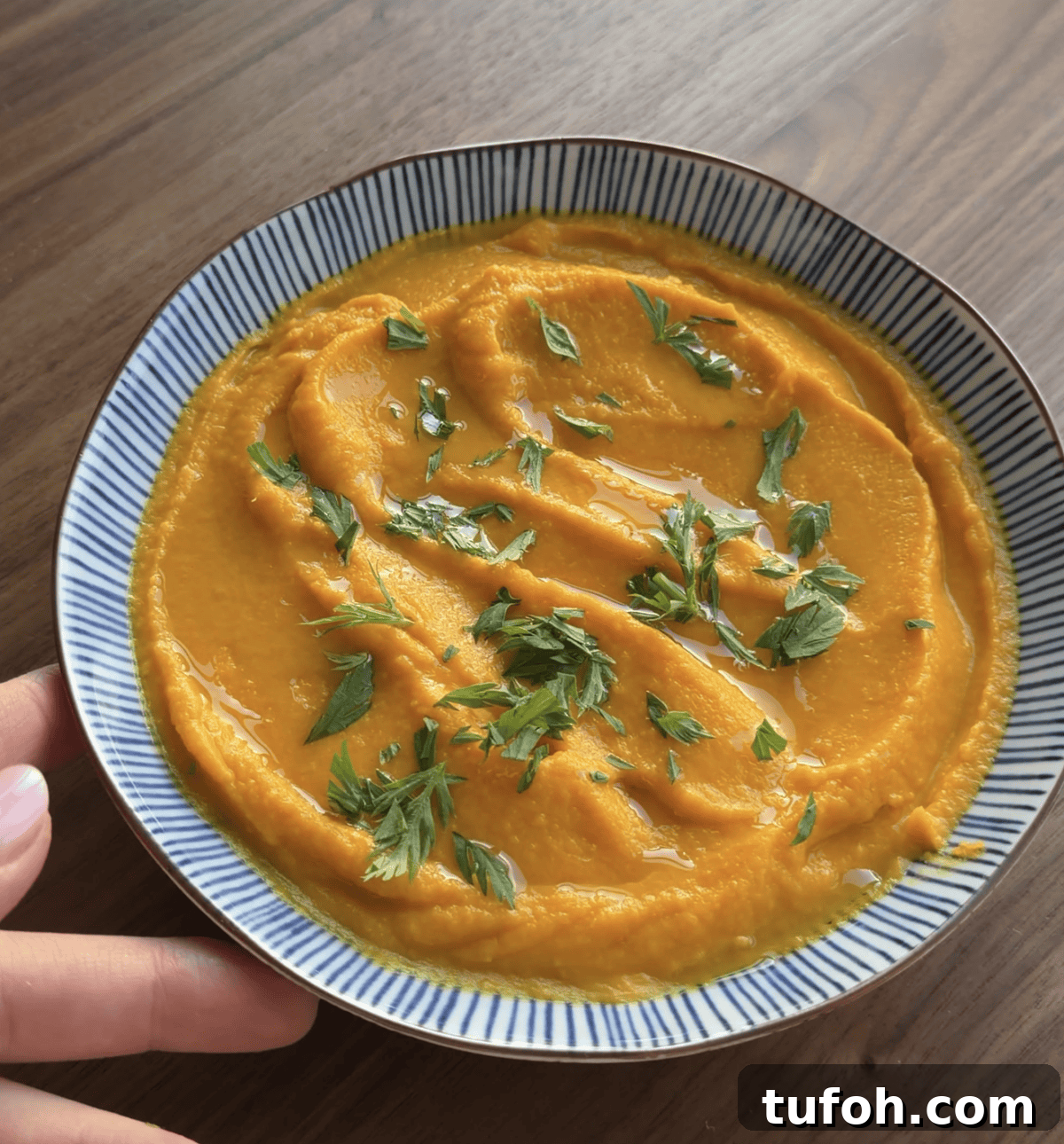
❤️ Why You’ll Love Ginger Carrot Puree
- Light but satisfying — a soft, mashed consistency that remains comforting without heaviness
- Bright, balanced flavor — sweet carrots and fresh ginger keep the profile interesting and fresh
- Texture you can control — keep it hearty like a mash or loosen it for a silkier purée
- Ideal spring side — pairs wonderfully with lamb, chicken, fish, or other lighter mains
🍲 Ingredients
- Carrots — peeled and chopped, the base of the puree
- Unsalted butter — adds richness and rounds the flavor
- Water or stock — used for cooking; stock adds extra depth
- Fresh ginger — freshly grated for gentle warmth and brightness
- Kosher salt — to season and enhance the carrots’ sweetness
- Extra virgin olive oil — for finishing, adding a clean, peppery note
- Carrot tops or fresh herbs — optional, for a bright finish
👩🍳 How to Make Ginger Carrot Puree
- Build the base — Place the chopped carrots, butter, grated ginger, salt, and 1 cup of water or stock in a pot.
- Simmer until tender — Bring to a simmer over medium heat, cover, and cook 20–25 minutes until the carrots are very soft.
- Reduce the liquid — Uncover and let the excess liquid evaporate slightly so only a little remains.
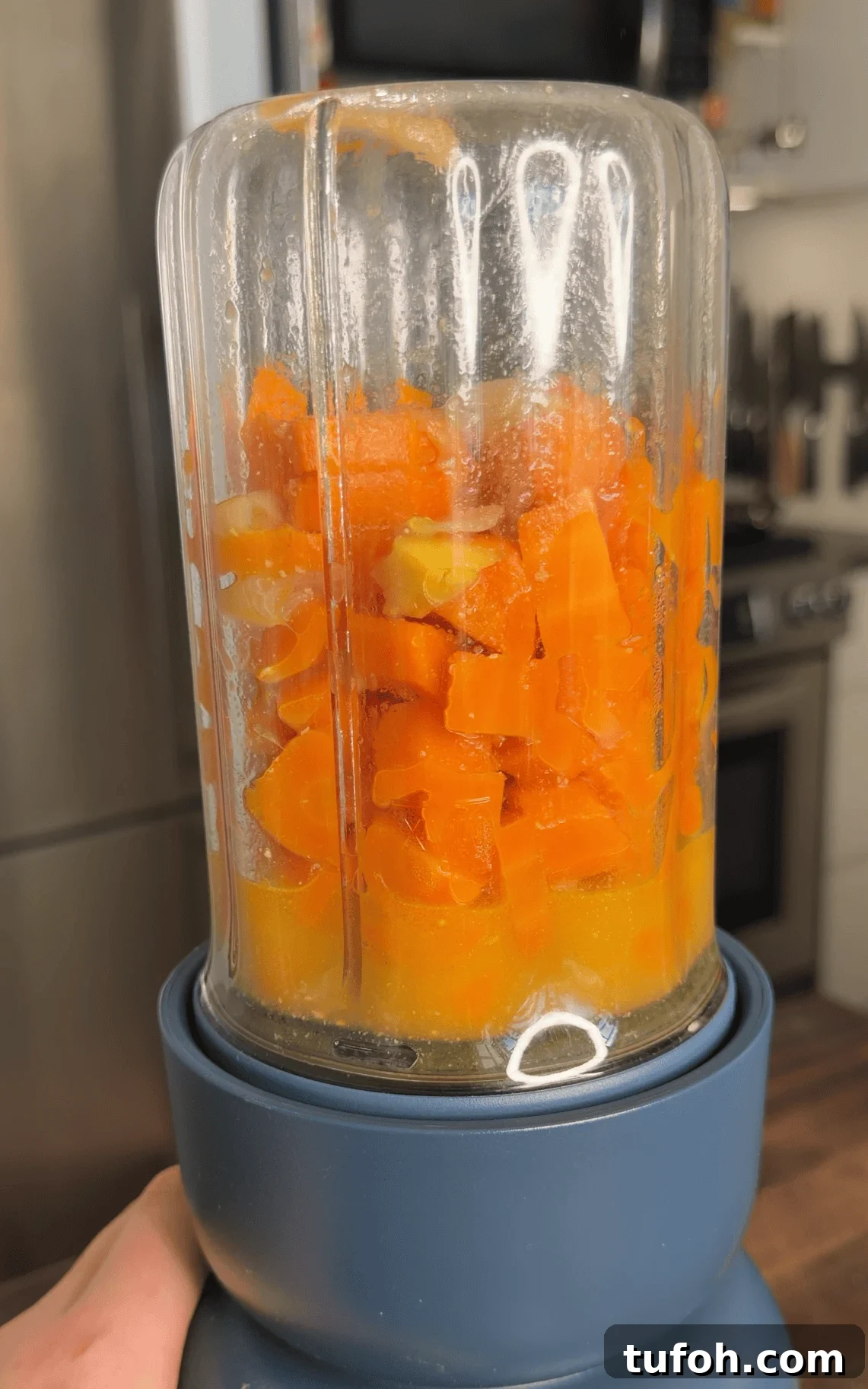
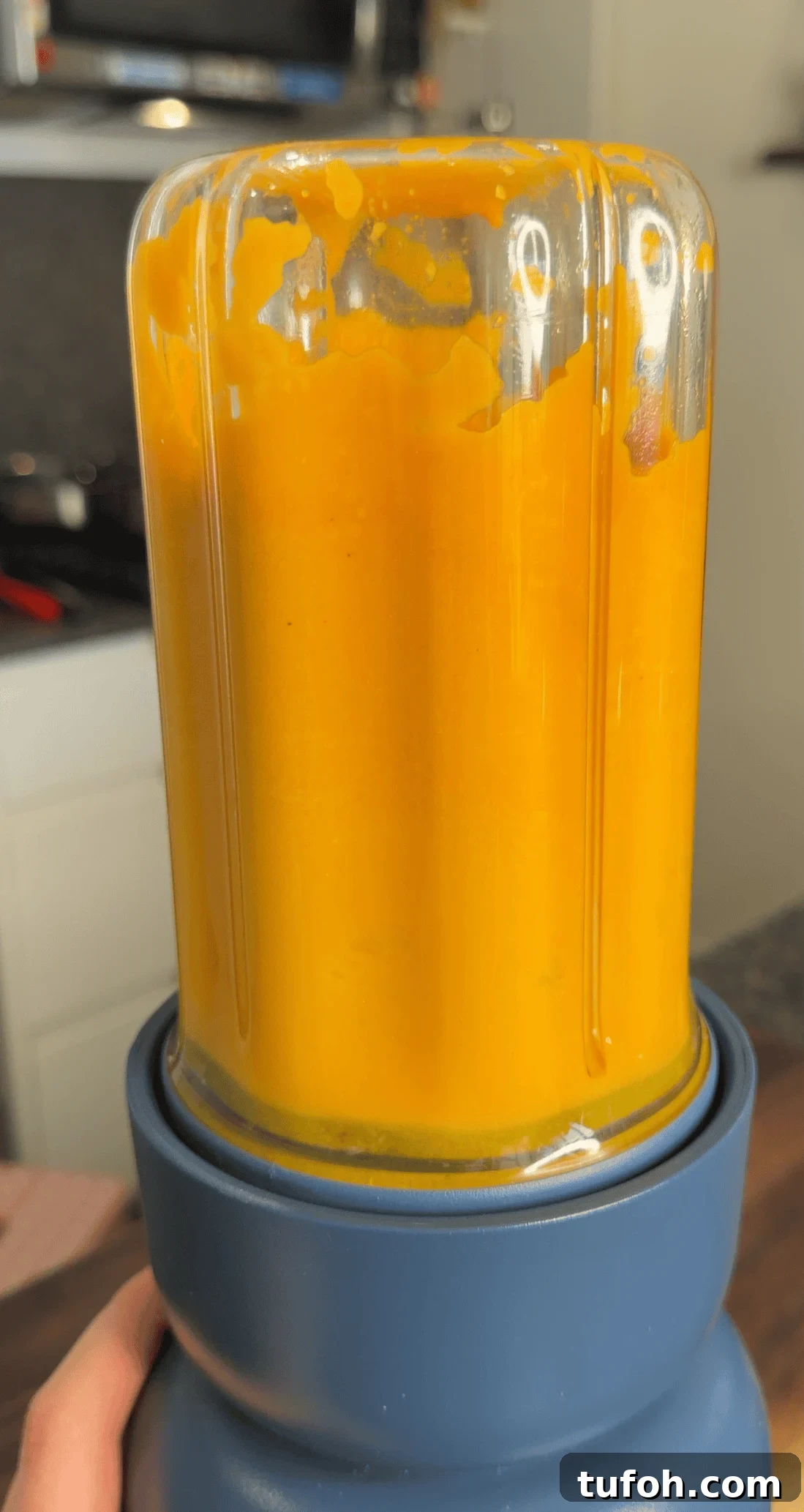
- Blend gradually — Transfer the carrots to a blender. Start with a small amount of the cooking liquid and blend until smooth, adding more liquid gradually until you reach a thick, mashed consistency.
- Adjust and finish — Taste and correct the salt. Reheat gently if needed, then finish with a drizzle of extra virgin olive oil and a sprinkle of carrot tops or fresh herbs.
🪄 Tips and Tricks
- Reduce the cooking liquid before blending to keep flavors concentrated and avoid a watery texture.
- Always start with less liquid when blending; you can add more, but you can’t remove it.
- For a more rustic, mashed-potato feel, avoid over-blending and stop when the texture is still slightly coarse.
🗒 Substitutions
- Swap butter for olive oil for a lighter, dairy-free version.
- Use vegetable stock instead of water for a deeper, savory base.
- Add a pinch of lemon zest at the end for extra brightness.
🧊 Leftovers
Store in an airtight container in the refrigerator for up to 3 days. Reheat gently on the stove and loosen with a splash of water or stock if it has thickened. Adjust seasoning after reheating if needed.
❓ FAQ
Yes. Reheat gently and loosen with a little water or stock before serving to restore the desired texture.
Yes. Mash by hand for a more rustic texture, but be sure the carrots are cooked until very soft.
Ginger Carrot Puree
Comment
Ingredients
- 1 lb carrots, peeled and chopped
- 1 tbsp unsalted butter
- 1 to 1½ cups chicken or veg stock
- 1 to 2 tsp freshly grated ginger
- 1 tsp kosher salt, plus more to taste
- Extra virgin olive oil, for finishing
- Carrot tops or fresh herbs, optional
Instructions
- Add carrots, butter, grated ginger, salt, and 1 cup of water or stock to a pot.
- Bring to a simmer over medium heat, cover, and cook 20–25 minutes until the carrots are very soft.
- Uncover and let the excess liquid reduce slightly so only a small amount remains.
- Transfer to a blender and blend, starting with a small amount of liquid. Add more gradually until you reach a thick, smooth mash consistency.
- Taste and adjust seasoning as needed.
- Reheat gently if necessary, then serve with a drizzle of extra virgin olive oil and herbs.
Nutrition
Carbohydrates: 14g,
Protein: 3g,
Fat: 4g
Nutrition information is automatically calculated and should be used as an approximation.
Tried this recipe?
Share your results on social media and tag the creator if you like.