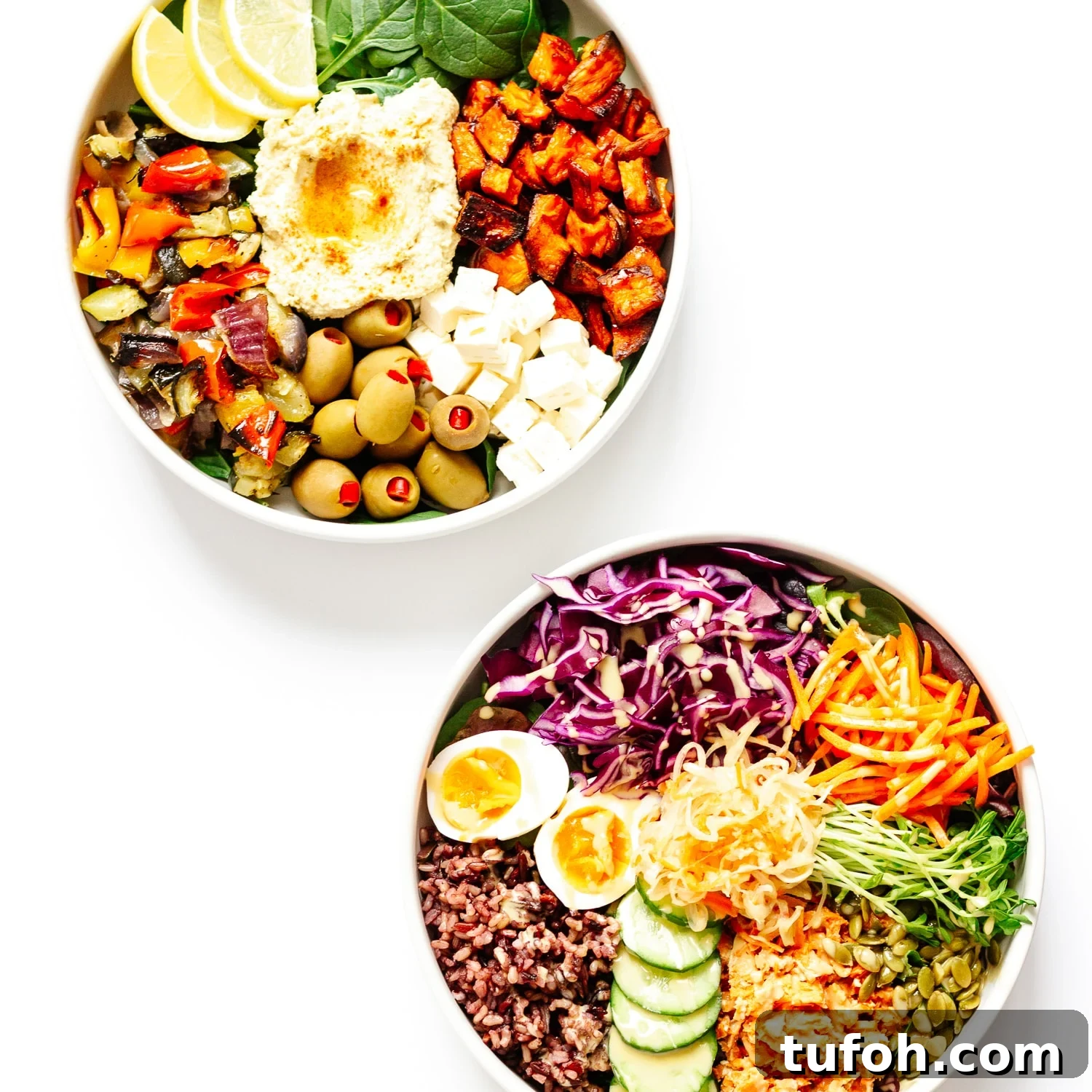
Looking for a balanced, nutritious, and easy-to-make meal idea? Learn how to build a healthy nourish bowl using a simple 3-step formula. Perfect for lunch, dinner, or meal prep, these bowls combine vibrant produce, quality protein, whole-food carbs, and healthy fats for a satisfying, nutrient-dense meal.
What is a nourish bowl?
A nourish bowl is a balanced meal built from nutrient-dense ingredients: leafy greens, a variety of vegetables, quality protein, whole-food carbohydrates, and healthy fats. Often called buddha bowls, power bowls, or bliss bowls, they’re an easy, flexible option for a wholesome lunch or dinner.
Do you eat them hot or cold?
Either works. Serve components warm, cold, or a mix of both depending on your preference and the ingredients you choose.
Why these bowls are great
Nourish bowls are a go-to meal for many reasons:
- No strict recipe: Build with what’s in season or on hand—flexibility is key.
- Healthy: They emphasize whole, nutrient-rich foods.
- Delicious: A mix of flavors and textures makes every bowl satisfying.
- Simple to make: Mostly assembly—prep a few components and combine.
- Endless options: Countless combinations keep meals interesting and let everyone customize their bowl.
- Diet-friendly: Easily adapted for allergies, vegan, paleo, keto, or other dietary needs by swapping ingredients.
- Meal prep friendly: Prep components ahead and mix and match for quick meals all week.
How to make a nourish bowl
Follow this three-step template to build a balanced, vibrant bowl.
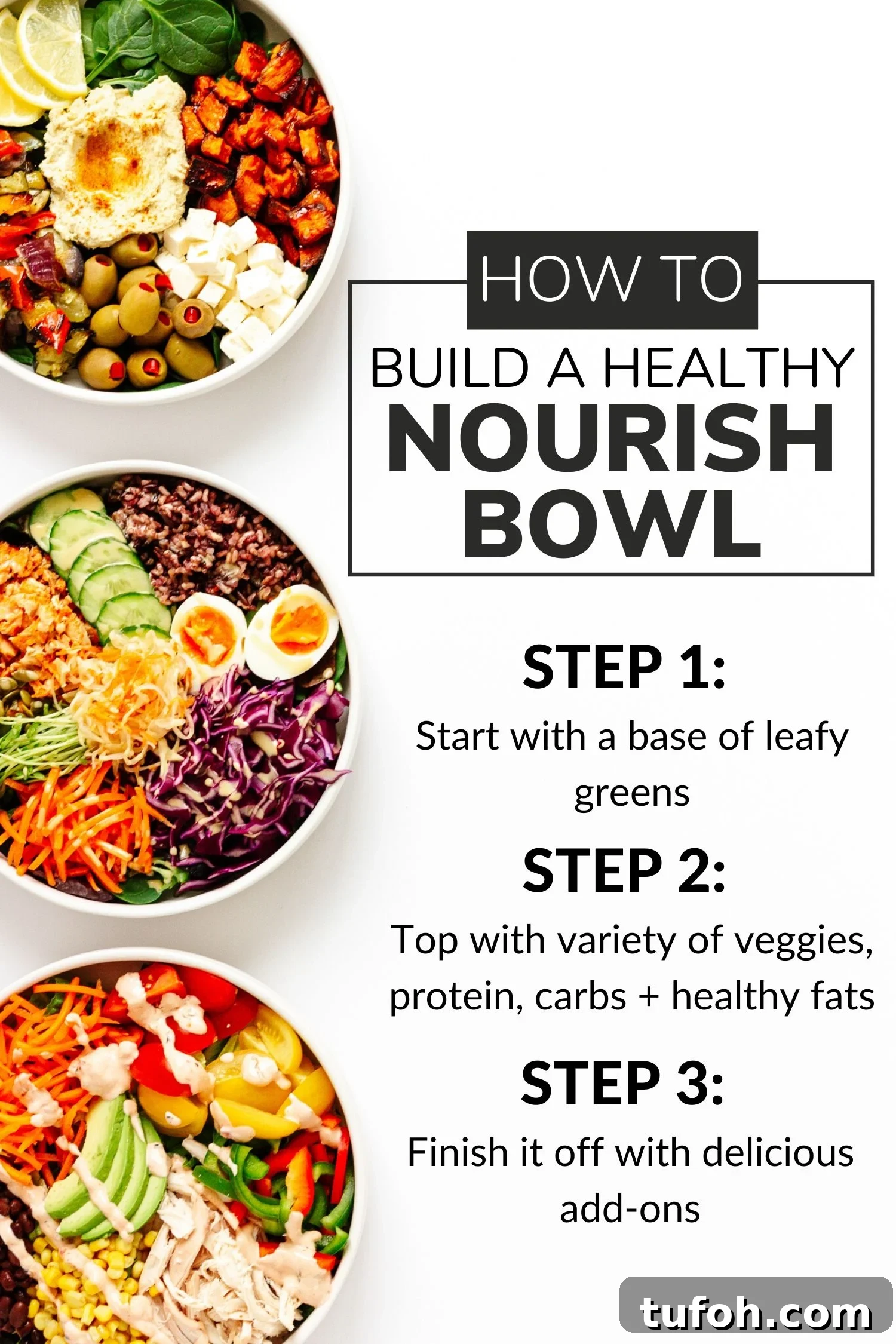
Step 1: Base of leafy greens
Begin with a generous bed of leafy greens. Options: spinach, kale, arugula, mixed baby greens, romaine, swiss chard, sprouts, or microgreens.
Step 2: Top with veggies, protein, carbs, and healthy fats
Add a variety of colorful, nutrient-dense toppings. Arrange them mixed or in sections—either way works. Ideas for each group:
- Veggies: Raw, roasted, or grilled—carrots, cucumber, cabbage, zucchini, beets, mushrooms, peppers, radish, broccoli, cauliflower, snap peas, asparagus, and more.
- Protein: Plant or animal sources such as nuts, seeds, beans, lentils, quinoa, tempeh, tofu, eggs, fish, or quality meats. Choose higher-welfare or local sources when possible.
- Whole-food carbs: Sweet potatoes, quinoa, rice, corn, squash, whole grains, wild rice, or additional beans and peas.
- Healthy fats: Avocado, nuts, seeds, olives, olive oil, tahini, or fatty fish like salmon.
Step 3: Finish with add-ons
Bring the bowl together with flavorful add-ons: dressings or sauces, fermented vegetables like sauerkraut or kimchi, nuts, seeds, hemp hearts, salsa, hummus, fruit, cheese, guacamole, pesto, nutritional yeast, fresh lemon juice, herbs, and your favorite seasonings.
Summary
Build a nourish bowl by layering a leafy-green base, topping with a mix of vegetables, protein, carbs, and healthy fats, then finishing with sauces and add-ons. Be creative and tailor each bowl to your taste.
Great for meal prep
Nourish bowls are ideal for meal prep. Prepare and store components separately—washed greens, chopped raw veggies, roasted vegetables, cooked grains, proteins, and dressings—and assemble bowls quickly during the week. You can also prep entire bowls for grab-and-go convenience, but storing ingredients separately offers more variety.
Inspiration and sample bowls
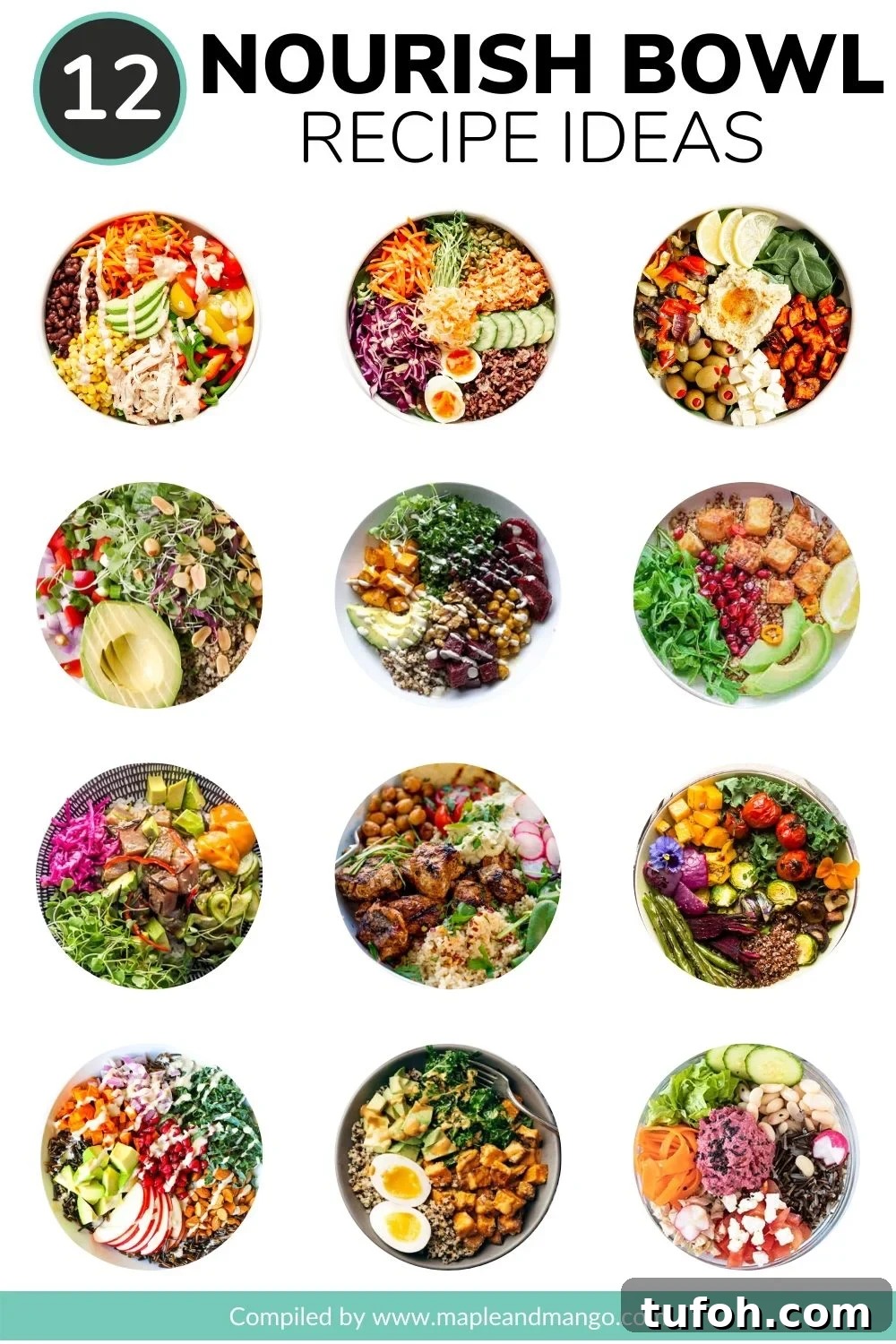
Here are a few example combinations to jump-start creativity. These are easy to assemble from prepped ingredients.
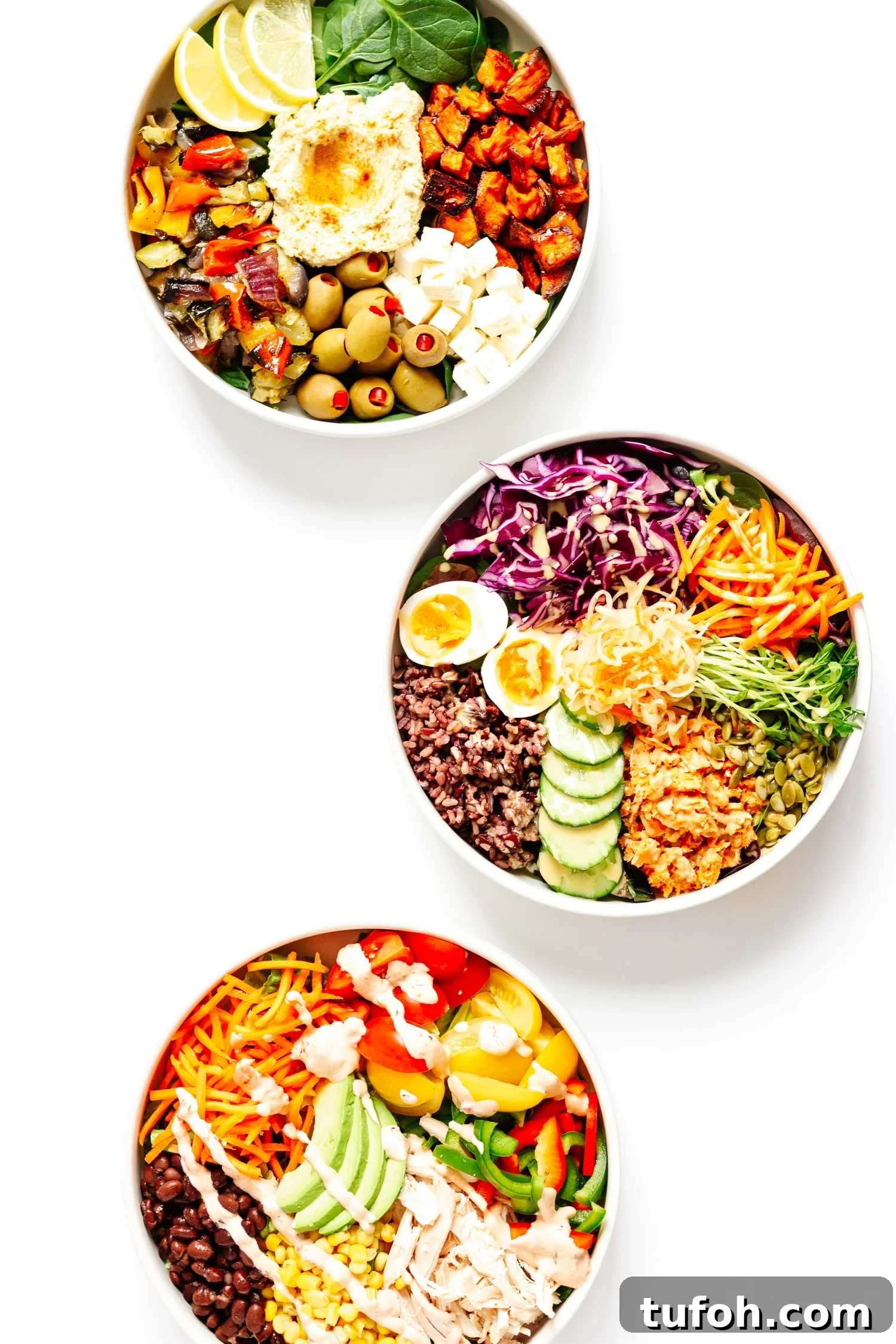
The three bowls shown at the top include simple, flavorful combinations:
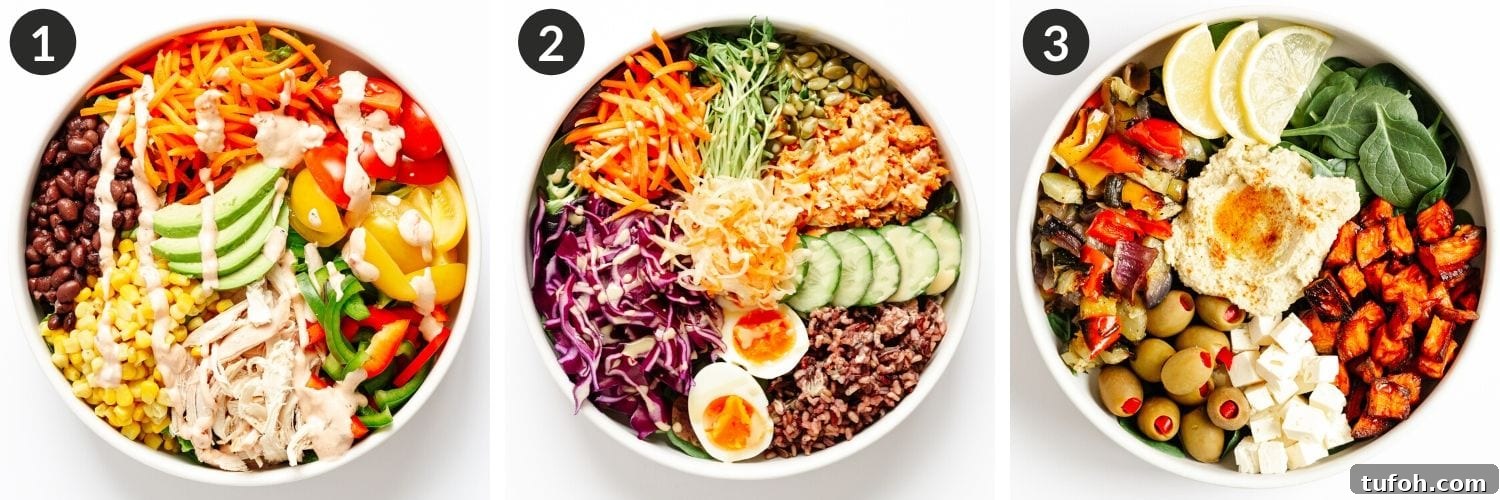
- Tex-Mex Style: Mixed baby greens, shredded carrots, red and yellow tomatoes, red and green bell peppers, shredded roast chicken, corn, black beans, avocado, finished with a yogurt-and-salsa drizzle.
- Salmon Bowl: Mixed greens, canned wild salmon, cucumber, wild rice blend, hard-boiled egg, red cabbage, shredded carrots, pea shoots, pepitas, kimchi, with a tangy vinaigrette or tahini dressing.
- Mediterranean Style: Baby spinach, roasted sweet potatoes, feta, olives, roasted onion and zucchini, hummus, lemon juice, and a drizzle of olive oil.
Try different flavor themes—Mexican, Mediterranean, Asian, or Mediterranean-inspired bowls—by swapping proteins, grains, vegetables, and sauces. Themed dressings tie everything together.
What’s your favorite nourish bowl combo? Share your ideas in the comments or tag your creations on social media. I’d love to see what you make!
Build Your Own Healthy Nourish Bowl
- Prep Time: 10 min (will vary)
- Total Time: 10 minutes
- Yield: varies
- Category: Main Course
- Method: Assemble
- Cuisine: American
Description
Looking for a balanced, nutritious, delicious and easy-to-make meal idea? Learn how to build a healthy nourish bowl using this simple formula. Great for lunch, dinner, and meal prep.
Ingredients
Base:
- Leafy greens (spinach, kale, arugula, mixed baby greens, romaine, swiss chard, sprouts, microgreens, etc.)
Top with:
- Veggies: Raw, roasted or grilled (carrots, cucumber, cabbage, zucchini, beets, mushrooms, peppers, radish, broccoli, cauliflower, snap peas, asparagus, etc.)
- Protein: Nuts, seeds, beans, lentils, quinoa, tempeh, tofu, eggs, fish, or quality meat.
- Whole-food carbs: Sweet potatoes, quinoa, rice, corn, squash, whole grains, wild rice, beans, peas, etc.
- Healthy fats: Avocado, nuts, seeds, olives, olive oil, tahini, salmon, etc.
Add-ons:
- Dressings or sauces, fermented vegetables like sauerkraut or kimchi, nuts, seeds, hemp hearts, salsa, hummus, fruit, cheese, guacamole, pesto, nutritional yeast, lemon juice, herbs, spices, and seasonings.
Instructions
These bowls are versatile and do not require a strict recipe. Follow three simple steps to assemble a healthy, delicious bowl.
- Base of leafy greens: Place a couple of handfuls of greens in a bowl.
- Top with veggies, protein, carbs, and healthy fats: Add a variety of nutrient-dense toppings. Arrange them as you like.
- Finish with add-ons: Drizzle or scatter dressings, sauces, seeds, nuts, or pickled vegetables to bring the bowl together.
Notes
- Customizable: Adapt the bowl to suit allergies, vegan, paleo, keto, or other preferences by substituting ingredients.
- Meal prep: Prep ingredients ahead for quick assembly throughout the week.
- Quality protein: If choosing animal protein, opt for high-quality, ethically sourced meat or fish when possible.