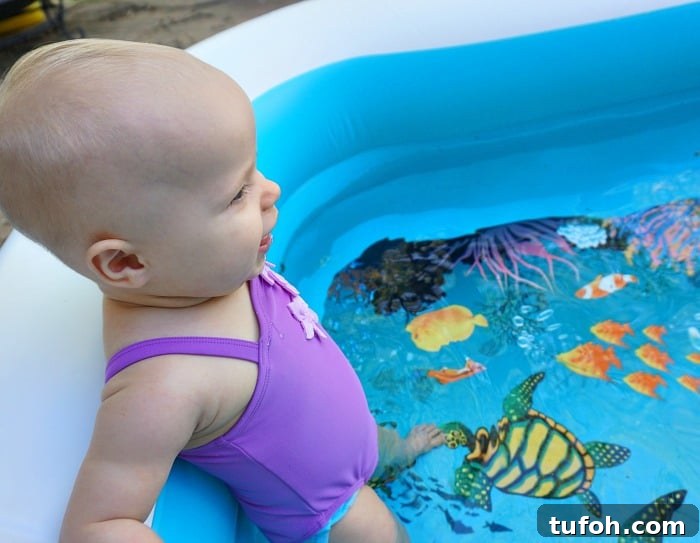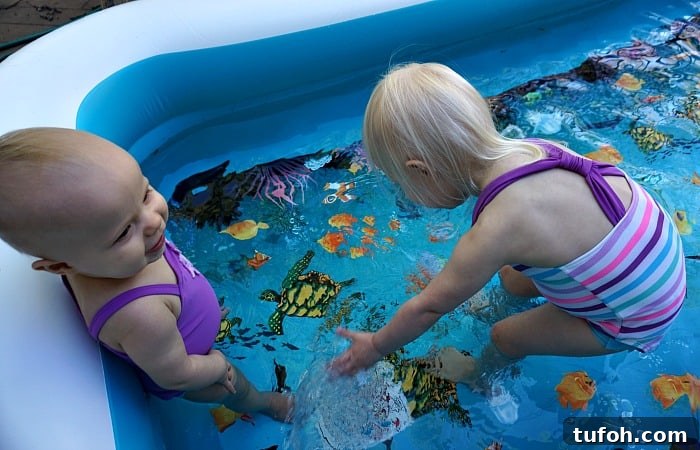
I’m so excited to get back in the pool with my girls this year. We’ve dipped our toes a few times when the heat spiked, but haven’t had a full swim yet. I can’t wait—mostly because I love swimming and want my kids to love it too. To make sure I don’t forget anything in the excitement, I put together this quick list of 5 Things to Remember When Introducing Baby to the Pool.
These tips also apply if you’re reintroducing little ones after a long break; a first swim in a year can feel like an entirely new experience for toddlers, so keep that in mind.
I’m planning to introduce my baby girl to the pool this season with the SwimWays Baby Spring Float (paid link). I wish I’d had one sooner—the design is thoughtful, compact, and easy to pack, which makes it great for pools, lakes, or vacations. The SwimWays Teach Me to Swim – Swim Steps system pairs products with instruction and is built around decades of swim-teaching experience.
The SwimWays video tutorials are full of practical guidance if you want help teaching your child to swim. The Baby Spring Float is only one part of the system: it helps keep babies safe and supported while you focus on introducing basic comfort and movement in the water. I’m eager to start teaching my little ones and to make their first pool experiences positive and confidence-building.
5 Things to Remember When Introducing Baby to the Pool
- Shallow. Even when using a float, stay in shallow water. Avoid the deep end where footing can become uncertain. Keeping the water shallow reduces risk and makes it easier for you to stay close and comfortable while supporting your child.
- Warm. Make the water comfortably warm for a baby. Cold water can make a first swim unpleasant and prompt crying or tension. You don’t need bath-hot water, but avoid icy, straight-from-the-hose temperatures—kids respond much better when the water feels cozy.
- Fun. Prioritize a pleasant first experience. Bring a few favorite pool-safe toys and encourage older siblings to splash away from baby or gently demonstrate how to splash and play. Positive, playful moments help the child form happy associations with the pool rather than fear.
- Short. Keep the initial session brief—about 10 to 15 minutes is plenty. New environments are stimulating and tiring, so a short introduction prevents overstimulation and fatigue while leaving room for eager repeats later.
- SUPERVISE. Never leave a baby unattended around water. Babies can drown in very shallow water, so always keep a hand on the child and remain within arm’s reach. If you need to step away, take the baby with you. Swim training aids can help build independence over time, but direct supervision is essential during the earliest swims.

Do you have other tips to add to this list? Leave a comment and share your experience introducing a baby to the pool. If you’re shopping for gear, the Baby Spring Float is widely available and can be a helpful aid for early water experiences—especially when combined with gradual, supervised practice and a focus on comfort and fun.